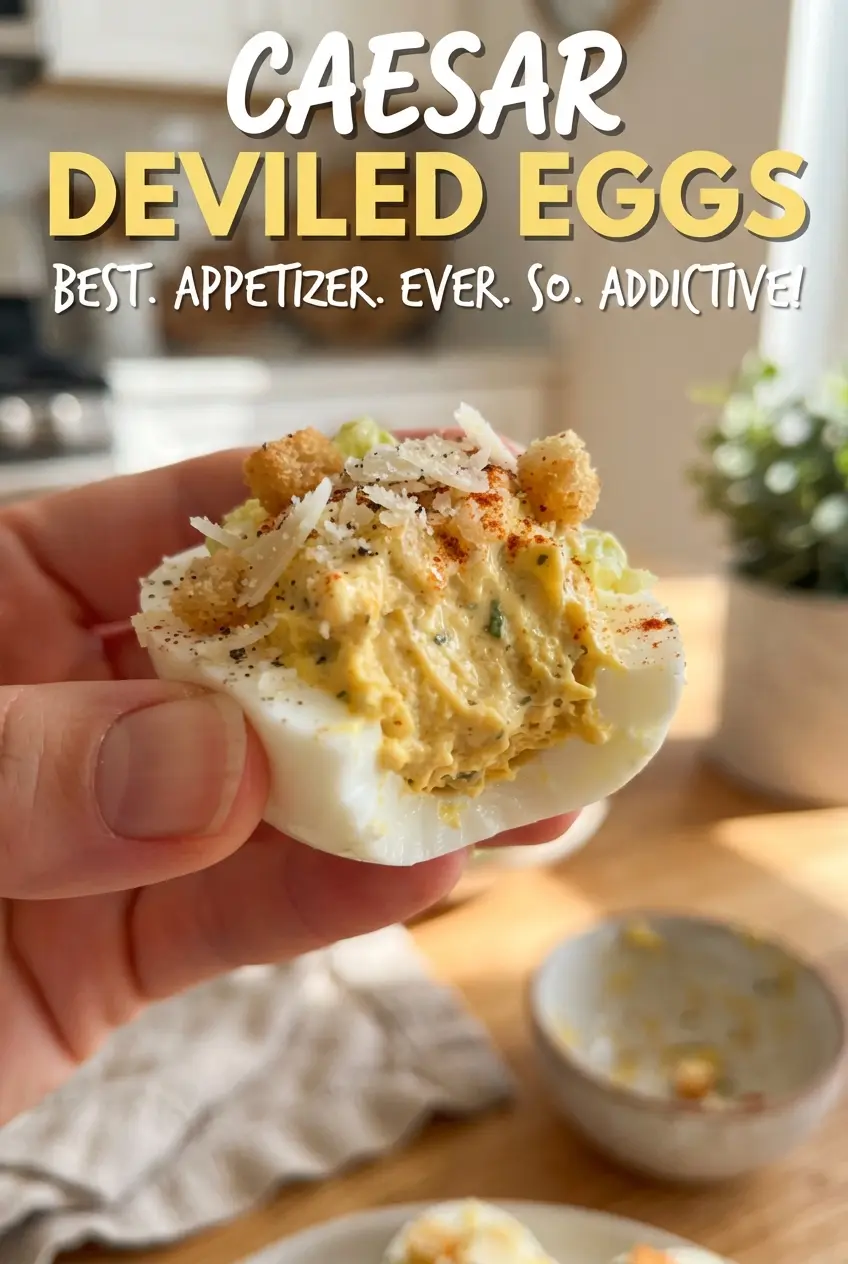
Caesar deviled eggs hit that sweet spot between familiar and a little unexpected: creamy yolk filling, sharp Parmesan, a whisper of garlic, and just enough anchovy to make people pause and ask what that great savory flavor is. They disappear fast because they taste like a Caesar salad and a classic party egg met in the best possible way. The garnish matters here, too. A tiny crouton, a strip of romaine, and a shower of cracked pepper give each bite the crunch and freshness that keeps the filling from feeling heavy.
The trick is balancing the filling so it stays silky without turning loose. Parmesan brings salt and body, while the lemon juice and Dijon keep the richness in check. Anchovy is the ingredient that makes this taste like Caesar instead of just garlicky deviled eggs; use anchovy paste if that’s easier, but keep the amount modest so it deepens the flavor without taking over. I also grate the garlic very finely so it melts into the yolks instead of leaving sharp bits behind.
Below you’ll find the small details that matter most: how to keep the yolks smooth, why the garnish should go on right before serving, and what to do if you want the filling a little lighter or a little more assertive.
The filling was unbelievably smooth and held its shape perfectly when I piped it. The little crouton on top added the best crunch, and the anchovy made them taste like a Caesar salad in egg form.
Love these Caesar deviled eggs? Save them to Pinterest for the appetizer tray that needs Parmesan, crunch, and a little anchovy depth.
The Filling Needs More Than Mayonnaise to Taste Like Caesar
Deviled eggs turn flat fast when the filling is only yolks and mayo. Caesar flavor needs contrast: Parmesan for salty depth, anchovy for that savory backbone, lemon for lift, and Dijon for a little edge. Without that balance, you get rich eggs that taste pleasant but forgettable.
The other thing that matters is texture. Yolks that are still warm when you mix them will mash smoother, but the filling sets up best after it chills a bit. If it feels too loose, the usual culprit is too much mayo or too much lemon at once. Add the wet ingredients gradually and stop as soon as the mixture holds soft ridges on a spoon.
- Anchovy fillets or anchovy paste — This is the ingredient that makes the filling taste like Caesar. Mince fillets until they almost disappear, or use paste for easier mixing. If you skip it, the eggs still work, but they lose that deep savory note.
- Parmesan — Grated Parmesan thickens the filling and adds the salty, nutty flavor Caesar needs. Use finely grated cheese here, not big shreds, or the mixture can turn grainy. Save the shaved Parmesan for the top.
- Lemon juice and Dijon — These keep the filling from tasting heavy. Fresh lemon is best because bottled juice can taste dull and makes the filling flatter. Dijon should stay subtle; it sharpens the flavor without turning the eggs into mustard eggs.
- Garlic — Grate it finely so it blends cleanly into the filling. A chunk of raw garlic will dominate every bite, while grated garlic gives you the background bite Caesar needs.
What Each Ingredient Is Actually Doing in This Recipe

- Primary ingredient (the star) — Quality matters most. Choose the best you can find.
- Cooking medium (oil, butter, or broth) — This carries flavors and prevents dryness.
- Seasonings (salt, pepper, spices, herbs) — Layer flavors so nothing overpowers. Build depth gradually.
- Aromatics (garlic, onion, herbs) — Cook with fat to bloom flavors. Become the foundation.
- Supporting ingredients — Complement the main ingredient without overpowering it.
- Sauce or liquid (if applicable) — Brings flavors together. Balance richness with acid.
- Acid (lemon, vinegar, wine, or other) — Brightens and prevents flat-tasting results.
- Final finish (garnish, glaze, or sauce) — Prevents one-dimensional taste and adds visual appeal.
Getting the Yolks Silky and the Whites Easy to Fill
Boil, Rest, and Cool the Eggs Properly
Set the eggs in a pot, cover them with cold water, and bring the water to a boil before turning off the heat and covering the pan. That gentle finish gives you firm yolks without the gray ring that comes from overcooking. If the eggs crack, the heat came up too fast, so start with cold water and don’t rush the boil. The 12-minute rest is the point where the yolks set but stay bright.
Chill Hard Before Peeling
Move the eggs straight into an ice bath for 10 minutes. That stops the cooking and tightens the whites, which makes peeling easier. If the shells cling, the eggs probably didn’t cool long enough. Peel under a little running water if needed; it helps lift stubborn bits of shell without tearing the whites.
Mash the Filling Until It Looks Like Spreadable Paste
Press the yolks with mayonnaise, Parmesan, anchovy, garlic, Dijon, lemon juice, and Worcestershire until the mixture turns smooth and dense. A fork works fine, but a small mesh strainer gives you the silkiest texture if you want a cleaner pipe. Season with black pepper at the end, because Parmesan and anchovy already bring salt. The filling should hold its shape in the bowl without looking stiff or dry.
Pipe and Garnish Right Before Serving
Use a spoon or piping bag to fill the egg whites, then finish with romaine, a crouton, and shaved Parmesan. The garnish should go on close to serving so the croutons stay crisp and the romaine stays perky. If the tops are added too early, the lettuce wilts and the croutons soften from the moisture in the filling. A final crack of pepper pulls everything together.
How to Adapt These Caesar Deviled Eggs for Different Guests
Skip the Anchovy, Keep the Caesar Idea
If you want the Caesar-style flavor without anchovy, add a little extra Parmesan and a tiny pinch of salt, then lean on Worcestershire and garlic for depth. The result tastes milder and less briny, but it still lands in the same savory lane.
Make Them Gluten-Free
The filling is already gluten-free if your Worcestershire sauce is gluten-free, so the only swap you need is the garnish. Replace the mini croutons with toasted gluten-free bread crumbs or skip them and add extra Parmesan for crunch from the cheese instead.
Turn Up the Garlic and Lemon for a Sharper Bite
For a more assertive filling, add a touch more lemon juice and a little extra grated garlic. This makes the eggs taste brighter and closer to a bold Caesar dressing, but the filling can loosen if you overdo either one, so add in small amounts.
Storage and Reheating
- Refrigerator: Store the filled eggs for up to 2 days in a covered container. The whites stay good, but the romaine and croutons soften, so add those just before serving if you can.
- Freezer: Don’t freeze deviled eggs. The whites turn rubbery and the filling splits after thawing.
- Reheating: These are meant to be served cold. If they’ve been chilled hard, let them sit at room temperature for 10 to 15 minutes before serving so the filling tastes creamy instead of dull.
Answers to the Questions Worth Asking
Caesar Deviled Eggs
Ingredients
Equipment
Method
- Place the eggs in a pot, cover with cold water, and bring to a boil. Cover, remove from heat, and let stand 12 minutes.
- Chill the eggs in an ice bath for 10 minutes, then peel them. Halve each egg lengthwise and set the whites aside.
- Mash the yolks with mayonnaise, grated Parmesan, minced anchovy fillets (or anchovy paste), grated garlic, Dijon mustard, lemon juice, and Worcestershire sauce until smooth. Aim for a thick, pipeable texture.
- Season the filling with plenty of black pepper. Mix again briefly so the pepper is evenly distributed.
- Pipe the filling into the egg white halves. Fill them to the top for a neat deviled-egg finish.
- Top each with a romaine strip, a mini crouton, and shaved Parmesan. Add a light final crack of black pepper if desired for visibility.