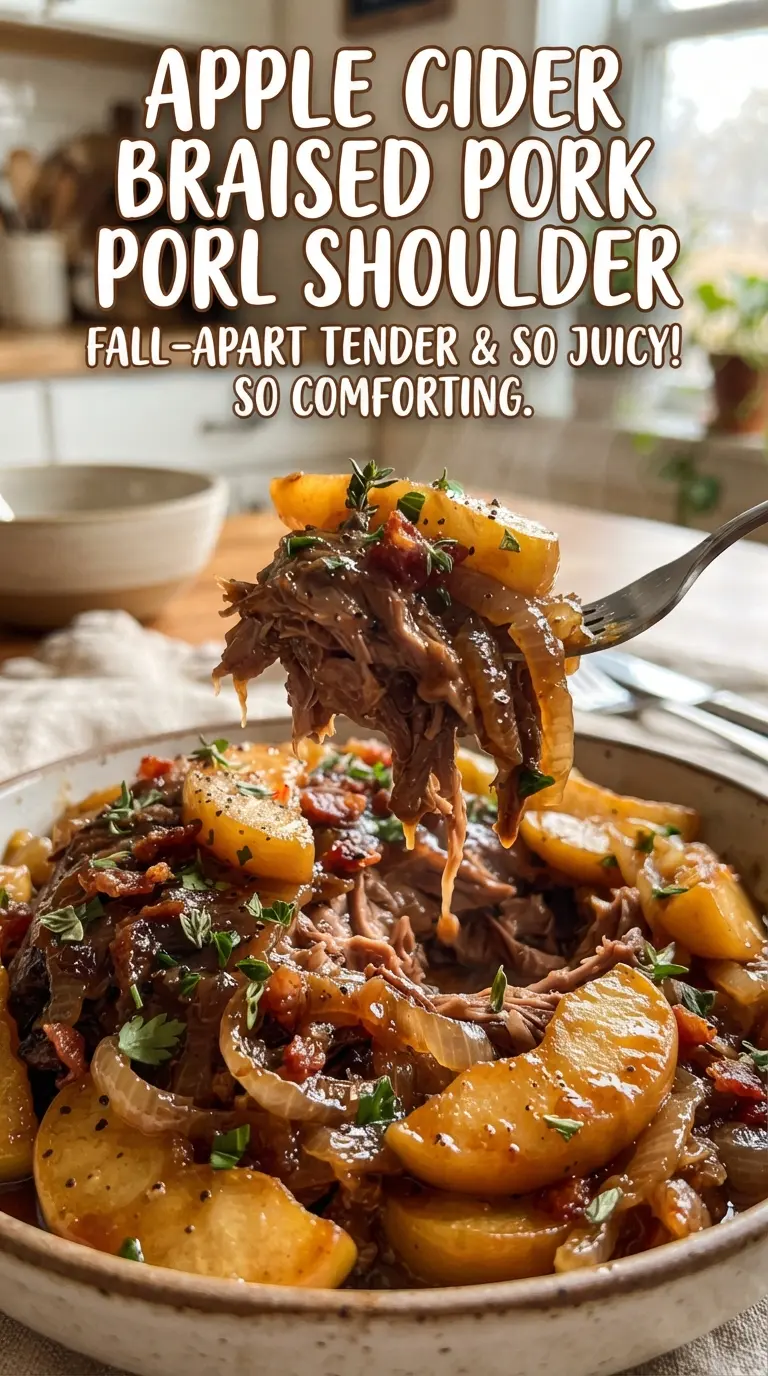
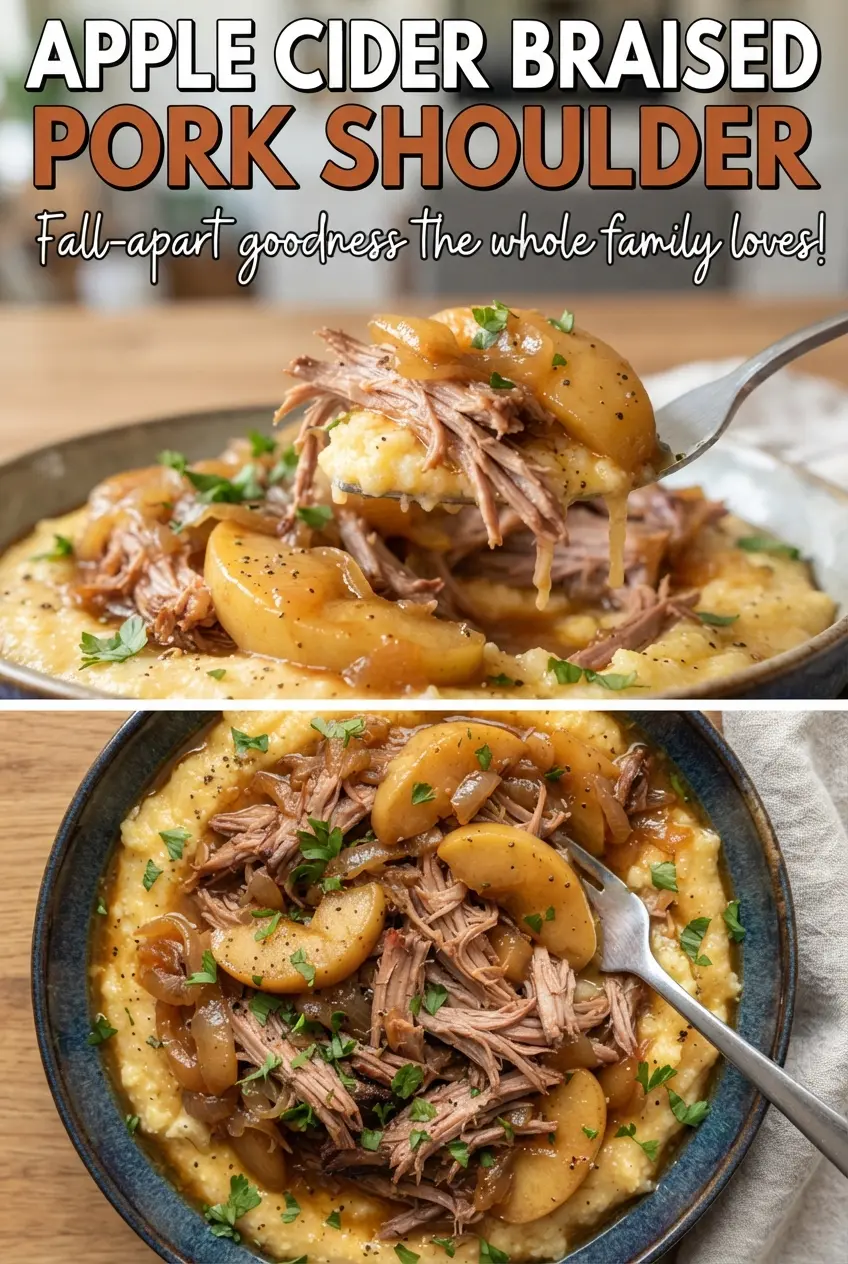
Apple cider braised pork shoulder turns a tough cut into spoon-soft, deeply savory meat with a glossy cider sauce that tastes like it spent all day earning its place. The pork comes out tender enough to pull apart with a fork, but it still holds onto its shape in big, satisfying pieces instead of collapsing into strings. The apples don’t disappear; they soften just enough to turn sweet and silky beside the onions and herbs.
What makes this version work is the balance in the braising liquid. Apple cider brings sweetness and fruit, Dijon sharpens it, vinegar keeps it from tasting flat, and brown sugar rounds out the edges. The pork gets a hard sear first, which builds the foundation for the sauce, and the apples go in near the end so they stay intact instead of melting into mush. That timing matters more than anything else here.
Below you’ll find the exact cues I watch for at each stage, plus a few smart swaps if you need to work with what’s in the pantry. If you’ve ever had braised pork turn dull, dry, or watery, this method fixes the usual trouble spots.
The pork was fall-apart tender and the cider sauce reduced into this rich, shiny coating that clung to every piece. I loved that the apples held their shape and didn’t turn to applesauce in the oven.
Save this apple cider braised pork shoulder for a slow Sunday dinner with fork-tender meat and sweet-savory pan sauce.
The Sear Is What Gives the Sauce Its Depth
When pork shoulder tastes flat after braising, the problem usually started before the liquid ever went in. A pale exterior means you missed the browned fond that turns cider and broth into a sauce with backbone. That crust matters because the braising liquid is mild on its own; it needs those caramelized bits from the pot to taste layered instead of one-note.
Give the pork enough time on each side to build a deep brown crust, and don’t crowd the pan. If the meat steams instead of browns, lower the batch size and wait. The onion goes in after the pork comes out so it can soften in the rendered fat and loosen up the fond without scorching it.
What Each Ingredient Is Doing in the Pot
- Pork shoulder — This cut has enough fat and connective tissue to become tender over a long braise. A leaner roast won’t give you the same silky texture.
- Apple cider — Use real cider, not apple juice if you can. Cider has a fuller, less sugary apple flavor that stands up better once it reduces.
- Dijon mustard and apple cider vinegar — These keep the sauce from turning sweet and soft. The mustard helps emulsify the liquid a bit, while the vinegar brightens the whole pot at the end.
- Apples — Use a firm baking apple like Honeycrisp, Braeburn, or Granny Smith. Soft apples break down too quickly and disappear before the pork is done.
- Fresh thyme and rosemary — Both herbs hold up to a long braise and perfume the sauce without turning bitter. Dried herbs will work in a pinch, but use less because they read more aggressively.
Building Tender Pork Without Drying Out the Edges
Seasoning and Browning
Heat the oven first, then season the pork all over so the salt has time to start working while you heat the pot. Sear the pieces in hot oil until the surface is dark brown and releases easily from the pan. If it sticks, it needs another minute; forced flipping tears off the crust you want in the sauce. Pull the meat out once it’s browned on both sides and leave the rendered fat behind.
Softening the Onions and Starting the Braise
Add the sliced onion to the same pot and cook until it turns translucent and starts picking up color from the bottom. Garlic only needs a minute; any longer and it turns sharp and bitter. Pour in the cider, broth, vinegar, Dijon, and brown sugar, then scrape the pan clean with a wooden spoon so every browned bit dissolves into the liquid. That’s where the depth comes from.
Long, Gentle Oven Time
Return the pork to the pot with the thyme and rosemary, cover it tightly, and braise until the meat feels loose when pierced with a fork. A steady 325°F gives the connective tissue time to melt without tightening the meat. If the lid doesn’t seal well, the top can dry out before the center turns tender, so check that the cover sits snugly before it goes in.
Adding the Apples at the End
The apples go in for the last stretch so they soften without collapsing. By that point, the pork has already done the heavy lifting, and the fruit only needs enough time to become tender and scented with the sauce. When the meat shreds easily, pull it apart into large pieces, simmer the liquid on the stove, and let it reduce until it coats a spoon. That final reduction turns the braising liquid into a proper sauce instead of a thin broth.
How to Adapt This Pork Shoulder When the Pantry Is Different
Make it gluten-free without changing the texture
This recipe is naturally gluten-free as written, as long as your broth and Dijon are certified gluten-free. Nothing about the braise depends on flour, so you won’t lose body in the sauce.
Use boneless pork butt or picnic shoulder interchangeably
Either cut works here because both have the fat and collagen this method needs. If the piece is uneven, cut it into two large chunks so it cooks more evenly and braises through at the same pace.
Swap the cider if all you have is apple juice
Apple juice works in a pinch, but the sauce will taste sweeter and less complex. Cut the brown sugar back a little if you use juice, and keep the vinegar in place so the finished sauce doesn’t taste sugary.
Storage and Reheating
- Refrigerator: Store in the sauce for up to 4 days. The pork gets even more flavorful after a day in the fridge.
- Freezer: It freezes well for up to 3 months. Cool it completely first, then pack the pork and sauce together so the meat stays moist.
- Reheating: Rewarm gently on the stove over low heat or covered in the oven at 300°F until hot. High heat dries out the pork and can make the apples collapse, so go slow.
Answers to the Questions Worth Asking
Apple Cider Braised Pork Shoulder
Ingredients
Equipment
Method
- Preheat the oven to 325F. Season the pork with salt, black pepper, and smoked paprika.
- Heat the olive oil in a Dutch oven and sear the pork over hot heat for 4-5 minutes per side until well browned, then remove it.
- Cook the sliced onion for 5 minutes, then add the smashed garlic and cook for 1 minute.
- Stir in the apple cider, chicken broth, apple cider vinegar, Dijon mustard, and brown sugar, scraping up the browned bits until combined.
- Return the pork to the Dutch oven, add the thyme and rosemary, cover, and braise for 2 1/2 hours at 325F.
- Add the apple wedges and braise, covered, for 45 minutes more at 325F until the pork is fork-tender.
- Shred the pork into large pieces and return it to the sauce. Simmer the liquid on the stove for 10 minutes to reduce, then serve the pork with the sauce and apples.