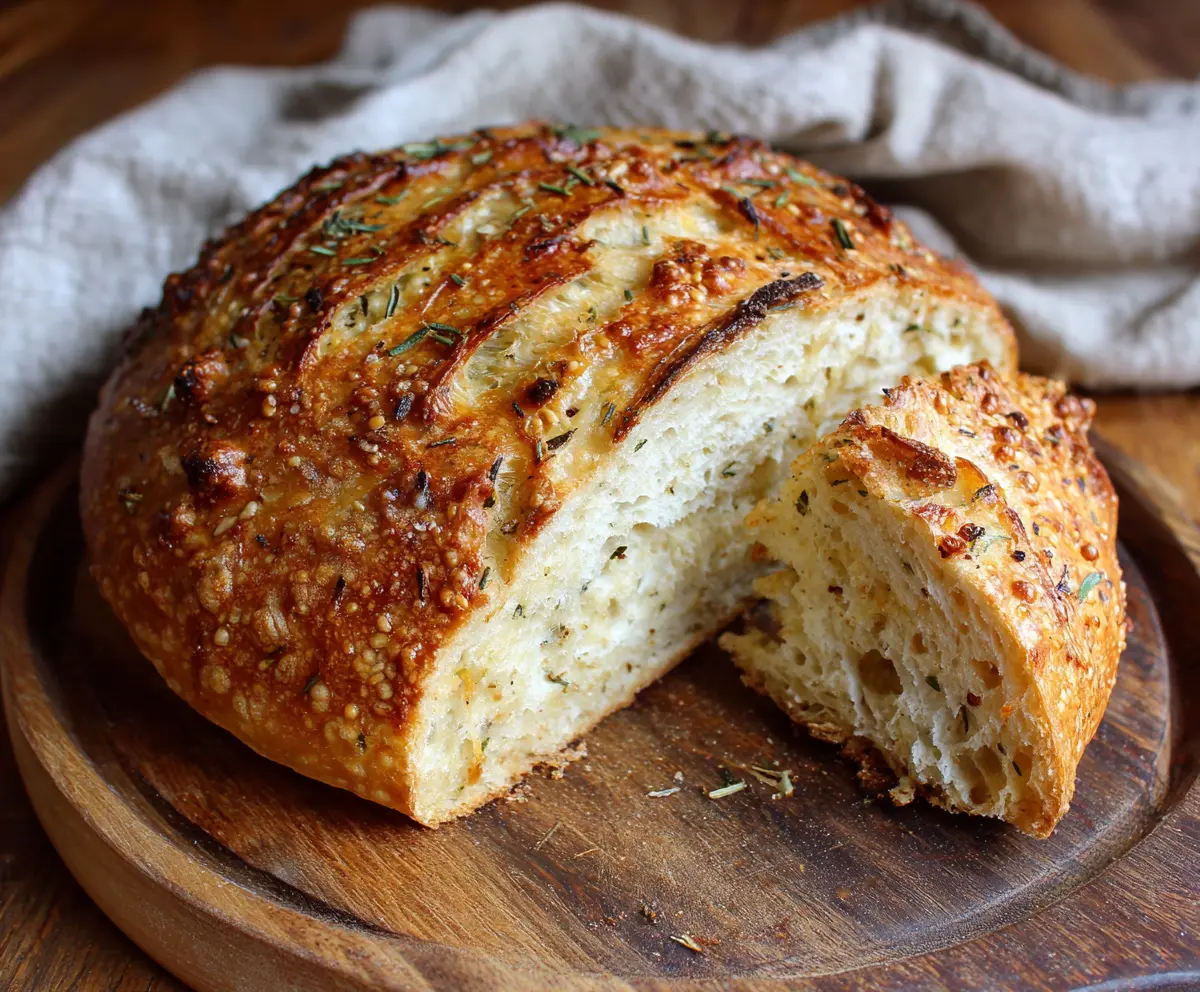
This Italian Herb and Cheese Sourdough Bread is a warm, cheesy delight! With a mix of yummy herbs and gooey cheese baked right in, it’s perfect for any meal.
Honestly, it smells amazing while baking—you’ll want to invite everyone over! I love serving it warm with just a bit of butter. Absolutely irresistible!
Key Ingredients & Substitutions
All-Purpose Flour: This flour gives the best structure to your bread. If you’re looking for something healthier, whole wheat flour works well too, but you might need a bit more water since it absorbs more moisture.
Sourdough Starter: An active starter is crucial for good rise. If you don’t have one, you can substitute with commercial yeast. Use 1 packet (2 ¼ tsp) of yeast mixed with water and a little sugar to help it activate.
Italian Herbs: The blend of basil, oregano, thyme, and rosemary adds a wonderful flavor. If you’re low on some, feel free to use what you have! Fresh herbs also make a great substitute. Just increase the amount by using about 2-3 times more.
Cheese: While mozzarella is the classic choice, feel free to mix in cheddar, gouda, or even feta for a different taste. If you’re watching calories, low-fat cheese can also be used, though it may not melt as well.
Olive Oil: This is used for brushing but any light oil can work, like canola or avocado oil. Olive oil adds wonderful flavor, but use what you have on hand!
How Do I Get the Dough to Rise Properly?
Getting that dough to rise beautifully is key for sourdough bread. It relies on wild yeast for fermentation. Make sure your starter is fed 4-6 hours before use to ensure it’s bubbly and active. Here’s how to help it along:
- Cover the dough in a warm, draft-free spot during fermentation. A cozy kitchen corner works best.
- Don’t rush the bulk fermentation. It’s okay to let it go longer until it feels airy and puffy.
- During stretch-and-folds, be gentle! This helps redefine the dough’s structure while trapping air bubbles, leading to a lovely rise.
- If your kitchen is cool, you can warm up the oven slightly, turn it off, and let the dough rise in there.
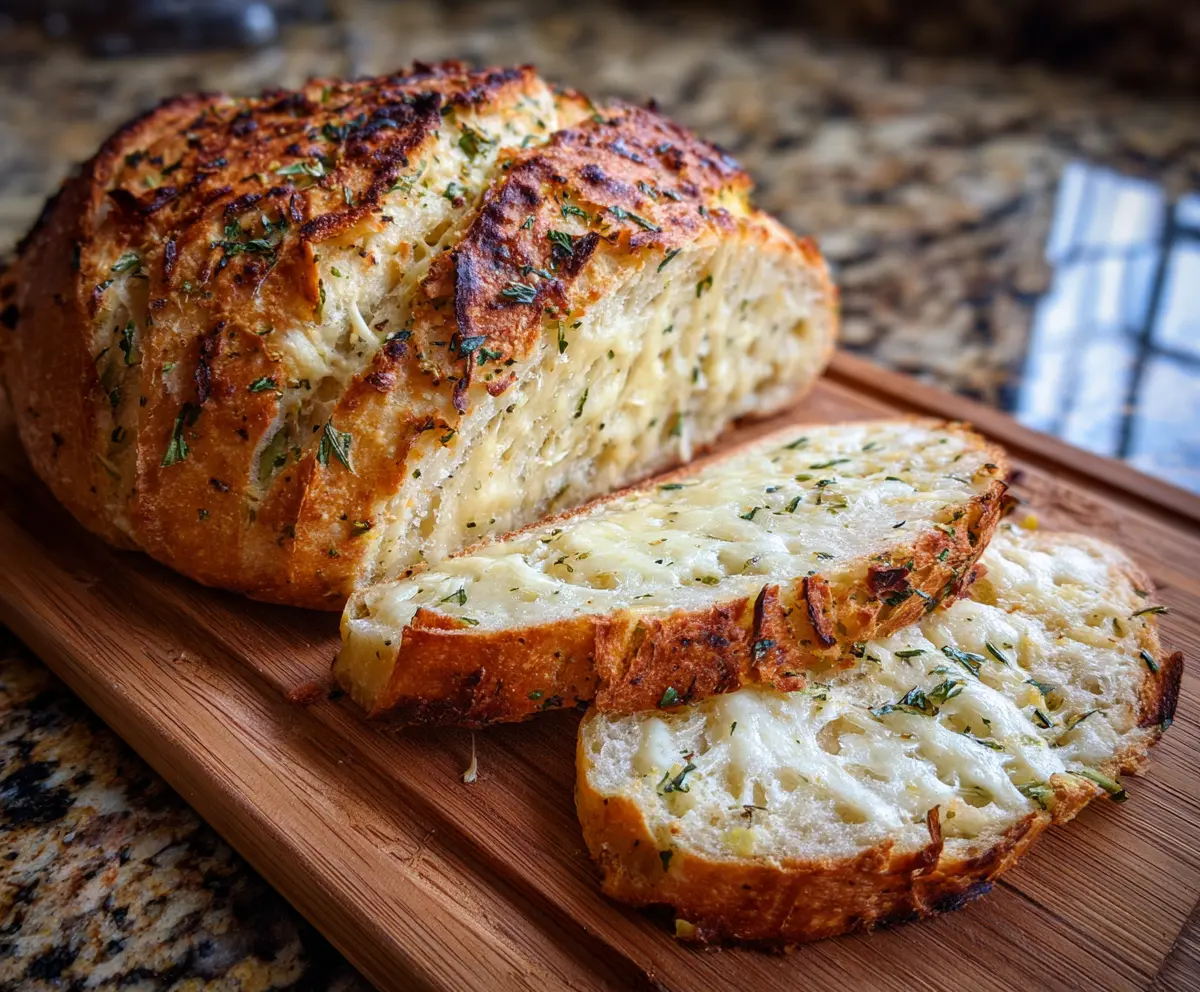
Italian Herb And Cheese Sourdough Bread
Ingredients You’ll Need:
Base Ingredients:
- 3 cups (360g) all-purpose flour
- 1 cup (240g) active sourdough starter (fed and bubbly)
- 1 cup (240ml) lukewarm water
- 1 ½ tsp salt
Herbs and Cheese:
- 1 ½ tsp dried Italian herb mix (e.g., basil, oregano, thyme, rosemary)
- 1 cup (100g) shredded mozzarella cheese (or a blend of mozzarella and parmesan)
Finishing Touches:
- 1 tbsp olive oil (for brushing)
- Optional: fresh rosemary or thyme sprigs for topping
How Much Time Will You Need?
This delicious sourdough bread will take about 30 minutes to prepare and about 4-6 hours to ferment (depending on your kitchen temperature), plus an additional baking time of around 45-55 minutes. So, plan for a total of about 5 to 7 hours including fermentation and baking. It’s worth the wait!
Step-by-Step Instructions:
1. Mixing the Dough:
In a large mixing bowl, combine the flour, salt, and dried Italian herbs. Stir them together gently so everything is well-distributed. Next, pour in the active sourdough starter and lukewarm water. Mix everything thoroughly until a shaggy dough forms. This is the exciting part – you’re mixing flour with lively sourdough and water!
2. Adding the Cheese:
Now it’s time to add the shredded cheese to your dough. Fold the cheese in evenly; this will create those yummy cheesy pockets throughout the bread. If you’re feeling adventurous, you can add some extra herbs or spices with the cheese!
3. Autolyse Process:
Cover the bowl with a damp towel or plastic wrap and let the dough rest for 30 minutes. This resting time, known as autolyse, allows the flour to properly hydrate, making kneading easier.
4. Stretch and Fold:
After the dough has rested, it’s time for some stretch and folds! Every 30 minutes for the next 2 hours, wet your hands and gently pull the dough from one side, folding it over to the center. Rotate the bowl and repeat this on all sides. This helps develop the dough’s strength and texture.
5. Bulk Fermentation:
Cover the bowl again and let the dough bulk ferment for 4-6 hours at room temperature. Look for it to rise significantly and develop bubbles inside. You’ll know it’s ready when it’s puffy!
6. Shaping the Boule:
Once your dough has risen, lightly flour your work surface and gently turn out the dough. To shape it into a round boule, fold the edges toward the center and tuck underneath to create surface tension. Don’t press too hard; you want to keep those air bubbles intact!
7. Proofing:
Place the shaped boule seam-side down on a parchment-lined baking sheet or in a floured banneton. Cover it and let it proof for 1-2 hours until it looks puffy again. If you poke it lightly, it should spring back slowly.
8. Preheating Your Oven:
Preheat your oven to 450°F (230°C) with a Dutch oven or heavy baking pot inside. This will create the perfect steamy environment for your bread and help achieve a golden crust.
9. Scoring the Dough:
Right before you bake, use a sharp knife or lame to make shallow diagonal slashes on the top of the dough. This not only looks great but allows the bread to expand while it bakes. Give it a light brush with olive oil and sprinkle some extra Italian herbs on top.
10. Baking:
Carefully transfer the bread using the parchment into the preheated Dutch oven. Cover with the lid and bake for 20 minutes. After that, remove the lid and let it bake for another 20-25 minutes, until the crust is deep golden brown and crisp.
11. Cooling:
Once baked, remove the bread from the oven and let it cool on a wire rack for at least 1 hour before slicing. Patience is key; this will let all the flavors develop beautifully!
Enjoy your warm, herbaceous sourdough with melted cheese pockets and a wonderfully crispy crust!
Can I Use Whole Wheat Flour Instead of All-Purpose Flour?
Yes, you can! Whole wheat flour will give your bread a nuttier flavor and denser texture. Just start with a 50/50 mix of whole wheat and all-purpose flour, and adjust the water as needed since whole wheat flour absorbs more moisture.
How Do I Store Leftover Bread?
To keep your sourdough bread fresh, wrap it in a clean kitchen towel or place it in a paper bag and store it at room temperature for up to 3 days. For longer storage, slice the bread, wrap it tightly in plastic wrap, and freeze. Thaw slices as needed.
Can I Make This Recipe Without a Dutch Oven?
Absolutely! If you don’t have a Dutch oven, you can bake the bread on a baking sheet. Just place a pan filled with water at the bottom of the oven to create steam, which helps achieve a crispy crust.
What Should I Do If My Dough Isn’t Rising?
If your dough is not rising, ensure your sourdough starter is active and bubbly before beginning. Also, check your kitchen’s temperature; it should be warm enough for fermentation. If it’s too cool, consider placing the dough in a slightly warmed oven for better results.