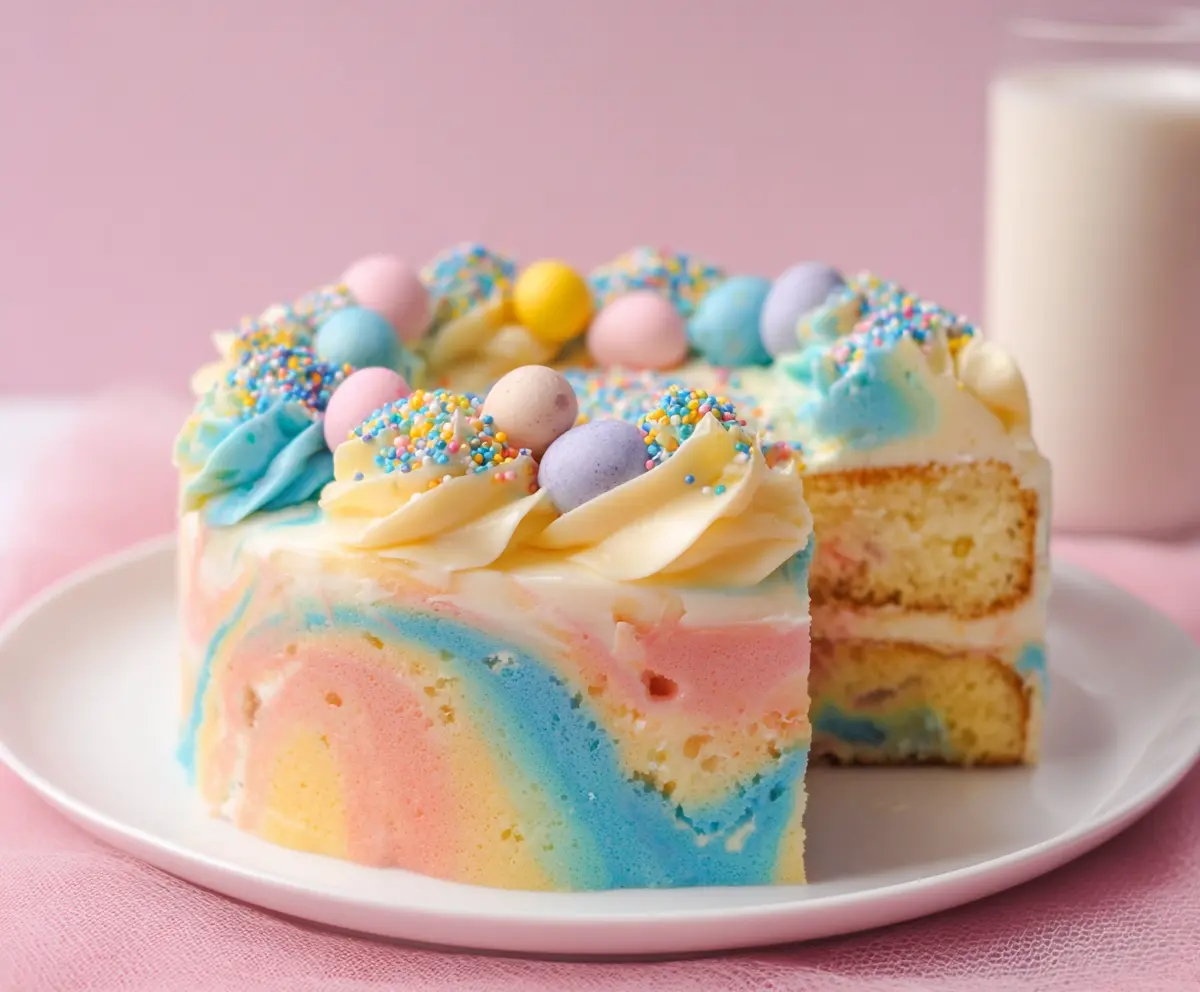
This Swirled Easter Cake is a fun and colorful treat that’s perfect for spring celebrations. With pretty swirls of pastel colors, it’s sure to catch everyone’s eye!
Making this cake feels like a delicious art project! I love how it brightens up the table during Easter. Plus, who can resist a slice of cake that looks this cheerful? 🐣🎂
Key Ingredients & Substitutions
All-Purpose Flour: This flour is key to a fluffy cake. If you want to make it gluten-free, you can try a 1:1 gluten-free flour blend, which works well for cakes.
Unsalted Butter: Butter adds richness and moisture. If you are dairy-free, consider using vegan butter or coconut oil for a similar texture and flavor.
Sugar: Granulated sugar helps the cake rise and adds sweetness. You can replace it with coconut sugar for a more natural option, but keep in mind it might change the color slightly.
Food Coloring: Pastel colors make the cake festive! If you want to avoid artificial dyes, natural food colorings from beets, spirulina, or turmeric work well, but the shades may vary.
Heavy Cream or Milk: This helps achieve a smooth frosting. You can use almond milk or oat milk as a lighter alternative, but it may make the frosting less rich.
How Do You Get the Swirling Effect Just Right?
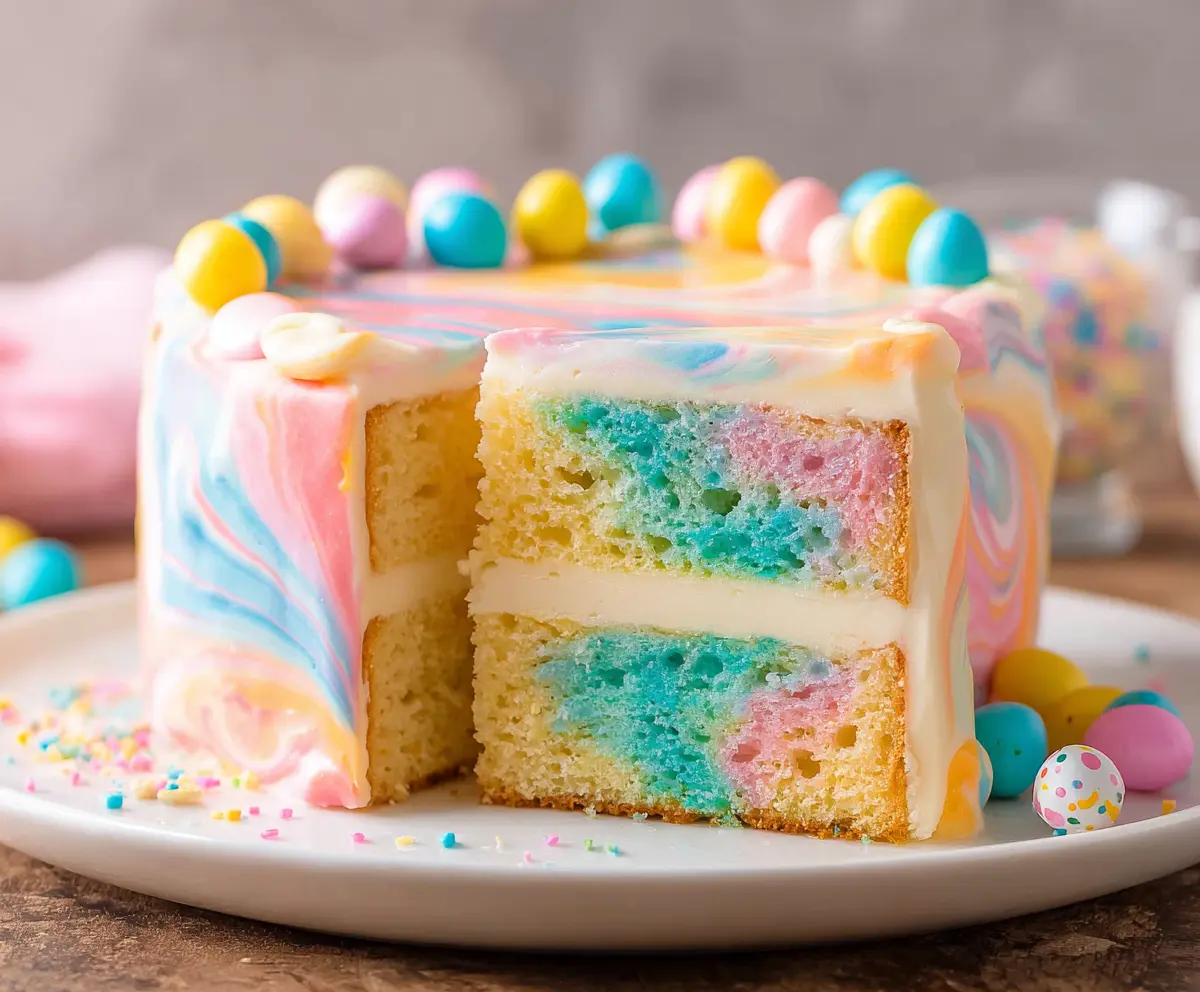
Creating those beautiful swirls is all about technique. Start adding dollops of each colored batter carefully in the cake pan. The fun part is how you mix them! Here’s how:
- Use a spoon to drop spoonfuls of each color alternately.
- Once you have layers, take a skewer or a knife and gently swirl through the batter. Aim for a few deep swirls, but don’t mix too much— you want to see the colors!
- Less is more here; overmixing could blend the colors into one.
Remember to have fun with it! Each cake will turn out unique, just like a work of art.
How to Make a Swirled Easter Cake
Ingredients You’ll Need:
For the Cake:
- 2 1/2 cups (320g) all-purpose flour
- 2 1/2 tsp baking powder
- 1/2 tsp salt
- 1 cup (225g) unsalted butter, softened
- 1 1/2 cups (300g) granulated sugar
- 4 large eggs
- 1 tbsp vanilla extract
- 1 cup (240ml) whole milk
- Food coloring (pink, blue, yellow)
For the Buttercream Frosting:
- 1 cup (225g) unsalted butter, softened
- 4 cups (480g) powdered sugar, sifted
- 2-3 tbsp heavy cream or milk
- 1 tsp vanilla extract
- Food coloring (light blue and pale yellow, optional for swirls)
For Decoration:
- Mini candy eggs in pastel colors
- Colorful round sprinkles
How Much Time Will You Need?
This delightful Swirled Easter Cake will take about 20 minutes of prep time and around 30 minutes of baking time. After baking, allow the cakes to cool completely before assembling, which may take an additional 30-60 minutes. Overall, you should set aside about 2 hours to create this festive treat!
Step-by-Step Instructions:
1. Prepare the Cake Batter:
First, preheat your oven to 350°F (175°C). Grab two 8-inch round cake pans and grease and flour them so the cake doesn’t stick. In a medium bowl, whisk together the all-purpose flour, baking powder, and salt. Set this bowl aside for a moment.
In a large bowl, use an electric mixer to beat the softened butter and granulated sugar together on medium speed until the mixture is light and fluffy (this should take about 3-4 minutes). Next, add the eggs one at a time, making sure to mix well after each addition. Then, mix in the vanilla extract. Now, start adding the flour mixture and the milk alternately into the butter mixture, beginning and ending with the dry ingredients. Mix until just combined, being gentle not to overmix.
2. Color the Batter:
Now it’s time to make your batter colorful! Divide the cake batter evenly into three different bowls. Add a few drops of pink food coloring to one bowl, blue to another, and yellow to the third. Gently stir each bowl until the colors are nicely distributed throughout the batter.
3. Create the Swirls:
In each prepared cake pan, spoon dollops of each colored batter in a random but alternating pattern, creating a beautiful swirled look. You can use a skewer or a knife to gently swirl the colors a bit for a marbled effect—just be careful not to overmix! Now, pop the cake pans into the oven and bake for 25-30 minutes. You’ll know they’re done when a toothpick inserted in the center comes out clean. Let the cakes cool in the pans for about 10 minutes before transferring them to wire racks to cool completely.
4. Make the Buttercream Frosting:
In a clean large bowl, beat the softened butter with an electric mixer until it’s creamy. Gradually add in the sifted powdered sugar, mixing on low speed to start so you don’t make a sugary cloud! Once the sugar is mixed in, turn up the speed and beat until the frosting is fluffy. Stir in the vanilla extract and 2 tablespoons of heavy cream or milk. Beat well, and if your frosting is too thick, you can add a bit more cream until it reaches a nice spreading consistency. Optionally, you can divide your frosting into two parts and add light blue and pale yellow food coloring to create more swirls on top of the cake.
5. Assemble the Cake:
Time to put it all together! Place one of your cooled cake layers on a serving plate. Spread a generous layer of your buttercream frosting on top of that layer. Then, carefully place the second cake layer on top. It’s time to crumb coat the entire cake with a thin layer of frosting to catch any crumbs. Once that’s done, chill the cake in the fridge for about 20 minutes. After chilling, apply a final, thicker layer of frosting all over the cake for a smooth finish. If you’d like, use a piping bag fitted with a star tip to pipe swirled rosettes around the top edge of the cake, alternating between the colored and basic frosting.
6. Decorate:
Let’s make your cake extra festive! Sprinkle the piped frosting rosettes with colorful round sprinkles. Find those mini pastel candy eggs and nestle them on top of the rosettes for a perfect Easter touch!
7. Serve:
Allow your beautiful cake to come to room temperature before slicing to ensure the best flavor and texture. Then, slice and enjoy this festive swirled Easter cake with a glass of milk or your favorite drink. Happy Easter!
This bright, colorful cake with swirled pastel batter, creamy buttercream frosting, and Easter-themed decorations is perfect for celebrating the holiday!
Can I Use Margarine Instead of Butter?
Yes, you can substitute margarine for unsalted butter in the cake and frosting. Just keep in mind that margarine might alter the flavor slightly, and be sure to choose a stick margarine for a similar texture.
What If I Don’t Have Heavy Cream?
No worries! If you don’t have heavy cream, you can use milk instead. Just remember that the frosting may be slightly less rich but will still be delicious!
How Do I Store Leftovers?
Store any leftover cake in an airtight container at room temperature for up to 3 days, or refrigerate it for up to a week. Ensure it’s well-wrapped to keep it moist and fresh!
Can I Make This Cake Gluten-Free?
Absolutely! You can use a 1:1 gluten-free all-purpose flour blend, which should work perfectly for the cake. Check that your baking powder is also gluten-free if that’s a concern!