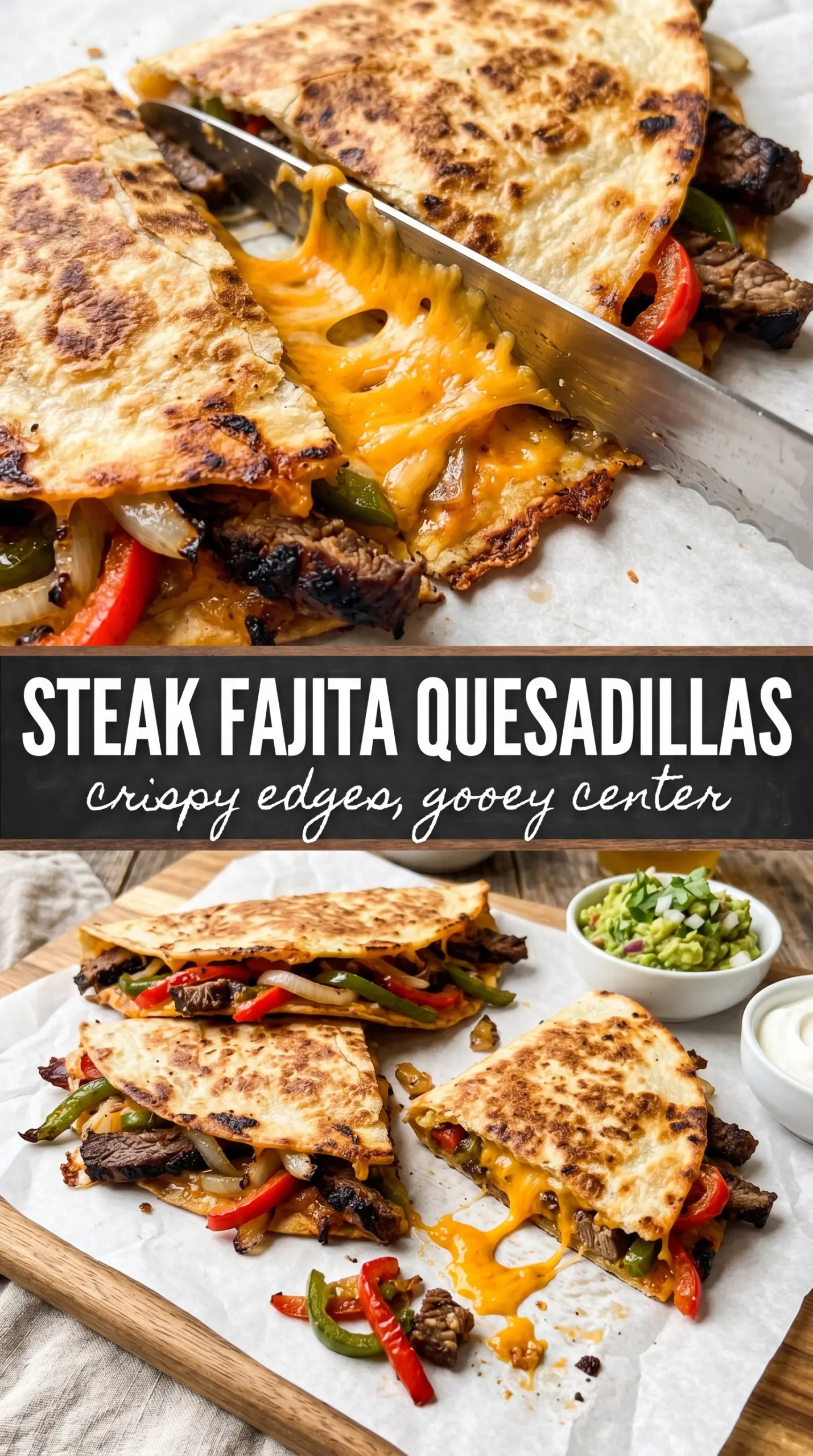
Steak fajita quesadillas hit that sweet spot between fast weeknight dinner and restaurant-style comfort food. The tortillas turn crisp and deeply golden while the cheese melts into the steak and peppers, holding everything together without turning soggy. Every bite gives you charred beef, sweet onions, and just enough lime to keep it bright.
What makes this version work is the way the steak and vegetables are cooked separately before they ever meet the tortilla. The steak gets a hard sear in batches, which keeps it browned instead of steaming, and the peppers and onions soften in the same skillet so they pick up all those browned bits. Using Oaxaca or mozzarella gives you the stretch you want without overpowering the fajita seasoning, and warming the tortillas first helps them fold without cracking.
Below, I’ll walk through the part that matters most: how to get a crisp tortilla without losing the filling to the pan. I’ve also included a few swaps and storage notes so you can make these work with what you have on hand.
The steak stayed tender, the peppers had a little char, and the tortillas got perfectly crisp without falling apart. I made these on a Tuesday and my husband asked if I could put them on repeat.
Save these steak fajita quesadillas for the night you want charred beef, melty cheese, and a crisp tortilla in under 30 minutes.
The Fastest Way to Keep the Steak Tender and the Tortillas Crisp
The mistake that ruins steak quesadillas is crowding the pan. If the steak goes in all at once, it steams, loses its sear, and can turn chewy before it ever reaches the tortilla. Cooking it in batches over high heat gives you browned edges and keeps the slices juicy.
The other trap is assembling everything while the filling is still wet. The peppers and onions need to cook until the moisture cooks off and the pan starts catching again at the edges. That little bit of char matters here because it keeps the filling savory instead of watery, which is what lets the quesadilla crisp cleanly in the skillet.
- High heat for the steak — You want a fast sear, not a slow cook. Thin flank steak cooks quickly, so leave it alone long enough to brown before stirring.
- Separate cooking for the vegetables — They need their own time to soften and pick up color. If they’re tossed in too early with the steak, the pan cools down and everything steams.
- Lime juice at the end of the vegetable cook — It wakes up the peppers and onion without dulling the char. Add it after the vegetables are softened so it doesn’t evaporate before you taste it.
- Warm tortillas before folding — Cold tortillas crack, especially once they’re filled. A quick warm-up makes them pliable and easier to press into a neat half-moon.
What the Cheese, Tortilla, and Steak Each Need to Do Here
- Flank steak — This cut gives you the best balance of flavor and quick cooking. Slice it thinly across the grain so it stays tender; if you cut with the grain, it’ll eat stringy no matter how well you sear it.
- Oaxaca or mozzarella cheese — Oaxaca melts with a lovely stretch and a mild milky flavor. Mozzarella is the easiest substitute and works well, but choose low-moisture shredded mozzarella if you want the tortillas to crisp instead of turning slick.
- Bell peppers and onion — These aren’t just filler. They bring sweetness and juiciness, and when they char a little, they taste like proper fajita filling instead of plain sautéed vegetables.
- Flour tortillas — Flour tortillas hold up better than corn tortillas for this kind of folded, pan-fried quesadilla. Use the burrito-size style if yours are small; you want enough surface area to hold the filling without overstuffing.
- Lime juice — Fresh is best here. Bottled lime juice can work in a pinch, but the fresh stuff gives a cleaner finish that cuts through the cheese and steak.
Building the Filling So Nothing Turns Soggy
Season and Sear the Steak First
Toss the sliced steak with salt, pepper, chili powder, and cumin until every piece is coated. The skillet needs to be hot enough that the meat hisses the moment it hits the pan. Cook in batches and let each side develop a deep brown crust before turning it. If the pan looks crowded or wet, pull some steak out and keep going in rounds.
Cook the Peppers and Onion Until the Pan Catches Again
Add the remaining oil and spread the peppers and onion into the skillet. At first they’ll release moisture, but keep cooking until that liquid cooks off and you see charred spots on the edges. That’s the point where they taste like fajita filling instead of plain vegetables. Stir in the lime juice at the end and let it sizzle off for a few seconds.
Assemble and Toast in Layers
Lay the filling on one half of each tortilla in this order: cheese first, then steak, then peppers and onion, then a little more cheese if you want extra glue. The cheese on both sides of the filling helps hold everything together as it melts. Fold the tortilla and cook over medium-high heat until the outside is crisp and spotty brown, about 2 minutes per side. Press lightly with a spatula, but don’t flatten it so hard that the filling squishes out.
How to Adapt These Quesadillas for Different Nights
Use chicken instead of steak
Thin-sliced chicken breast or thigh works well if you cook it the same way in batches over high heat. You’ll lose the deeper beefy flavor, but you’ll still get the smoky fajita seasoning, melted cheese, and crisp tortilla.
Make it dairy-free
Use a dairy-free melting cheese that’s meant for quesadillas or grilled sandwiches. The texture won’t stretch quite like Oaxaca cheese, but it still helps bind the filling and gives you that hand-held finish.
Use gluten-free tortillas
A sturdy gluten-free flour-style tortilla is the best swap here. Warm it before folding and handle it gently, since gluten-free tortillas are more likely to crack if they’re cold or overfilled.
Make the filling ahead
Cook the steak and vegetables up to 2 days ahead and store them separately from the tortillas. Reheat the filling before assembling so the cheese melts quickly and the tortilla doesn’t sit over a cold center.
Storage and Reheating
- Refrigerator: Store leftovers in an airtight container for up to 3 days. The tortillas soften a bit, but the flavor stays strong.
- Freezer: Freeze the cooked filling, not the assembled quesadillas, for up to 2 months. Tortillas lose their best texture after freezing and thawing once they’ve been crisped.
- Reheating: Reheat in a dry skillet over medium heat until the outside crisps back up and the cheese loosens again. The microwave works in a pinch, but it turns the tortilla soft instead of giving you that toasted edge.
Questions I Get Asked About This Recipe
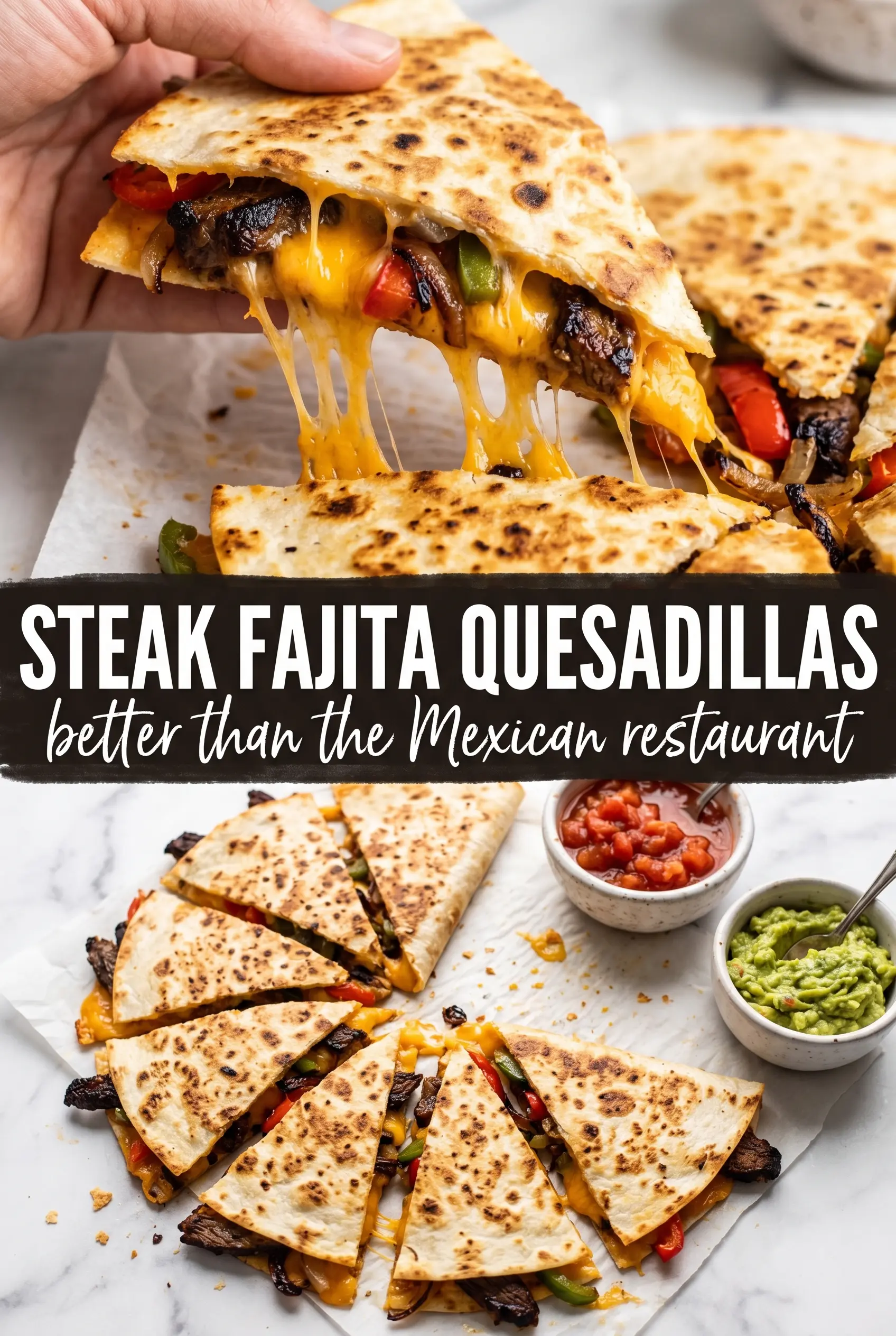
Steak Fajita Quesadillas
Ingredients
Equipment
Method
- Season the sliced flank steak with salt, black pepper, chili powder, and cumin until evenly coated. Let it sit while you heat the skillet.
- Heat 1 tablespoon of olive oil in a large skillet over high heat. Cook the steak in batches until charred, about 3 minutes per side, then remove and set aside.
- In the same skillet, heat the remaining olive oil over high heat. Sauté the bell peppers and onion until softened and charred, about 8 minutes.
- Add the lime juice to the peppers and onion in the skillet, stirring to coat. Cook for 30 seconds to meld flavors, then turn off the heat.
- Warm the flour tortillas in the skillet or over a dry heat until pliable, about 20 to 30 seconds per side. Keep them covered so they don’t dry out.
- Fill each tortilla with shredded Oaxaca or mozzarella cheese, steak, and the pepper mixture. Fold in half.
- Cook the folded quesadillas in the skillet over medium-high heat until golden and the cheese melts, about 2 minutes per side. Transfer to a plate as they finish.
- Serve the quesadillas immediately with sour cream, salsa, cilantro, and lime wedges on the side. Slice the quesadillas in half so the melted cheese and filling are visible.