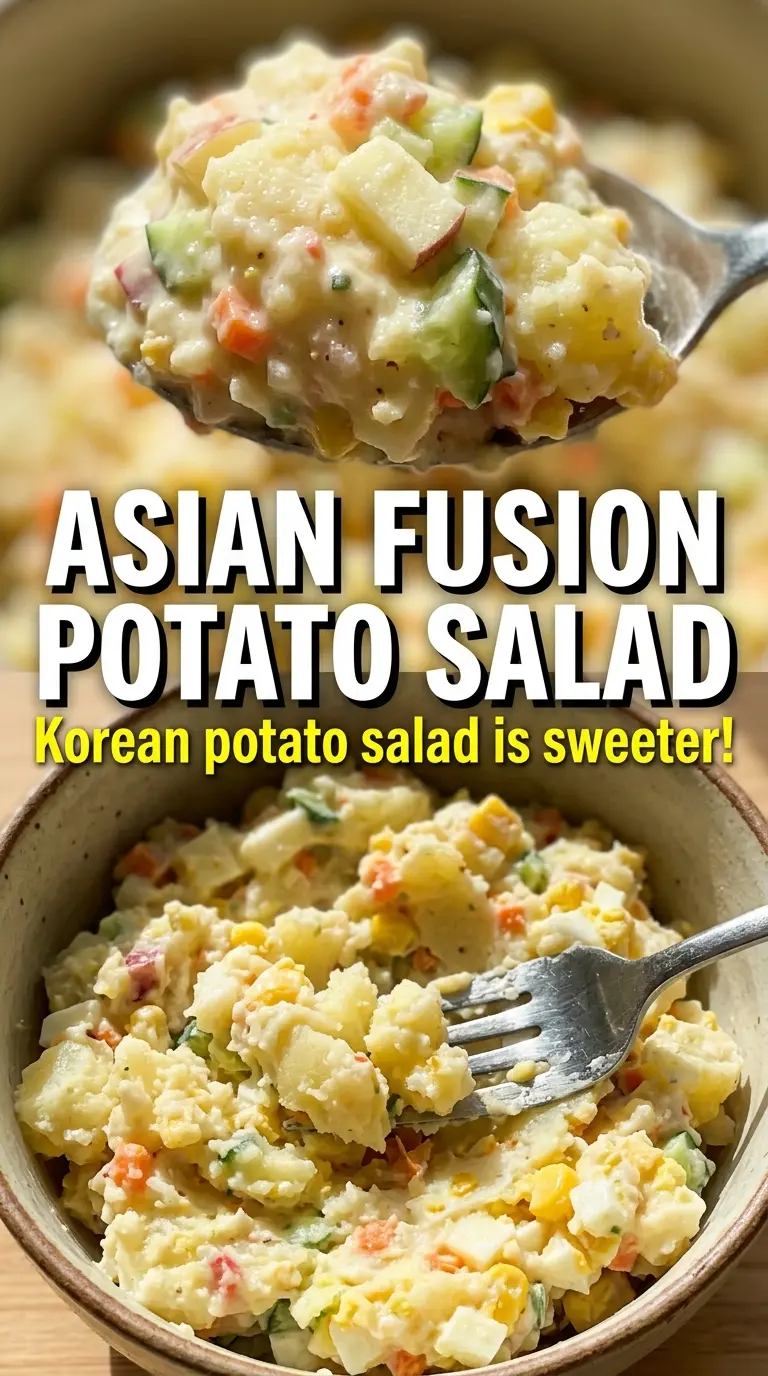
Creamy, lightly sweet Korean potato salad has a softness that makes it feel more like a comfort dish than a typical picnic side. The potatoes stay mashed just enough to catch the dressing, while the cucumber, carrot, and corn bring little bursts of crunch and freshness in every bite. It’s the kind of bowl that disappears fast because it tastes familiar and a little unexpected at the same time.
What makes this version work is the texture contrast. The potatoes need to be cooked until truly tender so they can absorb the dressing instead of staying grainy, and they should be mashed roughly rather than whipped smooth. That loose texture is what lets the mayonnaise, sugar, and rice vinegar cling without turning gluey. Chilling matters too; the flavor settles and the salad firms up into the right scoopable texture after a couple of hours in the fridge.
Below, I’ll walk through the one technique that keeps the salad creamy instead of watery, plus a few smart swaps if you want to adjust the sweetness or make it ahead for a crowd.
The potatoes were mashed just enough to hold the dressing, and after the chill time the salad had that perfect creamy-sweet texture with no watery puddle at the bottom.
Like this creamy Korean potato salad? Save it to Pinterest for the days when you want a chilled side dish with soft potatoes, crisp vegetables, and a sweet-tangy dressing.
The Trick Is Controlling the Potato Texture Before the Dressing Goes In
The biggest mistake with gamja salad is overworking the potatoes. If you mash them all the way smooth, the salad turns dense and pasty instead of soft and fluffy. Leave some small chunks behind. Those bits give the bowl a more relaxed texture and help the dressing settle into the potatoes instead of sitting on top.
Another common problem is watery vegetables. Cucumber needs to be seeded, then diced small, and the carrots should be blanched just long enough to lose their raw edge. If either one goes in too wet, the salad loosens up as it chills. The potatoes also need to cool down a bit before mixing, because a steaming-hot bowl can make the mayonnaise thin out and coat everything unevenly.
What Each Ingredient Is Actually Doing in This Dish
- Russet potatoes — These break down into a fluffy, absorbent base, which is exactly what you want here. Waxy potatoes stay firmer and don’t take on the dressing the same way, so the salad feels heavier and less cohesive.
- Mayonnaise — This gives the salad its creamy body. Use a full-fat mayo for the best texture; lighter versions can make the dressing taste thin once the potatoes are chilled.
- Sugar and rice vinegar — This is the signature Korean-style sweet-tangy balance. The sugar softens the sharpness of the vinegar, and rice vinegar brings a clean finish that doesn’t bully the potatoes the way stronger vinegars can.
- Cucumber — It adds freshness and a crisp bite, but only if it’s seeded first. The seeds hold a lot of water, and skipping that step is the fastest way to end up with a loose salad.
- Corn and carrots — Both add sweetness and color, and they keep the salad from feeling one-note. Blanch the carrots so they stay bright and tender-crisp rather than hard and raw.
- Hard-boiled eggs — They add richness and help the salad eat like a full side dish instead of just potatoes in dressing. Chop them after they’ve cooled completely so the whites stay neat and the yolks don’t smear into the bowl.
Building the Bowl So It Stays Creamy After Chilling
Cooking the Potatoes Until They Collapse Easily
Boil the potatoes until a knife slides through with no resistance at all. If they’re even a little firm in the center, they’ll hold onto a chalky texture after chilling. Drain them well, then let the steam escape for a minute or two so they don’t water down the dressing. A wet potato is the easiest way to end up with a loose, bland salad.
Bringing the Vegetables in Without Losing Their Bite
Blanch the carrots just until they brighten and soften slightly, then drain them immediately. The cucumber should be seeded and diced small so it stays crisp without leaking too much liquid. Combine the vegetables with the potatoes once they’re warm but not hot; that’s the window where everything mixes evenly without turning soft.
Mixing in the Dressing Without Crushing the Salad
Stir together the mayonnaise, sugar, rice vinegar, salt, and pepper before folding it into the potato mixture. That gives you a balanced dressing instead of pockets of sweetness or acid. Fold gently with a spoon or spatula, and stop as soon as everything is coated. If you stir aggressively, the potatoes break down too far and the salad goes past creamy into heavy.
Chilling for the Texture You Actually Want
Refrigerate the salad for at least 2 hours before serving. This is when the flavor settles and the dressing thickens around the potatoes. If you serve it too soon, it tastes flat and a little loose. After chilling, give it one gentle stir and adjust salt if needed, since cold potatoes dull seasoning a bit.
How to Adapt It for a Bigger Crowd or a Different Diet
Dairy-Free Without Losing the Creamy Finish
This recipe is naturally dairy-free as written, so there’s nothing to replace. The creamy texture comes from the mayonnaise and the mashed potatoes, not from milk or butter, which keeps the result rich without changing the ingredient list.
A Less Sweet Version
Cut the sugar back to 1 tablespoon if you want a sharper, more savory salad. You’ll still get the classic Korean balance, but the vinegar will read louder and the bowl will lean more side-dish than dessert-adjacent.
Using Yukon Gold Potatoes Instead of Russets
Yukon Golds will give you a denser, creamier base with a buttery taste, but they won’t absorb the dressing as lightly as russets. If you use them, mash a little more thoroughly and expect a more compact salad.
Storage and Reheating
- Refrigerator: Keep covered for up to 3 days. The potatoes will firm up a little, so give the salad a quick stir before serving.
- Freezer: I don’t recommend freezing it. The potatoes turn mealy and the cucumber releases too much water when thawed.
- Reheating: Serve this chilled or at cool room temperature. Reheating breaks the mayonnaise and ruins the clean texture, so let it sit out for 10 to 15 minutes if it feels too cold.
Answers to the Questions Worth Asking

Korean Potato Salad
Ingredients
Equipment
Method
- Bring a pot of water to a boil, then boil the peeled and cubed russet potatoes until very tender, about 15–20 minutes, until a fork slides in easily. Drain and let the potatoes steam off in the colander for 2 minutes to reduce excess moisture.
- Mash the drained potatoes roughly (not completely smooth) until you have a thick, chunky base. Stop when most large pieces are broken down, leaving some texture for the creamy salad.
- Blanch the diced carrots in boiling water for 2 minutes, then drain well. You should see the carrots brighten slightly while staying tender-crisp.
- Combine the mashed potatoes, blanched carrots, seeded and diced cucumber, corn kernels, and chopped hard-boiled eggs in the pot. Stir until the mix looks evenly distributed with visible colorful pieces.
- Mix the mayonnaise, sugar, rice vinegar, and salt and pepper until smooth and glossy. Taste and adjust salt/pepper so the dressing is tangy-sweet.
- Fold the dressing into the potato mixture until everything is coated, keeping a lumpy, creamy texture rather than fully puréeing. Scrape the bottom and corners so no dry potato remains.
- Refrigerate the salad for at least 2 hours before serving. It should thicken slightly and taste more cohesive after chilling.