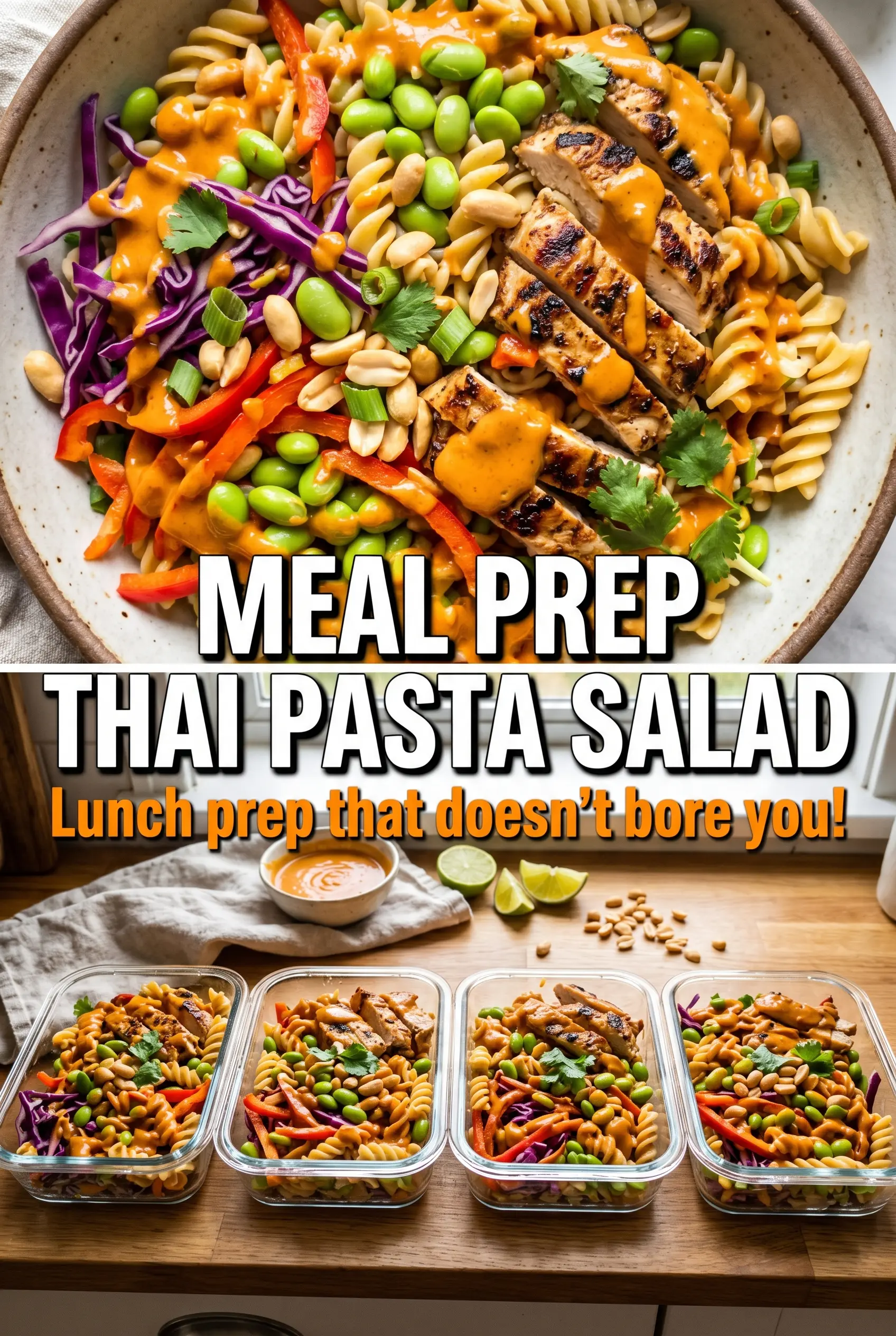
Protein packed Thai pasta salad is the kind of bowl that disappears fast because it eats like a full meal, not a side. The peanut-ginger dressing clings to every ridge of the pasta, the cabbage stays crisp, and the chicken gives it enough staying power that it works for lunch, dinner, or meal prep without feeling heavy.
What makes this version work is balance. Protein pasta can turn soft and sticky if it sits hot too long, so rinsing it cold stops the cooking and keeps the texture firm enough to hold up after chilling. The dressing is built from peanut butter, soy sauce, rice vinegar, honey, ginger, and garlic, which gives you creaminess, salt, acid, and heat all in one bowl. A little water is what turns it from paste into a dressing that actually coats the salad instead of clumping around the noodles.
Below, I’ve included the one resting step that matters most, plus the swaps I use when I want to make this dairy-free, vegetarian, or ahead for the week. If you’ve had pasta salads go dry in the fridge, this version fixes that.
The dressing coated everything evenly and stayed creamy after chilling. I loved that the protein pasta held its shape, and the lime at the end made the whole bowl taste bright instead of heavy.
Love the creamy peanut-ginger dressing and crisp veggie crunch? Save this Thai pasta salad for meal prep lunches that actually taste better after chilling.
The Step That Keeps Protein Pasta from Going Mushy
Protein pasta behaves differently than regular wheat pasta. It can go from pleasantly firm to soft and swollen if it sits in hot water too long, which is why the rinse matters here instead of being an optional extra. Cold water stops the cooking right away and washes off surface starch, so the dressing can cling without turning gummy.
The other trap is dressing the salad while the pasta is still warm. Warm pasta drinks up peanut sauce fast, which sounds helpful until the noodles absorb too much and the whole bowl turns dry after an hour in the fridge. Let the pasta drain well, rinse it cold, and give it a minute to shed excess water before you mix in the vegetables.
What Each Ingredient Is Actually Doing in This Bowl
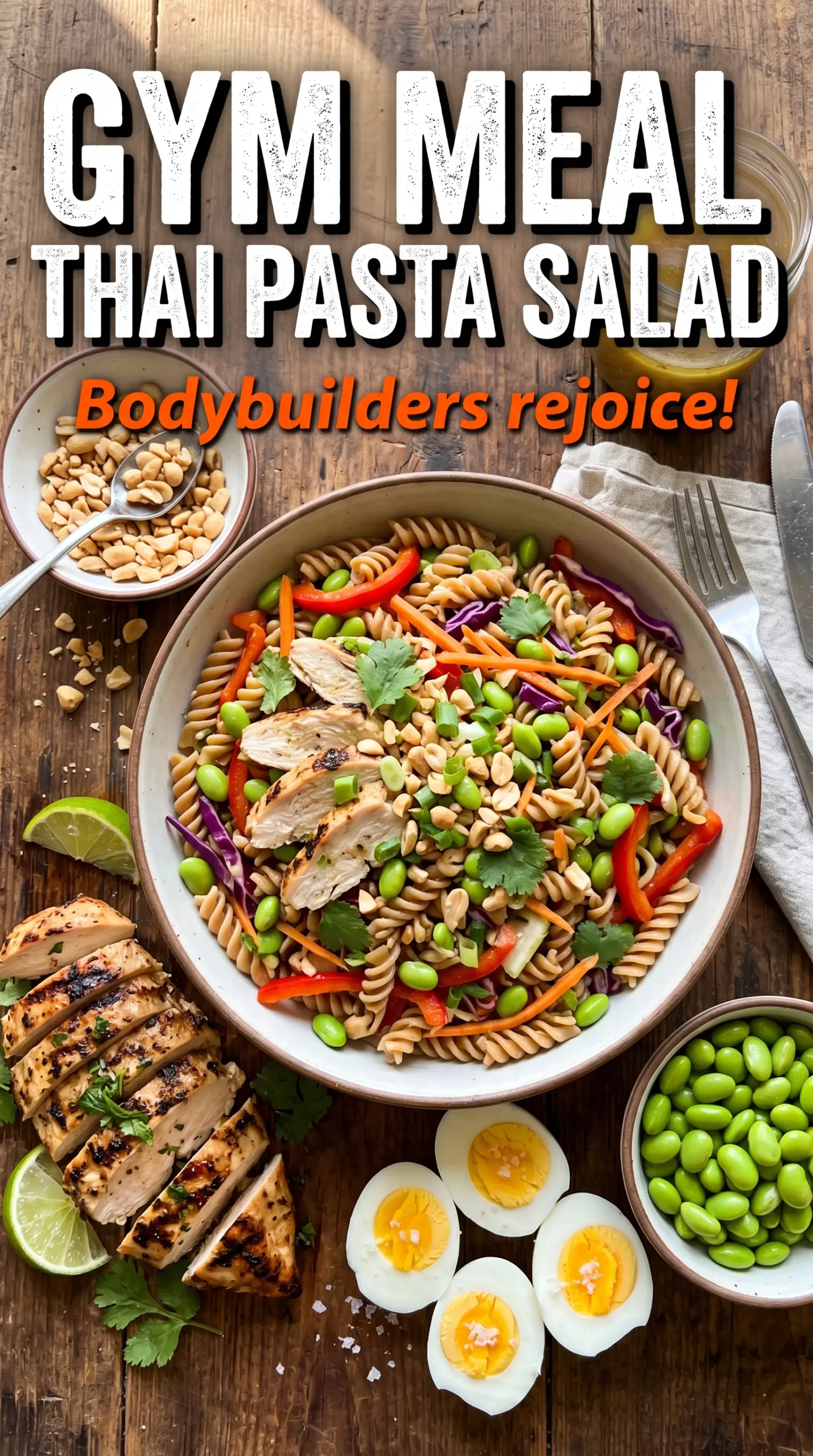
- Protein pasta — Edamame or chickpea pasta gives this salad its staying power. It holds up better than delicate noodles in the fridge, though you still want to cook it just to tender and no further. If you use regular pasta, the salad will be softer and a little less filling.
- Chicken breast — Shredded chicken turns this from a side dish into a full meal. Rotisserie chicken works fine if you need speed; just pull off the skin and chop it into bite-size pieces so it blends into the salad instead of sitting in big chunks.
- Peanut butter — This is the backbone of the dressing, not just a flavor note. Use a smooth peanut butter for the cleanest emulsion; natural peanut butter works too, but stir it well first so the oil doesn’t throw off the texture.
- Rice vinegar and lime — The vinegar builds brightness into the dressing, and the lime wedges at the end keep the whole bowl from tasting flat after chilling. If you skip that acid, the peanut sauce can taste heavy.
- Cabbage, carrots, and bell pepper — These bring crunch, color, and water resistance. They don’t collapse in the fridge the way leafy greens would, which is why this salad still tastes fresh the next day.
- Ginger and garlic — Fresh grated ginger and minced garlic make the dressing taste sharp and alive. Powdered versions can work in a pinch, but the flavor will be duller and less clean.
- Peanuts and cilantro — Add these at the end for texture and a fresh finish. If you stir them in too early, the peanuts soften and the cilantro loses its lift.
Building the Dressing So It Stays Creamy After Chilling
Whisk the Sauce Until It Loosens
Start with the peanut butter, soy sauce, rice vinegar, honey, ginger, and garlic in a bowl. Whisk until the mixture looks thick and grainy, then add water a little at a time until it turns glossy and pourable. If you dump in too much water at once, the dressing can go thin before you notice it, and it’s harder to bring back. You want a sauce that coats the back of a spoon and falls in a slow ribbon.
Coat the Pasta While It’s Cool, Not Wet
Combine the pasta, chicken, cabbage, carrots, and bell pepper in a large bowl, then pour the dressing over the top. Toss until every piece looks lightly glazed. If the pasta is still dripping after rinsing, the dressing will slide off instead of clinging, so let it drain well before you start. A big bowl helps here because crowded ingredients are harder to coat evenly.
Let the Salad Rest Before Serving
Chill the finished salad for at least an hour. That resting time lets the flavors settle together and gives the dressing a chance to sink into the pasta without drying it out. Right before serving, top with crushed peanuts, cilantro, and a squeeze of lime. If it tastes muted after chilling, it usually needs acid, not more salt.
Three Smart Ways to Change This Salad Without Losing What Works
Make it vegetarian with edamame and extra peanuts
Skip the chicken and add shelled edamame for another layer of protein. You’ll still get a filling main dish, and the extra peanuts help replace the savory bite the chicken normally brings. This version eats a little lighter but keeps the same creamy-crunchy balance.
Make it gluten-free with tamari or certified gluten-free soy sauce
The dressing works the same way with tamari, and the rest of the bowl is naturally gluten-free as long as your pasta package says so. Chickpea and edamame pastas usually fit that need, but check the label because some blends add wheat. The flavor stays savory and balanced without changing the texture.
Use rotisserie chicken when you need this fast
Rotisserie chicken saves time and blends right into the salad once it’s shredded. It does bring a little more salt than plain cooked chicken breast, so taste the dressing before serving and add a touch more lime if it needs brightness. This is the best shortcut when you want lunch ready in under 30 minutes.
Thin it with extra lime and water for a looser noodle-salad style
If you want a less rich, more slurpable salad, add a little more water and an extra squeeze of lime to the dressing. That gives you a lighter coating instead of a thick peanut blanket. It works best when you’re serving it right away rather than after a long chill.
Storage and Reheating
- Refrigerator: Keeps well for 3 to 4 days. The vegetables stay crisp, though the pasta will absorb some dressing as it sits.
- Freezer: I don’t recommend freezing this salad. The vegetables lose their crunch and the peanut dressing can separate after thawing.
- Reheating: This is best eaten cold or at cool room temperature. If it feels too thick after chilling, stir in a small splash of water or lime juice instead of heating it, which would soften the vegetables and make the dressing greasy.
Answers to the Questions Worth Asking
Protein Packed Thai Pasta Salad
Ingredients
Equipment
Method
- Cook the protein pasta according to package directions in a Dutch oven until tender. Drain and rinse with cold water until cool to the touch so it won’t keep cooking.
- Whisk peanut butter, soy sauce, rice vinegar, honey, ginger, and garlic in a bowl until smooth. Add water gradually to reach a pourable consistency that lightly coats a spoon.
- Combine pasta, chicken, red cabbage, carrots, and red bell pepper in a large bowl. Toss to distribute vegetables evenly through the pasta.
- Pour the peanut dressing over the salad and toss to coat all ingredients. Refrigerate for at least 1 hour so the dressing clings and flavors meld.
- Top the chilled salad with crushed peanuts and chopped cilantro. Serve with lime wedges for squeezing over each bite.