Pizza on a Blackstone griddle gives you the best parts of a pizzeria pie without waiting for an oven to preheat. The crust picks up a smoky, crisp bottom in just minutes, the cheese melts fast under the dome, and the whole thing lands on the table with those browned, lacy edges that tell you it was cooked hot and fast. It’s the kind of dinner that feels a little more fun than standard homemade pizza, but it still comes together with pantry-friendly ingredients.
The trick is getting the dough cooked on one side before you flip it and dress it. That first side gives the crust enough structure to hold sauce and toppings without going floppy, and the griddle’s direct heat keeps the bottom from steaming. A light hand with flour also matters here; too much and you’ll end up with dry patches instead of a clean, crisp base.
Below, I’m walking through the small details that make griddle pizza work: how hot the surface should be, when to flip, and why the dome does more than just trap heat. If you’ve ever had a homemade pizza turn soggy in the middle, this method fixes that.
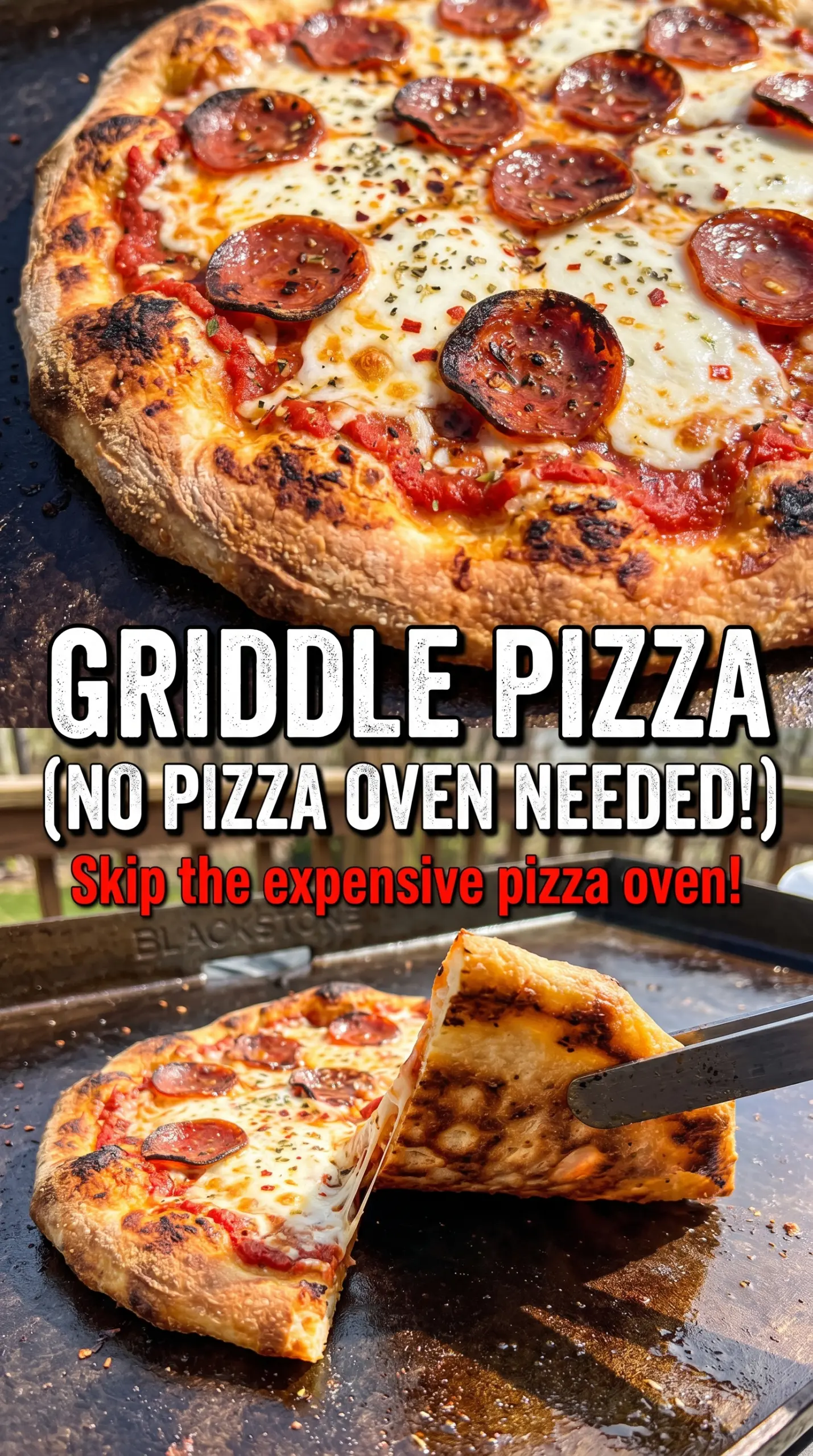
The crust got crisp on the bottom before the cheese was even fully melted, and the dome kept the toppings from drying out. We loved the charred edges and the fact that each pizza cooked in just a few minutes.
Save this Blackstone griddle pizza for crispy crust, melted cheese, and quick outdoor cooking on your next pizza night.
The Flip That Keeps Griddle Pizza from Going Soggy
The biggest mistake with griddle pizza is loading the dough before it has any structure. On a hot Blackstone, the bottom of the crust needs a head start so it can support the sauce and cheese once you flip it. If you skip that first cook, the center softens too fast and the toppings steam the dough instead of melting into it.
Flipping also gives you a cleaner finish on the crust. The first side gets the main contact with the griddle, then the second side takes on the toppings while the dome traps heat from above. That balance is what gives you a crisp base and fully melted cheese at the same time.
- Medium heat — hot enough to brown the dough in a few minutes, but not so hot that the bottom scorches before the cheese melts.
- Oil on the griddle — helps the crust release cleanly and adds a little extra browning on the surface.
- Flour for dusting — keeps the dough from sticking while you stretch it and move it. Use a light dusting; too much flour burns and tastes bitter.
- Dome or large pan — this acts like a lid and creates the trapped heat you need to melt mozzarella quickly without overcooking the crust.
What the Dough, Sauce, and Cheese Are Really Doing Here
- Pizza dough — a standard 1-pound dough works well because it stretches thin without tearing and browns fast on the griddle. If your dough keeps snapping back, let it rest a few minutes before shaping.
- Olive oil — it helps the surface crisp and keeps the dough from sticking. A decent everyday olive oil is fine here; save the fancy finishing oil for the basil at the end.
- Pizza sauce — keep it thick. Thin sauce turns the center soft before the cheese has time to melt, and that’s the fastest way to lose the crisp crust you worked for.
- Mozzarella — shredded mozzarella melts evenly and gives you that stretch. Fresh mozzarella can work, but it holds more moisture, so blot it dry first or the pizza will weep.
- Toppings — use cooked or quick-cooking toppings. Raw vegetables with a lot of moisture, like mushrooms or peppers, should be sliced thin so they soften in the short griddle time.
- Fresh basil and Parmesan — both go on after cooking. Basil turns dark and limp under the dome, and Parmesan adds a salty finish that keeps the whole pizza from tasting flat.
Building the Pizza in the Right Order on the Griddle
Preheating the Surface
Heat the Blackstone to medium and give it time to even out across the cooking surface. A drop of water should dance and evaporate quickly, not sit there and sputter. If the griddle is smoking hard, it’s too hot and the bottom of the dough will color before the inside cooks through.
Stretching and Starting the Crust
Divide the dough into four portions and stretch each one thin with a light dusting of flour. You want a round that feels supple, not paper thin in the center, because the dough will puff and tighten once it hits the heat. Lay it on the oiled griddle and leave it alone until the bottom turns golden and lifts easily, usually 2 to 3 minutes.
Flipping and Topping Fast
Flip the crust with confidence, then move quickly. Spread sauce over the cooked side, add mozzarella, and finish with your toppings while the dough is still hot from the first side. If you linger, the crust starts drying out and the cheese won’t melt evenly.
Melting Under the Dome
Cover the pizza with a dome or large pan to trap the heat. This is the part that finishes the cheese without blasting the crust with direct heat. In 3 to 5 minutes, the mozzarella should be fully melted and glossy, with a few browned spots around the edges if your heat is right.
Finishing and Serving
Pull the pizza off the griddle as soon as the cheese is melted and the crust looks set. Add fresh basil and a shower of Parmesan right before slicing so the herbs stay bright and the cheese doesn’t clump on top of the hot surface. Let it sit for a minute, then cut it while the bottom is still crisp.
How to Make Griddle Pizza Fit the Night You’re Having
Dairy-Free Version
Use a dairy-free mozzarella-style shred that melts well, not a hard block cheese substitute. Some brands brown better than others, but the key is still the dome; without that trapped heat, plant-based cheese tends to sit there and dry out instead of melting smoothly.
Gluten-Free Dough
A gluten-free pizza dough can work on the griddle, but it usually needs a little more care when you flip it because it won’t have the same stretch. Let it cook fully on the first side before moving it, and use a thin metal spatula so you don’t tear the crust.
Meat Lover’s Toppings
Pepperoni, cooked sausage, or chopped bacon all work well here, but they should be cooked before they go on the pizza. The griddle time is short, and raw meats won’t finish in time without overcooking the crust.
Storage and Reheating
- Refrigerator: Leftover pizza keeps well for up to 3 days, though the crust softens a little in the fridge.
- Freezer: It freezes best in slices wrapped tightly and stored flat for up to 2 months. The texture won’t be quite as crisp after freezing, but it’s still worth saving.
- Reheating: Reheat slices in a dry skillet or on the griddle over medium-low heat until the bottom crisps again and the cheese loosens. The oven works too, but avoid the microwave unless you want a chewy crust.
Answers to the Questions Worth Asking

Pizza on a Blackstone Griddle
Ingredients
Equipment
Method
- Heat the Blackstone griddle to medium heat and oil the surface so the first crust browns evenly. Watch for the oil to shimmer lightly before you cook the dough.
- Divide the pizza dough into 4 portions and stretch each into a thin round, dusting with flour as needed to prevent sticking. Keep the rounds thin enough to get crisp spots as they cook.
- Place the dough directly on the griddle and cook for 2-3 minutes until the bottom is golden. Look for bubbles and a deep golden color at the edges.
- Flip the crust and quickly add pizza sauce, mozzarella cheese, and your choice of toppings to the cooked side. Aim to cover the surface without piling so the cheese melts evenly.
- Cover with a dome or large pan and cook for 3-5 minutes until the cheese melts. Use a visual check: the cheese should look fully melted and glossy with lightly charred crust spots.
- Remove the pizza from the griddle and top with fresh basil leaves and grated Parmesan cheese. Slice and serve right away for the best melted-cheese stretch.