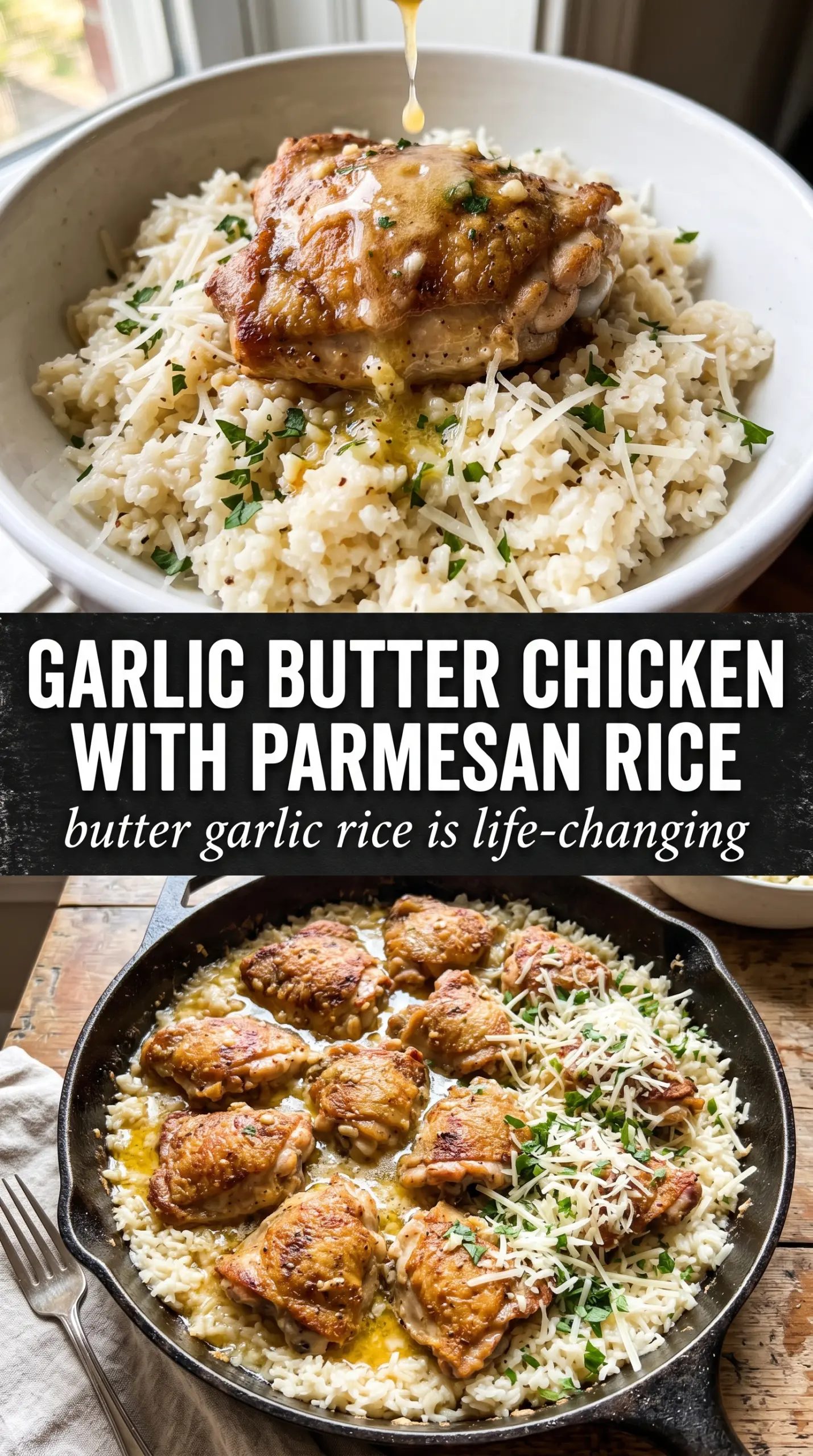
Golden garlic butter chicken over creamy Parmesan rice earns its place in the rotation because every bite gives you both the crisp, seasoned sear from the skillet and the rich, savory rice underneath. The chicken stays juicy, the rice soaks up the pan drippings, and the whole dish lands with the kind of comfort that feels like more work than it actually is.
The trick is building the flavor in layers instead of trying to force it all at the end. Browning the chicken first leaves behind a base of fond that the butter, garlic, and broth can pick up, and toasting the rice before the liquid goes in keeps the grains from turning soft and heavy. Parmesan and cream go in near the end, after the rice has already absorbed the broth, so the sauce turns silky instead of gluey.
Below, I’m walking through the part that matters most: how to keep the chicken from overcooking while the rice turns creamy, plus the small swaps that still give you a dependable dinner when you’re working with what’s in the fridge.
The rice turned out creamy without getting mushy, and the garlic butter on the chicken was perfect with the Parmesan. I liked that the thighs stayed juicy even after going back into the skillet at the end.
Garlic butter chicken with Parmesan rice is the kind of skillet dinner worth saving for the nights when you want creamy rice, juicy chicken, and one pan to clean.
The Part That Keeps the Rice Creamy Instead of Dense
Parmesan rice can go wrong when the cheese and cream are added too early or over heat that’s still too high. That’s how you end up with a grainy sauce on the outside and undercooked rice in the middle. In this version, the broth does the heavy lifting first, then the Parmesan and cream finish the dish after the rice has fully absorbed the liquid.
That order matters. The rice cooks in broth alone, covered and undisturbed, so the grains stay separate and tender. Once the lid comes off, the residual heat is enough to melt the cheese into the rice without turning the sauce tight or sticky.
- Boneless skinless chicken thighs — Thighs stay juicy through the sear and the final return to the pan. Chicken breast works, but it needs less time and dries out faster, so watch the temperature closely.
- Long-grain white rice — This gives you a lighter, more distinct grain than short-grain rice. It holds its shape under the creamy finish instead of collapsing into porridge.
- Parmesan cheese — Grate it fresh if you can. Pre-shredded Parmesan often has anti-caking agents that make the sauce less smooth and a little grainy.
- Heavy cream — This is what turns the rice glossy and spoonable. Half-and-half will work in a pinch, but the sauce will be thinner and less rich.
- Chicken broth — Use a broth you’d drink on its own. The rice absorbs every bit of it, so a weak broth gives you a flat-tasting base no amount of cheese can fully fix.
What Each Ingredient Is Actually Doing in This Baked Chicken
- Chicken breasts (the protein) — Pat dry so they brown instead of steam. Even thickness ensures uniform cooking.
- Sauce or cooking liquid (the moisture keeper) — This prevents the chicken from drying out in the oven. Balance richness with acid.
- Garlic (the aromatic foundation) — Fresh minced garlic mellows and becomes sweet when baked. Don’t brown it or it turns bitter.
- Cream or wine (optional richness) — This adds luxury and moisture. Don’t let it boil hard or it can break and separate.
- Lemon or white wine (the brightness) — Acid prevents heavy sauces from tasting flat. Balance is essential.
- Fresh herbs (basil, thyme, parsley) — Add some during cooking and some after so you get both cooked and fresh flavors.
- Cheese (optional richness) — Parmesan or feta adds depth. Don’t overdo it or the dish becomes heavy.
- Proper oven temperature (375-400°F) — This temperature bakes chicken through without drying the edges. Use a thermometer for 165°F.
Building the Skillet in the Right Order
Searing the Chicken First
Season the thighs well before they hit the pan, then cook them in olive oil over medium-high heat until the surface turns deep golden and releases easily. If you try to move them too soon, they’ll stick and tear; once they’re properly browned, they’ll lift cleanly. Pull them out when they reach 165°F, because they’ll go back into the skillet later and pick up more flavor without overcooking.
Toasting the Garlic and Rice
Melt the butter in the same skillet and cook the garlic for about a minute, just until fragrant. Don’t let it brown hard or it turns bitter fast. Add the rice and stir it through the butter for a couple of minutes until the edges look glossy and a little translucent; that quick toast helps the grains stay fluffy instead of gummy.
Cooking the Rice Low and Steady
Pour in the broth, bring it to a boil, then immediately cover and reduce the heat to low. The pot should stay at a quiet simmer, not a lively bubble. If the heat is too high, the liquid evaporates before the rice tenderizes, which leaves you with a dry bottom and a crunchy center.
Finishing with Cream and Parmesan
Once the rice is tender, stir in the Parmesan, cream, and thyme off the direct heat if the skillet is running hot. The rice should look creamy and loose, not stiff. Return the chicken to the pan and nestle it into the rice so the juices from the meat mix into the sauce instead of running off the top of the dish.
What You Can Change Without Losing the Character of the Dish
Swap chicken thighs for chicken breasts
Chicken breasts work if that’s what you have, but they cook faster and dry out sooner. Cut them into thinner cutlets or reduce the sear time, then pull them as soon as they hit 165°F. You’ll lose a little richness, but the garlic butter and Parmesan still carry the dish.
Make it dairy-free
Use a dairy-free butter and swap the cream for unsweetened oat or cashew cream. You’ll lose some of the classic Parmesan finish, so add a little extra salt and a spoonful of nutritional yeast if you want more savory depth. The rice will still come out creamy, just less sharp and nutty.
Use brown rice for a heartier version
Brown rice needs more broth and a longer simmer, so this isn’t a straight swap. Add about 1/2 cup more liquid and expect the rice to cook closer to 35 to 40 minutes. The texture gets nuttier and firmer, but the finished dish won’t be quite as creamy.
Storage and Reheating
- Refrigerator: Store leftovers in an airtight container for up to 3 days. The rice thickens as it sits, so expect a denser texture the next day.
- Freezer: The chicken freezes fine, but the rice loses some of its creamy finish. Freeze in portions if you need to, then thaw overnight in the fridge before reheating.
- Reheating: Warm it gently on the stovetop or in the microwave with a splash of broth or water. High heat dries out the chicken and tightens the rice, so reheat slowly and stir once or twice to loosen the sauce.
Questions I Get Asked About This Recipe

Garlic Butter Chicken with Parmesan Rice
Ingredients
Equipment
Method
- Season the boneless skinless chicken thighs with salt, pepper, garlic powder, and smoked paprika to taste. Heat olive oil in a large skillet over medium-high heat until shimmering, then sear chicken for 5-6 minutes per side until golden and cooked through to 165°F, and remove to a plate.
- Melt butter in the same skillet, scraping up browned bits. Cook minced garlic for 1 minute, then add long-grain white rice and toast for 2 minutes, stirring until fragrant.
- Pour in chicken broth and bring to a boil. Cover and simmer over low heat for 18 minutes until the rice is tender.
- Stir in Parmesan cheese, heavy cream, and dried thyme until the rice is creamy and saucy. Return the seared chicken to the pan and nestle it into the Parmesan rice.
- Top with fresh parsley for garnish and serve hot.