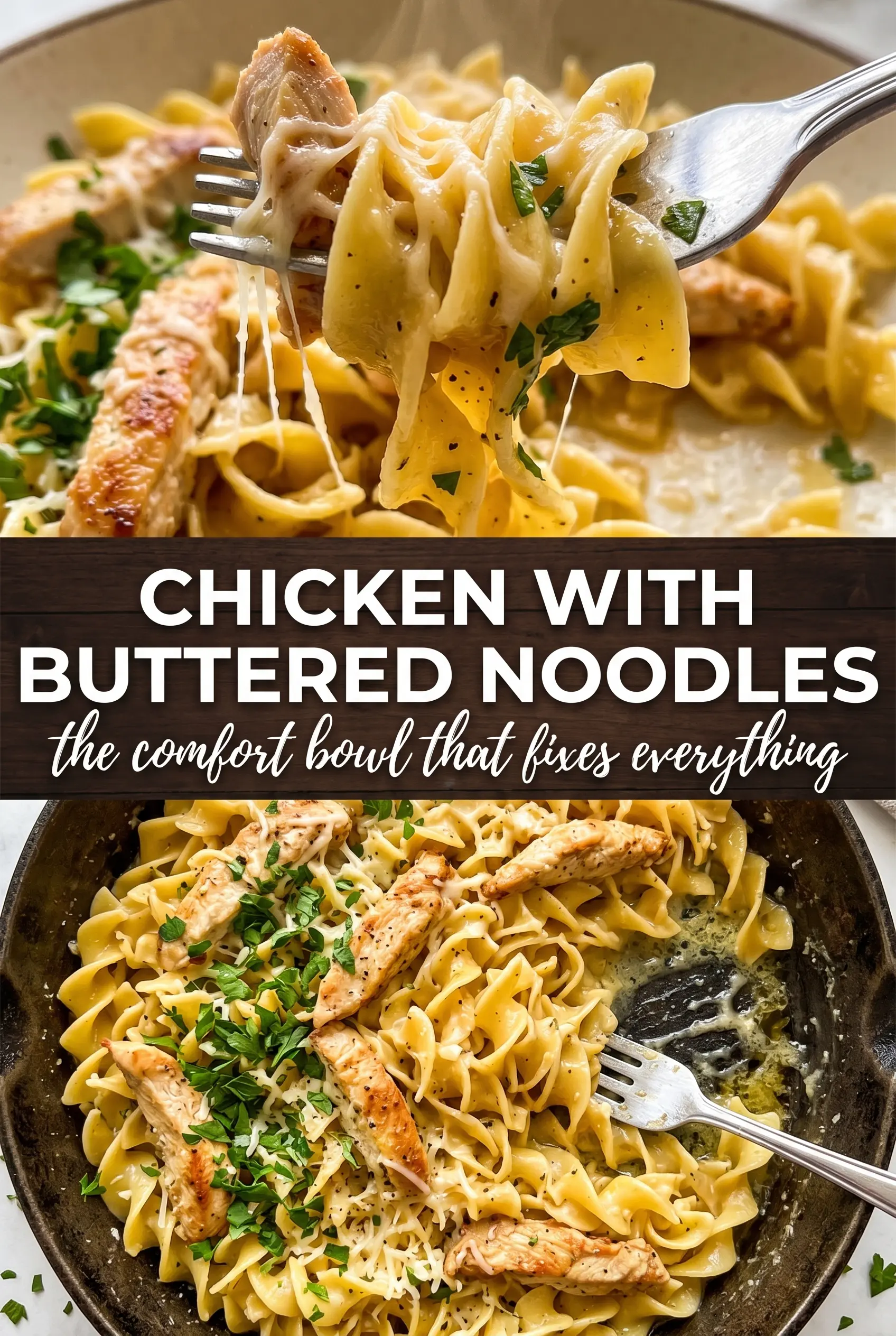
Silky buttered noodles and golden slices of chicken make this one of those dinners that disappears fast and doesn’t need much dressing up to feel complete. The noodles soak up the garlic herb butter until every strand tastes coated, while the chicken stays juicy on the inside with a browned, seasoned crust on the outside. It’s the kind of plate that lands at the table looking simple and still gets a quiet pause before the first bite.
What makes this version work is timing. The chicken gets seared first, then rests while the butter sauce is built in the same skillet, which keeps the browned bits in play instead of washing them away. A little pasta water loosens the noodles just enough to help the butter and Parmesan cling without turning the dish heavy or greasy.
Below, I’ve included the small details that matter here: how to keep the butter sauce from feeling oily, what to do if your noodles look dry, and a few practical variations for nights when you need to stretch the meal or work with what’s already in the kitchen.
The noodles came out glossy instead of greasy, and the garlic butter clung to every strand. I added a splash of pasta water like you said, and the sauce tightened up perfectly when I tossed the chicken back on top.
Like this garlic butter chicken pasta? Save it to Pinterest for the nights when you want tender chicken, glossy noodles, and a fast skillet dinner that feels finished.
The Trick to Keeping the Butter Sauce Glossy, Not Greasy
The biggest mistake with buttered noodles is treating the butter like a heavy sauce base instead of a coating. If the pan is too hot when the noodles go in, the butter separates and pools at the bottom instead of clinging to the pasta. This version stays glossy because the garlic is cooked just until fragrant, the pasta goes in with a little starch still on it, and a splash of reserved water helps everything emulsify in the pan.
- Don’t rush the chicken rest. Slicing it right away sends the juices onto the cutting board instead of keeping them in the meat, which is how chicken turns dry in a dish that should feel tender.
- Use the pasta water for structure. You only need a little, but that starch helps the butter and cheese cling to the noodles instead of sliding off.
- Keep the garlic gentle. Pale gold and fragrant is the goal. If it browns hard, it turns bitter and takes over the whole pan.
What the Chicken, Butter, and Parmesan Are Each Doing
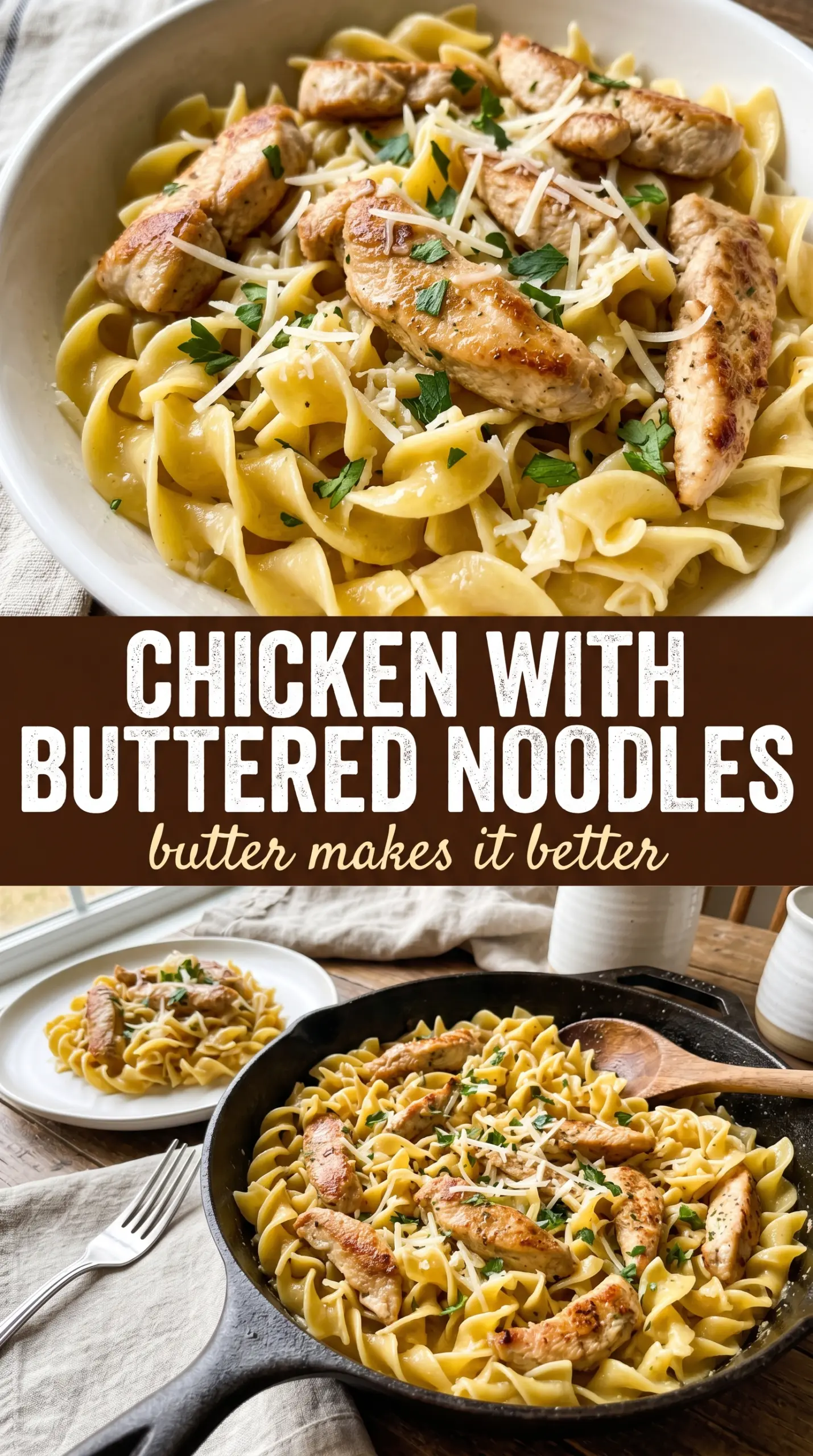
- Chicken breasts give the dish its clean, lean protein and take well to a simple seasoning blend. If you only have chicken thighs, they work too and stay a little juicier, though the finished plate will be richer.
- Egg noodles are the right shape here because they catch the butter in their curves and stay soft without going mushy. Regular pasta works in a pinch, but it won’t feel as plush.
- Butter is the sauce, so use the good stuff if you can. Salted or unsalted both work, but if you use salted butter, ease up on the final seasoning until you taste the noodles.
- Parmesan adds salt and a little body at the end. Grate it fresh if possible so it melts into the noodles instead of sitting in dusty clumps.
- Fresh parsley matters more than it looks like it should. It lifts the butter and garlic so the dish tastes finished instead of flat.
Getting the Chicken Seared Before the Noodles Go In
Seasoning and Browning the Chicken
Coat the chicken evenly with salt, pepper, garlic powder, and Italian seasoning, then lay it into the hot oil without crowding the pan. You want a steady sizzle and a deep golden crust before you flip it; if the pan is too cool, the chicken steams and never gets that flavor on the surface. Cook it until the center reaches 165°F, then let it rest so the juices settle back into the meat.
Building the Garlic Butter Base
Use the same skillet after the chicken comes out. Those browned bits at the bottom dissolve into the butter and give the noodles more depth than plain melted butter ever could. Add the garlic and red pepper flakes over medium heat and cook just until the garlic smells sweet and sharp, not long enough for it to brown.
Tossing the Noodles the Right Way
Add the cooked egg noodles straight into the butter mixture and toss until every strand looks coated. If the noodles seem clumpy or dry, add a spoonful or two of reserved pasta water and keep tossing; the sauce should loosen first, then tighten as the starch settles in. Finish with parsley, black pepper, and Parmesan, then serve right away while the butter still glistens.
Three Useful Ways to Adjust This Dinner
Use chicken thighs for a richer finish
Boneless thighs stay juicier and bring a little more flavor to the plate. They need roughly the same sear time, but watch for a deeper brown color because the extra fat can darken faster than breast meat.
Make it dairy-free without losing the garlic butter feel
Use a good plant-based butter and a dairy-free Parmesan-style topping if you like. The noodles won’t be quite as rich, but the garlic, pasta water, and parsley still carry the dish well, especially if you season a little more boldly at the end.
Stretch it with peas or spinach
Stir in a handful of frozen peas or a few handfuls of baby spinach at the noodle stage. Peas add sweetness and color, while spinach melts into the butter and makes the dish feel a little fuller without changing the core flavor.
Storage and Reheating
- Refrigerator: Store leftovers in an airtight container for up to 3 days. The noodles will firm up as they chill and the butter will set.
- Freezer: I don’t recommend freezing this one. Buttered noodles and sliced chicken both lose their best texture after thawing, and the sauce can turn grainy.
- Reheating: Warm gently in a skillet over low heat with a splash of water or broth, stirring until the noodles loosen again. High heat is the mistake here; it dries out the chicken and can make the butter separate.
Questions I Get Asked About This Recipe
Chicken with Buttered Noodles
Ingredients
Equipment
Method
- Season the chicken breasts with salt, pepper, garlic powder, and Italian seasoning to taste, then add olive oil to a skillet and sear over medium-high heat for 5-6 minutes per side until golden and the internal temperature reaches 165°F. Rest the chicken, slice it into pieces, and set aside.
- Melt the butter in the same skillet over medium heat, then add minced garlic and red pepper flakes and cook for 1-2 minutes until fragrant. Keep the heat at medium to prevent the garlic from browning too fast.
- Add the cooked egg noodles to the garlic butter and toss to coat, adding reserved pasta water a splash at a time as needed for silky coverage. Stir until the sauce clings to every noodle.
- Season with salt and pepper to taste, then stir in the chopped fresh parsley. Turn off the heat and keep the noodles glossy before serving.
- Divide the buttered noodles among plates and top each with the sliced chicken. Scatter Parmesan generously over the top and serve immediately.