Golden, crackly, and sharp with lemon, this chicken comes out with a crust that shatters when you cut into it and stays firmly attached instead of sliding off in one sad sheet. The Pecorino gets nutty and crisp in the oven, while the lemon zest keeps the whole thing bright enough to cut through the richness of the cheese.
The trick is in the balance. Dijon and olive oil give the coating something tacky to cling to, and the panko keeps the Pecorino from turning dense or greasy. Pounding the chicken to an even thickness matters here too, because the crust needs a few minutes to brown without the meat drying out underneath.
Below, I’ve included the small details that keep the coating crisp, plus a few smart swaps if you need to adjust the recipe for what’s in your kitchen.
The crust got deeply golden in 20 minutes and stayed attached all the way through slicing. The lemon and Pecorino together made it taste like something from a restaurant, but it was easy enough for a Tuesday night.
Save this Lemon Pecorino Crusted Chicken for the nights when you want a crisp, citrusy chicken dinner without frying.
The Crunch That Usually Falls Off Starts Here
Most baked crusted chicken fails because the coating is too dry to grip or too wet to brown properly. This version solves both problems at once: Dijon gives the crumbs something sticky to cling to, and the wire rack lets hot air move under the chicken so the bottom doesn’t steam. That means you get an even crust instead of one soggy side and one golden side.
The other mistake is crowding the pan. If the breasts are touching, the escaping moisture softens the crust before it has a chance to set. Give each piece space, and don’t skip the rest after baking; those three minutes let the juices settle so the coating stays intact when you slice.
What the Pecorino and Lemon Zest Are Really Doing
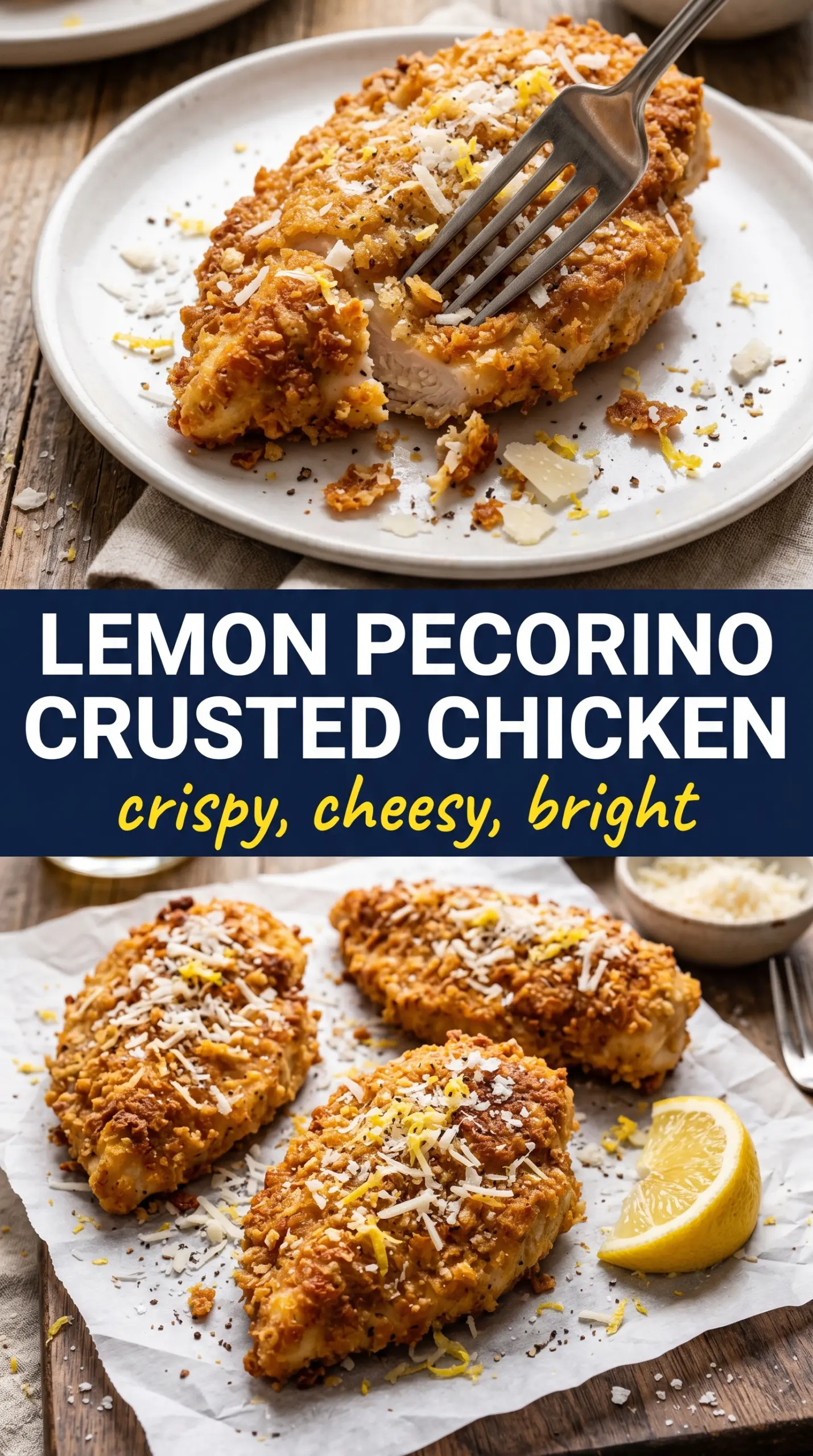
- Pecorino Romano — This is the main event. It’s saltier and sharper than Parmesan, and that intensity survives the oven heat. Freshly grated cheese melts and crisps better than the pre-shredded kind, which usually contains anti-caking agents that can dull the crust.
- Panko breadcrumbs — Panko keeps the coating lighter and crunchier. If you use regular breadcrumbs, the crust will still work, but it will read denser and less shattery.
- Lemon zest — Zest carries the bright citrus flavor without adding extra moisture. Use a fine grater and stop as soon as you hit the white pith, because pith turns bitter fast.
- Dijon mustard — It’s not there for a mustard-forward flavor. It acts like glue and adds a quiet tang that keeps the cheese from tasting flat.
- Olive oil — Just enough to help the mustard spread into a thin, even coat. Too much oil makes the crust greasy instead of crisp, so keep it to the amount listed.
From Coating to Crackling Crust
Preparing the Chicken for Even Browning
Pound the chicken breasts to an even thickness before you season them. Uneven pieces cook unevenly, and the thin ends dry out before the thick center reaches temperature. Season the chicken first so the meat itself tastes good under the crust, not just the topping.
Making the Coating Stick
Brush the Dijon and olive oil mixture over both sides in a thin layer. If it looks thick or patchy, the crumb mixture won’t adhere evenly. Press the Pecorino mixture onto the chicken firmly with your hand so it grips the surface instead of sitting loosely on top. The coating should look packed and textured, not dusty.
Baking Until the Cheese Turns Deep Gold
Set the chicken on a wire rack and bake at 425°F until the crust is deeply golden and the thickest part of the breast hits 165°F. If the top is browning before the center is done, the oven is running hot and the rack is doing its job; don’t lower the heat too early. A pale crust means it needs more time, but once the cheese starts to turn amber, it can go from crisp to bitter fast.
Resting Before You Slice
Give the chicken a short rest before serving. That pause keeps the juices from running out and softening the crust the second it hits the cutting board. Add the basil and lemon wedges at the end so they stay fresh and bright against the salty cheese.
How to Adapt It Without Losing the Crust
Make it gluten-free
Swap the panko for gluten-free panko or crushed gluten-free breadcrumbs. The crust still gets crisp, but gluten-free crumbs can brown a little faster, so watch the last few minutes closely.
Use Parmesan if that’s what you have
Parmesan works in place of Pecorino, but the flavor will be milder and less salty. If you make that swap, add a small extra pinch of salt to the chicken before coating so the crust doesn’t taste flat.
Turn it into cutlets for faster cooking
Slice larger breasts into thinner cutlets or buy cutlets and reduce the bake time a few minutes. You’ll get more crust per bite and a slightly juicier result, but the margin between done and overdone gets narrower, so use a thermometer.
Storage and Reheating
- Refrigerator: Store in an airtight container for up to 3 days. The crust softens a bit, but the flavor stays strong.
- Freezer: Freeze after baking if needed, tightly wrapped and stored for up to 2 months. Reheat from thawed for the best texture; freezing can dull the crispness.
- Reheating: Warm on a wire rack in a 375°F oven until heated through. The oven brings the crust back better than the microwave, which turns the coating soft and can make the cheese greasy.
Answers to the Questions Worth Asking

Lemon Pecorino Crusted Chicken
Ingredients
Equipment
Method
- Preheat the oven to 425°F and line a baking sheet with a wire rack to help the crust stay crisp.
- Season the chicken breasts with salt, pepper, and garlic powder to taste.
- Mix the Dijon mustard with the olive oil and brush over both sides of each chicken breast.
- Combine Pecorino Romano, panko breadcrumbs, lemon zest, fresh parsley, garlic powder, and black pepper.
- Press the crust mixture firmly onto the mustard-coated chicken so it adheres evenly and forms a thick layer.
- Place the chicken on the prepared rack and bake at 425°F for 20-22 minutes, until the crust is golden and the internal temperature reaches 165°F.
- Rest the chicken for 3 minutes to set the crust before slicing and serving.
- Garnish with fresh basil and serve with lemon wedges for extra brightness.