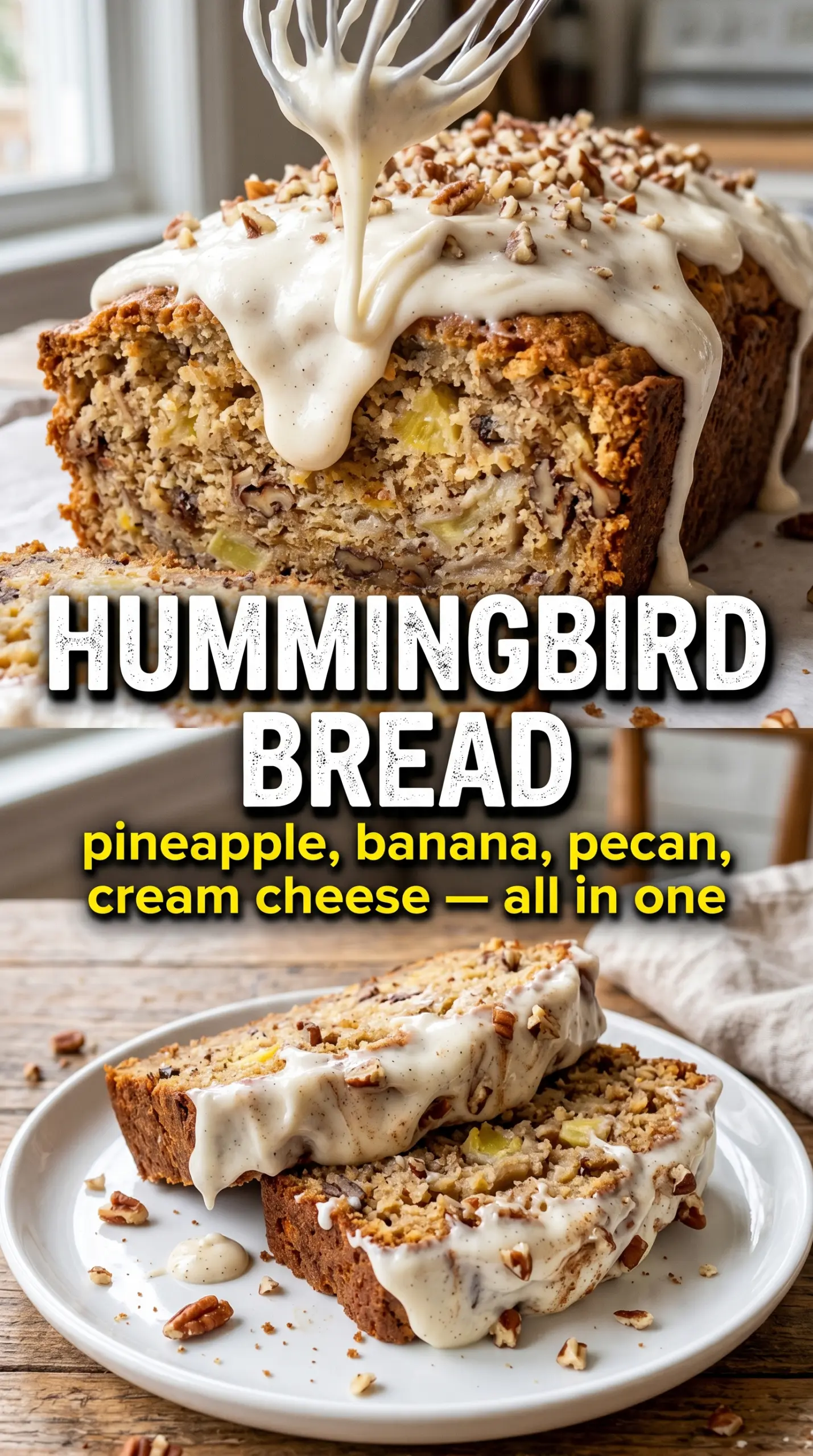
Hummingbird bread lands somewhere between banana bread and cake, with a tender crumb, pockets of sweet pineapple, and toasted pecans in every slice. The loaf stays moist for days without turning heavy, and the cream cheese frosting on top gives it that bakery-style finish that makes people hover near the cutting board for one more slice.
What makes this version work is restraint in the mixing and balance in the batter. The bananas and pineapple bring plenty of moisture, so the dry ingredients only need to be stirred in until the flour disappears. Overmix it and the loaf turns dense; bake it long enough and the center sets into a soft, sliceable crumb instead of collapsing under all that fruit.
Below, I’ve laid out the few details that matter most, from keeping the top from overbrowning to getting the frosting thick enough to spread without sliding off the loaf. The pecans are worth toasting, and I’ll explain why that extra step makes the whole bread taste warmer and more finished.
The loaf baked up so moist and the pineapple flavor came through without being too sweet. I covered it with foil near the end like you suggested and the top stayed golden instead of getting too dark.
Love the tropical banana, pineapple, and pecan combination? Save this Hummingbird Bread for the next time you want a soft quick bread with cream cheese frosting.
The Bake Time Matters More Than the Batter
This loaf has enough moisture from the bananas and pineapple to look done before it actually is. The top can turn a deep golden color while the center still needs time to set, which is why a toothpick test alone can be misleading if it hits a pocket of fruit. The crumb should feel springy when you press the center lightly, and the loaf should pull away from the pan edges in a clean line.
Foil is your friend here if the top is browning too quickly. A loose tent keeps the crust from getting too dark while the middle finishes baking through, and that matters more than chasing a darker top. If you pull it early, the loaf sinks once it cools and the frosting ends up covering a gummy center instead of a tender slice.
- Bananas — Use ripe bananas with plenty of brown spots. They bring sweetness and that familiar banana bread texture, and underripe bananas will make the loaf taste flat.
- Crushed pineapple with juice — Don’t drain it. The juice carries both flavor and moisture, and removing it means the batter dries out and loses the signature hummingbird bread softness.
- Pecans — Toast them before chopping. Untoasted pecans work, but toasted pecans taste deeper and keep the loaf from leaning too sweet.
- Cream cheese — Use full-fat cream cheese for the frosting if you want it to set properly. Reduced-fat versions can be loose and a little grainy once powdered sugar is added.
What Each Ingredient Is Doing in This Loaf
- Vegetable oil — Oil keeps the crumb soft for days in a way butter doesn’t here. That matters because the batter already has fruit and nuts; butter would firm up more as it cools.
- Sugar — It sweetens the bread and helps the crust brown. You can trim it slightly, but cutting too much changes the texture and makes the loaf less cake-like.
- Eggs — They hold the batter together so all that fruit doesn’t collapse the structure. Room-temperature eggs mix in more smoothly and help the loaf rise more evenly.
- All-purpose flour — This gives the bread enough structure without making it stiff. Bread flour would make it too chewy, and cake flour can make it fragile with this much moisture.
- Cinnamon — It adds warmth that ties the banana and pineapple together. You don’t taste a strong spice note; it just rounds everything out.
- Powdered sugar in the frosting — It thickens the cream cheese frosting fast. Add it gradually so the frosting stays smooth instead of turning lumpy.
Mixing the Batter Without Beating the Bread Tough
Start With the Wet Base
Whisk the oil, sugar, eggs, and vanilla until the mixture looks smooth and slightly glossy. That first step gives the sugar a chance to dissolve a bit, which helps the loaf bake with a finer crumb. Stir in the mashed bananas and crushed pineapple with all the juice, and don’t worry if the mixture looks loose — it should.
Fold the Dry Ingredients Just Until They Disappear
Add the flour, baking soda, cinnamon, and salt, then fold gently until there are no dry streaks left. The batter should look thick but scoopable, not whipped or stretchy. If you overmix here, the flour develops too much gluten and the loaf turns tight instead of tender.
Finish With the Pecans and Pan
Fold in the toasted pecans last so they stay intact and don’t sink through a batter that’s been worked too much. Scrape the batter into a greased 9×5 pan and spread it evenly into the corners. Uneven batter in the pan can bake with a domed middle and underdone edges.
Bake, Cool, Then Frost
Bake until the loaf is deeply golden and a toothpick comes out clean from the center, then let it cool completely before frosting. If the bread is warm, the cream cheese frosting softens into a slide instead of staying on top in a thick layer. Once cooled, beat the frosting ingredients until smooth and spread it over the loaf, then finish with more toasted pecans for crunch.
How to Adapt This for Different Kitchens and Different Eaters
Make it dairy-free
Skip the cream cheese frosting or use a dairy-free cream cheese and butter substitute. The loaf itself is already dairy-free, so this is an easy adjustment that keeps the crumb the same while changing only the topping.
Leave off the frosting for a breakfast loaf
The bread stands on its own without frosting if you want something a little less rich for breakfast or snacking. The loaf tastes more banana-forward and the pineapple reads brighter when the tangy topping isn’t there.
Swap the pecans for walnuts
Walnuts bring a slightly sharper, more bitter edge than pecans, which works if you want less sweetness in the final loaf. Toast them the same way so they still bring crunch and aroma.
Bake it as muffins
This batter can be portioned into a muffin tin for quicker baking and easier grab-and-go portions. The texture comes out a little lighter and the bake time drops a lot, so start checking early for set centers and golden tops.
Storage and Reheating
- Refrigerator: Store frosted or unfrosted bread in an airtight container for up to 5 days. The crumb stays moist, but the frosting softens slightly after day one.
- Freezer: Freeze the unfrosted loaf for best texture. Wrap slices or the whole loaf tightly, then thaw overnight in the refrigerator.
- Reheating: Warm individual slices for a few seconds in the microwave or a low oven. If the loaf is frosted, reheat gently only enough to take the chill off, or the frosting will melt into the bread.
Questions I Get Asked About This Recipe
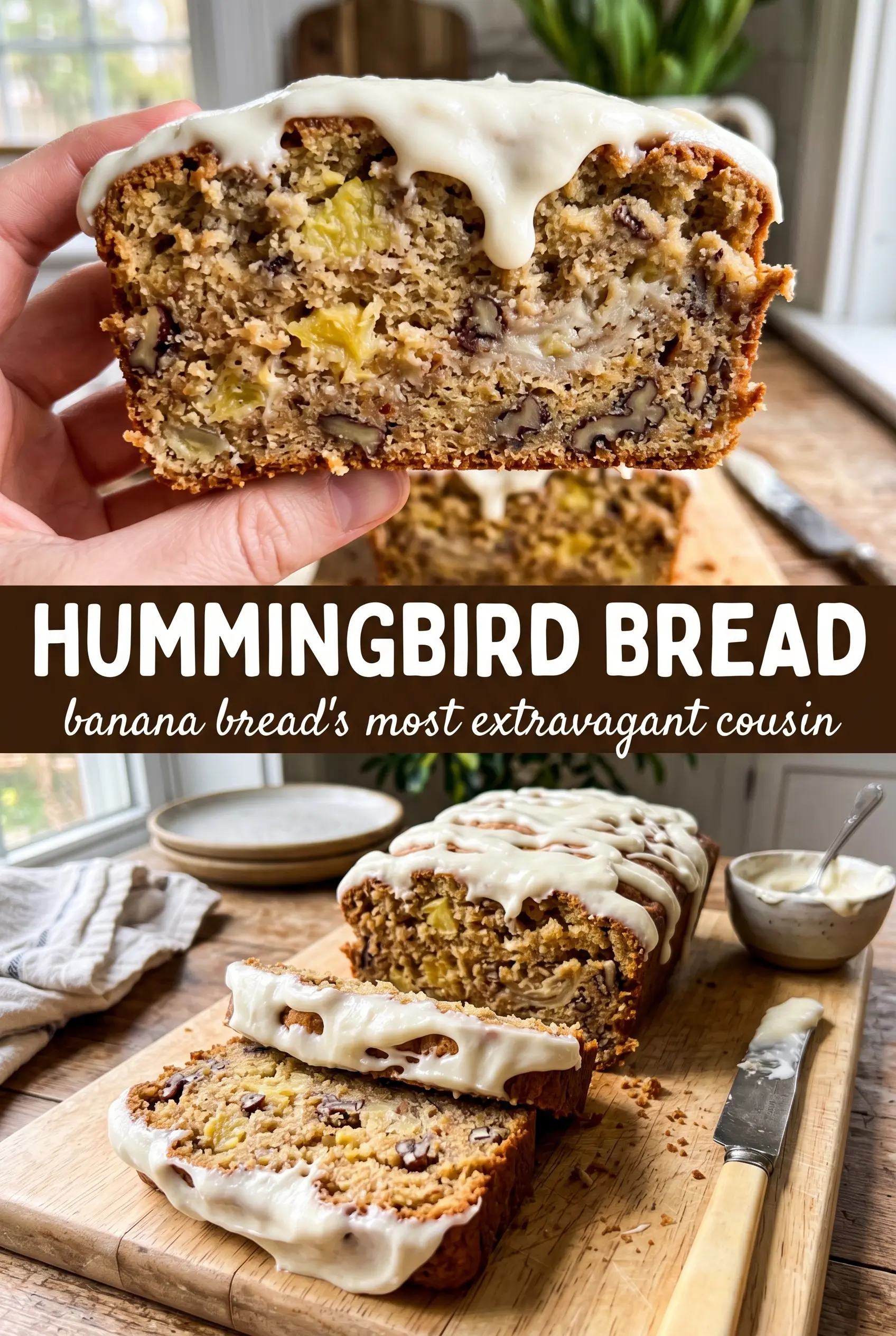
Hummingbird Bread
Ingredients
Equipment
Method
- Preheat the oven to 350°F and grease a 9x5 loaf pan.
- Whisk vegetable oil, sugar, eggs, and vanilla extract together until smooth.
- Stir in mashed bananas and crushed pineapple with all its juice.
- Fold in all-purpose flour, baking soda, cinnamon, and salt until just combined, then fold in toasted chopped pecans.
- Pour the batter into the prepared loaf pan and bake for 60–70 minutes, until deeply golden and a toothpick comes out clean.
- If the top browns too fast during baking, cover the loaf loosely with foil for the remaining time.
- Cool the loaf completely before frosting.
- Beat cream cheese and butter together until smooth and creamy.
- Beat in powdered sugar and vanilla until thick and spreadable.
- Spread the cream cheese frosting over the cooled loaf.
- Top with additional toasted pecans before serving.