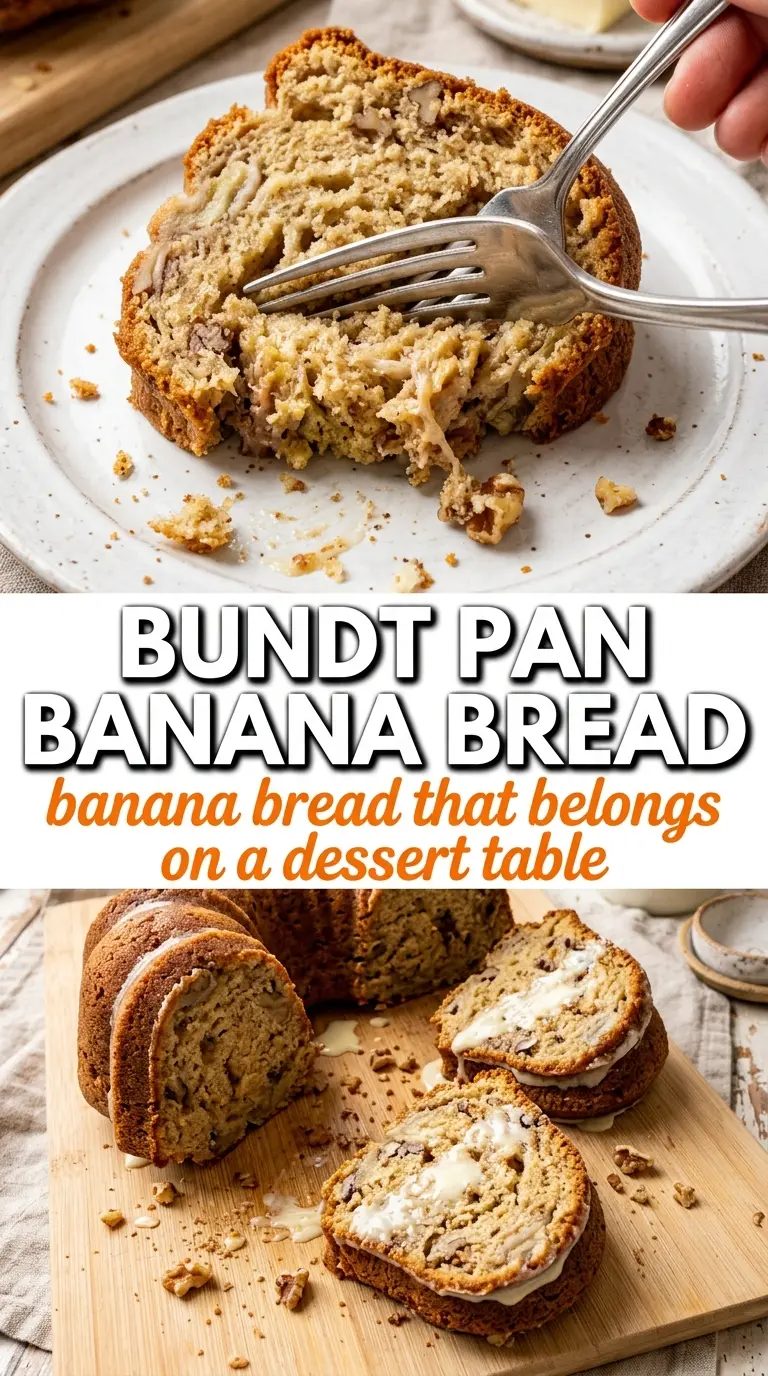
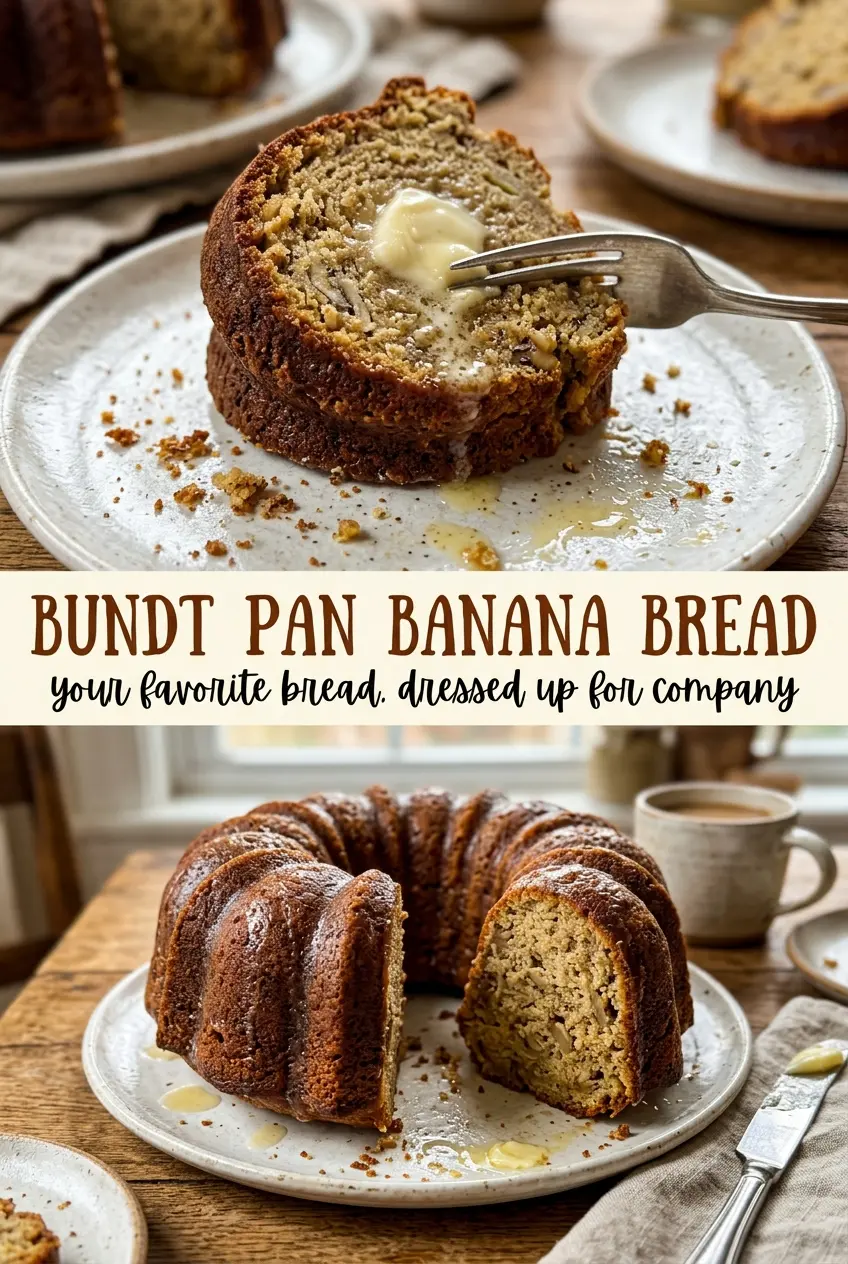
Bundt pan banana bread bakes up with all the comfort of classic banana bread, but the shape changes everything. The ridges give you more golden crust, the center stays tender, and the vanilla glaze settles into every curve so each slice looks bakery-worthy without any extra fuss. It’s the kind of loaf that disappears fast because it feels a little special even though the ingredient list is straight from the pantry.
The real difference here is structure. A bundt pan needs a batter that’s moist enough to stay soft, but not so loose that it bakes up gummy or sticks in the pan. Mashed ripe bananas and sour cream keep the crumb rich, while melted butter makes the loaf flavorful without the extra beating that can toughen quick breads. The cinnamon is quiet in the background, just enough to warm up the banana flavor without turning this into spice bread.
Below, I’ve laid out the part that matters most: how to get the bread out of the pan in one piece, how to know when the center is done, and how to finish it with a glaze that drips cleanly instead of disappearing into the crust.
The crumb was tender all the way through and the glaze actually stayed on the ridges instead of sliding off. I used very ripe bananas and it came out with that deep banana flavor I’ve been trying to get for ages.
Save this bundt pan banana bread for the days when you want a golden loaf with a dramatic glaze and no complicated steps.
The Trick to Getting a Bundt Pan Banana Bread Out in One Piece
A bundt pan is beautiful, but it’s less forgiving than a loaf pan. Every ridge is a place where batter can cling, which means the pan has to be coated thoroughly and the bread has to cool just long enough to release cleanly. If you invert it too soon, the center can tear. If you wait too long, the sugars can glue the crust to the pan.
The other thing people miss is how much the shape changes the bake. A bundt pan exposes more surface area than a standard loaf pan, so the edges brown faster while the middle still needs time. That’s why this batter uses sour cream for moisture and baking soda for lift; the bread rises well without turning dense, and the crumb stays soft even with that deeper crust.
- Grease and flour every curve. Use softened butter or baking spray with flour, then dust the pan and tap out the excess. Missed corners are the reason bundt cakes and breads stick.
- Let the bread rest 15 minutes before turning it out. That short wait lets the structure set so the loaf releases instead of collapsing.
- Look for deep golden edges. The top should spring back lightly, and a toothpick in the thickest part should come out clean or with a few moist crumbs.
- Cool it completely before glazing. Warm bread melts glaze into the crust instead of leaving those nice white ribbons on top.
What Each Ingredient Is Doing in This Dish
The bananas bring moisture and the unmistakable banana flavor, but they also need to be ripe enough to mash almost into a puree. Brown-speckled bananas give you sweetness and depth that under-ripe ones just can’t match. If yours aren’t quite ready, bake them in their peels at 300°F until the skins darken and the flesh softens.
- Melted butter — This adds rich flavor and keeps the batter easy to stir. You can swap in neutral oil if needed, but the bread will taste a little less rounded.
- Sour cream — This is the moisture insurance policy. It keeps the crumb tender and gives the bread enough body to hold the bundt shape without feeling heavy.
- All-purpose flour — Regular flour gives the best balance here. Bread flour would make the loaf tighter, and cake flour would be too delicate for the pan.
- Baking soda — The bananas and sour cream give it the acidity needed to activate the soda. Without it, the bread will bake up flatter and denser.
- Walnuts — Optional, but they add a good contrast against the soft crumb. Toast them first if you want deeper flavor and better crunch.
Building the Batter Without Toughening It
Start With the Wet Ingredients
Whisk the mashed bananas, melted butter, sugar, eggs, and vanilla until the mixture looks smooth and glossy, then stir in the sour cream. Don’t beat it hard enough to aerate it like cake batter; quick bread wants a gentle mix so it stays tender. If the butter is too hot, it can start cooking the eggs, so let it cool a few minutes after melting.
Fold the Dry Ingredients In Last
Add the flour, baking soda, salt, and cinnamon and fold just until you no longer see dry streaks. A few small lumps are fine. Overmixing develops gluten and turns banana bread rubbery, which is especially noticeable once it bakes in a bundt pan with all those exposed edges.
Bake Until the Center Is Set
Pour the batter into the prepared pan and tap it against the counter to release trapped air. Bake until the top is deeply golden and a tester comes out clean from the thickest part, usually 45 to 55 minutes. If the top browns before the center is done, lay a piece of foil loosely over the pan for the last stretch of baking.
Glaze After the Bread Cools
Mix the powdered sugar, milk, and vanilla until the glaze falls in a thick ribbon off a spoon. If it looks too thin, it will disappear into the crust; if it’s too thick, it will sit in clumps instead of dripping cleanly. Spoon it over fully cooled bread and let it settle into the ridges before slicing.
How to Adapt This for Different Pans, Mix-Ins, and Dietary Swaps
Dairy-Free Version
Swap the butter for melted coconut oil or a neutral oil, and use plain dairy-free yogurt in place of the sour cream. The texture stays moist, though the flavor loses a little of the buttery richness. Use an unsweetened yogurt so the loaf doesn’t turn overly sweet.
Gluten-Free Swap
Use a cup-for-cup gluten-free flour blend that already includes xanthan gum. The loaf will be a touch more delicate, so let it cool fully before turning it out. If your blend is very starchy, the crumb may be a little tighter, but the banana flavor still comes through.
Chocolate Chip Banana Bundt
Fold in 3/4 cup mini chocolate chips with the dry ingredients. Mini chips distribute better through the thick batter and won’t sink as much as full-size chips. The finished bread leans sweeter, so the glaze can be thinner or skipped entirely.
Storage and Reheating
- Refrigerator: Store covered for up to 4 days. The crumb stays moist, but the glaze may soften and disappear a bit into the bread.
- Freezer: Freeze slices or the whole loaf, tightly wrapped, for up to 2 months. For best texture, freeze without the glaze and add it after thawing.
- Reheating: Warm individual slices in the microwave for 10 to 15 seconds or in a low oven until just heated through. High heat dries out the edges before the center warms.
Answers to the Questions Worth Asking
Bundt Pan Banana Bread
Ingredients
Equipment
Method
- Preheat the oven to 350°F and thoroughly grease and flour a standard bundt pan so the ridges release cleanly.
- Whisk melted butter, sugar, eggs, and vanilla into the mashed bananas until smooth.
- Stir in the sour cream until the batter looks evenly combined.
- Fold in the all-purpose flour, baking soda, salt, and cinnamon just until no dry streaks remain, then fold in walnuts if using.
- Pour the batter into the bundt pan and tap the pan on the counter 2–3 times to release air bubbles.
- Bake for 45–55 minutes, until a toothpick comes out clean and the top is golden.
- Cool the banana bread in the pan for 15 minutes to firm up the crumb before inverting.
- Invert onto a plate, then drizzle the vanilla glaze over the cooled bread so it runs down every ridge and pools at the base.