Classic zucchini bread earns its place because it stays tender for days and bakes up with that deep, cinnamon-warm aroma that makes the kitchen feel finished before you even slice it. The top turns golden and cracked while the center stays soft and moist, with tiny green flecks that remind you there’s actual zucchini in there doing its job.
The trick is in the balance. Zucchini brings moisture, but it doesn’t bring much flavor on its own, so this loaf leans on cinnamon, nutmeg, and vanilla to carry the personality. The oil keeps the crumb soft in a way butter never quite does here, and the batter comes together fast if you stop mixing as soon as the flour disappears. Overmix it and you’ll lose that tender, bakery-style texture.
Below, I’ll show you why you should not squeeze the zucchini, how to keep the loaf from turning dense, and what to change if you want nuts, no nuts, or a version that freezes cleanly.
I’ve made a lot of zucchini breads over the years, and this one had the best texture by far. The center stayed moist without being gummy, and the crust got that crackly top I always want. My husband grabbed a slice before it even fully cooled.
Save this classic zucchini bread for the days when you want a crackly-topped loaf with a soft, cinnamon-spiced crumb.
The Reason This Loaf Stays Moist Without Turning Heavy
Most zucchini bread goes wrong for one of two reasons: too much flour or too much handling. Flour gets packed into the cup, the batter gets stirred until smooth, and suddenly the loaf bakes up tight instead of tender. This version stays light because the zucchini adds moisture and the batter is folded just until the dry streaks disappear.
The other mistake is squeezing the zucchini dry. That moisture is part of the structure here. It softens the crumb and keeps the loaf from drying out by day two, which is exactly why this bread tastes even better after it rests.
- Zucchini — Grate it on the fine side of a box grater and leave the liquid in. That moisture is what keeps the loaf plush instead of crumbly.
- Vegetable oil — Oil gives this bread a softer, longer-lasting crumb than butter. Melted coconut oil works if you want a little extra flavor, but it should be fully liquid before mixing.
- Cinnamon and nutmeg — These are doing the heavy lifting on flavor. Fresh cinnamon matters more than a pricey zucchini here; the loaf needs warmth, not complexity.
- Walnuts or pecans — Optional, but they add a good crunch against the soft crumb. Toast them first if you want the nut flavor to stand out.
How to Keep the Batter Tender From the First Stir to the Last Slice
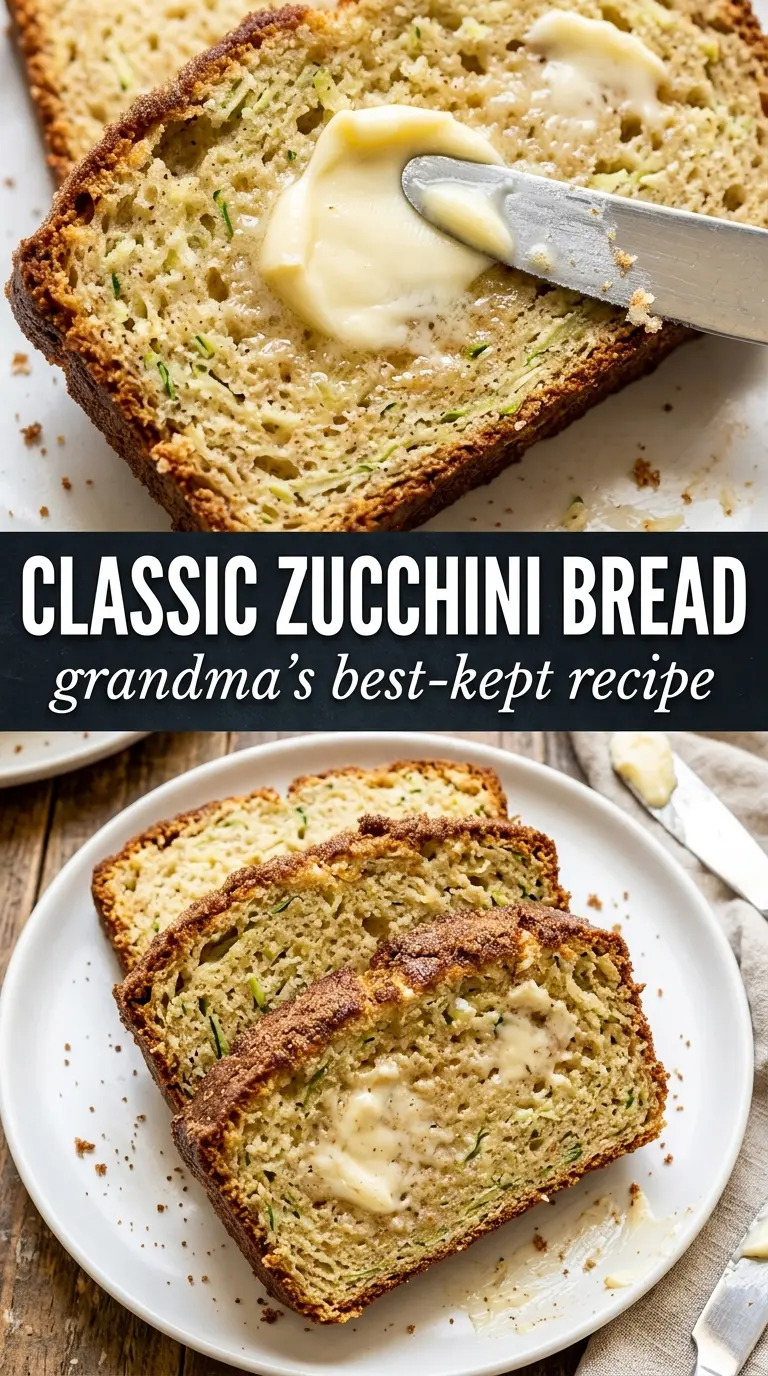
The quickest way to make dense zucchini bread is to beat the batter after the flour goes in. Once the wet and dry ingredients meet, stir only until you no longer see dry flour. A few small streaks are fine; they disappear in the oven.
Mix the Dry Ingredients First
Whisking the flour, baking soda, baking powder, salt, cinnamon, and nutmeg together evenly distributes the leavening and spices, so every slice bakes with the same rise and flavor. If the baking soda clumps, you’ll get uneven pockets that taste flat or bitter. Take a full minute here and break up any lumps with the whisk.
Build the Wet Base Separately
Beat the sugar, oil, eggs, and vanilla until the mixture looks smooth and glossy. That step helps dissolve the sugar a little, which gives the loaf a finer crumb instead of a grainy one. Stir in the zucchini last so it doesn’t release too much liquid before the batter is ready.
Fold, Don’t Whip
Once the dry ingredients go in, use a spatula and fold only until the batter comes together. If you keep mixing, the flour develops gluten and the loaf turns chewy in the wrong way. Add the nuts at the end if you’re using them, and stop as soon as they’re evenly scattered.
Bake Until the Center Springs Back
Two loaf pans bake more evenly than one oversized pan, so the middle sets without the edges drying out. Start checking at the 55-minute mark; the top should be deeply golden, cracked, and firm to the touch, and a toothpick in the center should come out clean or with just a few moist crumbs. If the top browns too fast, lay a loose piece of foil over it for the last 10 minutes.
Make It Nut-Free Without Losing Texture
Leave out the walnuts or pecans and the loaf still bakes up well. You’ll lose a little crunch, but the crumb stays just as tender. If you want a little more structure without nuts, add an extra 1/4 cup of grated zucchini and keep the mixing light.
A Gluten-Free Version That Still Slices Cleanly
Use a 1:1 gluten-free baking flour that includes xanthan gum. The loaf will be a little more delicate when warm, so let it cool fully before slicing. Without that rest, gluten-free quick bread tends to crumble at the knife.
Swap In Melted Coconut Oil for a Dairy-Free Loaf
Melted coconut oil works in place of vegetable oil at a 1:1 ratio. It adds a light coconut note and sets up a little firmer once cooled, which can be nice for cleaner slices. Use refined coconut oil if you don’t want the flavor to come through.
Storage and Reheating
- Refrigerator: Store tightly wrapped for up to 5 days. The crumb actually gets a little more settled by day two.
- Freezer: Freeze whole or sliced, wrapped well and tucked in a freezer bag, for up to 3 months. Slices thaw faster and are easier to grab one at a time.
- Reheating: Warm slices at 300°F for about 8 minutes or toast them lightly. Don’t blast them in the microwave too long or they’ll turn rubbery and damp on the outside.
Questions I Get Asked About This Recipe
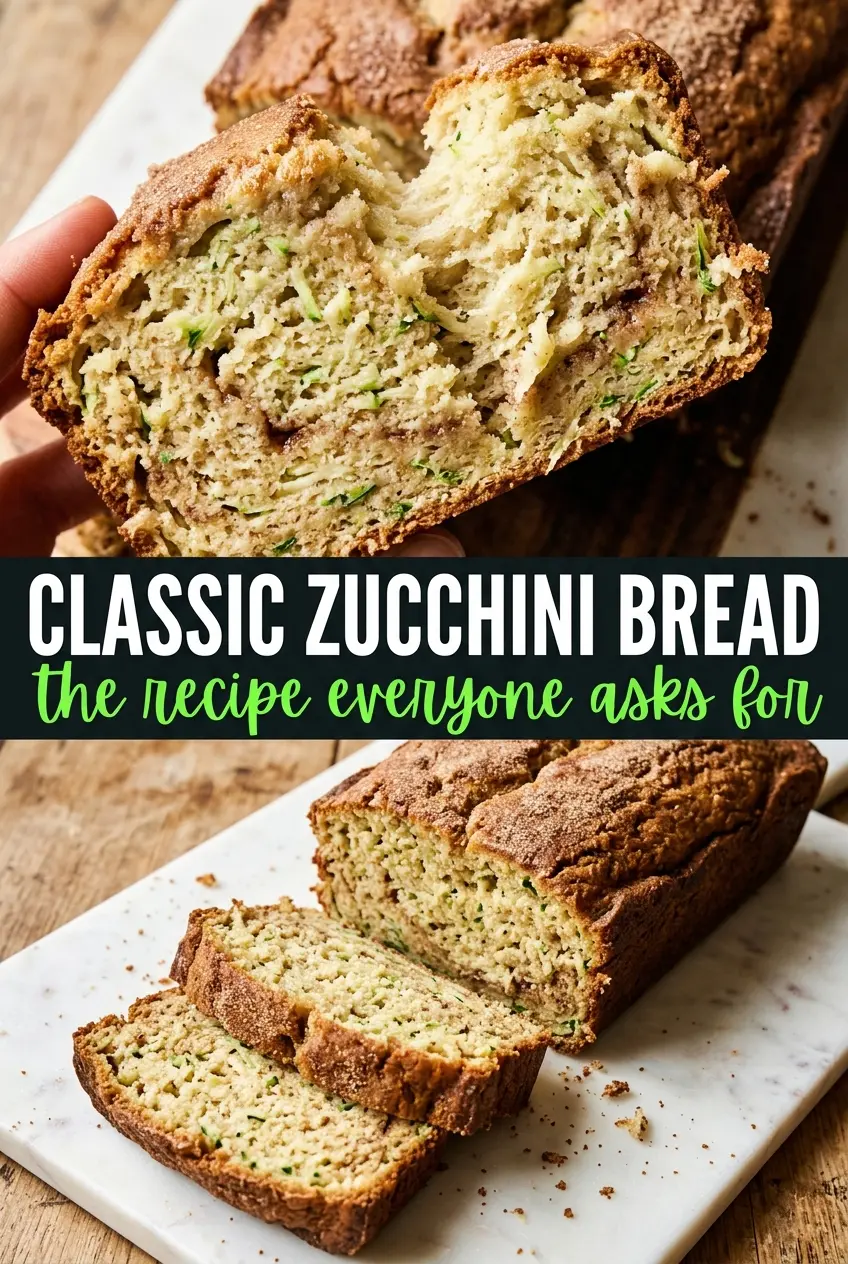
Classic Zucchini Bread
Ingredients
Equipment
Method
- Preheat the oven to 350°F, then grease two 9x5 loaf pans (or one large loaf pan).
- Whisk all-purpose flour, baking soda, baking powder, salt, cinnamon, and nutmeg in a large bowl until evenly combined.
- Beat granulated sugar, vegetable oil, eggs, and vanilla extract in a separate bowl until well combined.
- Stir in zucchini, grated (do not squeeze — moisture helps) until the mixture looks uniformly green-flecked.
- Add the wet mixture to the dry ingredients and fold until just combined, then fold in walnuts or pecans, chopped (optional) if using.
- Divide the batter between the prepared loaf pans and bake for 55–65 minutes at 350°F until a toothpick comes out clean and the top is deeply golden.
- Cool the loaves in the pan for 20 minutes before transferring to a wire rack, so the cracked top sets and slice cleanly.