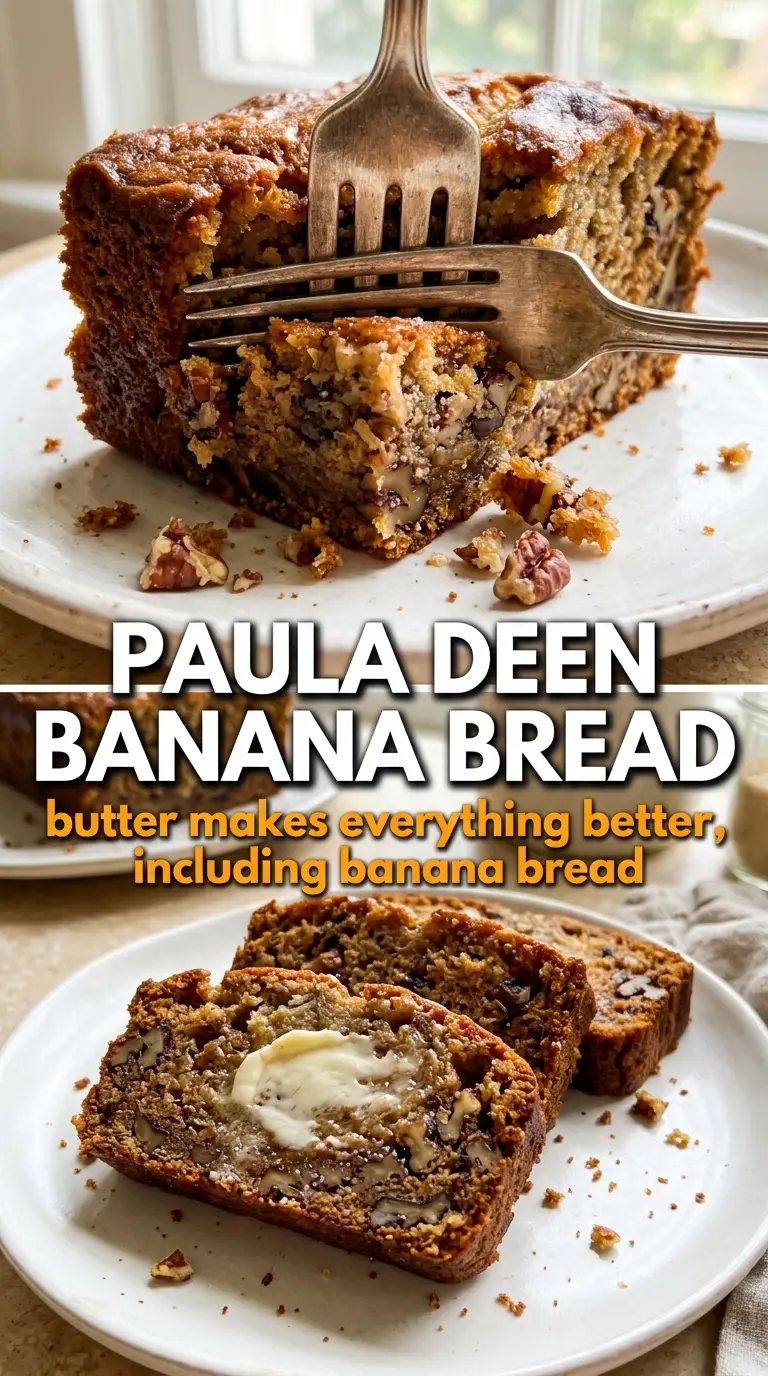
Paula Deen banana bread bakes up like a cross between a quick bread and a butter-rich loaf cake: deeply golden on the outside, tender and moist in the middle, with enough banana flavor to keep each slice from tasting heavy. The crumb stays tight and soft instead of airy, which is exactly what you want when the goal is a loaf that eats like a treat, not a snack cake pretending to be bread.
The butter is the thing that makes this version stand out. You cream it with the sugar until it turns pale and fluffy, and that step gives the loaf its plush texture before the bananas ever go in. The bananas should be ripe enough to mash easily and smell sweet, but not so liquefied that they turn the batter watery. That balance is what keeps the loaf rich without collapsing in the center.
Below, I’ve included the small details that matter most: why this loaf bakes up so lush, how to keep the crumb from turning dense in the wrong way, and what to do if you want pecans in every slice or none at all.
The loaf came out with that buttery, pound-cake crumb you don’t usually get in banana bread, and the edges caramelized beautifully. I baked it the full 65 minutes and it sliced clean after cooling for just a bit.
Save this buttery Paula Deen banana bread for the days when you want a rich loaf with a tender crumb and a deep golden crust.
The Butter-and-Banana Balance That Keeps This Loaf Tender
The most common mistake with rich banana bread is treating it like a standard quick bread and rushing the mixing. Here, the butter and sugar need a real creaming step. That’s what builds the fine, tight crumb that makes each slice feel almost cake-like instead of gummy.
The second trap is overloading the batter with banana. Three ripe bananas is enough for strong flavor, but not so much that the loaf turns wet in the middle. If your bananas are extra large and almost black, mash them first and check the volume; you want about 1 to 1 1/4 cups of mashed banana, not a bowl of thin puree.
- Butter — Use softened butter, not melted. Softened butter traps air when beaten with sugar, and that air gives you height and tenderness.
- Bananas — The riper the better, as long as they still hold body when mashed. Frozen bananas work too; thaw them fully and drain off excess liquid if they look watery.
- Flour — All-purpose flour keeps the loaf sturdy enough to slice cleanly. Cake flour makes it too fragile for this style of bread.
- Pecans — Optional, but they add a little crunch against the soft crumb. Toast them first if you want a deeper nutty flavor.
How to Build the Batter Without Losing That Pound-Cake Texture
Beat the butter and sugar until the mixture looks pale, fluffy, and almost whipped. If it still looks dense and grainy, keep going; this is the step that sets up the texture. Add the eggs one at a time so the mixture stays smooth instead of looking curdled, then stir in the bananas and vanilla just until combined.
When the flour goes in, switch to a gentle hand. Overmixing at this point tightens the crumb and can make the loaf tough around the edges. Stop as soon as the flour disappears, then fold in the pecans if you’re using them. Scrape the batter into a well-greased 9×5 loaf pan and bake until the top is deeply golden and a toothpick in the center comes out clean or with a few dry crumbs.
Three Ways to Adjust This Loaf Without Ruining It
Leave Out the Pecans for a Softer Slice
Skip the nuts if you want a smoother, more uniform crumb. The loaf will still be rich and full-bodied; you just lose the light crunch that gives each bite a little contrast.
Make It Dairy-Free With a Plant Butter
Use a solid dairy-free butter stick in place of regular butter. The flavor shifts a little, but the structure stays close because you still get the fat needed for creaming and tenderness.
Turn It Into Muffins for Faster Breakfasts
Divide the batter into a lined muffin tin and bake until the tops spring back and a tester comes out clean. The texture stays tender, but the bake time drops a lot and you get more of the caramelized edge in every portion.
Storage and Reheating
- Refrigerator: Store tightly wrapped for up to 5 days. The crumb firms up in the fridge, but the flavor stays excellent.
- Freezer: Freezes well for up to 3 months. Wrap the whole loaf or individual slices in plastic, then foil, and thaw at room temperature.
- Reheating: Warm slices in a 300°F oven for about 8 minutes or toast lightly in a skillet. The common mistake is blasting it in the microwave until the butter melts out and the crumb turns rubbery.
Answers to the Questions Worth Asking
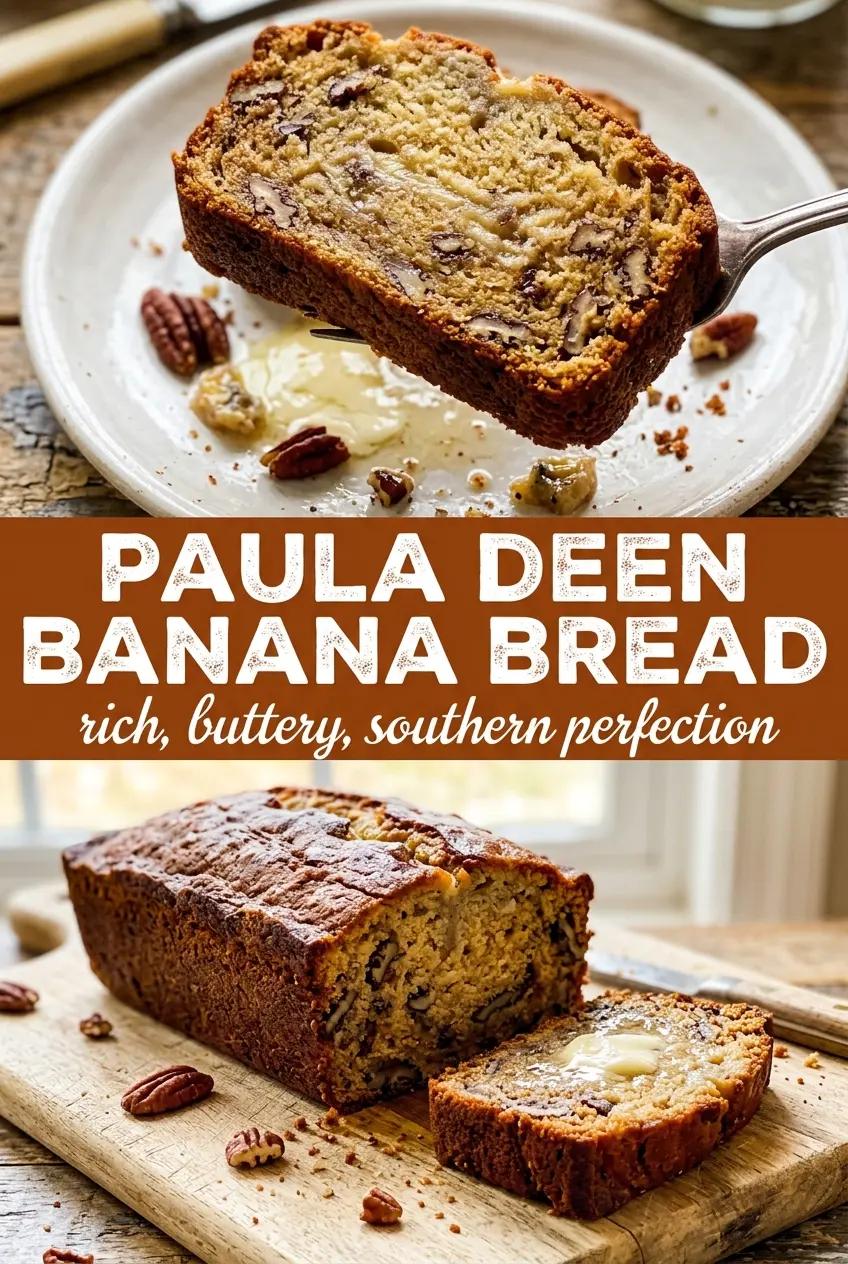
Paula Deen Banana Bread
Ingredients
Equipment
Method
- Preheat the oven to 350°F and generously grease a 9x5 loaf pan.
- Set the loaf pan aside so it’s ready for batter immediately after mixing.
- Beat the softened butter and sugar together until very light and fluffy—about 4 minutes.
- Scrape down the bowl as needed so the mixture creams evenly.
- Beat in the eggs one at a time, mixing until each is incorporated.
- Stir in the mashed bananas and vanilla until the batter looks uniform.
- Fold in the flour, baking soda, and salt until just combined—stop as soon as no dry streaks remain.
- Fold in the chopped pecans if using.
- Pour the batter into the prepared loaf pan and smooth the top.
- Bake for 60–70 minutes at 350°F until deeply golden and a toothpick inserted in the center comes out clean.
- Cool in the pan for 15 minutes before unmolding.
- Serve warm, with extra butter melting into the thick slices.