Garlic butter chicken pasta lands in that sweet spot where the sauce clings to every strand instead of pooling at the bottom of the bowl. The chicken stays juicy, the garlic turns fragrant instead of harsh, and the Parmesan melts into the butter just enough to give the whole dish a glossy finish. It’s the kind of pasta that feels like it took more work than it did, which is usually a good sign in my kitchen.
The trick is building the sauce in the same skillet you used for the chicken. Those browned bits left behind are packed with flavor, and a little pasta water pulls everything together without making the sauce greasy. Lemon juice matters here too. It keeps the butter from tasting flat and gives the pasta a cleaner finish, especially once the Parmesan goes on top.
Below, I’ve included the one timing detail that keeps the garlic from going bitter, plus a few swaps for making this work with what you already have on hand.
The sauce clung to the spaghetti perfectly and the garlic stayed sweet, not burnt. I added a little extra pasta water like you suggested and it turned silky instead of oily.
Like this garlic butter chicken pasta? Save it to Pinterest for the nights when you want glossy spaghetti, seared chicken, and a fast skillet sauce that tastes like restaurant pasta.
The Garlic Needs to Be Fragrant, Not Browned and Bitter
A garlic butter sauce can go from deep and rich to sharp and bitter in a matter of seconds. That’s the failure point most people run into: the pan is too hot, the garlic cooks too long, and the whole dish tastes burnt instead of buttery. Medium heat is the right call here because the garlic only needs enough time to bloom in the butter and give the sauce its backbone.
There’s another reason this works. The chicken gets cooked first, then the same pan becomes the sauce base, so the browned bits stay in play. If you start with fresh butter in a clean skillet, you lose a lot of the savory depth that makes this pasta taste finished instead of assembled.
- Chicken breasts — Cut them into even strips so they cook quickly and stay juicy. Thin, uneven pieces dry out before the thicker ones are done.
- Butter — This is the flavor base, so use real butter here. Salted or unsalted both work, but unsalted gives you more control once the Parmesan goes in.
- Garlic — Fresh minced garlic is the whole point. Jarred garlic can work in a pinch, but it’s milder and lacks the sweet edge you get when fresh garlic hits warm butter.
- Pasta water — Don’t skip this. The starch helps the butter and cheese cling to the spaghetti instead of sliding off.
What Each Ingredient Is Actually Doing in the Pan
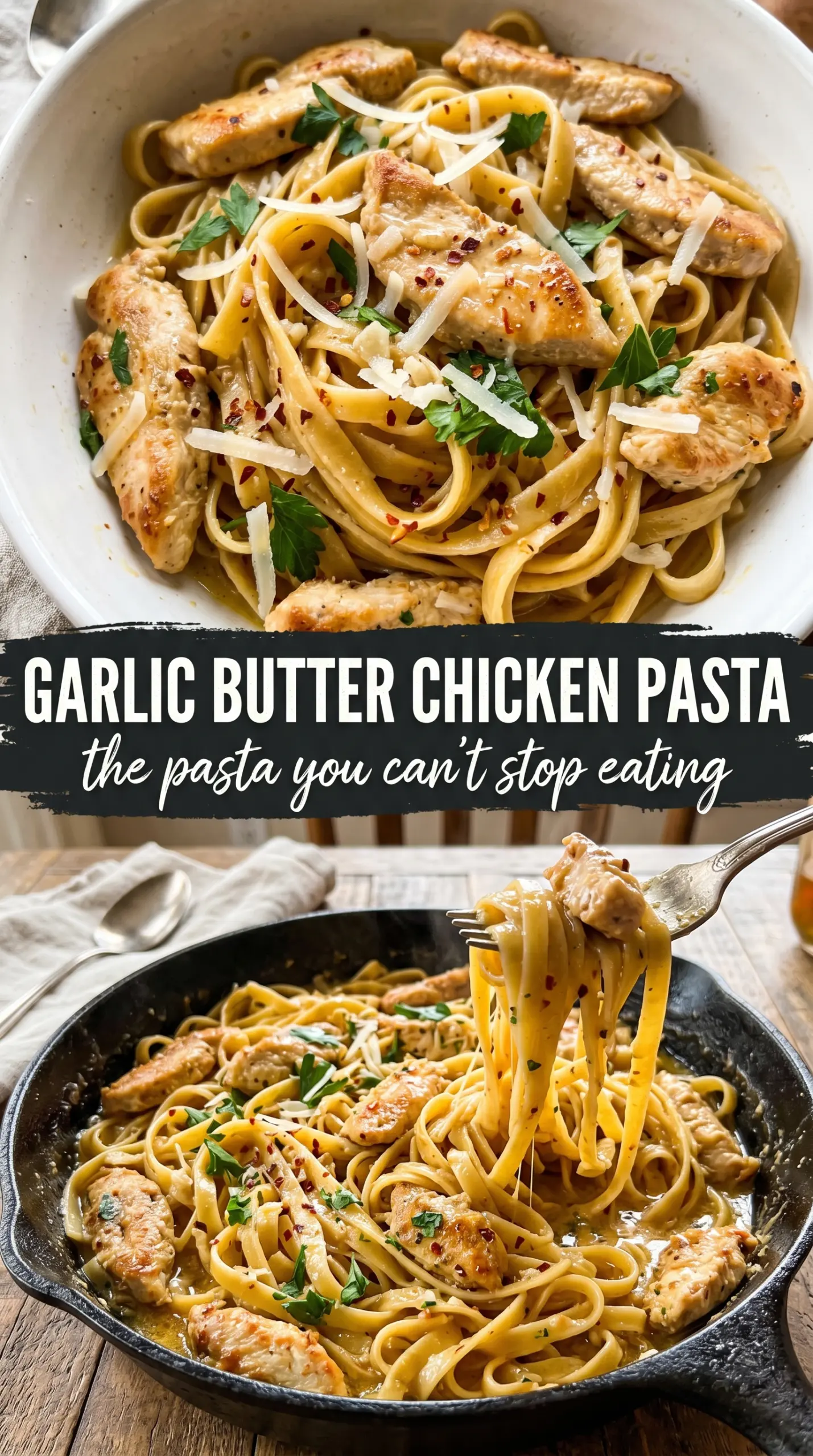
- Spaghetti — Long noodles work best because they catch the garlic butter sauce and twirl with the chicken. If you swap in a short pasta, you’ll get a different texture and less of that silky coated finish.
- Lemon juice — This keeps the butter from tasting heavy and lifts the whole dish. Fresh lemon is worth using because bottled lemon juice can taste flat or metallic here.
- Parmesan — Freshly grated Parmesan melts smoothly and adds body. Pre-shredded cheese often contains anti-caking agents, which can make the sauce grainy.
- Parsley and red pepper flakes — Parsley gives the pasta a clean, fresh finish, and the pepper flakes add just enough heat to keep the butter sauce from tasting one-note.
From Golden Chicken to Glossy Pasta Without Breaking the Sauce
Season and Sear the Chicken
Pat the chicken dry, season it well, and cook it in olive oil over medium-high heat until the strips are golden on the outside and cooked through. You want color, not steam, so give the pieces a little space in the pan instead of crowding them. If the skillet looks wet, the heat is too low or the pan is overloaded. Set the chicken aside once it’s done so it doesn’t overcook while you build the sauce.
Bloom the Garlic in Butter
Lower the heat to medium before the garlic goes in. Add the butter, then the garlic and red pepper flakes, and stir until the garlic smells sweet and turns just barely golden at the edges. If it browns fast, pull the skillet off the heat for a few seconds. Burnt garlic can’t be fixed, and it will take over the whole dish.
Toss the Pasta Until It Coats Cleanly
Add the lemon juice and cooked spaghetti, then toss in a splash of pasta water at a time. The goal is a sauce that clings in a thin sheen, not a puddle at the bottom of the pan. If it looks greasy, it needs a little more pasta water and a little more tossing, not more butter. Finish with Parmesan off the hottest part of the burner so the cheese melts in smoothly instead of clumping.
Return the Chicken and Finish Fast
Slide the chicken back on top, or toss it gently through the pasta if you want every strand coated. Add parsley and another handful of Parmesan right before serving. This dish waits for no one; once the sauce is glossy and the cheese is melted, get it on the table while the pasta is still silky.
How to Adapt This for a Lighter Bowl or a Different Pantry
Gluten-Free Pasta Swap
Use a sturdy gluten-free spaghetti and cook it just to al dente. Gluten-free pasta can go soft fast once it hits the skillet, so toss it with the sauce right away and add pasta water gradually to keep the texture from turning gummy.
Dairy-Free Version
Swap the butter for a good dairy-free butter and use a Parmesan-style alternative that melts well. You’ll lose a little of the classic richness, so lean harder on the garlic, lemon, and pasta water to keep the sauce lively instead of flat.
Use Chicken Thighs Instead
Boneless thighs work well if you want a richer, more forgiving cut. They’ll need a couple of extra minutes in the pan, but they stay juicy even if your heat runs a little high.
Turn It Into a Vegetarian Pasta
Skip the chicken and add sautéed mushrooms or roasted broccoli for substance. The sauce still works because the garlic butter and Parmesan carry the dish, but the final bowl will be lighter and a little less savory without the seared chicken.
Storage and Reheating
- Refrigerator: Store leftovers in an airtight container for up to 3 days. The pasta will soak up some of the sauce as it sits.
- Freezer: Freezing isn’t ideal. The butter sauce can separate and the pasta softens after thawing.
- Reheating: Warm gently in a skillet over low heat with a splash of water or broth. The common mistake is blasting it in the microwave until the butter splits and the chicken dries out.
Answers to the Questions Worth Asking
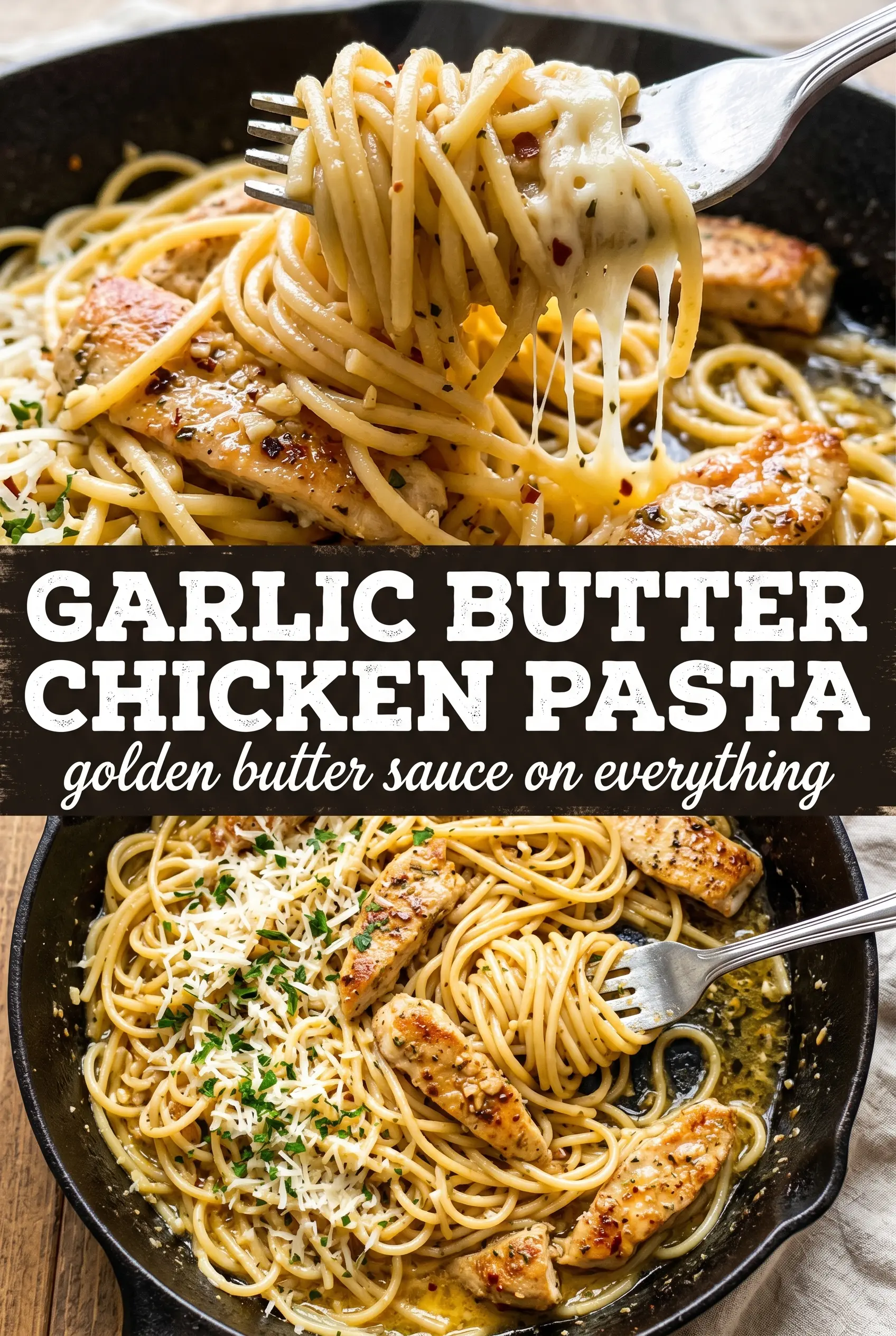
Garlic Butter Chicken Pasta
Ingredients
Equipment
Method
- Season the chicken strips with salt, pepper, garlic powder, and Italian seasoning. Heat olive oil in a large skillet over medium-high heat and sear chicken for 4-5 minutes per side until golden and cooked through, then remove and set aside.
- Melt the butter in the same skillet over medium heat. Add minced garlic and red pepper flakes and cook for 1-2 minutes until fragrant and golden at the edges.
- Add fresh lemon juice to the skillet and toss the cooked spaghetti in the garlic butter sauce. Add reserved pasta water a splash at a time, tossing until every strand is coated and glossy.
- Return the seared chicken strips to the pasta and top evenly. Sprinkle Parmesan and fresh parsley generously over the top and serve immediately.