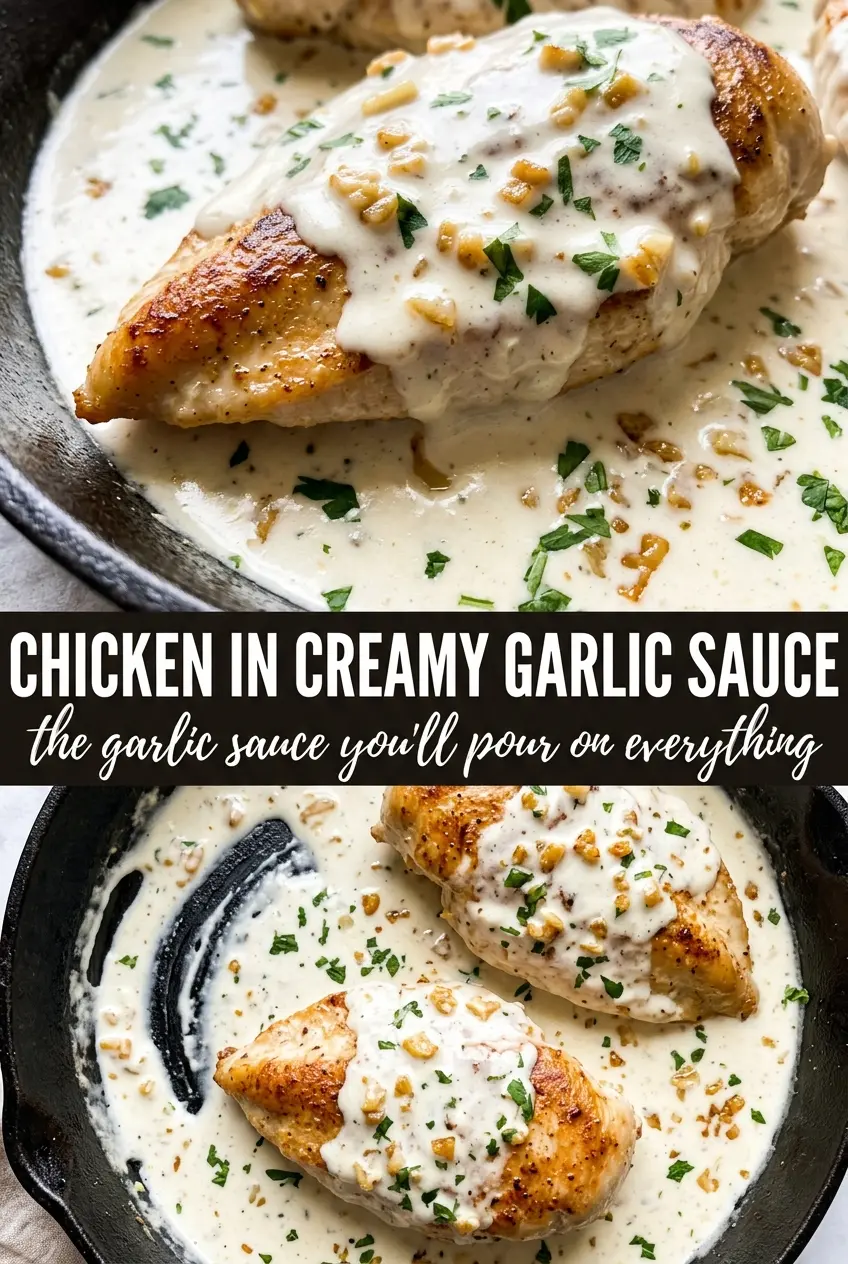
Juicy chicken breasts in a creamy garlic sauce earn their place in the dinner rotation because the sauce clings, the chicken stays tender, and the whole skillet tastes like it took a lot more effort than it did. The best part is how the garlic shows up in layers: first mellow and sweet from the butter, then richer once the cream and Parmesan hit the pan. It’s the kind of dinner that lands on the table with a glossy sauce pooling around the chicken and everyone at the table starts reaching for bread.
This version works because the chicken is seared first and pulled out before the sauce starts, which keeps the meat from overcooking while the cream reduces. The garlic gets just enough time in butter to lose its sharp edge without turning bitter, and the wine or broth lifts every browned bit from the pan so the sauce tastes built, not dumped together. A little cayenne doesn’t make it spicy; it just keeps the cream sauce from tasting flat.
Below, I’m walking through the small details that matter here: how to keep the sauce silky, what to swap if you’re out of wine, and the exact point when the garlic should come off the heat so it stays sweet instead of harsh.
The sauce thickened up beautifully and coated the chicken without getting grainy. I used broth instead of wine and it still tasted rich, plus the garlic stayed sweet instead of biting back.
Creamy garlic chicken is one to pin for nights when you want a skillet dinner with a glossy sauce and barely any cleanup.
The Sear Is What Keeps the Chicken Juicy
Most creamy chicken recipes go wrong before the sauce even starts. If the chicken goes into the pan cold, crowded, or wet, it steams instead of sears and leaves you with pale meat and a thin sauce base. A proper sear gives you browned flavor in the skillet and a little cushion of protection so the chicken can finish gently in the sauce without drying out.
Use a large skillet and give each breast space. If they’re very thick in the center, pound them to an even thickness so the edges don’t overcook while the middle catches up. You’re looking for a deep golden crust that releases cleanly from the pan before you turn it. If it sticks, it isn’t ready yet.
What Each Ingredient Is Actually Doing in This Sauce

- Chicken breasts — Boneless, skinless breasts give you a lean base that turns tender when seared correctly and finished in the sauce. If yours are huge, slice them horizontally or pound them to even thickness so the outside doesn’t overcook before the center is done.
- Garlic — Fresh minced garlic is the backbone of the sauce. Eight cloves sounds bold, and it should, because the cream and Parmesan mellow it. Jarred garlic works in a pinch, but the flavor is flatter and more one-note.
- Dry white wine or chicken broth — This is what lifts the browned bits from the pan and gives the sauce depth. Wine adds brightness; broth gives you a softer, more savory finish. If you use broth, add a tiny splash of lemon at the end if the sauce tastes heavy.
- Heavy cream — This is what makes the sauce thick and glossy without breaking. Half-and-half can work, but it won’t reduce into the same velvety texture and is easier to curdle if the heat runs too high.
- Parmesan cheese — Grated Parmesan thickens the sauce and adds salt and body. Use the finely grated kind that melts smoothly, not the dusty shelf-stable version if you can avoid it.
- Cayenne pepper — You’re not making a spicy dish here; you’re adding just enough heat to keep the cream from tasting flat. Leave it out if you want, but the sauce will taste rounder with even that small amount.
Building the Sauce So It Stays Silky
Brown the Chicken and Protect the Pan
Season the chicken well before it hits the skillet, then sear it in olive oil over medium-high heat until the surface is deep golden and the center reaches 165°F. Pull it out as soon as it’s done. The pan needs those browned bits, and the chicken needs to stop cooking before the sauce goes in.
Cook the Garlic Until It Smells Sweet, Not Sharp
Lower the heat to medium and add the butter, then stir in the garlic and keep it moving for about two minutes. You want fragrant garlic with the edges just starting to turn gold. If it gets dark too fast, the sauce will taste bitter, and there isn’t a fix for burnt garlic.
Reduce Before You Add the Cheese
Pour in the wine or broth and scrape up the bottom of the skillet, then let it cook for about two minutes. Stir in the cream, bring it to a gentle simmer, and add the Parmesan, Italian seasoning, and cayenne. Keep the heat low enough that the sauce barely bubbles. If it boils hard, the cheese can turn grainy and the cream can separate.
Finish by Returning the Chicken to the Pan
Slide the chicken back into the sauce and spoon it over the top so the meat picks up flavor while it warms through. Let it sit for a minute or two until the sauce coats the spoon and clings to the chicken instead of running off in a thin layer. Finish with thyme and parsley for freshness right before serving.
How to Adapt This for Different Kitchens and Diets
Use chicken thighs instead of breasts
Boneless, skinless thighs stay juicier and are more forgiving if your timing runs long. They take a little longer to sear, and the finished dish will be richer and slightly more savory. If you use thighs, cook them through before returning them to the sauce.
Make it dairy-light without wrecking the sauce
You can swap in evaporated milk for some of the cream, but the sauce won’t be quite as plush and it needs a gentler simmer. Skip this swap if you want the thickest texture; it works best when you care more about lighter richness than a truly velvety finish.
Make it gluten-free without changing the method
This recipe is naturally gluten-free as written if your broth and Parmesan are certified gluten-free. The texture and cooking method stay exactly the same, which is one reason this dish works so well for mixed-diet dinners.
Storage and Reheating
- Refrigerator: Store leftovers in an airtight container for up to 3 days. The sauce thickens as it chills, so it may look tighter the next day.
- Freezer: I don’t recommend freezing this one. Cream sauces can separate after thawing, and the chicken tends to lose its tender texture.
- Reheating: Warm it gently in a skillet over low heat with a splash of broth or cream to loosen the sauce. High heat is the mistake that makes the dairy break and the chicken turn tough.
Questions I Get Asked About This Recipe
Chicken Breasts in Creamy Garlic Sauce
Ingredients
Equipment
Method
- Season the chicken breasts with salt, pepper, and smoked paprika. Heat olive oil in a large skillet over medium-high heat and sear for 5-6 minutes per side until golden, reaching 165°F inside; remove the chicken to a plate.
- Melt butter in the same pan over medium heat, then add minced garlic and cook for 2 minutes, stirring constantly, until fragrant and starting to turn golden.
- Pour in the white wine (or chicken broth) to deglaze and cook for 2 minutes. Scrape up browned bits as the liquid reduces slightly.
- Stir in the heavy cream and bring it to a simmer. Keep it at a gentle simmer until the mixture looks smooth and ready for thickening.
- Add Parmesan, Italian seasoning, and cayenne, then simmer for 4-5 minutes until the sauce is thick and glossy. Keep stirring so the cheese melts evenly and the sauce clings to the spoon.
- Return the chicken breasts to the pan and spoon garlic cream sauce over each breast. Let the chicken warm in the sauce for about 1 minute so the coating looks glossy.
- Garnish with fresh thyme and parsley. Serve immediately while the sauce pools around the base of the chicken.