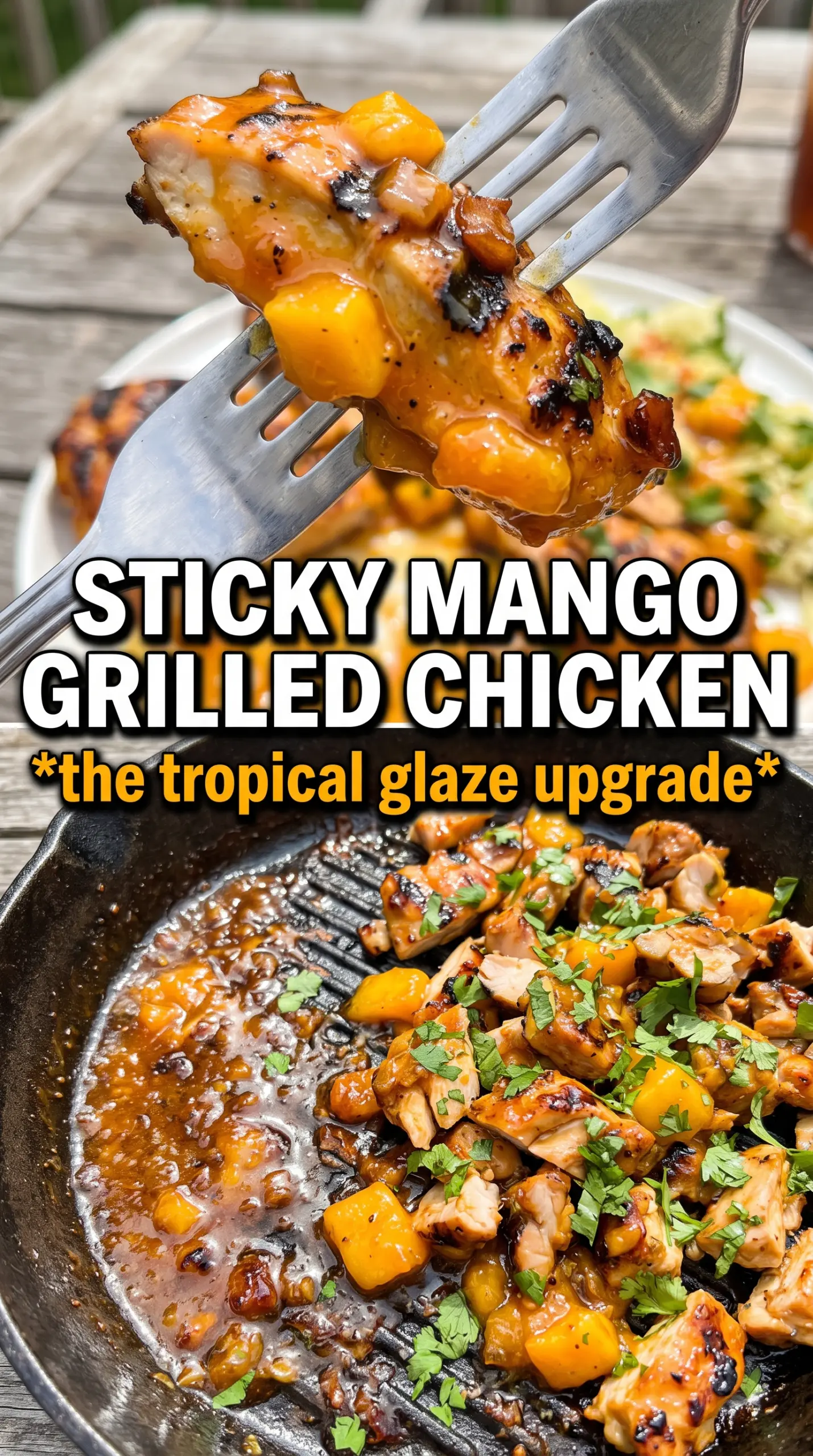
Grilled mango chicken lands on the plate with sticky, caramelized edges, juicy meat, and that bright sweet-tart finish that keeps you going back for another bite. The mango glaze doesn’t just sit on top; it reduces on the grill and turns glossy, with little charred spots that taste like summer heat and smoke in the same bite. It’s the kind of main dish that feels special without demanding a long ingredient list or fussy technique.
What makes this version work is the balance in the marinade. Mango brings body and natural sugar, while lime juice and zest keep it from tasting flat, and soy sauce adds the salty backbone that helps the chicken brown instead of steaming. Garlic, ginger, and allspice push the glaze toward a Caribbean-American lane that tastes layered, not heavy. The reserved glaze goes on near the end so it can cling and caramelize instead of burning on the grates.
Below, I’ve included the small details that matter most: how to keep the glaze from scorching, which chicken cut gives you the juiciest result, and a few smart ways to adapt it if you need to work with what’s in the kitchen.
The mango glaze thickened up beautifully on the grill, and the chicken stayed juicy the whole way through. I loved how the lime and ginger kept it from getting too sweet.
Save this grilled mango chicken for the nights when you want sticky caramelized glaze, juicy thighs, and a fast grill dinner with big flavor.
The Glaze Needs a Head Start, Not a Long Sit
The biggest mistake with fruit-based marinades is treating them like a soak-and-walk-away situation. Mango is full of sugar, and sugar burns fast on a grill. That’s why the glaze is split in two: enough to flavor the chicken from the inside, and a reserved portion for brushing on at the end when the surface is already cooked and ready to caramelize.
Boneless chicken thighs are the right cut here because they stay tender over direct heat and forgive small timing slips. If you use chicken breast, the glaze still works, but the margin is tighter and you’ll want to pull it the second it reaches 165°F. The lime juice does important work too, but don’t push the marinating time much past a few hours. Too long and the acid starts to tighten the meat instead of helping it.
What Each Ingredient Is Actually Doing in This Dish
- Mango puree — This is the body of the glaze. A ripe mango gives you natural sweetness and enough thickness to cling to the chicken. If your mango isn’t fragrant and soft, the glaze will taste thin and sharp instead of lush.
- Soy sauce — This adds salt and depth while helping the chicken brown. Regular soy sauce works fine; use low-sodium if that’s what you keep on hand, but don’t skip the saltiness entirely or the glaze tastes one-note.
- Lime juice and zest — Juice brings the brightness, while zest gives you the perfume that survives the grill. Fresh lime matters here. Bottled juice can taste dull and slightly bitter once it heats up.
- Honey — Honey helps the glaze lacquer instead of drying out on the heat. If you cut it back too much, you lose that sticky finish. Maple syrup can work in a pinch, but the result tastes deeper and less tropical.
- Garlic, ginger, red pepper flakes, and allspice — These are what keep the marinade from tasting like mango sauce on chicken. Ginger gives heat without heaviness, allspice adds a warm Caribbean note, and the pepper flakes keep the finish lively.
Getting the Chicken Caramelized Without Burning the Glaze
Build the marinade first
Blend the mango puree, soy sauce, lime juice, lime zest, honey, garlic, ginger, red pepper flakes, and allspice until smooth. Pull out about a third of that mixture before the raw chicken touches anything. That reserved portion stays clean so you can brush it on later without worrying about cross-contamination or muddy flavor.
Marinate with restraint
Coat the chicken thighs and let them sit for at least 1 hour. That’s enough time for the surface to pick up flavor without turning soft or stringy. If the chicken is swimming in a huge amount of marinade, it won’t brown well, so lift it out and let the excess drip off before it hits the grill.
Grill over medium-high heat
Preheat the grill and oil the grates before the chicken goes on. You want clean grill marks and steady sizzle, not flare-ups from dripping sugar. Grill the thighs for 6 to 7 minutes per side, then brush on the reserved glaze during the last 4 minutes so it can thicken and cling instead of scorching.
Check for the right finish
The chicken is done when the surface looks deeply caramelized and the thickest part reaches 165°F. If the glaze starts to darken too quickly, shift the chicken to a cooler part of the grill and finish there. Let it rest a few minutes before serving so the juices settle and the glaze stays on the meat instead of running off the cutting board.
How to Adapt It When You Want More Heat, Less Sugar, or a Different Cut
Make it spicier
Add an extra pinch of red pepper flakes or a little minced fresh chile to the marinade. That keeps the heat sharp and bright without burying the mango. Add it to the glaze, not just the serving plate, if you want the heat baked into every bite.
Use chicken breasts instead of thighs
Chicken breasts work, but they need closer attention because they dry out faster on the grill. Pound them to an even thickness and start checking early. You’ll still get the mango glaze, but the texture will be leaner and a little less forgiving than thighs.
Make it gluten-free
Swap in a certified gluten-free soy sauce or tamari and everything else stays the same. The glaze will still brown nicely, and the flavor stays balanced. This is the cleanest dietary swap because the texture and cooking method don’t need to change.
Make it dairy-free without changing a thing
This recipe is already dairy-free as written, which makes it easy for mixed-diet dinners. Keep the garnish simple with cilantro, fresh mango, and lime wedges so the plate still feels complete without adding a creamy sauce on the side.
Storage and Reheating
- Refrigerator: Store leftovers for up to 4 days. The glaze will set up a little more in the fridge, which is normal.
- Freezer: Freeze the cooked chicken for up to 2 months. Wrap it well and freeze with a bit of the extra glaze if you have it so the meat doesn’t dry out.
- Reheating: Reheat gently in a covered skillet over low heat or in a 300°F oven until warmed through. High heat will drive off the juices and can turn the sticky glaze bitter.
Questions I Get Asked About This Recipe
Grilled Mango Chicken
Ingredients
Equipment
Method
- Blend mango puree with soy sauce, lime juice, lime zest, honey, garlic, ginger, red pepper flakes, and allspice; reserve 1/3 for glazing.
- Set the reserved 1/3 glaze aside for later brushing while the rest stays for marinating.
- Add chicken thighs to the remaining mango mixture and marinate for at least 1 hour, refrigerated, until coated.
- While the chicken marinates, keep the reserved glaze covered in the refrigerator.
- Preheat the grill to medium-high and oil the grates to prevent sticking.
- Place chicken on the grill and cook 6-7 minutes per side, brushing with the reserved mango glaze in the last 4 minutes of grilling.
- Continue grilling until the outside is deeply caramelized and the internal temperature reaches 165°F.
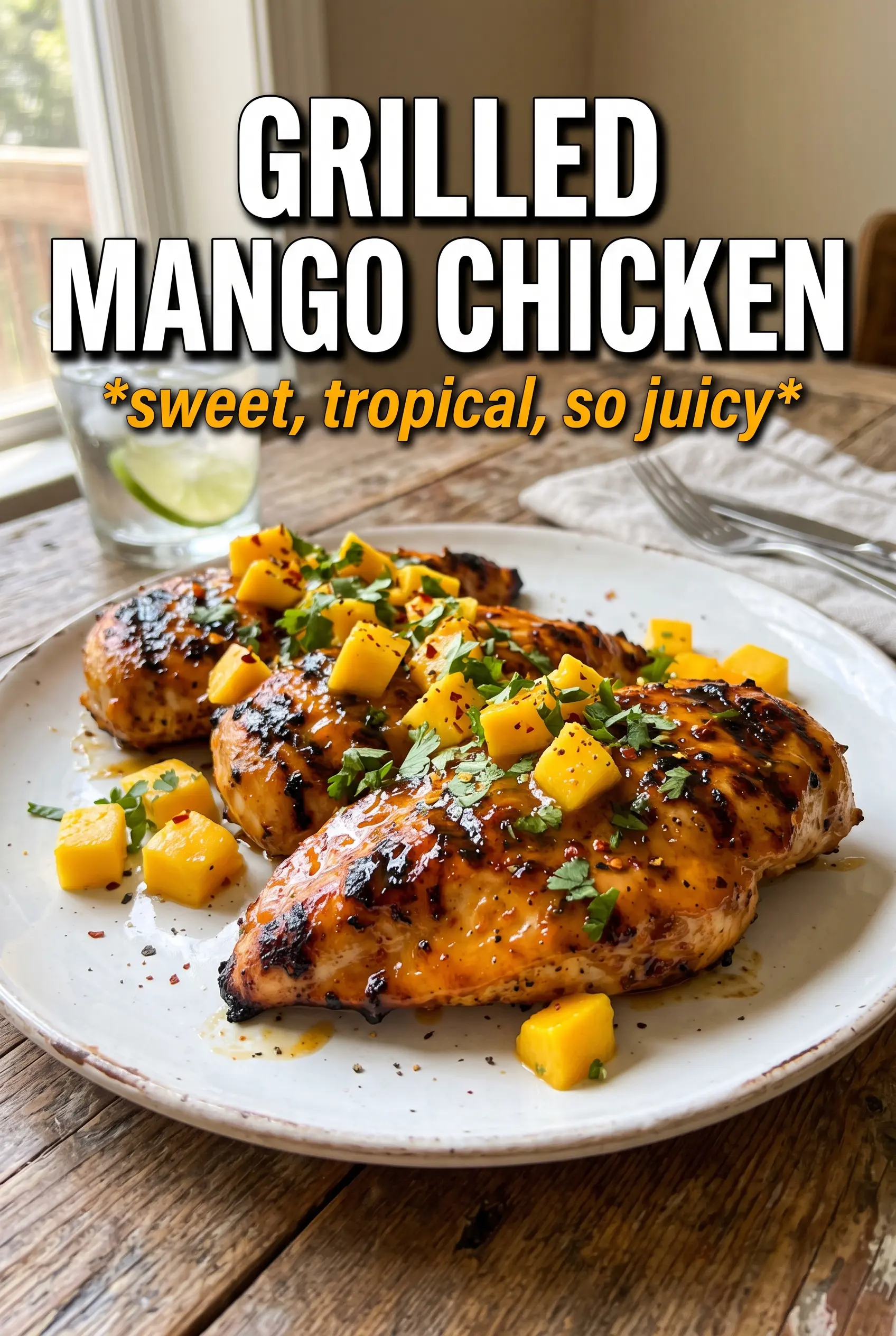
- Transfer chicken to a plate and top or serve with fresh mango chunks, cilantro, and lime wedges.