Orange amaretto cranberry sauce turns a basic holiday side into something glossy, bright, and a little unexpected. The cranberries cook down into a thick spoonable sauce with just enough texture left behind to keep every bite interesting, and the orange and amaretto give it a deeper, rounder finish than the usual tart-sweet version. It’s the kind of dish that quietly steals attention from the rest of the table.
The trick is cooking the cranberries just until they burst and the liquid takes on a jammy look. If you push it too far, the sauce can turn pasty once it chills. Stirring the amaretto in off the heat keeps the almond note fragrant instead of cooked off, and the toasted sliced almonds on top add the last bit of crunch right before serving.
Below, you’ll find the timing cues that matter, what the amaretto is actually doing in the sauce, and a few ways to adapt it if you want to make it a little less sweet or a little more intense.
The cranberries burst right on time and the sauce set up beautifully after chilling. The orange and amaretto tasted balanced, not overly sweet, and the toasted almonds on top gave it a great little crunch.
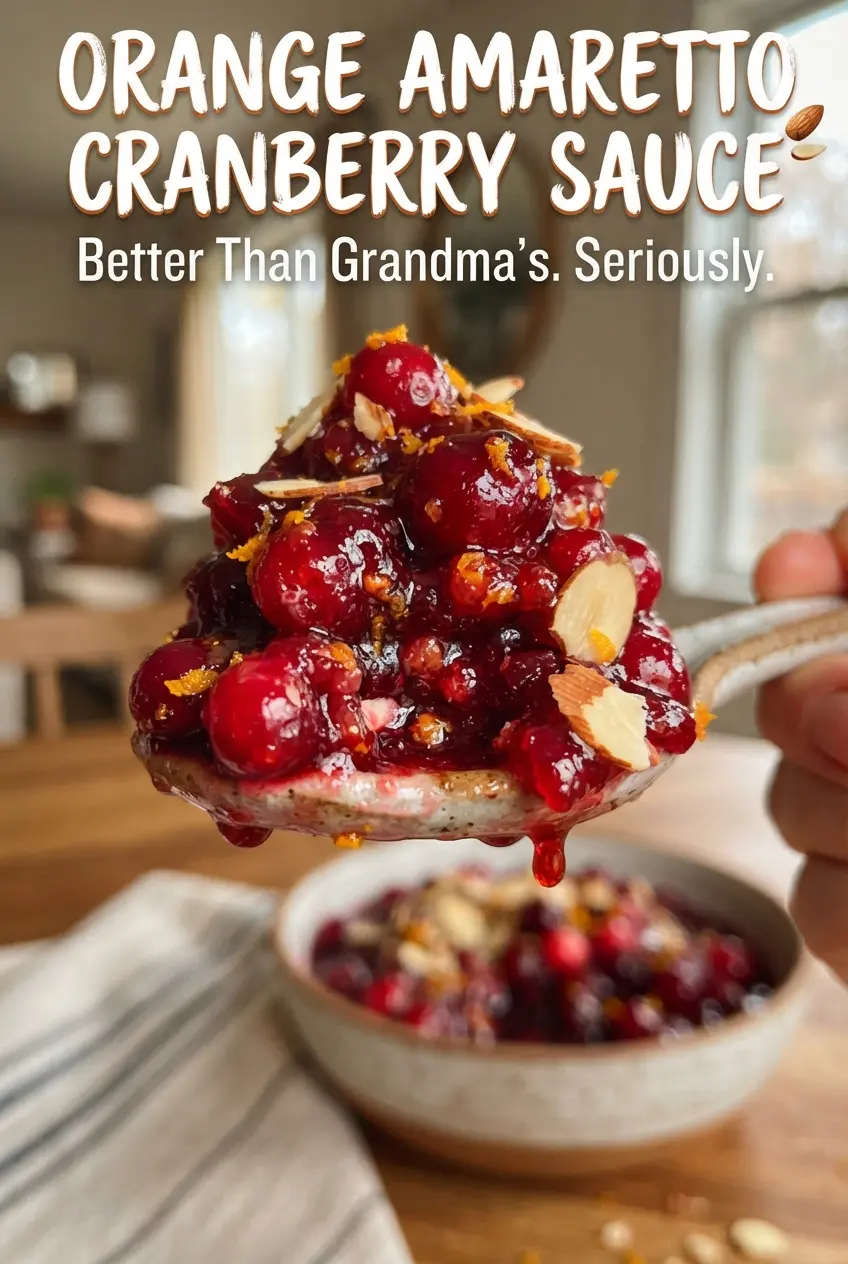
Orange amaretto cranberry sauce brings a bright citrus pop, a smooth set, and a toasted almond finish to the table.
The Part That Keeps Cranberry Sauce From Turning Gluey
Cranberries don’t need long cooking, but they do need enough heat for the skins to split and the juices to thicken naturally. The mistake is boiling them hard for too long, which can push the pectin past its sweet spot and leave you with a sauce that feels stiff once it cools. A gentle simmer gives you a better texture: loose while warm, spoonable after chilling.
Orange juice adds brightness, but it also counts toward the liquid balance. That’s why this recipe uses a mix of juice and water instead of all juice. It keeps the citrus flavor present without making the sauce cling too hard to the spoon. Amaretto goes in at the end for a reason. Heat dulls its almond character fast, so stirring it in after the pan comes off the burner gives you the cleanest flavor.
What Each Ingredient Is Actually Doing in This Sauce
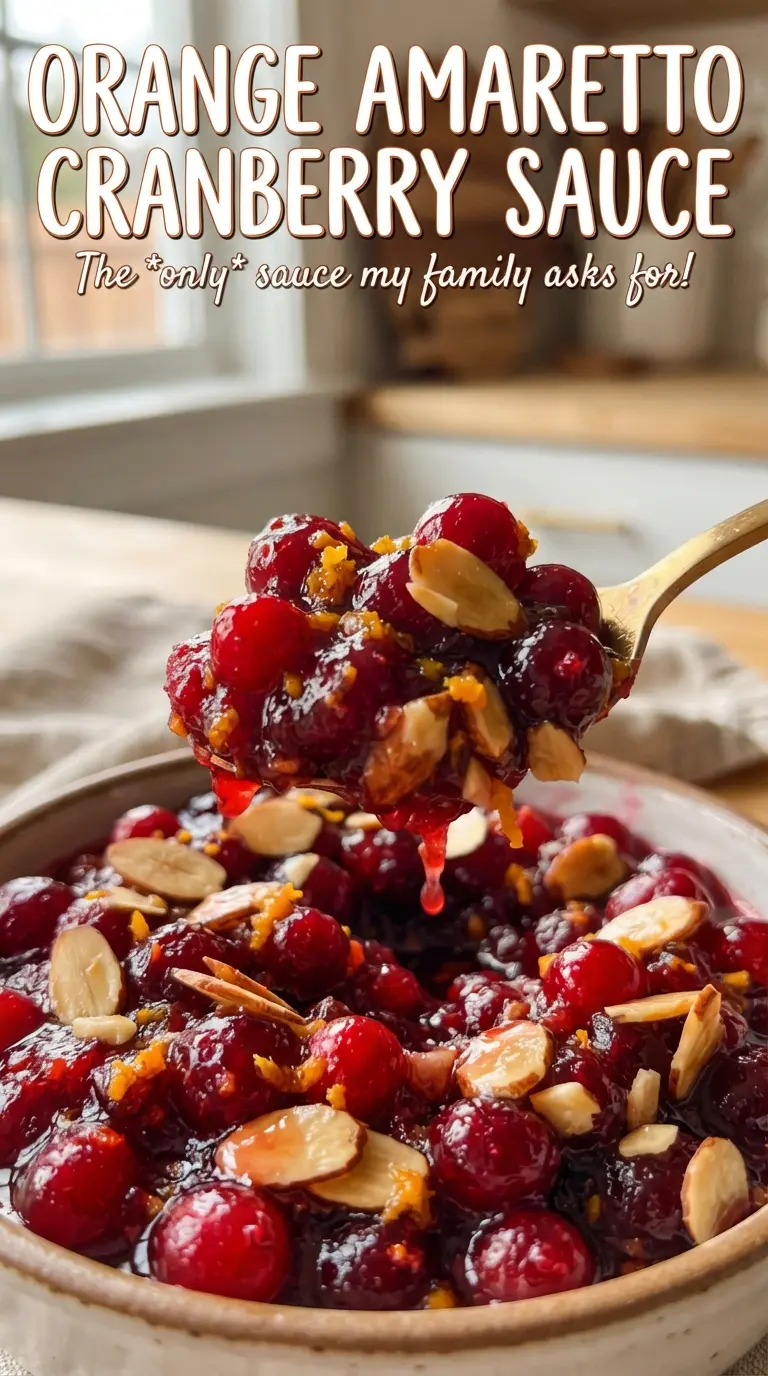
- Cranberries — Fresh cranberries are what give the sauce its natural pectin and that signature pop as they burst. Frozen cranberries also work without thawing, and the texture stays nearly the same.
- Orange juice and zest — The juice softens the sharpness of the berries, while the zest carries the brightest orange oil in the whole dish. Bottled juice works fine here, but zest from a fresh orange makes the flavor taste fresher and more layered.
- Amaretto — This adds the almond note that makes the sauce feel more polished and a little less standard. Add it off the heat so the aroma stays front and center instead of fading into the background.
- Sliced almonds — These are optional until the last second, then they matter. Toasting them first keeps them crisp and gives the topping enough nutty flavor to stand up to the sauce.
- Sugar — Cranberries need it to balance their sharpness and help the sauce set. You can reduce it slightly if you like a tarter sauce, but cutting it too far changes the texture as well as the taste.
Cooking the Berries Until the Sauce Sets on Its Own
Starting With the Syrup Base
Bring the sugar, orange juice, water, and salt to a full boil first. You want the sugar dissolved before the cranberries go in, or the berries can cook unevenly while the liquid is still grainy. Once the mixture bubbles steadily, add the cranberries and keep the heat at a lively simmer rather than a hard boil.
Watching for the Burst and the Thicken
As the cranberries heat, you’ll hear them start to pop. That’s the cue you’re looking for. Stir now and then, and pay attention to the liquid: it should go from watery to slightly syrupy, with some berries collapsed and a few still holding shape. Pull it from the heat when most berries have burst and the sauce coats a spoon, because it thickens more as it cools.
Adding the Amaretto at the End
Take the pan off the burner before you stir in the amaretto and orange zest. This keeps the alcohol from cooking away too quickly and protects the fresh orange oils in the zest. If the sauce smells flat after adding them, it usually means they went in while the pan was still boiling.
Cooling Before the Almond Finish
Let the sauce cool completely, then chill it until it firms up. Warm cranberry sauce looks looser than it will on the plate, so don’t judge the final texture too early. Sprinkle the toasted almonds over the top just before serving so they stay crisp instead of softening in the fridge.
Three Ways to Adjust the Sweetness, the Texture, or the Timing
Less Sweet, More Tart
Drop the sugar by 2 to 3 tablespoons if you want the cranberry flavor sharper and more direct. The sauce will still set, but it won’t taste as rounded, so this version works best with rich dishes on the plate.
Alcohol-Free Version
Swap the amaretto for 1 to 2 tablespoons of orange juice plus 1/4 teaspoon almond extract. Add the almond extract off the heat just like the liqueur, or it can turn harsh. You’ll get the same almond-citrus direction without the alcohol.
Make-Ahead for a Crowd
Cook the sauce up to 3 days ahead and chill it in a covered container. Hold the almonds until serving day so they keep their crunch. If the sauce looks a little firm from the fridge, let it sit at room temperature for 15 to 20 minutes before setting it out.
Storage and Reheating
- Refrigerator: Store in an airtight container for up to 1 week. It thickens as it chills, so expect a firmer set than when it first comes off the stove.
- Freezer: It freezes well for up to 2 months. Thaw overnight in the refrigerator and stir well after thawing, since the texture can loosen slightly.
- Reheating: If you want it warm, heat it gently over low heat or in short bursts in the microwave. Don’t boil it again or it can tighten up and lose that glossy texture.
Answers to the Questions Worth Asking
Orange Amaretto Cranberry Sauce
Ingredients
Equipment
Method
- Bring sugar, orange juice, water, and salt to a boil in a saucepan over high heat, stirring until the sugar dissolves. Visual cue: active bubbling across the surface.
- Add cranberries and simmer for 10-12 minutes, stirring occasionally, until the berries burst and the sauce thickens. Visual cue: skins split and the mixture turns glossy and more viscous.
- Remove the saucepan from the heat and stir in amaretto and orange zest. Visual cue: the sauce becomes fragrant and uniformly colored with visible zest flecks.
- Cool the sauce to room temperature, then cover and chill before serving for at least 60 minutes. Visual cue: it firms up and holds its shape when spooned.
- Top the chilled cranberry sauce with toasted sliced almonds just before serving. Visual cue: almonds look golden and add a crisp contrast on top.