Greek feta roast potatoes come out with crisp, bronzed edges, soft centers, and just enough lemony pan sauce clinging to every wedge to keep each bite bright. The feta goes on at the end, so it stays tangy and crumbly instead of melting away into the pan. That contrast is what makes this dish worth putting on repeat.
The method is simple, but the details matter. The potatoes roast in a shallow bath of olive oil, lemon juice, broth, garlic, and oregano, which means they don’t dry out before the outside has time to brown. Using Yukon gold potatoes gives you a creamy interior that holds its shape, and cutting them into similar wedges keeps the cooking even.
Below, I’ve included the one part that matters most if you want the edges to crisp instead of steam, plus the best way to handle leftovers so the potatoes don’t turn soft and dull the next day.
The potatoes got that crisp, roasted edge and the lemon-garlic juices soaked into the bottoms just enough. I added the feta at the end like you said, and it stayed nice and salty instead of disappearing.
Save these lemon-oregano Greek feta roast potatoes for the side dish that brings crisp edges, tender centers, and salty feta to the table.
The Trick to Crisp Edges Without Drying Out the Potatoes
The biggest mistake with roast potatoes is flooding the pan and expecting browning to happen anyway. These need a wide roasting pan and a single layer so the steam can escape instead of trapping the potatoes under a soft, wet lid. The broth and lemon juice help season the potatoes from the inside, but they need room and direct heat to turn golden.
Flipping halfway through matters here. The side that starts against the pan is the one that turns into the best part of the dish, and turning the wedges gives the whole batch a chance to caramelize. If the liquid is still pooling at the end, the potatoes need a few more minutes; the pan should look mostly absorbed, with crisp edges and a little glossy residue left behind, not a shallow sauce.
What the Potatoes, Lemon, and Feta Are Each Doing Here

- Yukon gold potatoes — These stay creamy inside while their edges hold enough structure to crisp. Russets can work if that’s what you have, but they’re starchier and a little more fragile, so they can break apart faster when you flip them.
- Olive oil — This is what carries the browning and gives the wedges their roasted flavor. Use a good-tasting olive oil here because it’s one of the dominant flavors in the finished dish.
- Fresh lemon juice — Bottled juice will work in a pinch, but fresh lemon gives the dish its clean, bright finish. The acid cuts through the richness of the potatoes and feta, and it helps the garlic and oregano taste sharper.
- Chicken broth — This keeps the wedges from drying out before the pan is absorbed. Vegetable broth works if you want to keep the dish vegetarian; just choose one with a clean, savory taste so it doesn’t overpower the lemon and herbs.
- Feta — Crumble it by hand if you can. The uneven pieces give you little salty pockets on top, and adding it after roasting keeps it from disappearing into the pan.
- Fresh dill or parsley — Dill leans more Greek and gives the potatoes a softer herbal note. Parsley is cleaner and lighter, and it works well if you want the lemon and oregano to stay front and center.
Roasting the Wedges So the Pan Goes From Wet to Crisp
Coating the Potatoes Evenly
Toss the potatoes with the olive oil, lemon juice, broth, garlic, oregano, salt, and pepper right in the roasting pan so every wedge picks up the same seasoning. The liquid should cling to the potatoes without drowning them. If the pan looks crowded or the wedges are stacked, move them to a bigger pan; overlap is what turns roasting into steaming.
Getting the First Roast Right
Slide the pan into a hot 425F oven and leave it alone long enough for the edges to start taking on color. The potatoes should look softening around the corners while the liquid slowly reduces around them. If the pan is on a lower rack or the oven runs cool, they’ll go pale and limp instead of bronzed.
Flipping for Color
Turn the wedges once halfway through roasting. By then, the bottoms should be starting to catch and release from the pan with a golden crust. If they stick hard, give them another few minutes; forcing them too early tears the surface and costs you that crisp edge.
Finishing With Feta and Herbs
When the liquid is absorbed and the potatoes are deep gold, pull the pan from the oven and scatter the feta and herbs over the top. The heat from the potatoes softens the feta just enough to take the raw edge off without melting it completely. Serve them hot, while the edges are still crisp and the feta is distinct.
Three Ways to Make These Roast Potatoes Fit Your Table
Vegetarian Version
Swap the chicken broth for vegetable broth and keep everything else the same. The potatoes still roast up with plenty of flavor, but the broth should be light and savory rather than heavily seasoned, or it can muddy the lemon and oregano.
Dairy-Free Finish
Skip the feta and finish with extra dill, a little more lemon zest, and a drizzle of olive oil. You lose the salty creamy pop on top, but the potatoes still taste bright and satisfying, especially if you serve them with something briny like olives or roasted vegetables.
More Rustic and Garlicky
Leave the potato wedges a little thicker and add an extra clove or two of garlic. Thicker wedges stay softer in the center and pick up more of the pan juices, which makes this version better for a heartier side dish.
Storage and Reheating
- Refrigerator: Store leftovers in an airtight container for up to 4 days. The potatoes will soften as they sit, but they still taste good when reheated properly.
- Freezer: These freeze, but the texture changes enough that I don’t reach for the freezer unless I have to. The potatoes get a little mealy after thawing, and the feta is best added fresh after reheating.
- Reheating: Reheat on a sheet pan in a 400F oven until the edges crisp back up, about 10 to 15 minutes. The mistake is microwaving them, which warms them through but wipes out the roasted texture.
Answers to the Questions Worth Asking
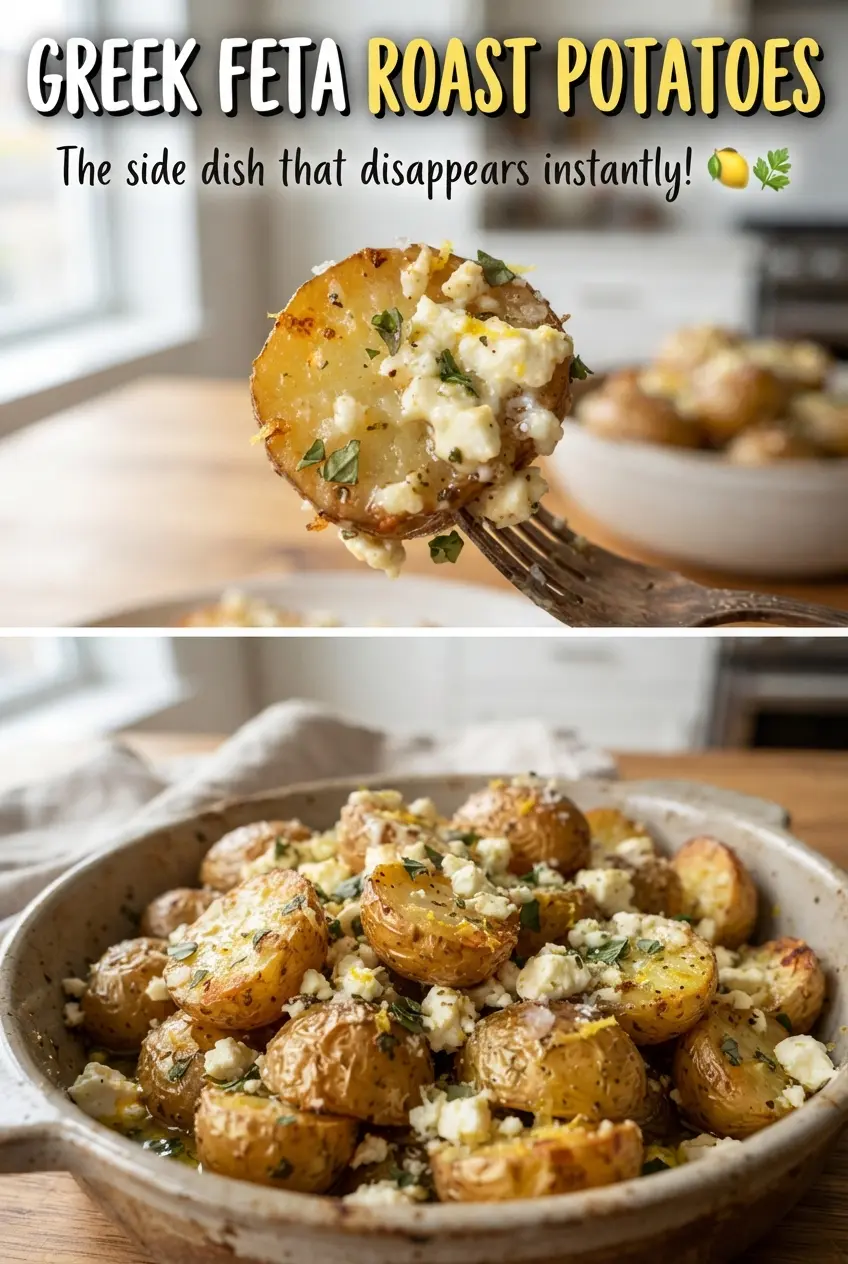
Greek Feta Roast Potatoes
Ingredients
Equipment
Method
- Preheat the oven to 425F and place a roasting pan or sheet pan inside while it heats, so the edges start crisping right away.
- In a roasting pan, toss potato wedges with olive oil, lemon juice, chicken broth, minced garlic, dried oregano, salt, and black pepper until evenly coated.
- Spread the potatoes in a single layer so they sit cut-side down and have space for browning.
- Roast 45-50 minutes, flipping halfway, until the liquid is absorbed and you see crispy, golden edges and a dry, caramelized surface.
- Remove the pan from the oven and top hot potatoes with crumbled feta and chopped fresh dill or parsley so the feta softens slightly on contact.
- Serve hot, with any remaining browned lemon-oregano pan juices drizzled over the wedges.