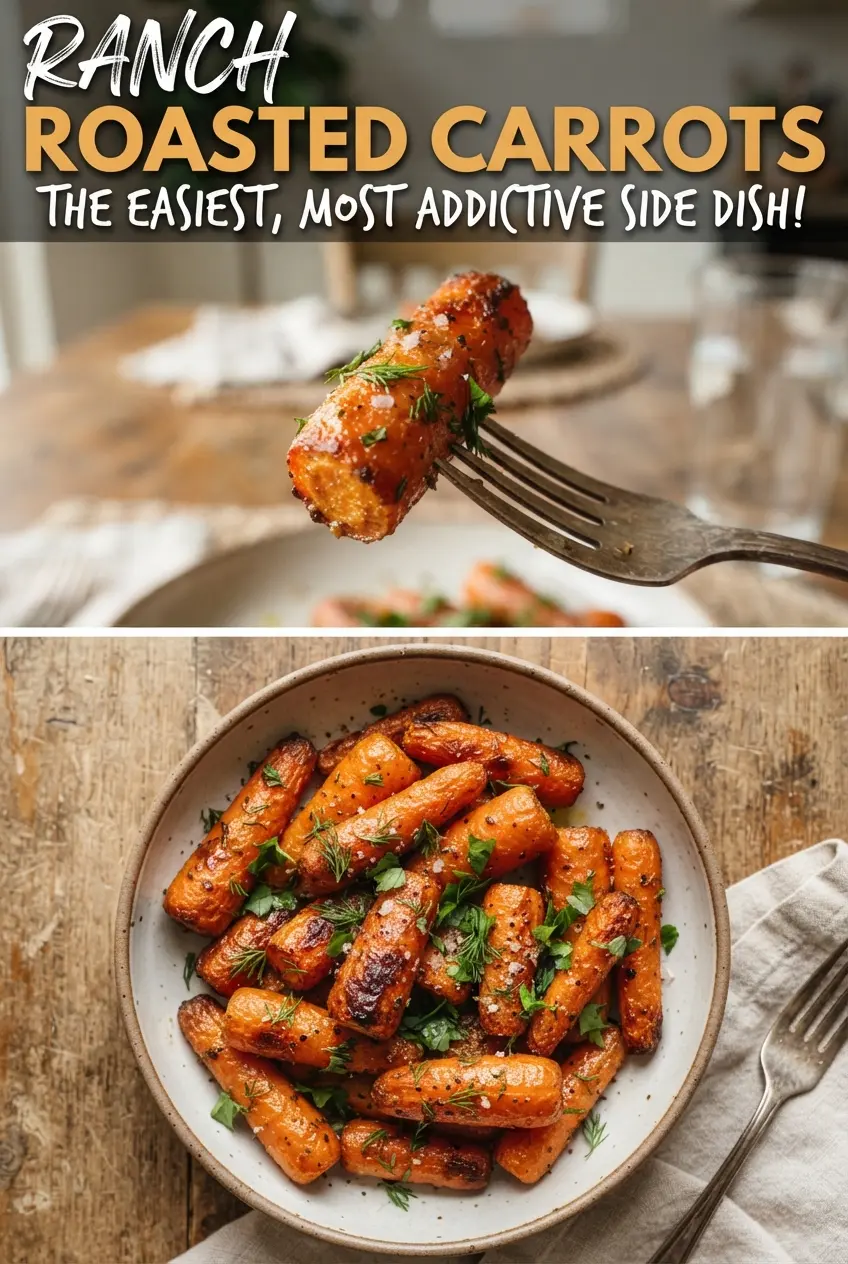
Ranch roasted carrots come out with crisp, browned edges, tender centers, and just enough savory coating to make a plain side dish feel worth repeating. The carrots keep their sweetness, but the ranch seasoning and Parmesan pull them into something salty, herby, and a little addictive. They’re the kind of side that disappears faster than the main dish when the pan hits the table warm.
The trick here is keeping the carrots in a single layer so they roast instead of steam. Ranch seasoning needs a little oil to cling to the carrots, and the Parmesan goes on after roasting so it stays sharp and doesn’t burn in the oven. A quick toss halfway through is what gives you even color without losing those caramelized edges.
Below, you’ll find the small details that make these carrots work every time, plus a few easy ways to adjust them for different dinners. If you’ve ever had roasted carrots turn soft and flat, this version fixes that with a hotter oven and a lighter hand on the pan.
The carrots got those browned, crisp edges I always want, and the ranch-Parmesan finish made them taste like more than a side dish. I served them with chicken and my kids kept picking them off the pan before dinner.
Love these ranch roasted carrots? Save them for the nights when you want a fast, savory side with crisp edges and a cheesy finish.
The Trick to Carrots That Brown Instead of Steaming
The biggest mistake with roasted carrots is crowding the pan. When the pieces sit on top of each other, they release moisture, and that moisture turns the oven into a steamer. You get soft carrots, but you miss the caramelized edges that make this dish worth serving.
425°F gives the carrots enough heat to brown before they collapse. Tossing halfway through matters here because the sides touching the pan brown faster than the tops, and that one turn gives you even color without overcooking the pieces underneath. If the carrots are cut too thick, they’ll stay firm in the middle after the outside is done, so keep the sticks similar in size.
What the Ranch Packet and Parmesan Are Doing Here
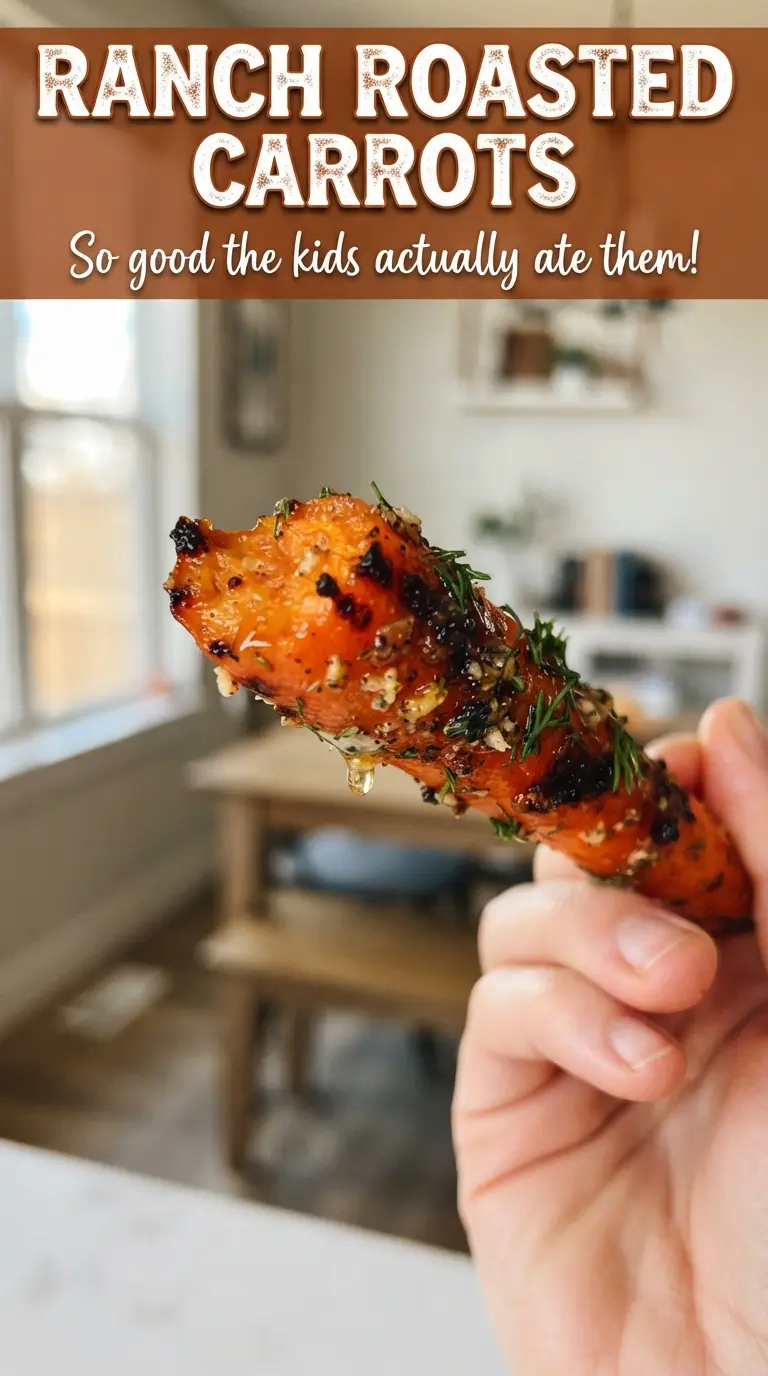
- Carrots — Fresh carrots with a medium thickness roast best because they hold their shape and caramelize at the edges. Baby carrots work in a pinch, but they soften faster and don’t brown quite as well.
- Olive oil — This helps the seasoning stick and gives the carrots enough surface fat to brown. You can use avocado oil if that’s what you keep on hand; either way, don’t skimp or the seasoning will look dusty instead of clinging.
- Ranch seasoning — This is the backbone of the recipe. The packet gives you salt, herbs, and a little tang in one move, and there isn’t a substitute that lands in quite the same place unless you build a homemade blend with dried dill, garlic, onion, and buttermilk powder.
- Parmesan — Add it after roasting so it melts lightly from the heat of the carrots instead of scorching in the oven. Finely grated Parmesan melts and coats the surface better than big shreds.
- Fresh dill or parsley — This wakes everything up at the end and keeps the carrots from tasting heavy. Dill gives the stronger ranch connection; parsley keeps things fresh and clean.
Getting the Seasoning to Stick and the Edges to Crisp
Coating the Carrots Evenly
Toss the carrots with olive oil first, then add the ranch seasoning so every piece gets a thin, even film. If you dump everything in together, the dry seasoning clumps and leaves some pieces under-seasoned. The carrots should look lightly coated, not buried in powder.
Roasting in a Single Layer
Spread the carrots out with space between them. If they touch too much, they trap steam and soften before they brown. Line the pan with parchment for easy cleanup, but don’t use a crowded sheet pan just because it looks full enough.
Finishing After the Oven
Roast until the carrots are tender when pierced with a fork and the edges have browned. Add the Parmesan and herbs right away while the carrots are hot, then toss once so the cheese clings instead of sitting on top in dry flakes. If they come out pale, they needed more space or a hotter oven, not more seasoning.
Three Smart Ways to Adjust These Roasted Carrots
Dairy-Free Version
Skip the Parmesan and finish with extra herbs plus a pinch of flaky salt. You’ll lose the cheesy edge, but the carrots stay savory and the ranch seasoning still carries the dish.
Gluten-Free Check
Most ranch seasoning packets are gluten-free, but the label matters because blends vary by brand. If yours is safe, the recipe stays exactly the same and you don’t need any other changes.
Make It Stronger on the Ranch Side
Add an extra teaspoon of ranch seasoning and a little more dill for a bolder finish. Don’t add more oil to compensate, or the carrots will stop browning and start sliding around the pan.
Storage and Reheating
- Refrigerator: Store leftovers in an airtight container for up to 4 days. They’ll soften a bit, but the flavor holds.
- Freezer: Not my first choice. Roasted carrots freeze, but the texture turns soft after thawing.
- Reheating: Warm them on a sheet pan in a 400°F oven until hot. The oven brings back a little edge; the microwave just makes them limp.
Questions I Get Asked About This Recipe
Ranch Roasted Carrots
Ingredients
Equipment
Method
- Preheat oven to 425F and line a sheet pan with parchment, so the carrots roast evenly without sticking.
- Toss carrots with olive oil and ranch seasoning until evenly coated, making sure every stick is lightly covered.
- Spread carrots in a single layer on the sheet pan, leaving space so they can brown at the edges.
- Roast for 20-25 minutes at 425F, tossing halfway, until tender and browned at the edges.
- Sprinkle with Parmesan and fresh dill or parsley, then serve warm.