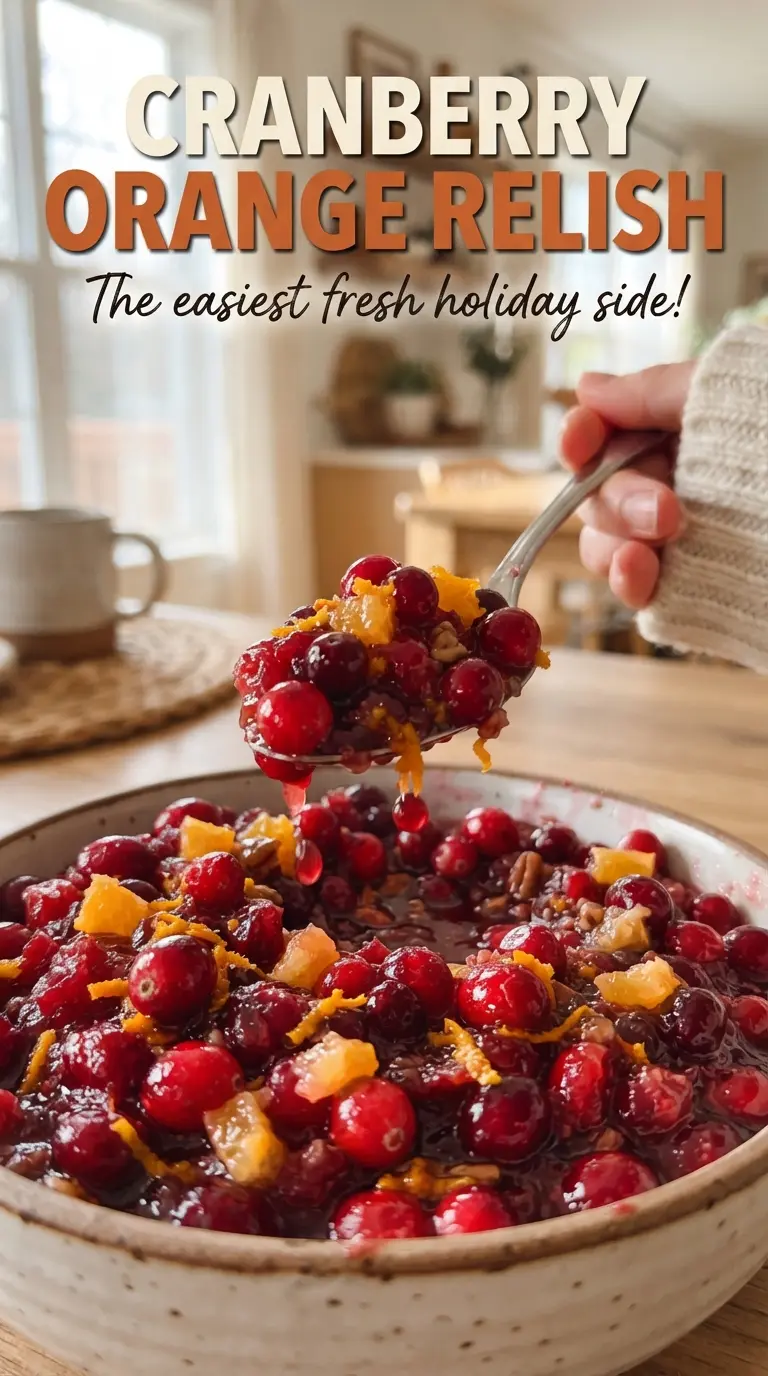
Cranberry orange relish wakes up a plate in a way cooked cranberry sauce never quite does. It stays bright and punchy, with little bursts of tart cranberry, sweet citrus, and just enough sugar to pull everything into balance. The texture is the best part: finely chopped and glossy, not jammy, so it tastes fresh and sharp instead of heavy.
The trick is in the food processor. You want the cranberries and orange to be chopped fine enough that the sugar can draw out their juices, but not so far that the mixture turns watery or paste-like. Leaving the orange unpeeled adds a little bitterness and perfume from the zest, which keeps the relish from tasting flat. The orange liqueur gives it a rounder citrus note, but orange juice works well if that’s what you have.
Below, I’ve included the one texture cue that keeps this relish from turning mushy, plus a few simple ways to adjust it for your table.
The orange stayed bright and the cranberries softened just enough after chilling. I made it the night before, and by dinner the sugar had pulled out all that gorgeous juice without turning it into sauce.
Like this cranberry orange relish? Save it to Pinterest for the tart, bright side dish that comes together in 10 minutes and chills into perfect holiday flavor.
The Reason This Relish Stays Bright Instead of Turning Mushy
Most cranberry relish goes wrong in the processor, not in the bowl. Pulse too long and the berries release too much juice before the sugar has a chance to do its work, which leaves you with a loose, soupy mixture instead of a clean, spoonable relish. Stop when the cranberries are finely chopped and the orange is broken down into tiny pieces with visible flecks of zest.
The chilling time matters just as much as the chopping. Sugar needs a few hours to draw moisture from the fruit and mellow the raw edge of the cranberries. If you serve it right away, it tastes sharp and a little gritty. After a good chill, the flavors settle together and the texture turns glossy and bright.
- Pulse, don’t puree. The food processor should chop the fruit evenly, not turn it into juice.
- Use the orange peel. The zest in the skin gives the relish its perfume and keeps the flavor from tasting one-note.
- Chill long enough. Four hours is the minimum if you want the sugar fully dissolved and the flavors balanced.
What Each Ingredient Is Actually Doing in This Recipe
- Primary ingredient (the star) — Quality matters most. Choose the best you can find.
- Cooking medium (oil, butter, or broth) — This carries flavors and prevents dryness.
- Seasonings (salt, pepper, spices, herbs) — Layer flavors so nothing overpowers. Build depth gradually.
- Aromatics (garlic, onion, herbs) — Cook with fat to bloom flavors. Become the foundation.
- Supporting ingredients — Complement the main ingredient without overpowering it.
- Sauce or liquid (if applicable) — Brings flavors together. Balance richness with acid.
- Acid (lemon, vinegar, wine, or other) — Brightens and prevents flat-tasting results.
- Final finish (garnish, glaze, or sauce) — Prevents one-dimensional taste and adds visual appeal.
What the Orange Liqueur Is Doing Here
- Cranberries — Fresh cranberries bring the sharp, clean tartness that makes this relish worth serving. Frozen cranberries work too; use them straight from the freezer so they don’t get soft before chopping.
- Navel orange — A sweet orange with a thin skin gives you juice, zest, and fragrance all at once. Seed it well before processing so the relish stays pleasant, not bitter from stray seeds.
- Sugar — This isn’t just for sweetness. It pulls the juices out of the fruit and softens the edge of the cranberries so the relish tastes balanced instead of harsh.
- Orange liqueur or orange juice — The liqueur adds a deeper citrus note and a little grown-up roundness. Orange juice works fine if you want it alcohol-free, but it won’t have quite the same finish.
- Pinch of salt — It doesn’t make the relish salty; it keeps the sweetness from flattening out and makes the citrus taste clearer.
Chopping, Sweetening, and Letting It Rest
Breaking Down the Fruit
Add the cranberries and orange chunks to a food processor and pulse in short bursts. Watch for a finely chopped mix with no big pieces left, but stop before the bowl looks wet or pasty. If you overprocess, the cranberry skins break too much and the relish loses its fresh, crunchy bite.
Stirring in the Sugar
Scrape the chopped fruit into a bowl and stir in the sugar, orange liqueur or juice, and salt. The mixture will look dry at first, then turn glossy as the sugar starts drawing out liquid. That’s the moment you know it’s on track. Use a bowl with a little room, because the relish loosens as it sits.
Chilling for the Best Texture
Cover the bowl and chill it at least 4 hours, or overnight if you want the flavor fully rounded. During that time, the sugar dissolves and the fruit softens just enough to spoon neatly. Give it a good stir before serving, because the juices settle at the bottom and the top can look drier than it really is.
Finishing at the Table
Spoon the relish into a serving bowl and garnish with fresh mint. The mint is optional, but it adds a cool top note that plays nicely against the tart cranberry and orange. Serve it cold or lightly chilled so the texture stays crisp and the citrus stays loud.
How to Adjust This Relish for Different Tables
Make It Alcohol-Free
Use orange juice instead of orange liqueur. You’ll still get a bright citrus finish, just without the slight warmth and depth that the liqueur brings. If your orange is especially sweet, the juice-only version can taste a little lighter and fresher.
Dial Back the Sugar
If you like a sharper relish, reduce the sugar slightly, then chill it and taste again before serving. Cranberries vary a lot in tartness, so a batch made with very sharp berries may need the full amount to taste balanced. Cutting too much sugar can leave the relish harsh instead of bright.
Swap in a Different Citrus
A mandarin or blood orange changes the character a little, but the method stays the same. Sweeter citrus makes the relish softer and less sharp, while blood orange gives it a deeper color and a rounder finish. Keep the peel in the mix if you want that fragrant citrus note to come through.
Storage and Reheating
- Refrigerator: Keeps well for 5 to 7 days in a covered container. The flavor gets smoother after the first day.
- Freezer: It freezes well for up to 2 months, though the texture softens a bit after thawing. Freeze in a tight container and thaw in the refrigerator.
- Reheating: No reheating needed. Serve it cold or let it sit at room temperature for 15 to 20 minutes so the citrus flavor opens up. Don’t microwave it; heat makes the fruit slump and dulls the fresh taste.
Answers to the Questions Worth Asking
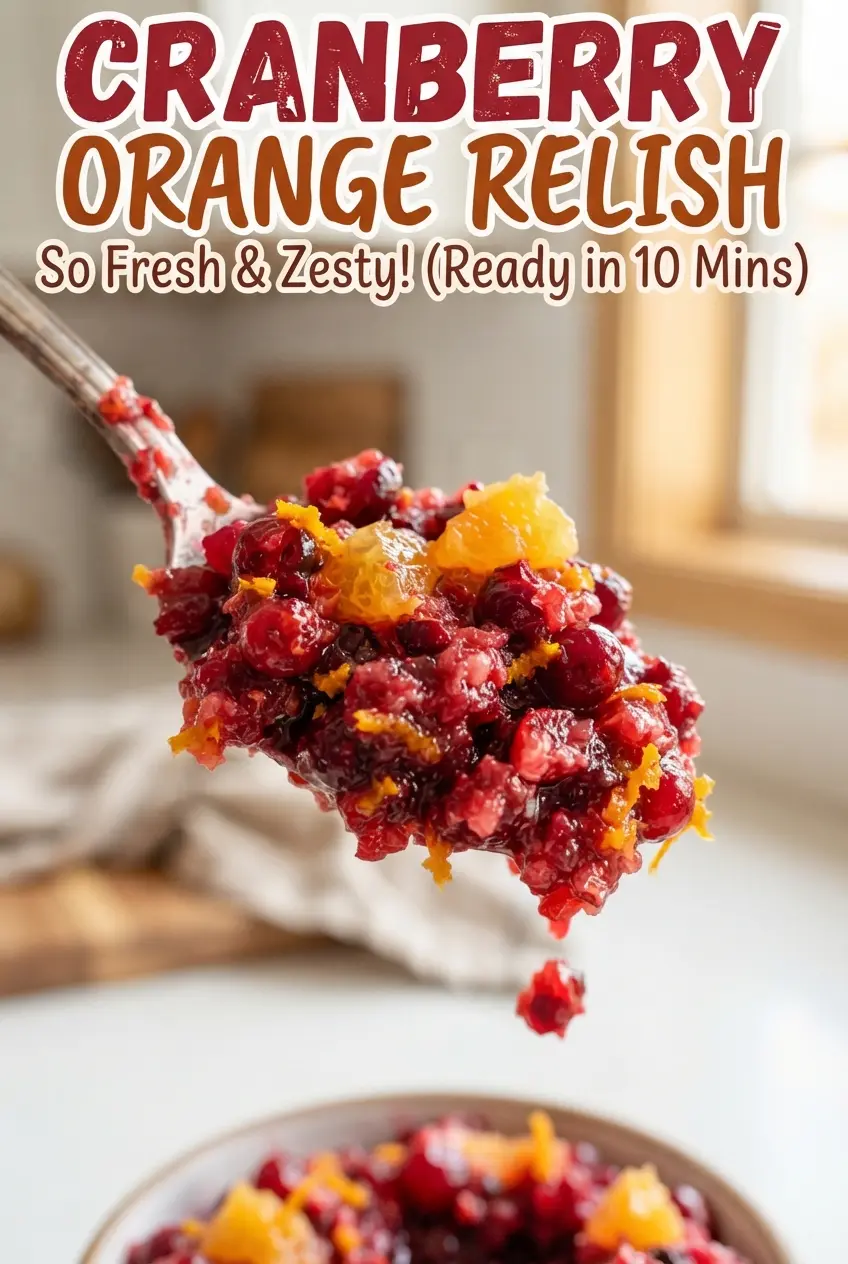
Cranberry Orange Relish
Ingredients
Equipment
Method
- Pulse the fresh cranberries and orange chunks in a food processor until finely chopped but not pureed, about 20-30 seconds with pauses to scrape down the sides if needed. Stop while you can still see small pieces rather than a smooth puree.
- Transfer to a bowl and stir in sugar, orange liqueur or orange juice, and a pinch of salt until evenly combined. The mixture should look glossy and slightly wet from the orange juices.
- Cover and chill at 40°F (4°C) for at least 4 hours or overnight. You should notice the relish thicken as the sugar draws out juices.
- Stir well before serving to redistribute any liquid and re-suspend the chopped fruit. Serve chilled or at cool room temperature for the brightest flavor.
- Garnish with fresh mint right before serving to keep it vivid and fragrant. Add leaves as a final visual cue of freshness.