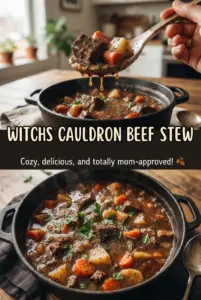
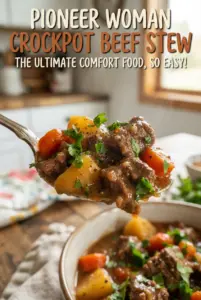
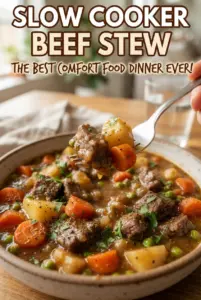
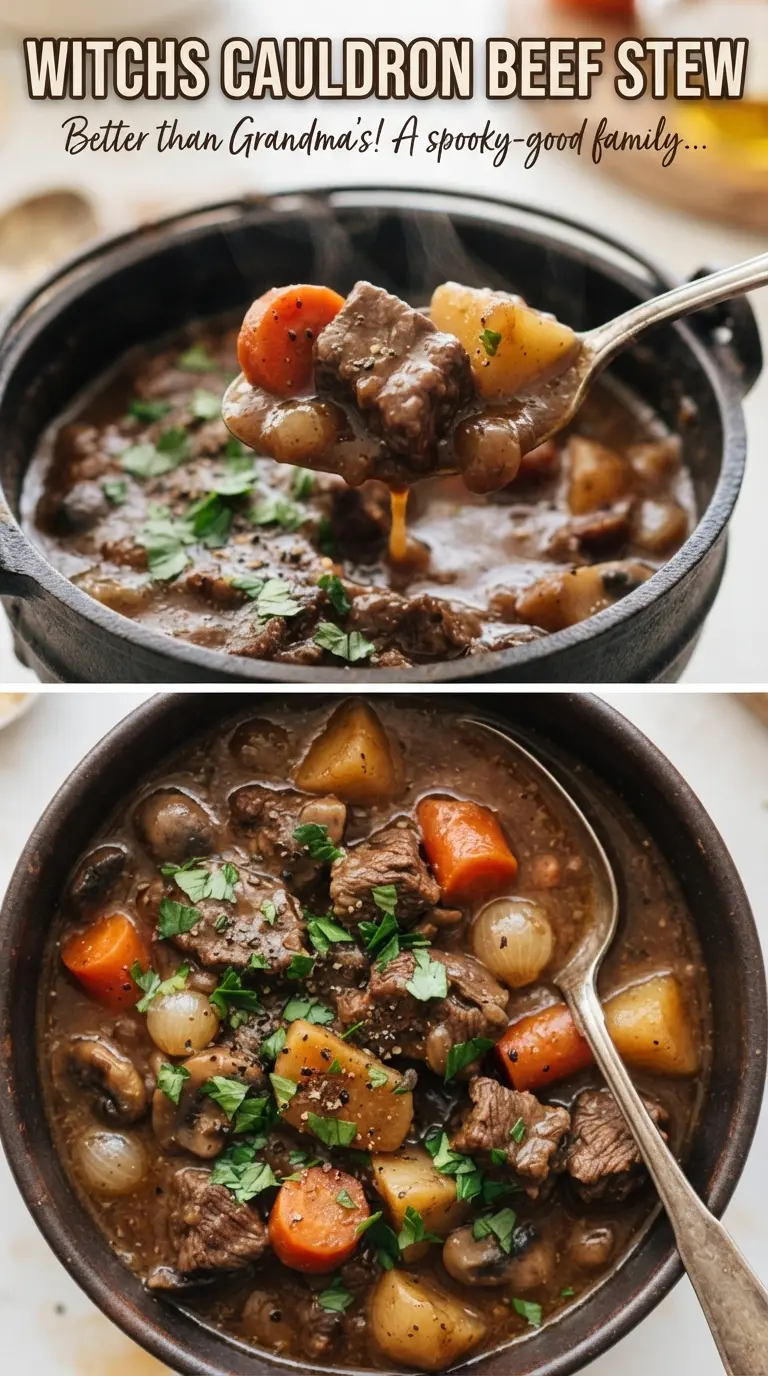
Witch’s Cauldron Beef Stew lands thick, dark, and deeply savory, with beef that turns tender enough to cut with a spoon and a broth that tastes like it spent all day building itself layer by layer. The purple potatoes hold their shape without turning chalky, the carrots stay sweet, and the black beans make the whole pot feel heartier than a standard beef stew. It’s the kind of dinner that fills the kitchen with the smell of onions, stout, and browned beef long before it hits the table.
The key is treating the beef like you mean it. Browning in batches gives you the fond that makes the broth taste rich instead of flat, and the stout pulls up every browned bit from the bottom of the pot. The tomato paste, balsamic, smoked paprika, and thyme give the stew a deep, slightly smoky edge that keeps it from tasting one-note, while the potatoes and carrots go in late enough to stay intact.
Below, I’ve included the part that matters most for getting the texture right, plus a few swaps that actually make sense if you need them. The puff pastry bats are a simple finish, but they turn this into a bowl people remember.
The stout and balsamic gave the broth this deep, rich flavor, and the beef was fall-apart tender after simmering. I loved that the purple potatoes stayed intact instead of dissolving into the stew.
Save this Witch’s Cauldron Beef Stew for the night you want tender beef, dark stout broth, and those puff pastry bats on top.
The Reason This Stew Tastes Deeper Than Most Beef Stews
Most beef stews go flat because the meat is stewed before it gets a real sear. That browned crust isn’t decoration; it’s the foundation of the broth. If you crowd the pan, the beef steams and you lose the deep, roasted flavor that makes this pot taste like it simmered for hours instead of just long enough.
The stout matters for the same reason. It brings bitterness, malt, and a dark edge that balances the sweetness from the carrots and the richness from the beef. A splash of balsamic vinegar keeps the stew from tasting heavy, and the tomato paste adds body without making the broth tomato-forward. The result is a stew that tastes layered instead of muddy.
- Beef chuck — This cut has enough fat and connective tissue to turn tender during a long simmer. Leaner beef turns stringy and dry before the vegetables are done.
- Stout — Use a stout you’d actually drink. A dark, malty beer gives the broth depth; an overly sweet beer can make the stew taste cloying.
- Purple potatoes — They hold their shape better than some waxy potatoes and add that dramatic color, but they should still go in late so they don’t break down too much.
- Puff pastry — Bake the bats separately until fully golden. If they go into the stew too soon, they soften fast and lose the crisp edge that makes the topping work.
What Each Ingredient Is Actually Doing in This Recipe
- Primary ingredient (the star) — Quality matters most. Choose the best you can find.
- Cooking medium (oil, butter, or broth) — This carries flavors and prevents dryness.
- Seasonings (salt, pepper, spices, herbs) — Layer flavors so nothing overpowers. Build depth gradually.
- Aromatics (garlic, onion, herbs) — Cook with fat to bloom flavors. Become the foundation.
- Supporting ingredients — Complement the main ingredient without overpowering it.
- Sauce or liquid (if applicable) — Brings flavors together. Balance richness with acid.
- Acid (lemon, vinegar, wine, or other) — Brightens and prevents flat-tasting results.
- Final finish (garnish, glaze, or sauce) — Prevents one-dimensional taste and adds visual appeal.
Building the Stew So the Meat Stays Tender and the Broth Stays Rich
Browning the Beef in Batches
Season the beef, toss it with flour, and brown it in a hot oiled pot without crowding the pieces. You want deep brown edges and some stickiness on the bottom of the pan; that’s flavor, not a problem. If the pieces pile up, the temperature drops and the beef releases liquid instead of browning, which leaves the finished stew dull.
Cooking the Onion Base
Add the onion to the same pot and cook until it softens and starts turning translucent at the edges. Stir in the garlic and tomato paste for a full minute so the garlic loses its raw bite and the tomato paste darkens slightly. If the paste still looks bright red and raw, keep it moving until it smells sweet and concentrated.
Deglazing with Stout
Pour in the stout and scrape the bottom of the pot while the liquid is still bubbling. Those browned bits should lift right into the beer and turn the base darker almost immediately. If anything seems stuck hard, lower the heat for a minute; high heat can burn the fond before it has a chance to dissolve.
Simmering Until the Beef Softens
Add the broth, balsamic, smoked paprika, thyme, and beef, then cover and let it simmer gently for about two hours. You want a low, lazy bubble, not a hard boil, because boiling tightens the meat and turns the broth cloudy. By the end, the beef should give easily when pressed with a spoon but still hold its shape.
Adding the Vegetables at the End
Stir in the purple potatoes and carrots after the beef has already started to soften, then simmer until the potatoes are tender and the carrots have some bite left. Add the black beans for the last 10 minutes so they warm through without breaking apart. The stew should be thick and glossy by then; if it looks too loose, keep it uncovered for a few extra minutes.
How to Adapt This Stew Without Losing the Part That Makes It Work
Make it alcohol-free
Replace the stout with extra beef broth plus 1 tablespoon of molasses or a little extra balsamic for depth. You won’t get the same malt bitterness, but you’ll keep the dark, rounded flavor that keeps the stew from tasting thin.
Make it gluten-free
Skip the flour and use a cornstarch slurry at the end if you want extra body, or coat the beef lightly with a gluten-free flour blend before browning. Choose a gluten-free stout or swap in more broth if that’s easier. The stew still thickens nicely as the potatoes simmer.
Swap the vegetables
Regular Yukon Gold or red potatoes work if you can’t find purple potatoes, and parsnips can stand in for some of the carrots. What matters is adding the quicker-cooking vegetables late so they don’t dissolve into the broth.
Storage and Reheating
- Refrigerator: Store for up to 4 days. The broth thickens as it chills, and the flavors get even deeper by day two.
- Freezer: Freezes well for up to 3 months, though the potatoes will soften a bit after thawing. Cool completely before freezing in airtight containers.
- Reheating: Reheat gently on the stove over medium-low with a splash of broth if needed. Don’t boil it hard, or the beef can tighten and the potatoes can break apart.
Answers to the Questions Worth Asking
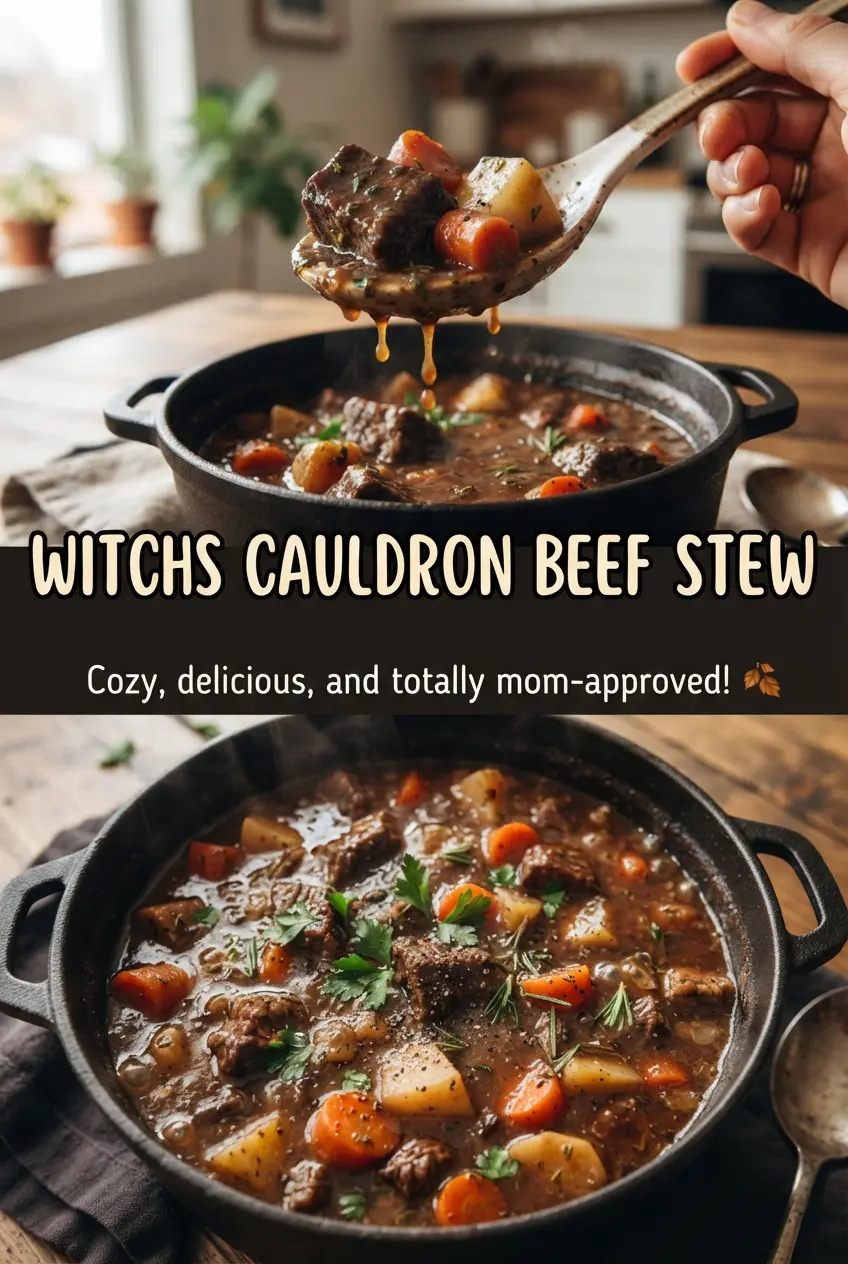
Witchs Cauldron Beef Stew
Ingredients
Equipment
Method
- Season the beef with salt and black pepper, then toss it with the all-purpose flour until evenly coated. Heat the vegetable oil in a Dutch oven over high heat and brown the beef in batches, keeping the oil hot and turning pieces until deeply browned.
- Reduce heat to medium and cook the red onion for 5 minutes until softened. Add the garlic and tomato paste and cook 1 minute, stirring until fragrant.
- Pour in the stout and scrape up the browned bits from the bottom of the pot. Stir in the beef broth, balsamic vinegar, smoked paprika, and dried thyme, then add the browned beef back in.
- Cover the Dutch oven and simmer for 2 hours until the beef is tender and the stew is thickening.
- Add the purple potatoes and carrots, then simmer for 45 minutes until the potatoes are tender. Stir in the black beans and simmer for 10 minutes to warm through.
- Ladle the hot stew into bowls, then float a baked puff pastry bat on each serving. Serve immediately while the topping is golden and crisp.