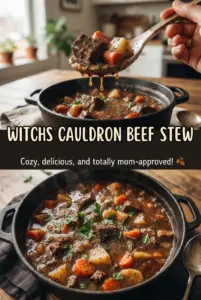
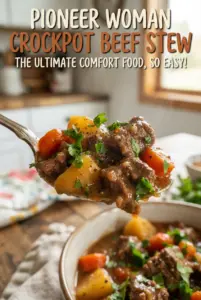
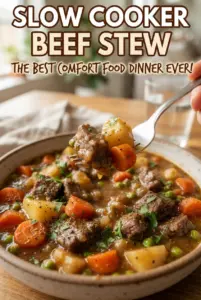
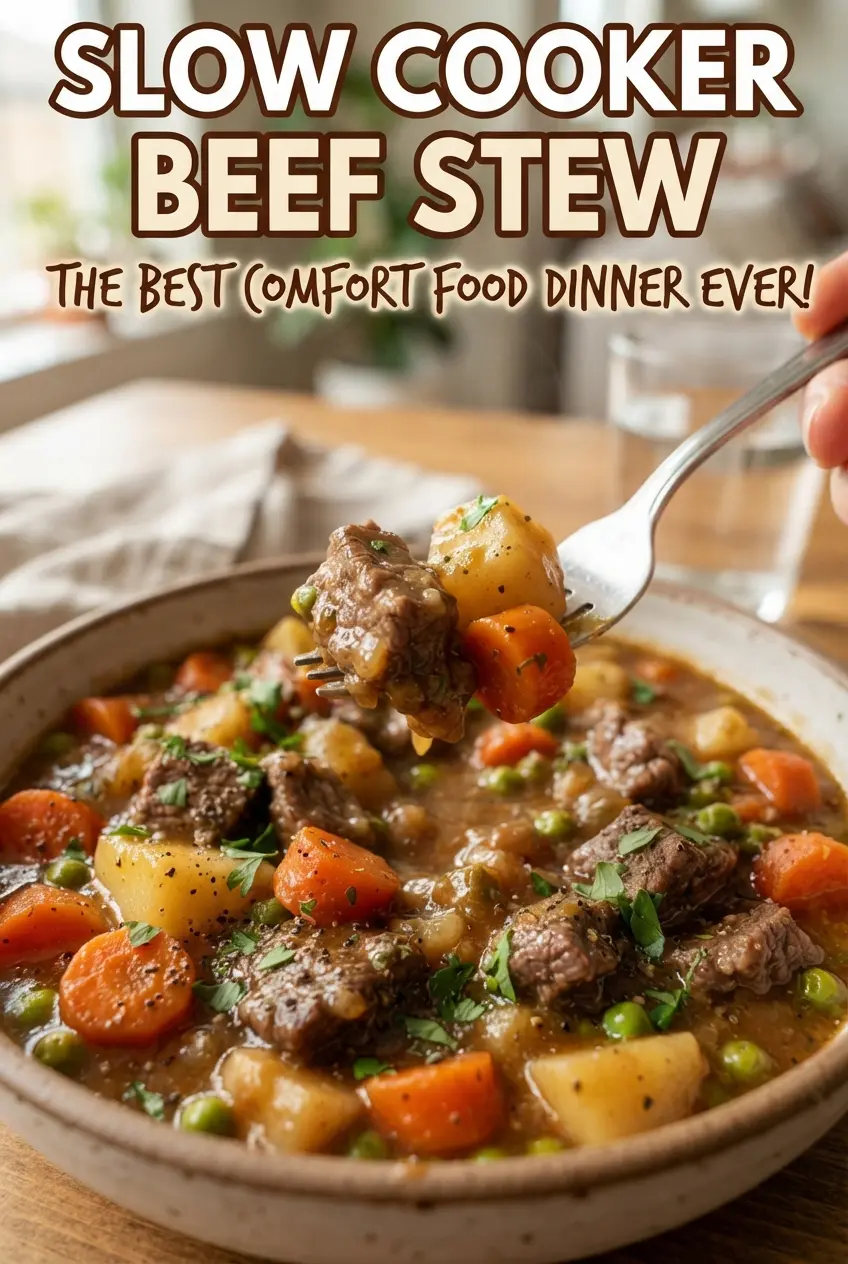
Slow cooker beef stew turns into a deep, spoon-coating meal when the beef has time to break down and the broth has time to thicken around the vegetables. The best bowls have tender chunks of chuck, soft potatoes that still hold their shape, and carrots that taste like they actually belong in the pot instead of floating in the background. It’s the kind of stew that makes the kitchen smell like dinner has been waiting for you all day.
The trick is building flavor before the slow cooker ever turns on. Browning the beef gives you the savory base that long cooking alone can’t create, and the tomato paste plus Worcestershire add a quiet richness that makes the broth taste fuller. Tossing the beef with flour before searing also helps the stew finish with a naturally thickened body instead of a thin, brothy texture.
Below you’ll find the small details that keep the beef tender, the vegetables intact, and the broth glossy instead of muddy. The last-minute peas and parsley are worth keeping in — they lift the whole pot right before serving.
The beef was fall-apart tender and the broth thickened up just enough after 8 hours on low. I loved that the potatoes held their shape and the peas at the end kept it from tasting heavy.
Save this slow cooker beef stew for the kind of night when you want tender beef, glossy gravy, and almost no hands-on work.
The Browning Step That Keeps This Stew from Tasting Flat
Slow cooker stew can go bland fast if every ingredient goes straight into the pot raw. The short browning step changes that. When the beef hits hot oil, the surface develops savory browned bits that dissolve into the broth later, giving the stew its depth. If you skip that step, the finished pot usually tastes like beef and vegetables simmered in broth instead of a proper stew.
The other detail that matters is scraping the pan after the onion and tomato paste go in. Those browned bits are concentrated flavor, and the splash of broth loosens them without burning them into bitterness. That little deglazing move is what keeps the base rich and dark instead of dull.
What Each Ingredient Is Actually Doing in This Pot
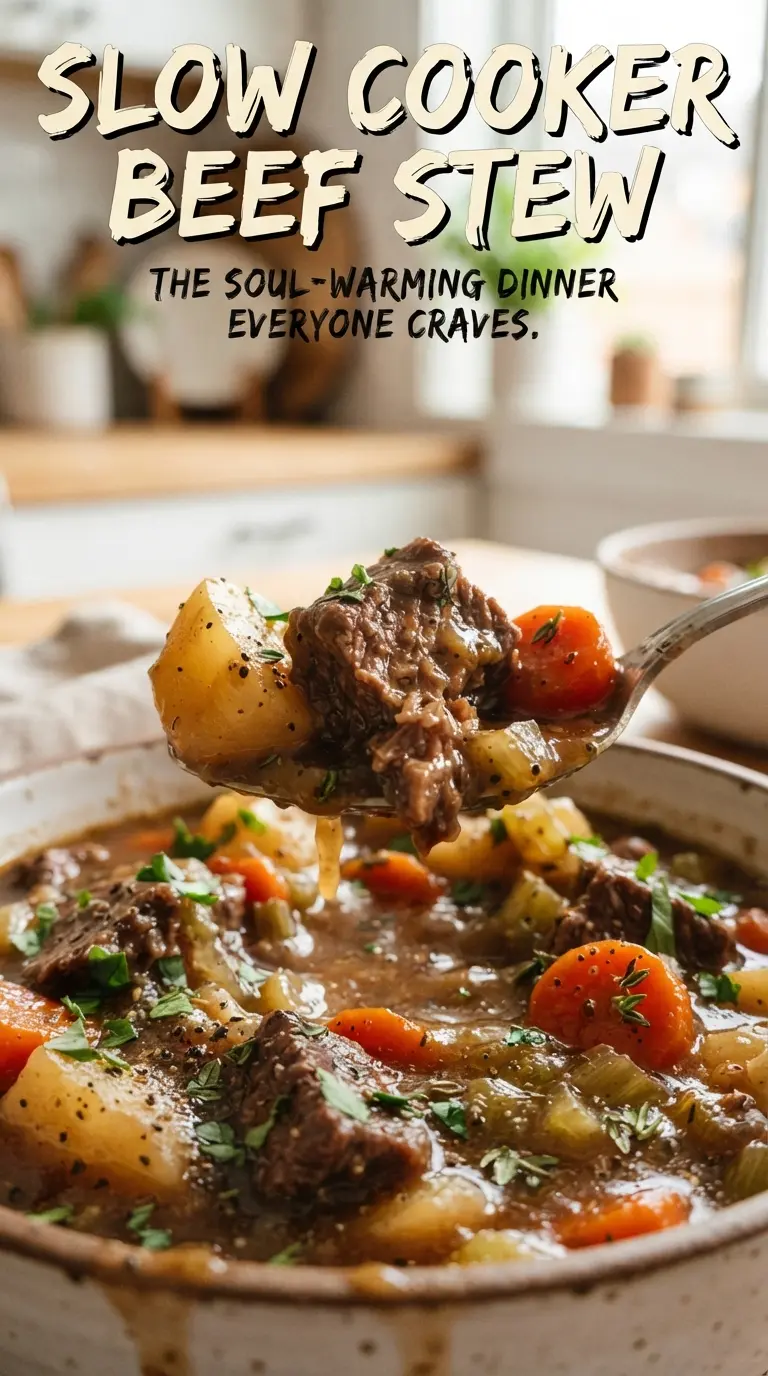
- Beef chuck roast — This is the cut that turns silky after long cooking. Leaner stewing meat can dry out before it gets tender, but chuck has enough connective tissue to melt into the broth.
- Flour — A light coating helps the beef brown and also gives the stew a subtle thickened finish. If you need to skip it, the stew will still work, but the broth will stay looser.
- Tomato paste — This doesn’t make the stew taste like tomato; it deepens the base and adds a darker, more rounded savory note. Cook it for a full minute with the onions and garlic so it loses the raw edge.
- Yukon gold potatoes — They hold their shape better than russets and give you a creamier texture without dissolving into the broth. Cut them into even chunks so they finish at the same time as the carrots.
- Worcestershire sauce — A small amount sharpens the beef flavor and adds complexity you’d miss if it weren’t there. There isn’t a perfect swap, but soy sauce plus a little extra broth will give you some of the same savory lift.
Building the Stew So the Beef Stays Tender and the Vegetables Don’t Collapse
Browning the Beef in Small Batches
Dust the beef with flour, salt, and pepper, then sear it in a hot pan without crowding it. You want a real brown crust, not gray cubes steaming in their own juices. If the pan looks wet, the heat is too low or the pot is too crowded, and the beef will never develop the flavor that carries the whole stew.
Making the Base in the Same Pan
Cook the onion in the same skillet until it softens and starts picking up color from the fond. Stir in the garlic and tomato paste for about a minute so the paste darkens a shade and loses its raw taste. Then pour in a cup of broth and scrape the bottom clean; that’s where the best flavor is hiding.
Slow Cooking Without Turning Everything Mushy
Add the broth, Worcestershire, potatoes, carrots, celery, thyme, and bay leaves, then cook on low until the beef yields easily when pressed with a fork. Low and slow gives the chuck time to relax into tenderness without shredding into threads too soon. High heat works in a pinch, but it’s easier to overshoot the vegetables and end up with potatoes that start breaking apart at the edges.
The Final Few Minutes That Wake the Pot Up
Stir in the peas near the end so they stay bright and sweet. Pull out the bay leaves before serving, then scatter the parsley over the top right before the bowls hit the table. If the stew tastes a little muted at the end, it usually just needs a small pinch of salt more than anything else.
How to Adapt This Stew for Different Kitchens and Schedules
Gluten-Free Version
Skip the all-purpose flour and toss the beef with a gluten-free flour blend or cornstarch instead. The stew will still thicken nicely, though cornstarch gives a cleaner finish and a slightly silkier broth.
No-Wine, Pantry-Style Flavor Boost
This recipe doesn’t need wine to taste rich. If you want a deeper broth, add a teaspoon of soy sauce or a little extra Worcestershire when the liquids go in, which boosts savoriness without changing the texture.
Lower-Carb Bowl
Replace the potatoes with turnips or celery root if you want fewer starches. They’ll soften into the stew but won’t give you the same creamy, classic potato texture, so expect a lighter result.
Storage and Reheating
- Refrigerator: Store in an airtight container for up to 4 days. The stew thickens as it chills, and the potatoes soften a bit more overnight.
- Freezer: It freezes well for up to 3 months. Cool it completely first, then freeze in portions; the potatoes may become a little softer after thawing, but the flavor holds up well.
- Reheating: Warm it gently on the stove over medium-low heat or in the microwave at reduced power. Don’t boil it hard, or the beef can tighten up and the potatoes can start breaking down too much.
Answers to the Questions Worth Asking
Slow Cooker Beef Stew
Ingredients
Equipment
Method
- Toss the beef cubes with flour, salt, and black pepper until coated, then shake off any excess flour for better browning. 4-5 minutes later, they should look dusty and evenly seasoned before they hit the pan.
- Heat olive oil in a hot cast iron skillet and brown the beef in batches for 4-5 minutes per batch, turning so all sides develop color. Stop when browned edges appear and no longer look raw in the center.
- Transfer the browned beef to the slow cooker as each batch finishes, keeping it from cooling too much between batches. Aim for a consistent layer so it heats evenly later.
- Cook the diced onion in the same skillet for 4 minutes, stirring, until softened and lightly golden. Add garlic and tomato paste and cook for 1 minute until fragrant and darker in color.
- Pour in 1 cup of beef broth and scrape up the browned bits from the bottom of the skillet. Keep stirring until the liquid looks dark and glossy, then transfer it into the slow cooker.
- Add the remaining beef broth, Worcestershire sauce, potatoes, carrots, celery, dried thyme, and bay leaves to the slow cooker, then stir to distribute evenly. Make sure the bay leaves are submerged in the liquid.
- Cover and cook on LOW for 8 hours (or HIGH for 4-5 hours) until the beef is fork-tender. You should see the vegetables softened and the stew thickening as it simmers.
- Stir in the frozen peas and cook for the last 10 minutes with the lid on until bright green. The peas should be tender but still keep their color.
- Remove the bay leaves, then top with chopped fresh parsley before serving. The stew should look thick and glossy with tender beef chunks and visible vegetables.