White queso dip should be silky enough to coat a chip in one clean sweep, with just enough heat from jalapeño and salsa verde to keep each bite from feeling heavy. When it’s made right, it stays smooth instead of turning grainy or clumpy, and the flavor lands in layers: buttery onion, mellow cream cheese, sharp white cheddar, then that bright little lift from cilantro at the end.
The trick is treating the cheese like the main event, not an afterthought. White cheddar melts best when it’s shredded fine, cream cheese softens the texture, and the cream goes in after the cheese starts loosening so the sauce doesn’t seize up. I also cook the onion and jalapeño first, which keeps the dip from tasting flat or raw. That short sauté is what gives the queso a real cooked flavor instead of just melted dairy.
Below, I’ve included the one part that matters most for keeping queso smooth on the stove, plus the swaps that still work if you want a milder dip or need to use what’s already in the fridge.
The queso stayed creamy the whole time we were eating, and the salsa verde gave it a bright kick without making it greasy. I’ve made plenty of dips that tighten up fast, but this one stayed smooth right in the bowl.
Want that silky white queso with salsa verde and jalapeño? Save this dip for your next chip-and-scoop night.
The Reason This Queso Stays Smooth Instead of Going Grainy
Most queso breaks because the heat is too aggressive once the cheese goes in. Cheese doesn’t need a hard boil to melt; it needs steady, low heat and a little patience. If the sauce gets too hot too fast, the fats separate and the texture turns gritty or oily instead of glossy.
The other thing that helps here is the cream cheese. It acts like a buffer, giving the sauce body and helping the cheddar melt into the liquid more evenly. I shred the cheddar myself because pre-shredded cheese is coated with starch, and that coating can make the finished dip a little pasty. The goal is a pourable dip that still clings to a chip, not a thick paste that sets up in the bowl.
- Low heat matters after the cheese goes in — keep the burner at medium-low or lower once the dairy is added so the sauce emulsifies instead of splitting.
- Freshly shredded white cheddar melts cleaner — it gives you a smoother finish and a sharper cheese flavor than bagged shreds.
- Cream cheese adds insurance — if the cheddar starts to tighten, the cream cheese helps pull the sauce back together.
- Salsa verde brightens the richness — it keeps the dip from tasting one-note and adds just enough acidity to wake everything up.
What Each Ingredient Is Doing in the Bowl
Every ingredient here has a job, and the best queso happens when you let each one do only that job. The cheese brings body and salt, the cream softens the texture, and the salsa verde adds tang so the dip doesn’t taste heavy after a few chips. The jalapeño and onion cook in butter first because raw alliums can taste sharp and distract from the cheese.
- White cheddar cheese — this is the backbone of the dip. A sharp white cheddar gives the most flavor, but mild white cheddar melts a touch more gently if you want a softer finish.
- Cream cheese — this is what keeps the queso from feeling thin or broken. Let it soften a little before cooking so it melts into the sauce without stubborn little cubes.
- Heavy cream — it loosens the mixture and helps the cheese flow. Half-and-half works in a pinch, but the dip will be a little less rich and may need a few extra minutes to smooth out.
- Salsa verde — the acidity and tomatillo brightness cut through the dairy. If yours is very thick, stir it in gradually so you control how loose the dip becomes.
- Jalapeño and onion — these need a short sauté to soften and sweeten. If you skip that step, the dip can taste raw around the edges instead of rounded and cooked.
Building the Queso So It Stays Velvety
Softening the Aromatics
Melt the butter over medium heat, then add the minced jalapeño and diced onion. Cook them for about 2 minutes, just until the onion turns translucent and the jalapeño loses its raw edge. If the butter starts browning fast, the pan is too hot and the aromatics will scorch before they soften. You want them tender and fragrant, not deeply colored.
Melting the Dairy Without Rushing It
Add the shredded white cheddar and cubed cream cheese, then stir often as they begin to melt together. If you dump in the cream too early, the mixture can go loose before the cheese has a chance to form a smooth base. Keep the heat moderate and stay with the pan; the sauce should look thick and stretchy before it turns glossy.
Finishing the Sauce
Stir in the heavy cream, salsa verde, cumin, and garlic powder, then cook for another 2 to 3 minutes. The queso should loosen slightly, then settle into a spoonable consistency that coats the back of a spoon. Take it off the heat before it looks fully perfect, because it thickens a little as it sits. Stir in the cilantro at the end so it stays bright and fresh.
How to Adapt This Queso for Different Crowds
Make it milder for kids or spice-shy guests
Leave out the jalapeño seeds, or swap in a little diced green bell pepper for the same bit of texture without the heat. The salsa verde still gives the dip character, so you won’t lose flavor even if you cut the spice back.
Make it gluten-free without changing the method
This recipe is naturally gluten-free as written, as long as your salsa verde and tortilla chips are certified gluten-free. That’s the easy part here, and it means you can serve it without changing the texture or the cooking process at all.
Use what you have instead of white cheddar
Monterey Jack gives a milder, creamier dip, while pepper Jack adds extra heat and a little more stretch. Both melt well, but the flavor will be softer than white cheddar, so taste the finished queso before adding much salt.
Keep it warm for a party
Transfer the queso to a small slow cooker on the warm setting if it needs to sit out for a while. Stir it now and then so the edges don’t thicken faster than the center, and thin it with a splash of cream if it starts to tighten.
Storage and Reheating
- Refrigerator: Store in an airtight container for up to 4 days. It will thicken as it chills.
- Freezer: I don’t recommend freezing this queso; dairy sauces tend to separate and turn grainy after thawing.
- Reheating: Warm it gently on the stove over low heat, stirring often and adding a splash of cream if needed. Don’t blast it in the microwave on high, or the cheese can tighten and turn oily before the center is warm.
Answers to the Questions Worth Asking
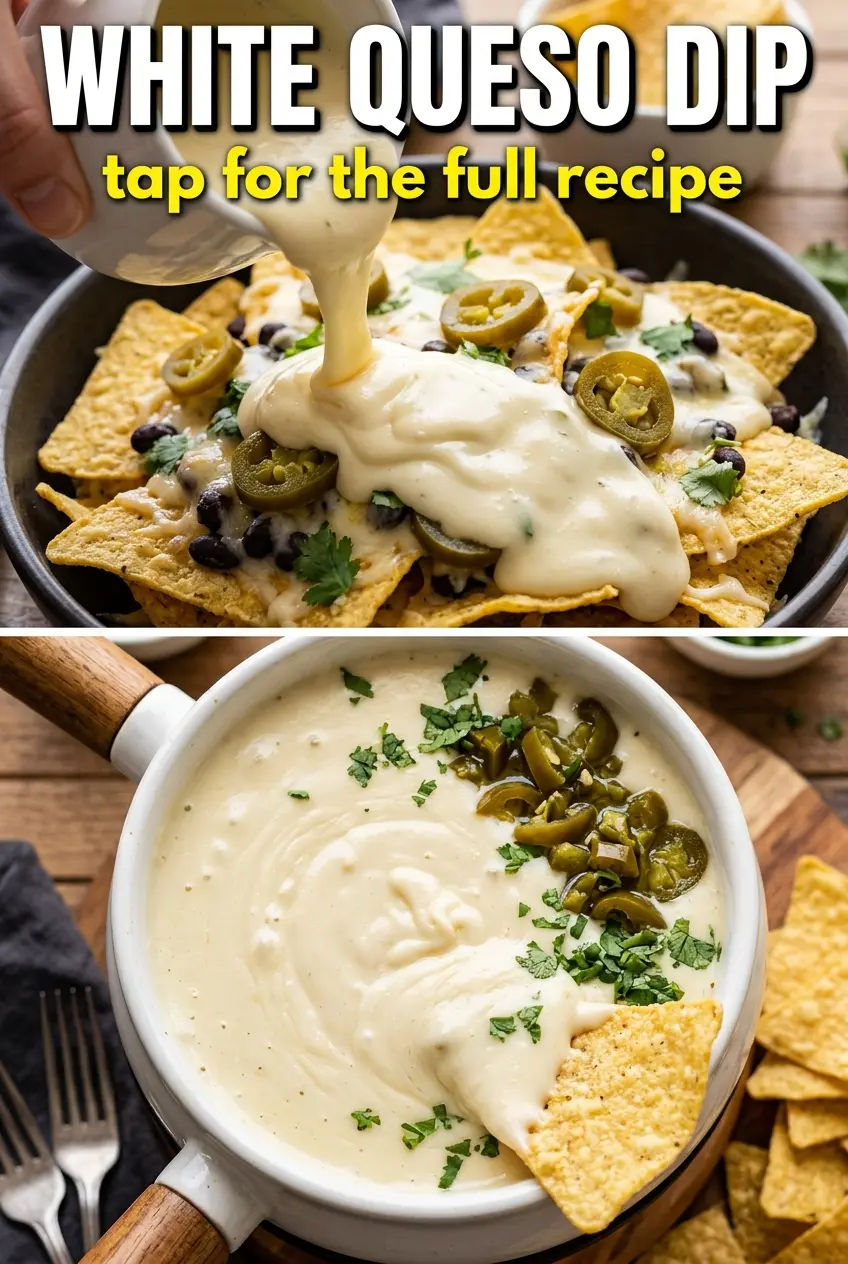
White Queso Dip
Ingredients
Equipment
Method
- Melt the butter in a saucepan over medium heat. Add the minced jalapeño and diced onion, cooking for 2 minutes until softened, stirring so the onion turns translucent.
- Add the shredded white cheddar cheese and cubed cream cheese, stirring frequently until melted and smooth. Keep the heat at medium so the cheese fully melts without separating.
- Stir in the heavy cream, salsa verde, cumin, and garlic powder. Cook for 2-3 minutes more, stirring occasionally, until the sauce looks glossy and uniformly creamy.
- Remove from the heat and stir in the chopped cilantro. Season with salt and pepper to taste.
- Transfer to a serving bowl and serve warm with tortilla chips. Drizzle with additional salsa verde if desired for extra visible green specks.