Restaurant-style black beans earn their keep by landing in that sweet spot between creamy and brothy, with enough body to scoop up on a tortilla chip or spoon beside rice without sliding all over the plate. The best versions taste like they were simmered much longer than they actually were, with soft garlic, warm cumin, and a finish that stays bright instead of flat.
The trick is not overcooking the beans into paste. A short simmer with onion, garlic, bay leaves, and broth gives the liquid time to pick up flavor, and then a partial mash at the end creates that glossy, thick texture people associate with good Mexican restaurant beans. Canned beans work beautifully here because they’re already tender; what they need is seasoning, a little fat, and enough time on the stove for the broth to reduce and coat everything.
Below, I’ll walk through the small choices that matter most, including how to get the beans creamy without turning them grainy and how to adjust the salt and lime so the flavor stays balanced all the way through.
The beans got that thick restaurant texture after mashing a few right in the pot, and the lime at the end kept them from tasting heavy. I served them with tacos and my husband kept going back for spoonfuls straight from the pan.
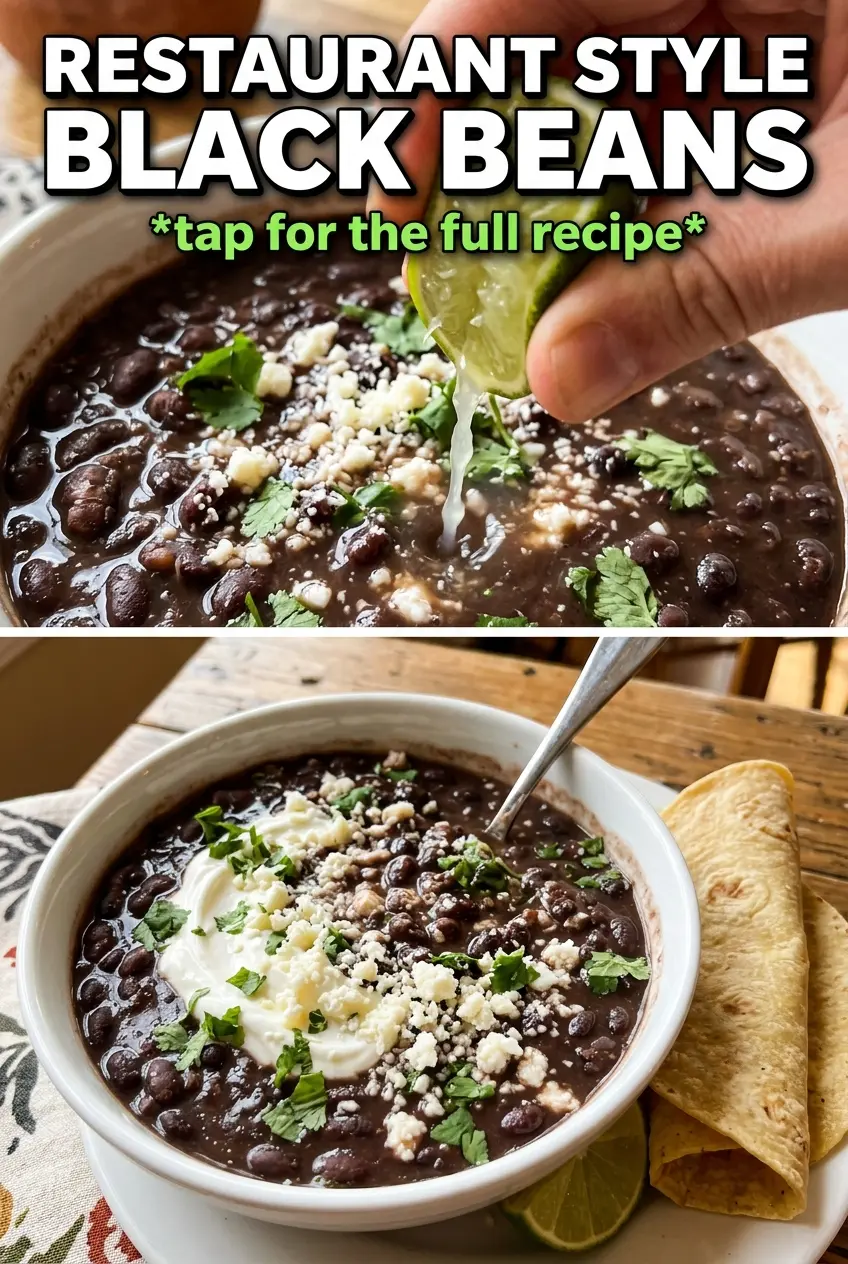
Creamy restaurant-style black beans with cumin, garlic, and lime are perfect for tacos, rice bowls, and burrito night.
Why These Beans Taste Like They Came From the Counter, Not the Can
The difference here is balance. Canned beans are already cooked through, so the job isn’t to soften them — it’s to season them, infuse them, and concentrate the liquid enough that the beans taste simmered instead of rinsed and heated. That’s why the onion goes in first, the garlic only gets a minute, and the broth is left uncovered. You want the pot to work like a tiny braising liquid.
The other thing people miss is the partial mash. If you mash all of them, you get refried beans. If you skip it, you get beans sitting in seasoned broth. Pulling about a quarter of the beans against the side of the pot gives you that restaurant texture: thick, glossy, and spoonable, with enough whole beans left for body.
- Olive oil — This gives the beans a silky finish and helps carry the garlic, cumin, and onion flavor into the broth. A neutral oil works too, but you’ll lose a little richness.
- White onion — Quartering the onion lets it soften without disappearing. It perfumes the pot, then gets removed before serving so the final texture stays smooth instead of chunky.
- Canned black beans — This is one place where canned really is the right choice. They’re consistent, quick, and tender enough to absorb flavor fast. Drain and rinse them so the final broth doesn’t taste starchy or overly salty.
- Broth — Vegetable broth keeps this vegetarian, while chicken broth adds a little extra depth. Use a good one here, because it’s the liquid the beans simmer in and reduce with.
- Lime juice — Add it at the end, after the beans have thickened. If you add it too early, the bright note fades during the simmer and the beans taste flatter than they should.
The 20 Minutes That Turn Brothy Beans Into Restaurant Beans
Softening the Onion and Garlic Without Browning Them
Warm the olive oil over medium heat, then cook the onion until it starts to turn translucent at the edges. You want softening, not color. If the onion browns hard at this stage, the beans pick up a bitter edge instead of a mellow base. Add the garlic only for the last minute so it smells fragrant but doesn’t toast or burn in the hot oil.
Letting the Broth Reduce Around the Beans
Once the beans, bay leaves, cumin, pepper, salt, and broth go in, bring everything to a simmer and leave it uncovered. That uncovered simmer is what concentrates the liquid and gives the beans their glossy finish. If the pot is boiling hard, the beans can break apart too aggressively and the broth turns muddy instead of rich, so keep it at a steady, lazy bubble.
Mashing for Creaminess Without Losing the Whole Beans
After about 20 minutes, the beans should look darker, thicker, and lightly soupy around the edges. Use the back of a spoon or a potato masher to crush about a quarter of them against the side of the pot. That creates body fast. The biggest mistake here is mashing too much while the pot is still too loose; if the beans haven’t reduced enough, you’ll end up with thin paste instead of a creamy sauce. Let the mash happen only after most of the liquid has cooked down.
Finishing With Lime and Cilantro
Pull out the bay leaves, stir in the cilantro, and taste before adding lime. The acidity should brighten the beans, not make them tart. If the beans taste flat, they usually need salt first and lime second. Serve them hot while they’re glossy and spoonable; they thicken as they sit, which is part of the charm.
How to Change These Beans Without Losing the Texture
Make Them Vegetarian or Vegan
Use vegetable broth and keep the rest exactly the same. You’ll still get depth from the onion, garlic, cumin, and bay leaves, and the olive oil helps make up for the missing chicken stock richness.
Make Them a Little Spicier
Add a pinch of cayenne or a minced jalapeño with the onion. The heat will sit underneath the cumin instead of overpowering it, and the beans will still taste balanced because the lime pulls everything back into focus.
Use Dry Beans Instead of Canned
Cook about 1 1/2 cups dry black beans until fully tender, then use them in place of the canned beans. Keep some of the cooking liquid if you need to loosen the pot at the end, but taste carefully because that liquid may be less salty than broth and will change how much seasoning you need.
Storage and Reheating
- Refrigerator: Store in an airtight container for up to 4 days. They thicken as they chill, which is normal.
- Freezer: Freeze for up to 3 months in portioned containers. Leave a little space at the top so the beans can expand.
- Reheating: Rewarm gently on the stove over low heat with a splash of broth or water. The most common mistake is blasting them on high heat, which dries out the beans and makes the texture pasty before the center is hot.
Answers to the Questions Worth Asking
Restaurant Style Black Beans
Ingredients
Equipment
Method
- Heat 3 tbsp olive oil in a large pot over medium heat. Add the quartered white onion and cook for 2 minutes, stirring occasionally until the onion starts to soften and look glossy.
- Add the minced garlic and cook for 1 minute until fragrant, keeping it from browning. You should notice a strong garlic aroma within the minute.
- Add drained and rinsed black beans, 2 bay leaves, 1 tsp cumin, 1/2 tsp black pepper, 1/2 tsp salt, and 1 cup broth to the pot. Bring the mixture to a simmer and cook uncovered for 20 minutes, stirring occasionally so the beans develop a creamy sheen.
- Mash about 1/4 of the beans against the side of the pot to create a creamy consistency while keeping some beans whole. Visual cue: you’ll see part of the beans break down into a thicker, glossy sauce.
- Taste and adjust seasoning with lime juice, then remove the bay leaves. Stir in the chopped cilantro and serve hot with visible flecks of green on top.