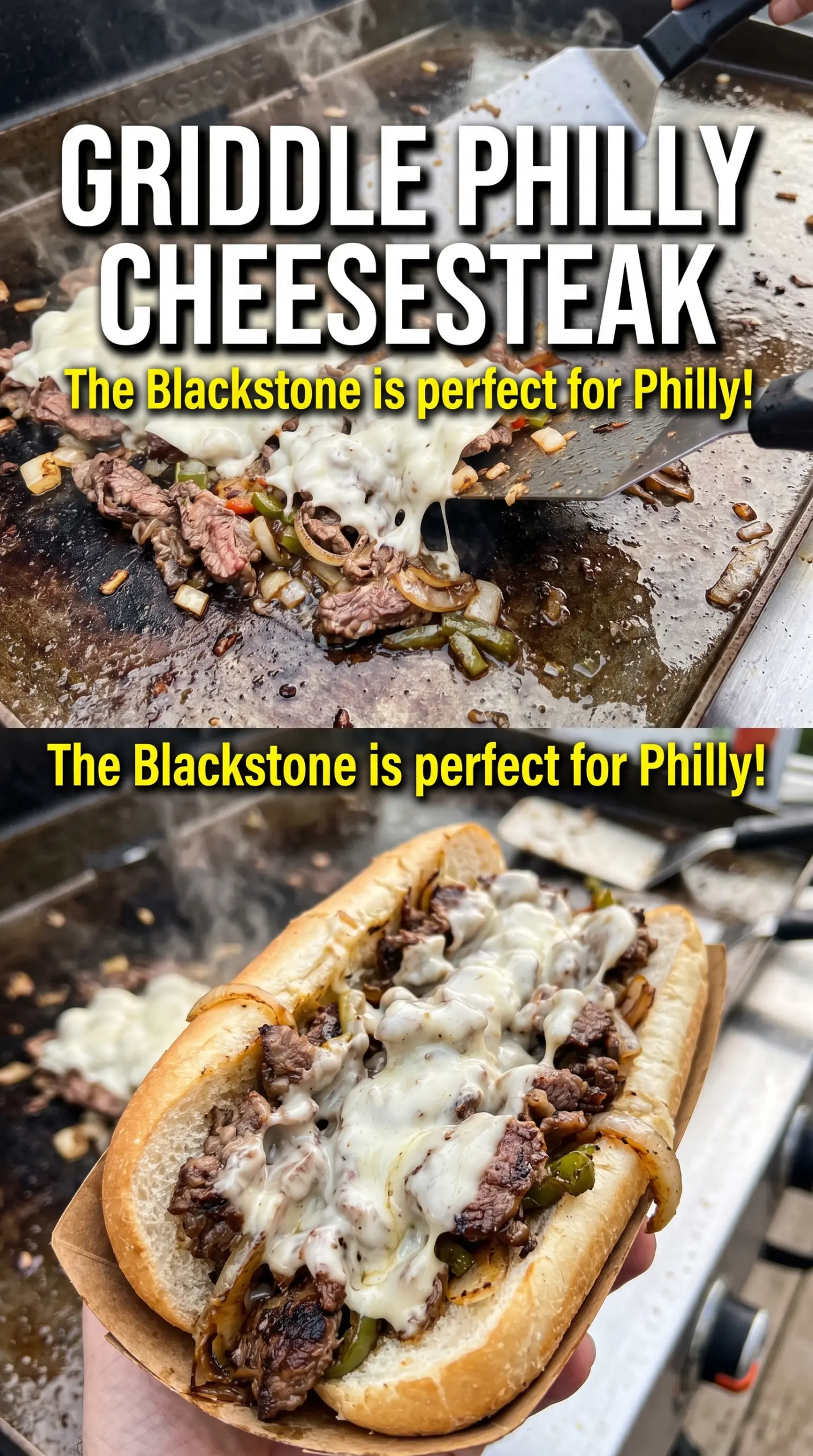
Thinly sliced ribeye, caramelized onions, and melted cheese on a toasted hoagie roll is hard to beat when you want a sandwich that eats like a full meal. The Blackstone does the heavy lifting here: it gives you enough heat to brown the steak fast, enough surface area to soften the onions properly, and enough room to keep everything moving without steaming the meat.
What makes this version work is the order. The onions and peppers go down first so they get sweet and tender instead of crunchy, then the steak hits the hot griddle for a short, hard cook so it stays juicy. The cheese melts right on top of the chopped beef, which helps it cling to the meat instead of sliding off the roll.
Below you’ll find the little details that matter most — how thin the steak should be, why the griddle temp matters, and the easiest way to get that classic cheesy, messy, hot-off-the-griddle finish.
The steak stayed tender, the onions turned sweet without getting soggy, and the cheese melted right into the meat. My husband said it tasted like the real thing from the sandwich shop downtown.
Save this Blackstone Philly Cheesesteak for the nights when you want sizzling ribeye, sweet onions, and melted provolone on a toasted roll.
The Griddle Temperature That Keeps the Steak Juicy
The biggest mistake with a cheesesteak on a flat-top is letting the steak sit too long before it gets chopped and moved. Ribeye cooks fast, and once the thin slices are spread out on a hot surface, they can go from browned to dry in a minute. Medium-high heat gives you enough sizzle to build flavor without turning the meat leathery.
The other thing that matters is giving the onions and peppers time first. If you throw everything on at once, the vegetables throw off steam and the steak loses that browned edge that makes a cheesesteak taste finished. Cook each component for what it needs, then combine them at the end so the sandwich stays hot, not soggy.
What the Steak, Rolls, and Cheese Are Each Doing Here
- Ribeye steak — This is the right cut because the fat melts as it cooks, which keeps the meat tender and gives the sandwich that classic beefy taste. If you buy it whole and slice it yourself, chill it first so you can get paper-thin slices. Pre-sliced shaved steak works in a pinch, but it won’t have quite the same rich texture.
- Onions — They need enough time to turn sweet and soft. Don’t rush them; pale onions taste raw in the finished sandwich, and that’s the detail that makes homemade versions miss the mark.
- Green bell peppers — These are optional in some old-school versions, but they add a clean bite that balances the richness of the steak and cheese. Slice them evenly so they soften at the same pace as the onions.
- Provolone or Cheese Whiz — Provolone gives you a mellow, stretchy melt, while Cheese Whiz brings the sharper, classic deli-style finish. Provolone is the easiest to work with if you want slices that melt evenly over the chopped steak. Use Whiz if you want that unmistakable Philly-style saucy coat.
- Hoagie rolls — A soft roll with a sturdy crust is ideal. Too flimsy and it falls apart under the juices; too crusty and it fights the filling. Toasting the inside with butter gives you a little protection against sogginess and a better bite.
Building the Sandwich on the Griddle, Not on the Cutting Board
Softening the Peppers and Onions First
Heat the Blackstone to medium-high and add the oil, then get the onions and peppers on the griddle first. Stir them often until they’re softened and browned at the edges, about 8 to 10 minutes. If they start to scorch before they soften, the heat is too high and the sandwich will taste sharp instead of sweet. Push them to one side when they’re done so you have a clean hot zone for the steak.
Chopping the Steak as It Cooks
Season the ribeye with salt and pepper, lay it on the hot griddle, and let it sear before you start chopping. Once the edges lose their raw red color, use two spatulas to break the meat into small pieces. That chopped texture is what makes a cheesesteak eat like a cheesesteak. If the steak is sliced too thick or crowded into a pile, it steams instead of browns.
Melting the Cheese Right on Top
Divide the steak into four portions and top each pile with cheese while it’s still on the griddle. Give it a minute to melt over the meat instead of stirring the cheese into the onions, which makes the filling greasy and uneven. If you’re using provolone, cover the pile with a dome or foil for a faster melt. Cheese Whiz can go straight on with no extra help.
Toasting the Rolls and Assembling Fast
Butter the hoagie rolls and toast them cut-side down until they’re golden. That quick toast keeps the bread from going soft as soon as the steak hits it. Scoop the cheesy meat and vegetables into the rolls right away and serve immediately. Waiting even a few minutes lets the cheese tighten up and the bread start absorbing the juices.
How to Adjust This Cheesesteak for the Way You Eat
No Green Peppers
Leave them out and use extra onion instead. The sandwich gets a little sweeter and more classic in flavor, and you won’t lose any of the texture that matters most.
Whiz Style, Philly Diner Style
Use Cheese Whiz instead of provolone if you want a smoother, saucier sandwich with that old-school cheesesteak feel. It coats the chopped steak more completely, while provolone gives a cleaner melt and a milder finish.
Gluten-Free Version
Swap in gluten-free rolls and keep the rest of the method the same. The filling is naturally gluten-free, but the bread matters here, so use a roll that can handle the hot meat without collapsing.
Extra Cheesy Crowd Version
Double the cheese and keep the steak portions a little looser so each roll gets plenty of melty filling. This works best if you’re serving the sandwiches right away, since more cheese means more chance of a messy, hot sandwich that should be eaten immediately.
Storage and Reheating
- Refrigerator: Store the steak, vegetables, and rolls separately for up to 3 days. The filling will still taste good, but the texture softens after the first day.
- Freezer: The cooked steak and vegetables freeze well for up to 2 months. Freeze them without the rolls, then thaw overnight in the fridge before reheating.
- Reheating: Warm the filling in a skillet or on the griddle over medium heat until hot, then toast fresh rolls and assemble. The common mistake is microwaving the whole sandwich, which makes the bread rubbery and the steak dry at the edges.
Answers to the Questions Worth Asking
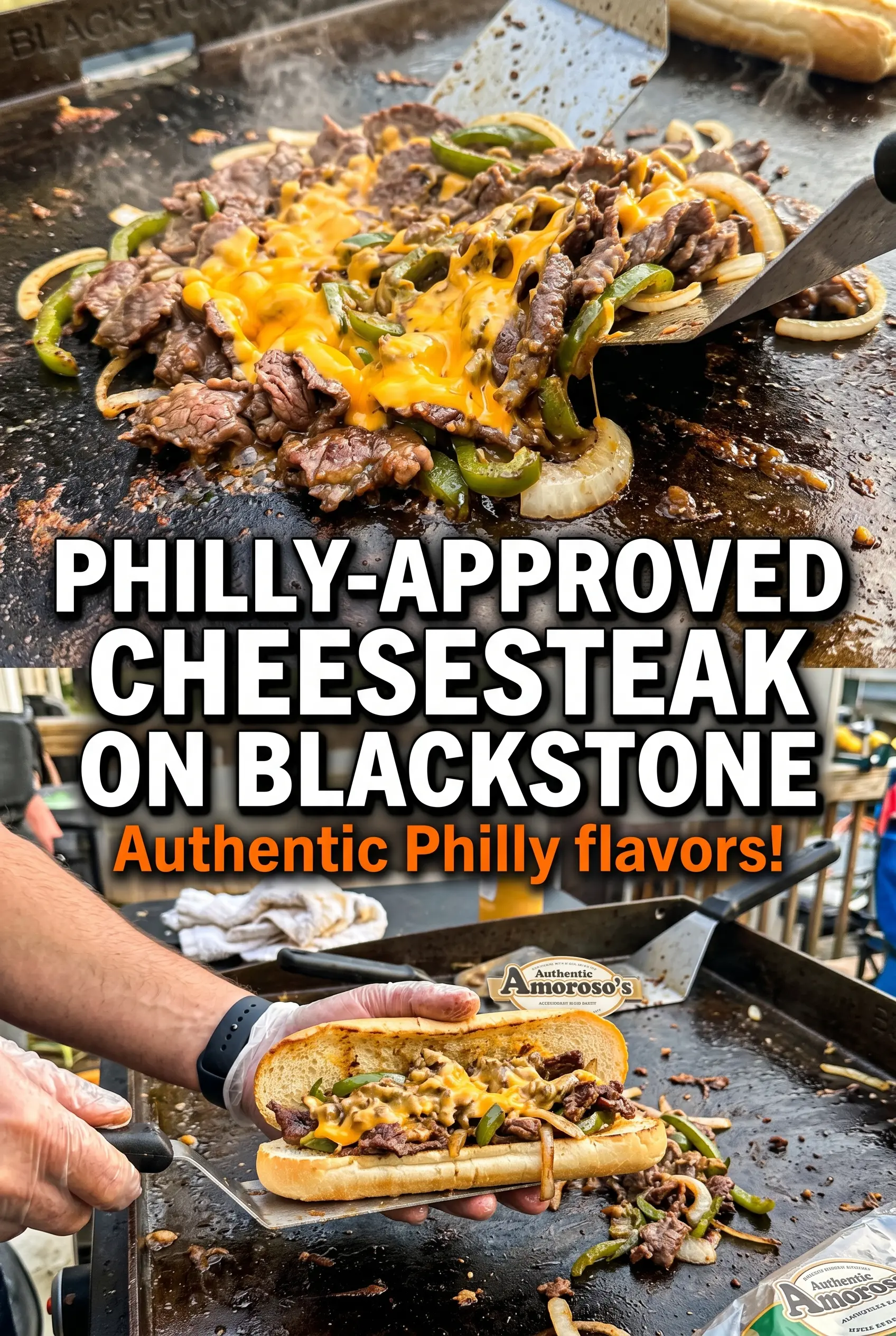
Authentic Blackstone Philly Cheesesteak
Ingredients
Equipment
Method
- Heat the Blackstone griddle to medium-high heat and add the oil. Wait until the oil is shimmering before adding the onions and peppers.
- Cook the sliced onions and bell peppers until caramelized, about 8-10 minutes, then move them to the side. Keep them moving occasionally so they brown without burning.
- Season the thinly sliced ribeye with salt and pepper to taste. Spread it in a single layer so it sears quickly on contact.
- Cook the steak on the hot griddle for 3-4 minutes, chopping with spatulas. Continue cooking until browned and tender, then stop with a little moisture left so it melts cheese fast.
- Divide the steak into 4 portions and top each with provolone cheese, allowing it to melt. Cover with a loose splash of heat by leaving portions undisturbed for 30-60 seconds.
- Butter and toast the hoagie rolls on the griddle until golden. Toast cut-side down first, then flip briefly for even browning.
- Scoop each steak portion with the caramelized onions and peppers into toasted rolls and serve immediately. Use a tight packing so each sandwich shows meat plus melted cheese in the cross-section.