Warm German potato salad lands on the table with that unmistakable mix of tender potatoes, smoky bacon, and a sharp-tangy dressing that clings to every slice instead of sliding to the bottom of the bowl. It’s the kind of side dish that disappears first because it tastes sturdy and bright at the same time, not heavy or mayo-laden. Served warm, it has a comfort-food feel that still cuts through richer mains and makes a plain plate taste complete.
The trick is getting the potatoes tender without letting them turn waterlogged, then building the dressing in the bacon drippings so it picks up real depth before the vinegar goes in. A small spoonful of flour gives the sauce just enough body to coat the potatoes, which matters because thin dressing pools and leaves the flavor uneven. The result should be glossy, savory, and balanced — not soupy, and not sweet enough to taste like glaze.
Below, I’m walking through the part that matters most: how to keep the potatoes intact, how to thicken the dressing without lumps, and what to do if you need to make it ahead for a gathering.
The dressing thickened up exactly right and coated the potatoes instead of running to the bottom. The bacon and vinegar balance was perfect, and it still tasted great after sitting warm for a bit.
Save this warm German potato salad for the nights when you want bacon, tangy vinegar dressing, and tender potatoes that hold their shape.
The Part Most Potato Salads Get Wrong: Dressing the Potatoes While They’re Still Hot
Old-fashioned German potato salad works because the potatoes absorb the dressing while they’re still warm, but not falling apart. If they sit cold before the vinaigrette-style sauce goes on, the flavor stays on the surface and the whole dish tastes flatter than it should. If they’re overcooked, they’ll break when you toss them and the bowl turns mashed at the edges. The sweet spot is tender slices that can hold a fork without crumbling.
The other thing that matters is the bacon drippings. They’re not just there for flavor; they carry the onion, flour, and vinegar into a dressing that tastes rounded instead of sharp. When the flour goes in, stir it long enough to disappear before adding the broth and vinegar. If you dump the liquid in too fast, you’ll get little lumps that never quite smooth out.
What Each Ingredient Is Doing in the Bowl
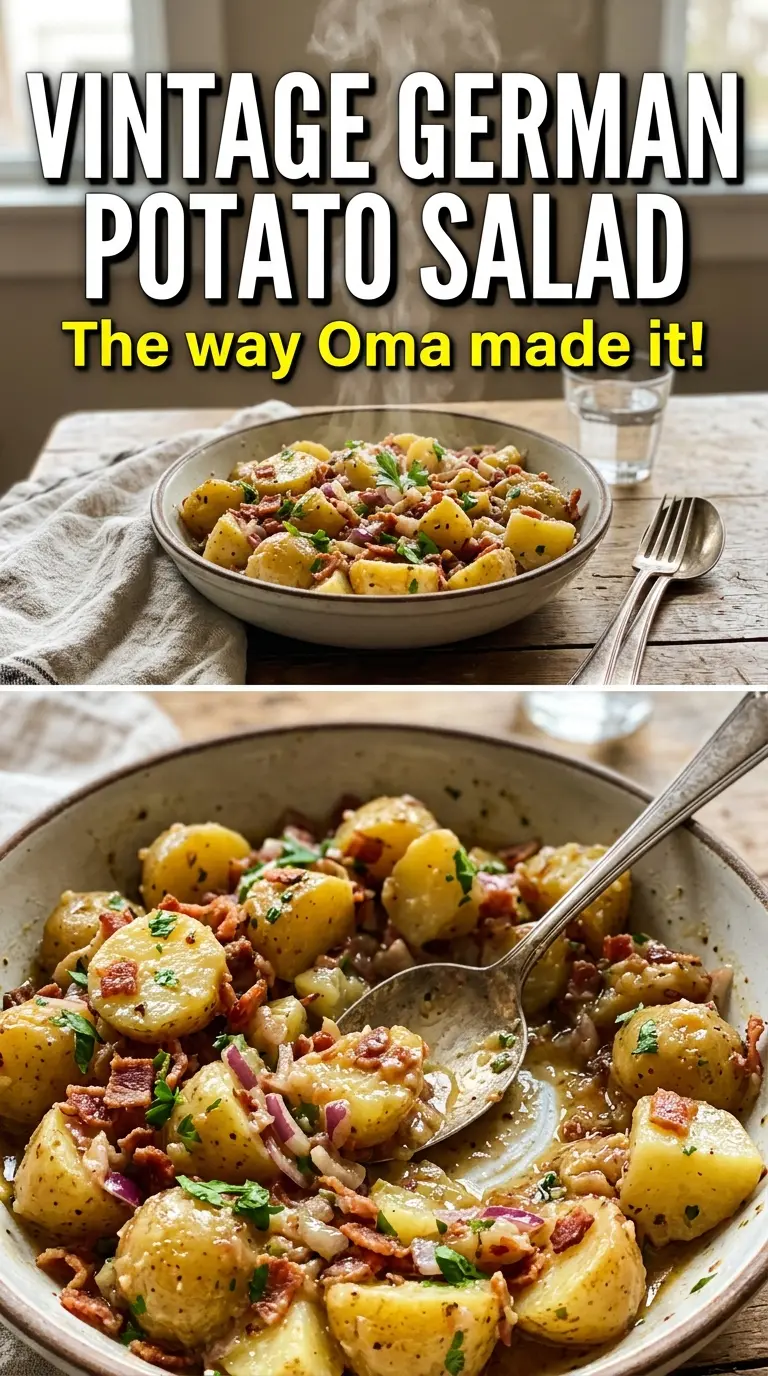
- Russet potatoes — These soften beautifully and soak up the dressing well, but they can go mushy if boiled too hard. Slice them evenly so they finish at the same time and keep the texture consistent from top to bottom.
- Bacon and drippings — This is the backbone of the dish. The bacon adds salt and smoke, and the drippings carry that flavor into the onion and dressing, which is why butter won’t give you quite the same result.
- Beef broth — It deepens the dressing and keeps the vinegar from tasting thin. If you need a substitute, chicken broth works, but the flavor will be lighter and a little less savory.
- White vinegar and sugar — These are the balance point. The vinegar wakes everything up, and the sugar keeps it from reading harsh. Don’t cut the sugar to zero unless you like a very sharp finish.
- Flour — Just a tablespoon is enough to give the dressing body. It should be stirred into the onions before the liquid goes in so it can cook out the raw taste and thicken evenly.
- Fresh parsley — It’s not just garnish here. The parsley adds a fresh note that keeps the warm bacon dressing from tasting one-note at the end.
How to Build the Dressing So It Clings Instead of Pooling
Cooking the Potatoes Just Past Tender
Start the potato slices in boiling water and cook them until a knife slides in without resistance but the slices still hold their shape. Drain them well and let the steam escape for a minute so the dressing doesn’t get diluted. If the potatoes are left wet, they’ll water down the sauce and the final bowl will taste thinner than it should.
Rendering the Bacon and Softening the Onion
Cook the bacon until crisp, then move it out of the pan and leave the drippings behind. Add the diced onion to that fat and cook until it turns soft and translucent with a little gold around the edges. If the onion stays raw, it gives the dressing a harsh bite that never really mellows once the vinegar is added.
Thickening the Tangy Sauce
Sprinkle the flour over the onions and stir until it disappears into the fat, then add the broth, vinegar, sugar, salt, and pepper. Let it simmer until the dressing looks glossy and lightly thickened, not pasty. If it looks lumpy, keep whisking gently over low heat; if it gets too thick, loosen it with a splash of broth rather than more vinegar.
Bringing Everything Together While It’s Warm
Crush or crumble the bacon, add it to the potatoes, then pour the hot dressing over the top and toss gently. The potatoes should be coated, not broken into pieces, so use a wide spoon or spatula instead of stirring aggressively. Finish with parsley while the salad is still warm so the herbs stay bright and the whole dish smells fresh at the table.
How to Adapt This for a Bigger Crowd or a Different Pantry
Make-ahead for potlucks
Cook the potatoes and dressing separately, then combine them while both are still warm right before serving. If the salad sits too long fully mixed, the potatoes keep drinking up the dressing and the bowl can dry out at the bottom. A small splash of broth loosens it back up if needed.
Gluten-free version
Swap the flour for a gluten-free all-purpose blend or a small cornstarch slurry. Cornstarch thickens a little more sharply than flour, so mix it with cold broth first and simmer just until the sauce coats a spoon.
Less bacon, still plenty of flavor
You can cut the bacon back a little and keep the same onion, broth, and vinegar base. The salad will be a touch lighter, but the drippings still give the dressing enough backbone if you don’t drain the pan too aggressively.
Dairy-free by default
This recipe already skips dairy, which is part of why it tastes so clean and bright next to heavy mains. Don’t replace the broth with cream or milk-based shortcuts; the vinegar dressing is what gives this version its classic German character.
Storage and Reheating
- Refrigerator: Store covered for up to 4 days. The potatoes will absorb more dressing as it sits, so the salad gets a little less saucy by day two.
- Freezer: I don’t recommend freezing it. Cooked potatoes change texture in the freezer and turn grainy once thawed.
- Reheating: Warm it gently in a skillet over low heat or in the microwave at half power, adding a spoonful of broth if the dressing has tightened up. High heat can split the dressing and make the potatoes fall apart.
Answers to the Questions Worth Asking

Old-Fashioned German Potato Salad
Ingredients
Equipment
Method
- Bring a pot of water to a boil and cook the peeled, sliced russet potatoes until tender, 10 to 15 minutes. A fork should slide in easily with no resistance.
- Drain the potatoes thoroughly. Shake the colander gently so excess water leaves the potatoes.
- Cook the bacon in a skillet over medium heat until crispy, 8 to 10 minutes, then reserve the drippings in the pan. The bacon should look deep golden and crisp at the edges.
- Sauté the diced onion in the reserved bacon drippings over medium heat, stirring, until softened, 4 to 6 minutes. The onion should turn translucent and fragrant.
- Sprinkle the flour over the onions and stir for 1 minute. The flour should look slightly toasted rather than raw.
- Add the beef broth, white vinegar, sugar, salt, and pepper to the skillet and stir until smooth. Bring the mixture to a simmer.
- Simmer the dressing until thickened, 3 to 5 minutes, stirring occasionally. It should coat the back of a spoon and look glossy.
- Crumble the crispy bacon and add it to the drained potatoes. Distribute the bacon so every portion has bits.
- Pour the hot dressing over the potatoes and bacon and toss to coat. The potatoes should look evenly glazed.
- Garnish with chopped fresh parsley and serve immediately while warm. The bowl should steam when you bring it to the table.