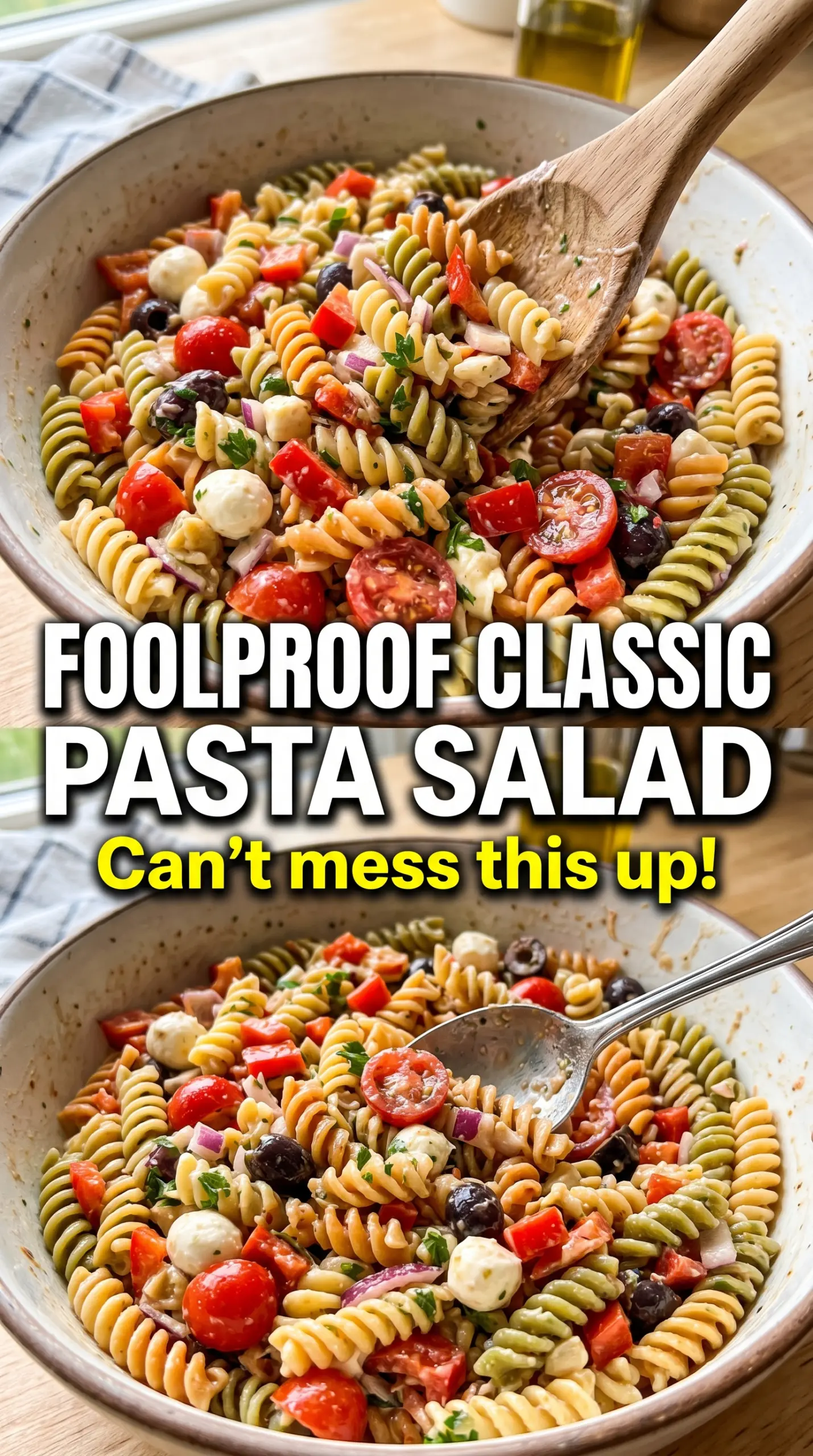
Classic pasta salad earns its place at picnics because it stays creamy, holds up after chilling, and tastes even better once the dressing has had time to settle into every curve of the pasta. The best versions don’t drown the macaroni; they coat it lightly, then let the celery, onion, and peas bring the crunch and color that make each bite feel balanced instead of heavy.
The trick here is treating the pasta and dressing like two separate jobs. Rinsing the macaroni cools it fast and keeps it from soaking up all the mayonnaise before you’ve had a chance to mix everything together. The dressing also needs a little sharpness from vinegar and Dijon, or it ends up flat the next day. That touch of acid keeps the whole bowl tasting bright, even after a long chill.
Below you’ll find the timing that makes the texture right, the ingredient swaps that still keep the salad classic, and the small adjustment I use when I want it to taste like it came straight from a summer potluck table.
I always thought pasta salad was just okay until I made this one. Chilling it for a few hours made the dressing cling to the macaroni instead of pooling at the bottom, and the celery stayed crisp the whole time.
Save this classic pasta salad for picnics, cookouts, and make-ahead side dishes that need to taste better after chilling.
Why Pasta Salad Tastes Better After the Chill, Not Before
The first mistake most pasta salads make is serving them too soon. Right after mixing, the dressing sits on the surface and the flavors feel separate. After a few hours in the fridge, the macaroni absorbs a little of the dressing, the vinegar softens the mayonnaise, and the whole bowl starts tasting intentional instead of assembled. That resting time is not optional here; it’s part of the recipe.
Rinsing the pasta in cold water matters too. It stops the cooking fast enough to keep the macaroni from going soft, and it washes away surface starch that can make the salad gluey. If the pasta goes in warm, it keeps drinking dressing while it cools and can turn dry by the next day. Cold pasta gives you a salad that stays creamy without getting heavy.
- Elbow macaroni — The curved shape traps dressing in every bite. Small shells or ditalini work in a pinch, but you’ll lose some of that classic picnic feel.
- Mayonnaise — This is the backbone of the dressing. Use a mayo you already like eating plain, because a weak one tastes flat once it’s diluted with vinegar and mustard.
- Dijon mustard — It sharpens the dressing without making it taste mustardy. Yellow mustard can work, but it tastes sweeter and less rounded.
- Frozen peas — Thawed peas add sweetness and little bursts of softness without any extra cooking. Fresh peas are fine if that’s what you have, but canned peas are too soft for this salad.
What Each Ingredient Is Actually Doing in This Bowl
- White vinegar — This keeps the dressing from tasting heavy. If you swap in lemon juice, the salad turns brighter and a little fresher, which is nice, but less traditional.
- Sugar — Just enough sugar rounds out the vinegar and mustard. Leave it out and the dressing can taste sharp instead of balanced.
- Celery, red bell pepper, and red onion — These are the crunch and color. Dice them fine so they tuck into the pasta instead of falling off the fork, and rinse the onion briefly in cold water if you want to soften its bite.
- Mayonnaise plus vinegar — This pairing is what gives the salad its creamy but not greasy texture. If you want a lighter version, replace half the mayo with plain Greek yogurt, but expect a tangier, less classic result.
Building the Salad So the Dressing Clings Instead of Pooling
Cooking the Pasta to the Right Edge
Boil the macaroni until just tender, then drain it right away. You want it cooked through but still firm enough to hold its shape after chilling, because soft pasta gets mushy once it sits in dressing. Rinse it under cold water until it’s cool to the touch, then shake off as much water as you can. If there’s a lot of water left behind, the dressing loosens and slides off instead of coating.
Mixing the Dressing Before the Pasta Goes In
Whisk the mayonnaise, vinegar, sugar, mustard, salt, and pepper until smooth before you add anything else. That step matters because it keeps you from overmixing the salad later, which can break down the pasta and bruise the vegetables. Taste the dressing now; it should taste a little sharper than you want in the finished bowl, since the pasta will mellow it as it chills.
Letting the Chill Time Do Its Job
Once everything is combined, cover the bowl and refrigerate it for at least three hours. Overnight is even better if you’re planning ahead. Stir before serving and check the seasoning again, because cold food tastes less salty and less bright than it did at room temperature. If the salad seems dry after chilling, stir in a spoonful or two of mayonnaise to bring it back.
Three Smart Ways to Adjust Classic Pasta Salad Without Losing the Point
Dairy-Free as Written
This recipe is already dairy-free if you use a mayonnaise made without dairy ingredients, which most standard brands are. Check the label if you’re serving a mixed crowd, then keep the rest of the recipe the same. The texture stays classic and creamy without any extra work.
Lighter Dressing With Greek Yogurt
Replace half the mayonnaise with plain Greek yogurt for a tangier salad that feels a little lighter on the plate. The tradeoff is a sharper flavor and a dressing that firms up more in the fridge, so add a spoonful of mayo before serving if it seems too thick.
Gluten-Free Pasta Salad
Use a gluten-free elbow pasta and cook it just until tender, since gluten-free pasta can go soft faster than wheat pasta. Rinse it well and chill the salad before serving so the noodles have time to set up. The flavor stays the same, but the texture is at its best the day it’s made.
Make It Ahead for a Crowd
This salad is one of the best make-ahead sides you can bring to a potluck. Mix it the day before, then hold back a small spoonful of dressing to stir in right before serving if the pasta has absorbed a lot overnight. That last touch brings back the creamy look and keeps the bowl from feeling dry.
Storage and Reheating
- Refrigerator: Store covered for up to 4 days. The pasta will keep absorbing dressing, so expect it to thicken a bit as it sits.
- Freezer: This one doesn’t freeze well. The mayonnaise can separate and the vegetables lose their crunch.
- Reheating: Don’t reheat it. Serve it cold after a good stir, and if it looks tight or dry, loosen it with a spoonful of mayo before serving.
The Things That Trip People Up With This Dish
Classic Pasta Salad
Ingredients
Method
- Cook elbow macaroni according to package directions, then drain. Rinse under cold water until fully cooled so the pasta doesn’t keep steaming.
- Whisk together mayonnaise, white vinegar, sugar, Dijon mustard, salt and pepper. Whisk just until smooth and evenly combined.
- Combine elbow macaroni, celery, red bell pepper, red onion, and frozen peas in a large bowl. Toss lightly to distribute the vegetables.
- Pour the dressing over the pasta salad and toss to coat evenly. Keep tossing until glossy and consistently creamy throughout.
- Refrigerate the salad for at least 3 hours or overnight for best flavor. Cover and chill until cold and set.
- Stir before serving and adjust seasoning as needed. If it seems thick, loosen with a small splash of mayonnaise or vinegar and toss again.