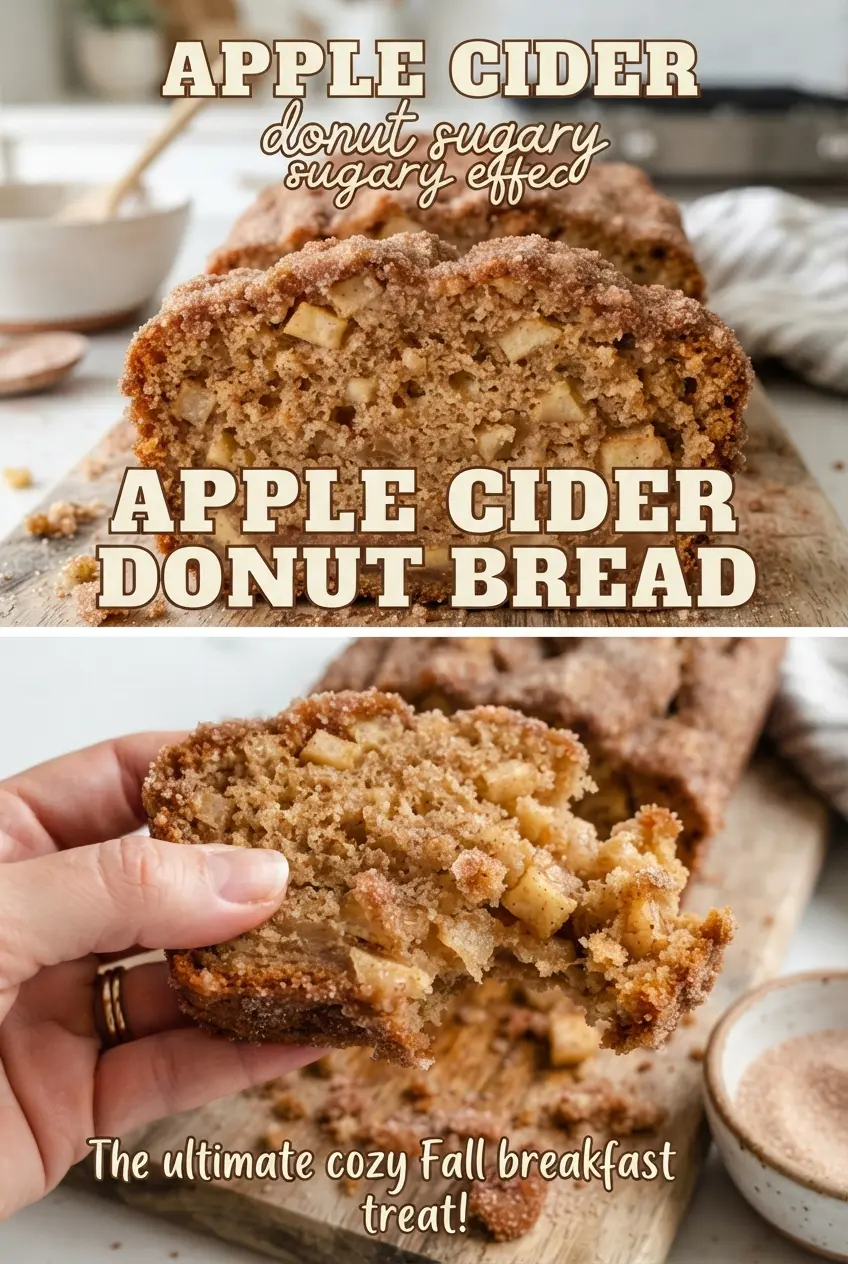
Apple cider donut bread bakes up with a tender, tightly knit crumb and that unmistakable cinnamon-sugar finish that cracks a little when you slice into it. The reduced cider gives it a deeper apple flavor than a simple spice loaf, and the buttery crust on the outside brings it right back to the bakery-style donut feeling without the frying.
The trick is concentrating the cider first. That step pulls out a lot of the water and leaves behind a stronger apple note, which keeps the loaf from tasting flat. Sour cream adds moisture and a little tang, and the butter-sugar topping sticks best while the loaf is still warm, when the surface can catch every grain of cinnamon sugar.
Below, I’ll walk through why the cider reduction matters, what each ingredient is doing, and how to keep the loaf soft in the middle with that crisp, coated top. If you’ve ever wanted a quick bread that tastes like it came from a cider mill bakery case, this one gets there.
The cider reduction made the loaf taste like actual apple cider donuts, and the sugar crust stayed crunchy even after it cooled.
Love that crunchy cinnamon-sugar crust and spiced apple cider crumb? Save this apple cider donut bread for the next time you want bakery-style quick bread at home.
The Cider Reduction Is What Keeps This Loaf From Tasting Flat
Apple cider bread can taste pleasant but one-note if you pour it in straight from the bottle. Reducing the cider first concentrates the apple flavor and removes enough water that the loaf bakes up with a cleaner crumb instead of a damp, spongy middle. Let it cool before it goes into the batter; hot cider can soften the butter mixture and throw off the texture.
The other place people run into trouble is overmixing once the flour goes in. Stir just until the dry streaks disappear. If you keep going, the loaf turns tighter and a little rubbery instead of tender and cakey like an apple cider donut.
What Each Ingredient Is Doing In This Apple Cider Donut Bread
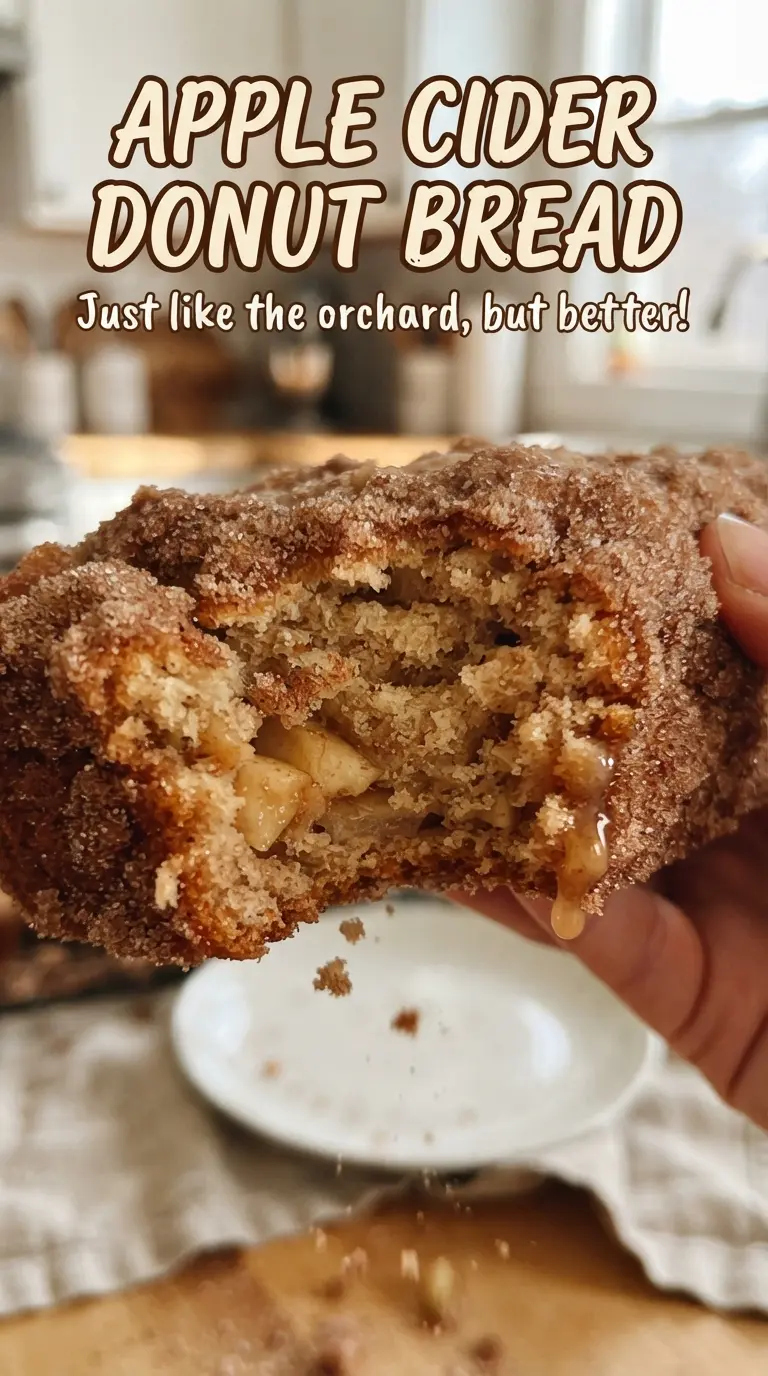
- Apple cider — Reducing it is non-negotiable here. That step gives you the cider-donut flavor that plain juice can’t match, and it keeps the loaf from baking up watery.
- Brown sugar — It adds moisture and a deeper caramel note that fits the cinnamon and nutmeg. Granulated sugar won’t give the same soft crumb or the same warm flavor.
- Sour cream — This is what keeps the loaf plush without making it heavy. Plain yogurt works in a pinch, but use full-fat and expect a slightly tangier result.
- Butter on top — The melted butter is what helps the cinnamon sugar cling to the crust. Brush it on while the loaf is still warm, not hot, or the topping will slide off.
- Cinnamon sugar topping — Don’t skimp on this layer. It turns the top into that sandy, crackly donut finish that makes the loaf taste finished instead of just spiced.
Building The Crumb Before The Sugar Crust Goes On
Reducing the cider
Pour the cider into a small saucepan and let it simmer until it drops to about half a cup. You want a stronger apple smell and a slightly syrupy look, not a hard boil that scorches the edges. If it’s still warm when you add it to the batter, the butter mixture can soften too much, so let it cool first.
Mixing the batter without toughening it
Beat the butter and brown sugar until the mixture looks pale and fluffy. That traps air and gives the loaf lift before the baking powder takes over in the oven. Add the eggs, sour cream, vanilla, and cooled cider, and don’t worry if the batter looks a little loose at this point. Once the dry ingredients go in, fold gently and stop as soon as the flour disappears.
Baking to the right center
Scrape the batter into a greased and lined 9×5-inch loaf pan and bake until the top is deeply golden and a toothpick comes out clean from the center. If the top browns too fast before the middle is done, tent it loosely with foil for the last 10 to 15 minutes. The loaf needs a full cool-down of at least 10 minutes before you turn it out, or it can break apart while it’s still fragile.
Finishing with the crust
Brush the warm loaf all over with melted butter, then press on the cinnamon sugar while the surface is still tacky. The coating sticks best when the loaf is warm enough to absorb the butter but not so hot that it melts the sugar into a wet layer. Use your hands or the back of a spoon to press it on firmly so the crust sets up crunchy.
How To Adapt This Loaf Without Losing The Donut Feel
Dairy-free version
Use a good plant-based butter for both the batter and the topping, and swap the sour cream for thick unsweetened coconut yogurt or a dairy-free plain yogurt. The loaf still bakes up tender, but the topping may set a little softer than the butter-based version.
Gluten-free swap
A 1:1 gluten-free baking flour blend works best here. The crumb will be a touch more delicate, so let the loaf cool fully before slicing or it can crumble at the edges.
Extra donut-style crust
If you want a heavier cinnamon sugar shell, brush the loaf with butter twice: once right after baking and again after five minutes. The second coat gives the topping more places to cling, which makes the exterior taste even more like a cider donut shop loaf.
Storage and Reheating
- Refrigerator: Store covered for up to 4 days. The crust softens a bit in the fridge, but the loaf stays moist.
- Freezer: Freeze slices wrapped tightly, then tucked into a freezer bag for up to 2 months. Freeze before adding the butter-sugar topping if you want the best texture.
- Reheating: Warm slices in a toaster oven or a 300F oven for a few minutes. The microwave softens the sugar crust and makes the top sticky instead of crisp.
Answers To The Questions Worth Asking About Apple Cider Donut Bread
Apple Cider Donut Bread
Ingredients
Equipment
Method
- Simmer apple cider for 15-20 minutes until reduced to 1/2 cup, then cool. The liquid should look darker and slightly syrupy as it reduces.
- Preheat the oven to 350F, then grease and line a 9x5-inch loaf pan. The pan should be ready before you start mixing so the batter bakes immediately.
- Whisk all-purpose flour, baking powder, baking soda, salt, ground cinnamon, and nutmeg in a bowl. Whisk until the spices are evenly distributed with no visible clumps.
- Beat softened butter and packed brown sugar until fluffy, about 2-3 minutes, then beat in eggs, sour cream, and vanilla extract. The mixture should lighten in color and look smooth.
- Fold the dry ingredients into the wet ingredients just until combined, then spread the batter into the loaf pan. Stop mixing when the last streaks of flour disappear.
- Bake at 350F for 50-55 minutes until a toothpick comes out clean. The top should be set and lightly browned.
- Cool the loaf for 10 minutes. It should be firm enough to handle while still warm.
- Brush the warm loaf all over with melted butter, then press on the cinnamon sugar topping. The crust should look thick and dry with visible cinnamon-sugar granules.