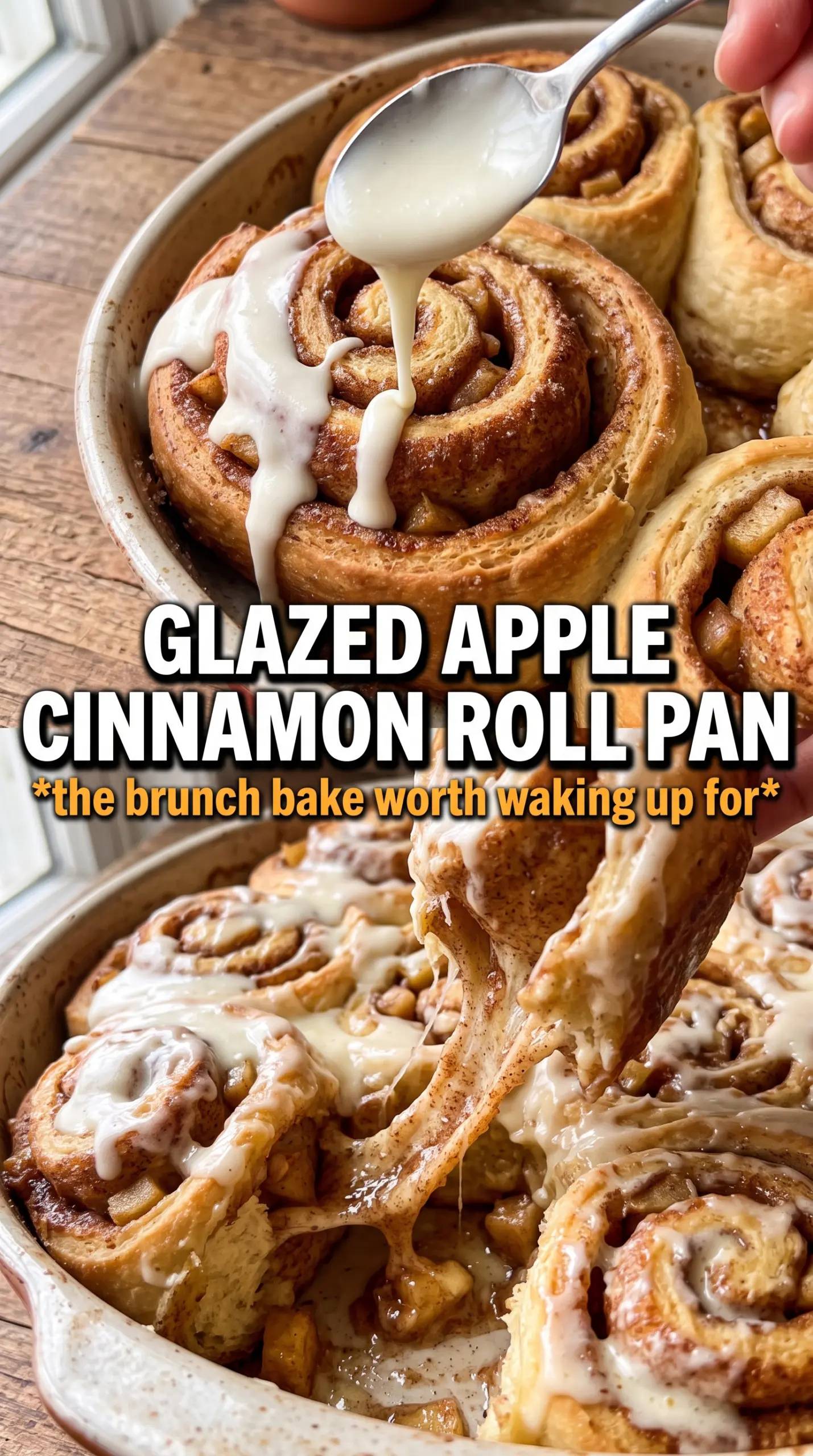
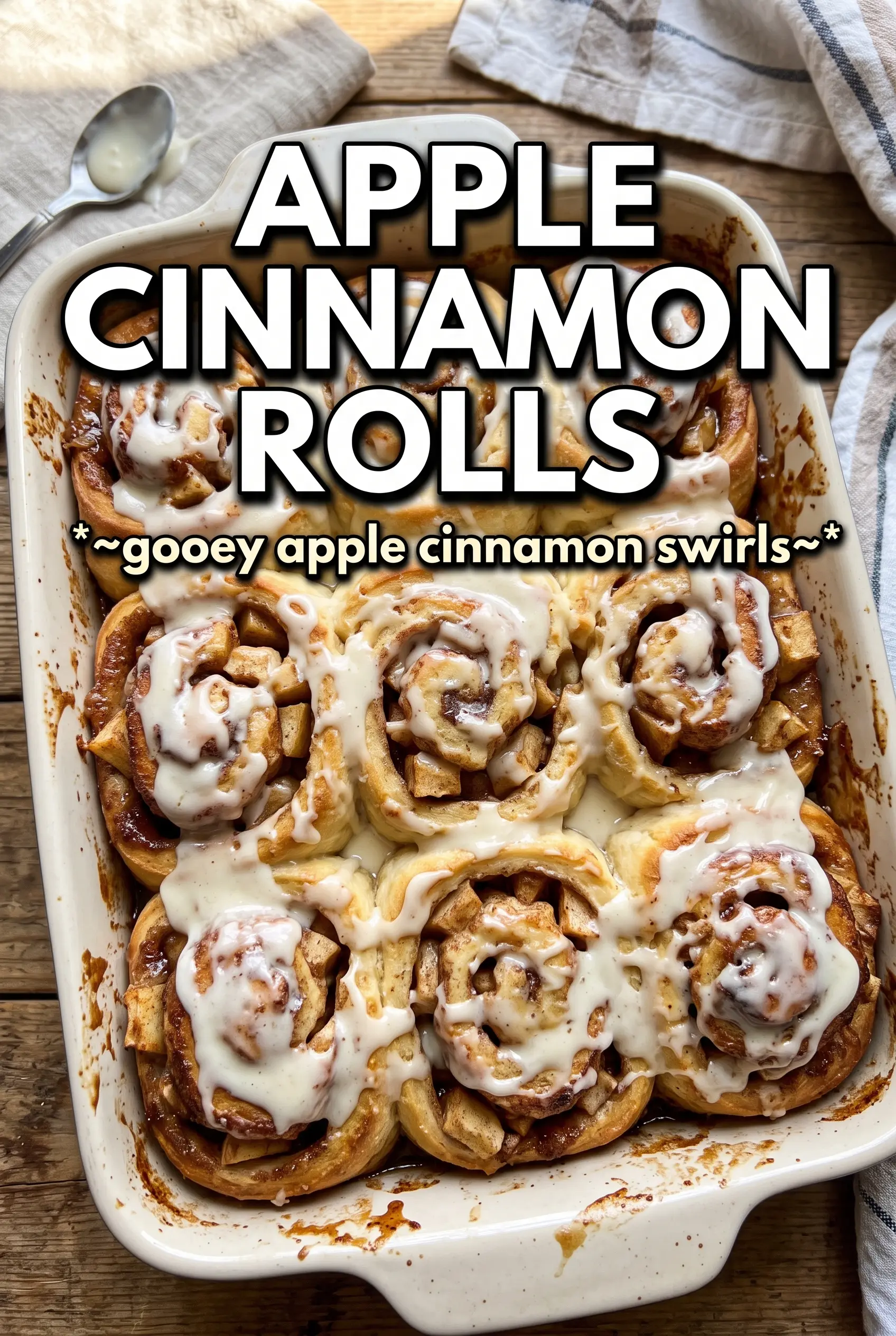
Pillowy apple cinnamon rolls bake up with soft spirals, sticky cinnamon-sugar edges, and pockets of tender fruit tucked into every layer. The best ones don’t rely on a heavy filling; they stay light enough to pull apart cleanly while still giving you that warm apple-cinnamon center that makes the whole pan disappear fast.
What makes this version work is the balance between the dough and the filling. The apples are cooked first, which keeps extra moisture from leaking into the dough and turning the rolls dense or gummy. That step also deepens the flavor, so you get caramelized apple notes instead of raw fruit bits sitting inside a sweet bun. The cream cheese glaze finishes everything with just enough tang to cut through the brown sugar and butter.
Below, I’ll walk you through the little details that matter: how to keep the filling from sliding out, how to tell when the rolls are properly proofed, and what to do if you want to make them ahead for a slower morning.
The apples cooked down just enough that the filling stayed put, and the rolls baked up soft in the middle with those caramelized edges I was hoping for. The glaze melted into every swirl while they were still warm, which was exactly right.
Save these apple cinnamon rolls for the morning when you want soft, spiraled buns with caramelized apples and cream cheese glaze.
The Trick to Keeping Apple Filling Inside the Swirls
The most common reason apple rolls turn soggy is a wet filling. Fresh apples release juice as they bake, and if that liquid goes straight into the dough, the center of the roll turns heavy before the outside ever browns. Cooking the apples first fixes that. You’re concentrating the flavor, softening the pieces, and driving off just enough moisture so the filling stays tucked into the spiral instead of leaking into the pan.
Rolling the dough tightly matters too. Loose spirals look pretty for about five minutes, then they open in the oven and dump the filling. Keep the rectangle even, spread the apples all the way to the edges, and roll from the long side so you get enough turns in each bun. That gives you those defined layers instead of a floppy log with fruit in the middle.
What Each Ingredient Is Actually Doing in These Rolls
- Warm milk — This wakes up the yeast without shocking it. If the milk is too hot, the yeast dies; too cool, and the dough takes forever to rise. Aim for warm, not hot, and it should feel like bath water.
- Active dry yeast — This gives the rolls their lift and soft texture. If it doesn’t foam after a few minutes in the milk, start over; dead yeast means flat, dense rolls.
- Brown sugar in the filling — This melts into the apples and creates that sticky, caramel-like layer between the spirals. Granulated sugar won’t give the same depth or moisture.
- Apples — Use a firm baking apple if you can, because it holds shape better after the quick cook. Softer apples break down too much and disappear into the filling.
- Cream cheese — This is what gives the glaze body and a gentle tang. You can swap in milk and powdered sugar for a plain glaze, but you’ll lose the richness that makes the topping taste finished.
Building the Dough, Filling, and Bake So Nothing Turns Heavy
Proofing the Yeast
Stir the yeast into the warm milk and wait until it looks foamy on top. That foam is the signal that the yeast is alive and ready to work. If the surface stays flat and creamy, the yeast isn’t active and the dough won’t rise properly. Add the sugar, butter, eggs, and vanilla after that, then mix in the flour and salt until the dough looks shaggy and soft.
Kneading for a Smooth, Elastic Dough
Knead long enough for the dough to feel supple and slightly springy, about 8 minutes by hand or until it clears the sides of the bowl. If it tears easily, it needs more kneading. The dough should still be soft, not stiff, because too much flour here gives you dry rolls instead of fluffy ones. Let it rise in a greased bowl until doubled; if your kitchen is cool, expect the full hour or a little longer.
Cooking the Apple Filling
Cook the diced apples with butter, brown sugar, cinnamon, and nutmeg until the pieces are softened and the pan looks syrupy rather than watery. You want the apples tender with a little shape left, not applesauce. Then cool the filling completely before spreading it on the dough. Warm filling melts the butter in the dough and makes rolling messy.
Rolling, Cutting, and Baking
Roll the dough into a 12×18-inch rectangle and spread the cooled filling evenly over the surface, leaving only a thin border at the far edge so the seam seals. Roll it tightly from the long side, then slice 12 even rolls with a sharp knife or unflavored dental floss if you want cleaner edges. After the second rise, the rolls should look puffy and touch each other in the pan. Bake until the tops are golden and the centers look set, then glaze while warm so the frosting melts into the creases.
Make Them Ahead for a Slower Morning
Assemble the rolls in the baking dish, cover tightly, and refrigerate overnight after the second rise has started. In the morning, let them sit at room temperature until they look puffy again before baking. Cold dough straight from the fridge usually bakes unevenly in the center.
Dairy-Free Version
Use a plant-based milk and a dairy-free butter substitute in both the dough and filling. For the glaze, swap the cream cheese for a dairy-free cream cheese alternative or use a simple powdered sugar glaze. The rolls still bake up soft, but the glaze will be a little lighter and less tangy.
Extra-Caramel Apple Filling
Cook the apples a few minutes longer until more of the moisture evaporates and the mixture turns jammy. That gives you a thicker filling with a deeper caramel note, but don’t cook it until dry or the apples will lose all their fresh bite. This version tastes richer and holds its shape even better.
Freezer-Friendly Rolls
Freeze the baked rolls without glaze, then thaw and warm them before topping. You can freeze the unbaked rolls too, but the second rise will take much longer once they thaw. Baked first, they keep the best texture and reheat with less risk of a gummy center.
Storage and Reheating
- Refrigerator: Store covered for up to 4 days. The rolls stay soft, though the glaze will firm up.
- Freezer: Freeze baked rolls for up to 2 months, wrapped well and without glaze if possible. Thaw overnight in the fridge.
- Reheating: Warm individual rolls in the microwave for 20 to 30 seconds or cover a pan and reheat in a low oven. High heat dries out the dough fast and makes the glaze separate.
Questions I Get Asked About This Recipe
Apple Cinnamon Rolls
Ingredients
Equipment
Method
- Combine the warm milk (110F) and active dry yeast, then let sit 5 minutes until foamy. The surface should look bubbly and active.
- Stir in the granulated sugar, melted unsalted butter, eggs, and vanilla extract, mixing until smooth.
- Add the all-purpose flour and salt, then mix until a soft dough forms. Stop once the flour is fully incorporated and the dough pulls together.
- Knead the dough for 8 minutes until smooth. It should feel elastic and spring back when pressed.
- Place the dough in a greased bowl, cover, and let rise for 1 hour until doubled. Look for a noticeable increase in volume.
- Cook the diced apples with unsalted butter, brown sugar, cinnamon, and nutmeg in a skillet for 5-7 minutes until softened and caramelized. Stir until the apples look glossy and the juices thicken.
- Cool the apple filling completely before assembling. It should be cool to the touch so the dough doesn’t become soggy.
- Roll the dough into a 12x18 inch rectangle. Use even pressure so the thickness stays consistent.
- Spread the apple filling evenly over the surface. Cover to the edges so each roll gets filling.
- Roll tightly from the long side. Keep the roll snug as you go.
- Cut the roll into 12 equal pieces. Use a steady motion so the layers stay intact.
- Arrange the rolls in a greased 9x13 baking dish, cover, and let rise for 45 minutes. They should puff up and fill the gaps between rolls.
- Bake at 375F for 22-25 minutes until golden. The tops should look set and lightly browned.
- Beat the cream cheese glaze ingredients together, then drizzle over warm rolls. Glaze should melt slightly and settle into the swirls.