Apple crisp cookies bring the same warm, buttery comfort as the dessert they’re inspired by, but in a soft, chewy cookie that’s easier to share and even easier to pack into lunchboxes or holiday tins. The edges bake up lightly crisp, the centers stay tender, and the oats give each bite that familiar crumble you expect from a good crisp. With chopped dried apples and caramel chips folded through, every cookie tastes layered instead of one-note.
What makes this version work is balance. Fresh apple pieces would throw off the dough and add too much moisture, so dried apple pieces give you concentrated flavor without making the cookies cakey. The oats are there for texture, but they also help keep the cookies sturdy enough to hold onto that soft middle. A little cinnamon sugar on top finishes them with a light crunch that makes the whole cookie taste more like apple crisp in handheld form.
Below, I’ll show you the one timing detail that keeps the centers soft instead of dry, plus a few smart swaps if you need to work with what’s already in your pantry.
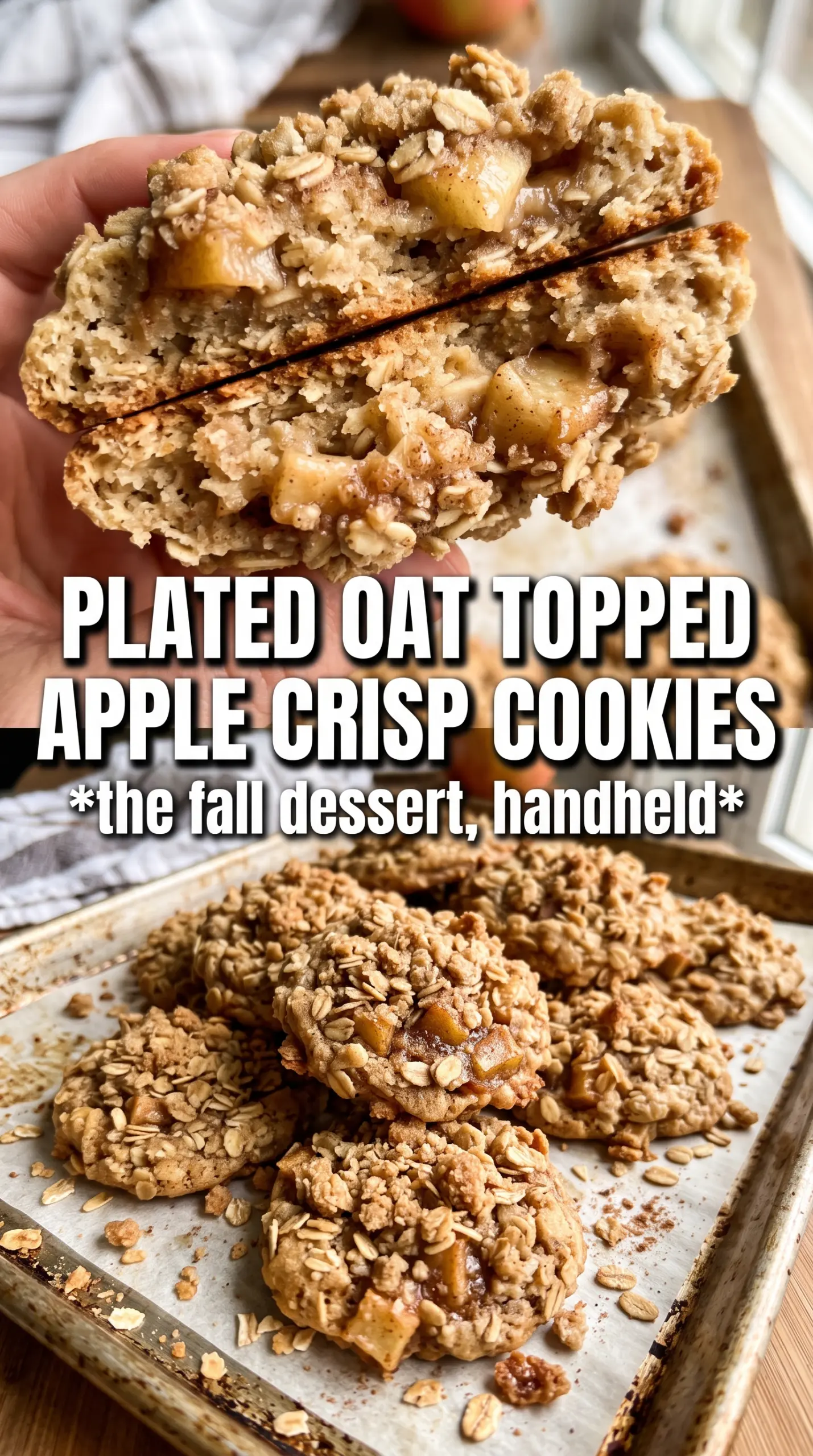
The cookies stayed soft in the middle with those chewy apple bits, and the cinnamon sugar on top gave them just enough crunch. I baked mine for 11 minutes and they set up perfectly after cooling on the pan.
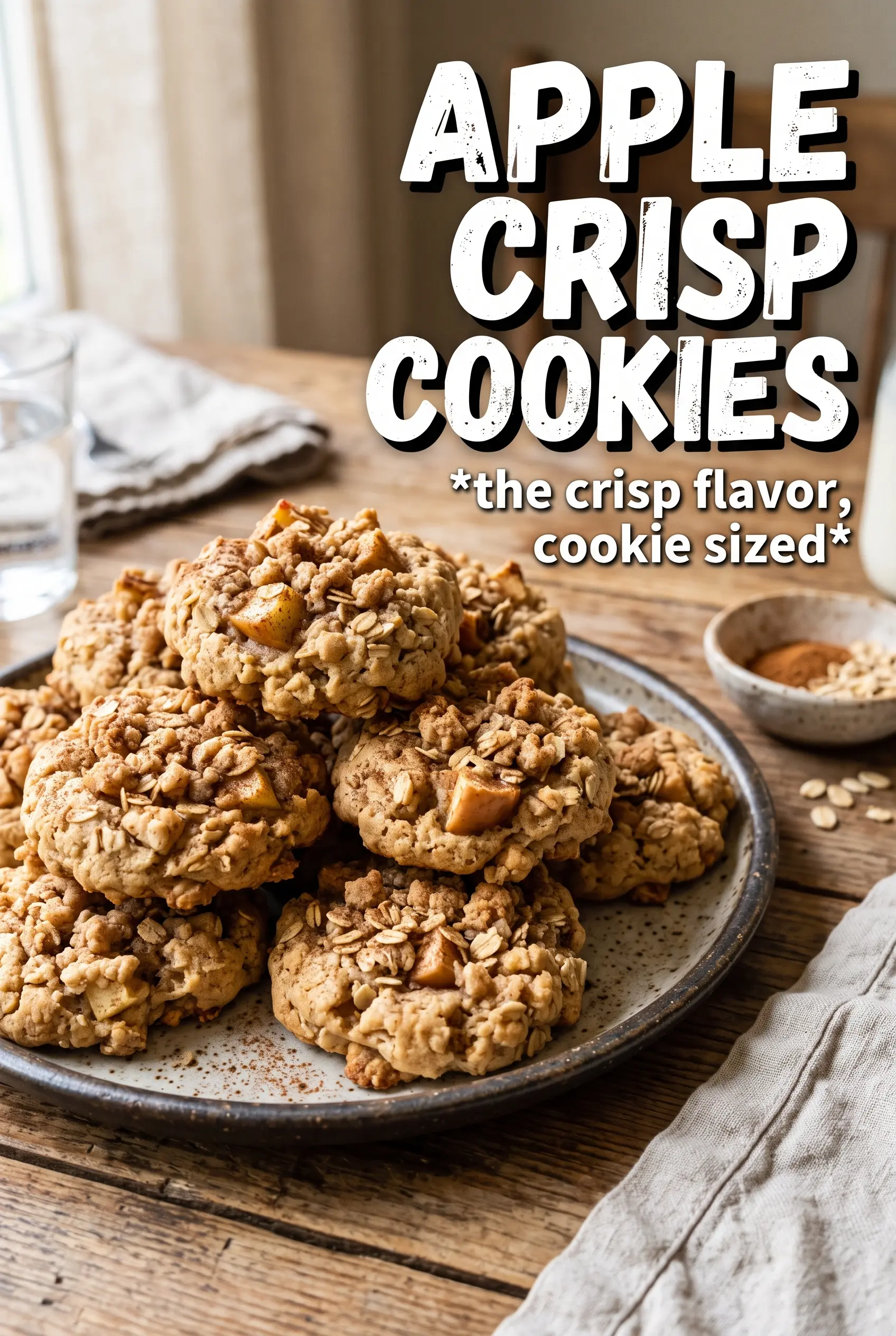
Apple crisp cookies with chewy oats, caramel chips, and a cinnamon sugar finish
The One Mistake That Makes Apple Cookies Turn Soft Instead of Chewy
The biggest problem with apple cookies is moisture. Too much wet fruit and the dough turns cakey or spreads unevenly, and the cookies lose that crisp-edged, chewy-center contrast that makes them worth baking. Dried apple pieces solve that problem because they bring concentrated apple flavor without watering down the dough.
The second thing that matters is the bake time. These should come out when the edges are golden and the centers still look just barely underdone. If you wait until the middle looks fully baked in the oven, they’ll finish too far and dry out as they cool. Pulling them early is what keeps the texture soft.
- Rolled oats — Old-fashioned oats give the cookies their apple crisp personality. Quick oats can work in a pinch, but they break down more and the texture gets less distinct.
- Dried apple pieces — Chop them finely so they distribute through the dough instead of clumping. Larger pieces can make the cookies uneven and make the dough harder to scoop.
- Caramel chips — These melt into sweet pockets that echo the baked fruit-and-oat flavor. Butterscotch chips are the closest swap if caramel chips aren’t available.
- Cinnamon sugar topping — This isn’t just decoration. It gives the tops a light crunch and keeps the cookies from tasting flat.
What Each Ingredient Is Actually Doing in These Cookies
- All-purpose flour — This gives the cookies structure without making them dense. Measure it carefully; too much flour is the fastest way to lose the soft center.
- Brown sugar — Brown sugar keeps the dough moist and adds that caramel note that fits the apples. You can’t get the same chew from white sugar alone.
- Granulated sugar — The white sugar helps the cookies spread and gives the edges a little more snap. Using only brown sugar makes them thicker and softer, which changes the texture.
- Butter — Softened butter creams with the sugars to trap air, which helps the cookies bake up tender. If the butter is melted, the dough will spread too much.
- Eggs — Eggs bind the oats and fruit into the dough and give the cookies a sturdy chew. Room-temperature eggs mix in more evenly, which helps the dough hold together.
- Dried apple pieces — Finely chopped dried apples are the right choice here because they add apple flavor without creating excess moisture. If you only have dried apple rings, chop them small and let them sit in the dough a few minutes before scooping.
How to Mix, Scoop, and Bake Them So the Centers Stay Soft
Creaming the Butter and Sugars
Beat the softened butter with both sugars until the mixture looks fluffy and a little lighter in color. This step builds the base for the cookie’s texture, so don’t rush it. If the butter is too cold, the mixture will look grainy and won’t hold enough air; if it’s melted, the cookies will spread before they set.
Bringing the Dough Together
Mix in the eggs and vanilla until the batter looks smooth, then add the dry ingredients and stir just until the flour disappears. Fold in the oats, dried apples, and caramel chips after that. Overmixing here makes the cookies tough, and it also smears the fruit pieces instead of distributing them cleanly through the dough.
Baking to the Right Set
Scoop the dough into even 2-tablespoon portions and roll the tops in the cinnamon sugar before baking. The cookies are done when the edges are golden and the centers still look soft and slightly underbaked. Let them sit on the pan for 5 minutes before moving them, because that carryover heat is what finishes the middle without drying it out.
Three Smart Ways to Work These Cookies Into Your Own Kitchen
Make them dairy-free
Use a plant-based butter that’s meant for baking, not a soft tub spread. You’ll keep the same chew and spread, though the flavor will be a little less rich and a little more neutral.
Swap the caramel chips for butterscotch
Butterscotch chips give you a similar sweetness with a more old-fashioned bakery taste. They melt a little faster than caramel chips, so the cookies taste sweeter and a touch softer in the center.
Make them gluten-free
Use a 1:1 gluten-free flour blend that includes xanthan gum, and keep the oats certified gluten-free. The cookies will still be chewy, but they may spread a little less and need an extra minute in the oven to set.
Make the apple flavor stronger
Add an extra 1/4 teaspoon cinnamon and let the chopped dried apples sit in the vanilla for 5 minutes before mixing them in. That softens them slightly and pulls more apple flavor into the dough without changing the moisture balance.
Storage and Reheating
- Refrigerator: Store in an airtight container for up to 5 days. The oats will keep absorbing moisture, so the cookies get a little softer by day two.
- Freezer: These freeze well. Freeze the baked cookies in a single layer, then move them to a freezer bag for up to 2 months.
- Reheating: Warm a cookie in the microwave for 8 to 10 seconds or in a 300°F oven for 3 to 4 minutes. Don’t overheat them, or the caramel chips will turn hard and the centers will dry out.
Questions I Get Asked About This Recipe
Apple Crisp Cookies
Ingredients
Equipment
Method
- Preheat oven to 375°F and line baking sheets with parchment for easy release and clean bottoms.
- Whisk together flour, baking soda, baking powder, cinnamon, nutmeg, allspice, and salt until evenly combined with no spice clumps (visual cue: uniform color).
- Beat softened butter with brown sugar and granulated sugar until fluffy, scraping the bowl as needed (visual cue: lighter, airy mixture).
- Beat in eggs one at a time, then mix in vanilla extract until smooth and glossy.
- Add the flour mixture and stir until just combined, then fold in rolled oats, dried apples, and caramel chips (visual cue: thick dough with visible apple pieces and chips).
- Scoop dough into 2-tablespoon rounds and place on the baking sheets, leaving space between cookies.
- Roll the tops in cinnamon sugar so each cookie has a lightly coated, speckled surface (visual cue: dusting adheres to the top).
- Bake 10 to 12 minutes until edges are golden and centers are just set with a slight soft look (visual cue: tops remain lightly matte, not wet).
- Cool 5 minutes on the pan before transferring to a rack so they finish setting without breaking.