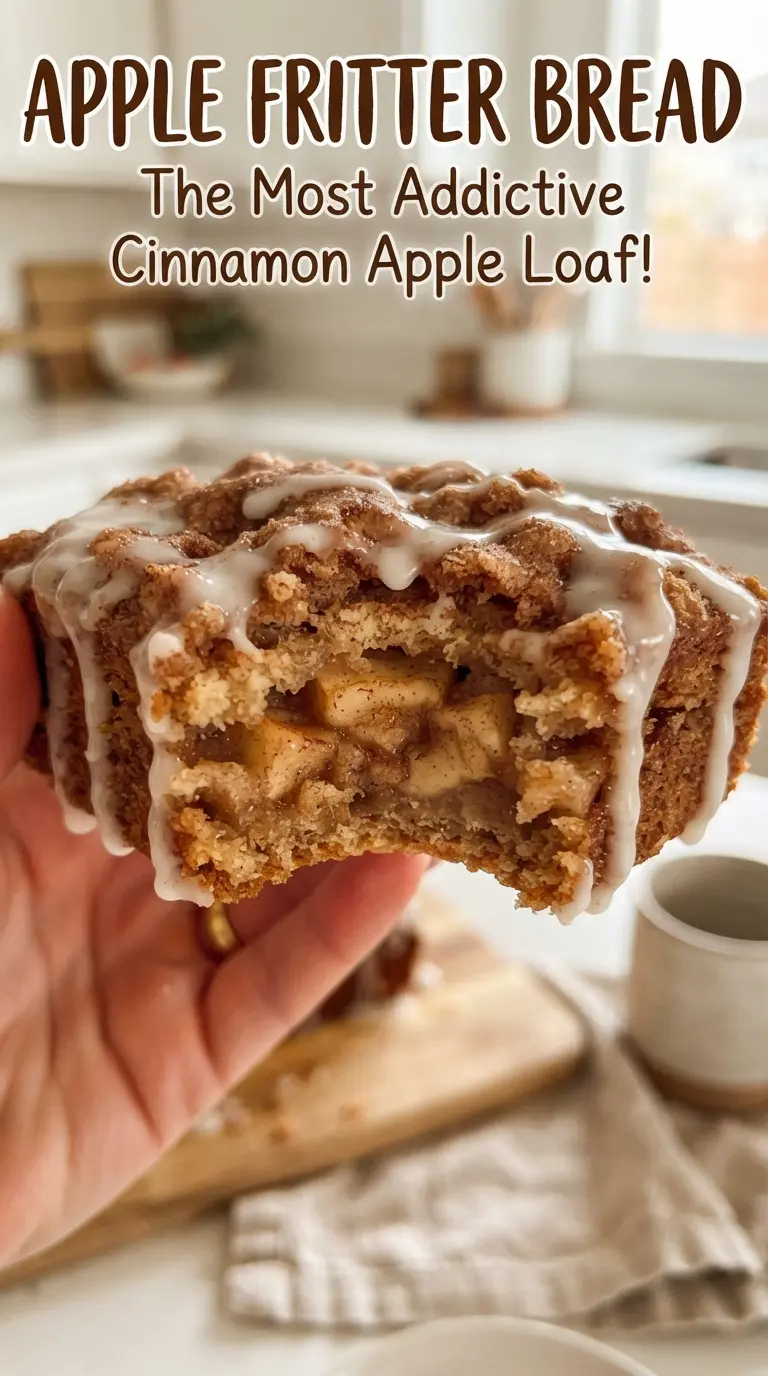
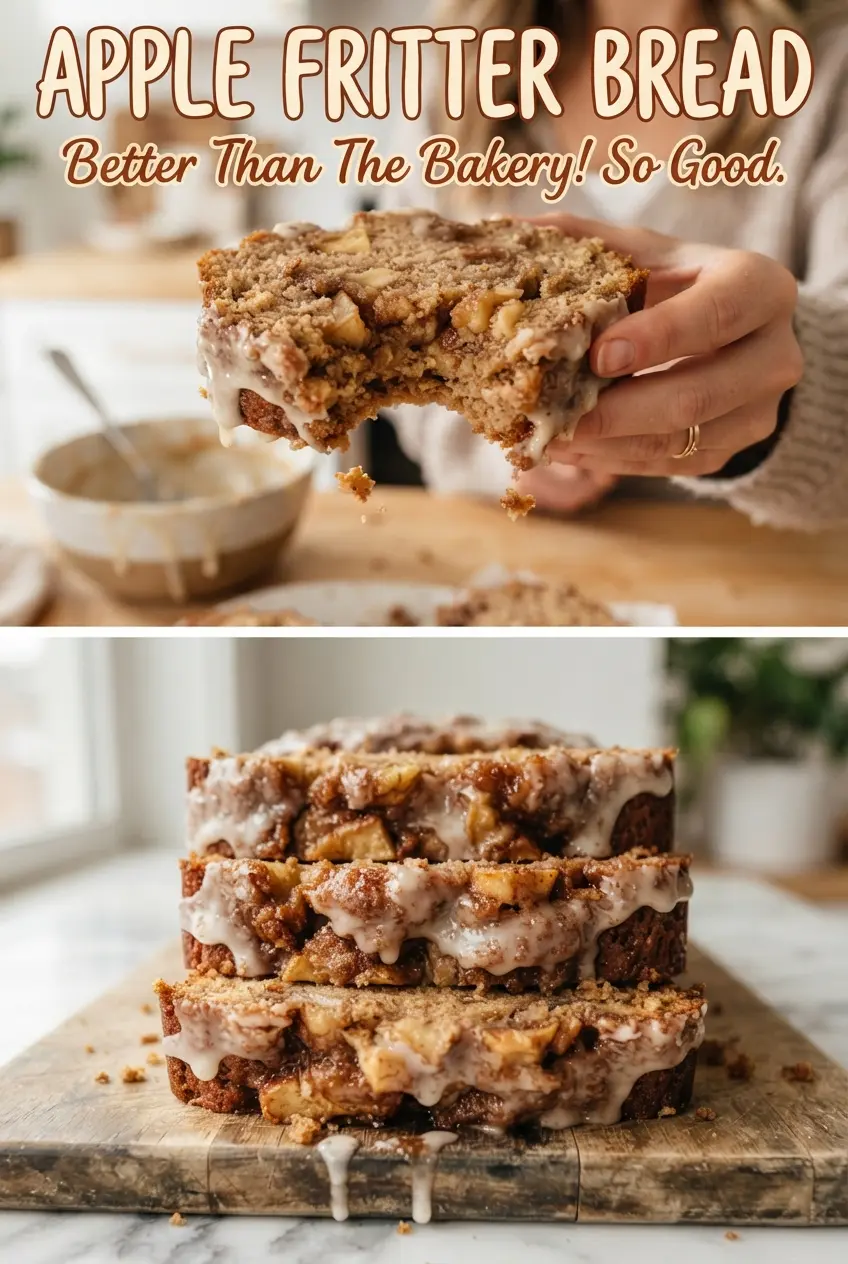
Apple fritter bread bakes up with a tender crumb, ribbons of cinnamon sugar, and pockets of soft apple in every slice. The top turns golden and lightly crackled, then the vanilla glaze settles into the warm loaf and gives each piece that bakery-style finish people always remember. It tastes like an apple fritter in loaf form, but it slices cleanly and holds together well enough for breakfast, snacking, or dessert.
The trick is layering instead of stirring everything together. Tossing part of the cinnamon sugar with the apples pulls out some of their juices and keeps the fruit from feeling dry, while the rest creates those sweet streaks through the batter. The butter needs to be properly softened so it creams with the sugar and gives the loaf enough lift to stay light instead of dense. A gentle swirl with a knife is enough; if you overdo it, the layers blur and you lose the fritter-like look.
Below, I’ve included the details that matter most: how to keep the loaf moist without making it gummy, which apples work best, and how to store it so the glaze stays nice instead of disappearing into the crumb.
The cinnamon sugar swirls stayed distinct and the apples baked up soft without turning mushy. I glazed it while it was still a little warm, and the whole loaf disappeared by the next morning.
Save this apple fritter bread for the days when you want cinnamon-swirled loaf cake with a thick vanilla glaze.
The Trick to Keeping the Apples in Distinct Layers Instead of Melting Into the Batter
The biggest mistake with apple loaf cakes is treating the fruit like a mix-in instead of a layer. When apples go straight into batter, they release moisture all over the loaf and leave you with a heavy center and scattered fruit. This version solves that by coating the chopped apples with a portion of the cinnamon sugar first, which seasons them and keeps their edges from disappearing during baking.
Another detail that matters is the swirl. You want enough movement to create ribbons of brown sugar, not enough to blend the whole pan into one cinnamon-colored batter. A few passes with a knife is plenty. Stop as soon as you see streaks moving through the loaf.
- Apples — A firm apple holds its shape better than a soft one. Granny Smith gives you tartness and structure, while Honeycrisp or Pink Lady bring a sweeter, juicier bite. Soft apples can work, but they fade into the crumb faster.
- Brown sugar and cinnamon — This is what gives the loaf its fritter-style streaks. The brown sugar melts into little caramel pockets, so packed brown sugar matters here. Light or dark both work, though dark brown sugar gives a deeper molasses note.
- Butter — Softened butter traps air when beaten with sugar, which is what keeps the loaf from eating like a brick. If it’s too cold, the batter turns lumpy; if it’s melted, you lose the lift that makes the texture work.
- Milk — The milk loosens the batter just enough to spread around the apples and bake up tender. Whole milk gives the best richness, but 2% works without changing much.
What Each Ingredient Is Actually Doing in This Recipe
- Primary ingredient (the star) — Quality matters most. Choose the best you can find.
- Cooking medium (oil, butter, or broth) — This carries flavors and prevents dryness.
- Seasonings (salt, pepper, spices, herbs) — Layer flavors so nothing overpowers. Build depth gradually.
- Aromatics (garlic, onion, herbs) — Cook with fat to bloom flavors. Become the foundation.
- Supporting ingredients — Complement the main ingredient without overpowering it.
- Sauce or liquid (if applicable) — Brings flavors together. Balance richness with acid.
- Acid (lemon, vinegar, wine, or other) — Brightens and prevents flat-tasting results.
- Final finish (garnish, glaze, or sauce) — Prevents one-dimensional taste and adds visual appeal.
Building the Loaf So the Swirl Bakes, Not Sinks
Creaming the Base
Beat the softened butter and granulated sugar until the mixture turns pale and fluffy. That step sets the loaf up with enough air for a tender crumb, so don’t rush it. If the butter still looks greasy and dense, keep mixing; if it starts to look broken, the butter was too warm and the batter may bake up tighter than you want.
Layering the Batter and Apples
Spread half the batter in the pan, then add half the apples and half the cinnamon sugar. Repeat with the remaining batter and fruit so the loaf bakes with distinct pockets instead of one heavy fruit layer at the bottom. Gentle pressure is fine when you spread each layer, but don’t mash the apples down or the batter will squeeze up around them unevenly.
The Swirl and the Bake
Drag a knife through the top just a few times, making broad figure-eight motions through the loaf. The goal is visible streaks, not full blending. Bake until the center springs back and a toothpick comes out clean or with a few moist crumbs; if it comes out wet, the apples need a little more time to cook through. Let the loaf rest before glazing so the sugar topping sets instead of sliding off.
How to Adapt This Apple Fritter Bread for Different Pans, Diets, and Finish Levels
Make It Dairy-Free
Swap the butter for a plant-based baking stick and use an unsweetened non-dairy milk in both the batter and glaze. The loaf will still be tender, though the flavor will be a little less rich and the crumb slightly less plush. Use a neutral-tasting substitute so the cinnamon and apple stay in front.
Turn Up the Spice
Add a pinch of nutmeg or apple pie spice to the cinnamon sugar if you want a warmer bakery-style flavor. Keep it light; too much spice can bury the apple and make the loaf taste dusty instead of bright. A little extra spice works best when you’re using sweeter apples.
Glaze It Thicker or Skip It
For a thicker glaze, use the lower end of the milk range and drizzle it over a fully cooled loaf. For a thinner, more bakery-style glaze, add a little extra milk and pour it over while the bread is still warm so it melts into the top. Skipping the glaze gives you a less sweet breakfast loaf with more of the cinnamon-sugar crust coming through.
Storage and Reheating
- Refrigerator: Store covered for up to 4 days. The crumb stays moist, but the glaze softens and sinks in a bit.
- Freezer: Freeze the unglazed loaf tightly wrapped for up to 2 months. Thaw at room temperature, then glaze after it has defrosted so the topping stays fresh.
- Reheating: Warm slices in the microwave for 10 to 15 seconds or in a low oven until just heated through. Don’t overheat it or the apples can turn soft and the glaze will melt away completely.
Questions I Get Asked About This Apple Fritter Bread
Apple Fritter Bread
Ingredients
Equipment
Method
- Preheat oven to 350F and grease and line a 9x5-inch loaf pan. Make sure the pan has full coverage so the loaf releases cleanly.
- Mix brown sugar and ground cinnamon, then toss the chopped apples with 2 tablespoons of the mixture. The apples should look evenly coated with a sandy cinnamon coating.
- Beat the softened butter and granulated sugar until fluffy. Scrape the bowl as needed so the batter turns lighter in color and texture.
- Beat in the eggs and vanilla extract until smooth. Stop as soon as the mixture looks uniform.
- Whisk the all-purpose flour, baking powder, and salt together. This keeps the leavening evenly distributed before you add it to the wet batter.
- Add the dry ingredients to the batter alternately with the milk. Start and end with the dry, mixing just until no dry streaks remain.
- Spread half the batter in the loaf pan. Level the surface so the layers stack evenly.
- Top with half the apples and half of the remaining cinnamon sugar. Distribute the apples so they peek through the layer rather than clumping.
- Repeat with the remaining batter, apples, and cinnamon sugar. Tap the pan lightly to help settle the layers.
- Swirl gently with a knife through the top layer. Make 6-8 passes for visible swirls without fully mixing the layers.
- Bake for 50-55 minutes at 350F until a toothpick comes out clean. The loaf should look set in the center and lightly browned on top.
- Cool for 15 minutes before glazing. This prevents the glaze from melting into the loaf.
- Whisk powdered sugar with 2-3 tablespoons milk until smooth, then drizzle over the warm loaf. Let the glaze fall in thick ribbons for the classic fritter-bread look.