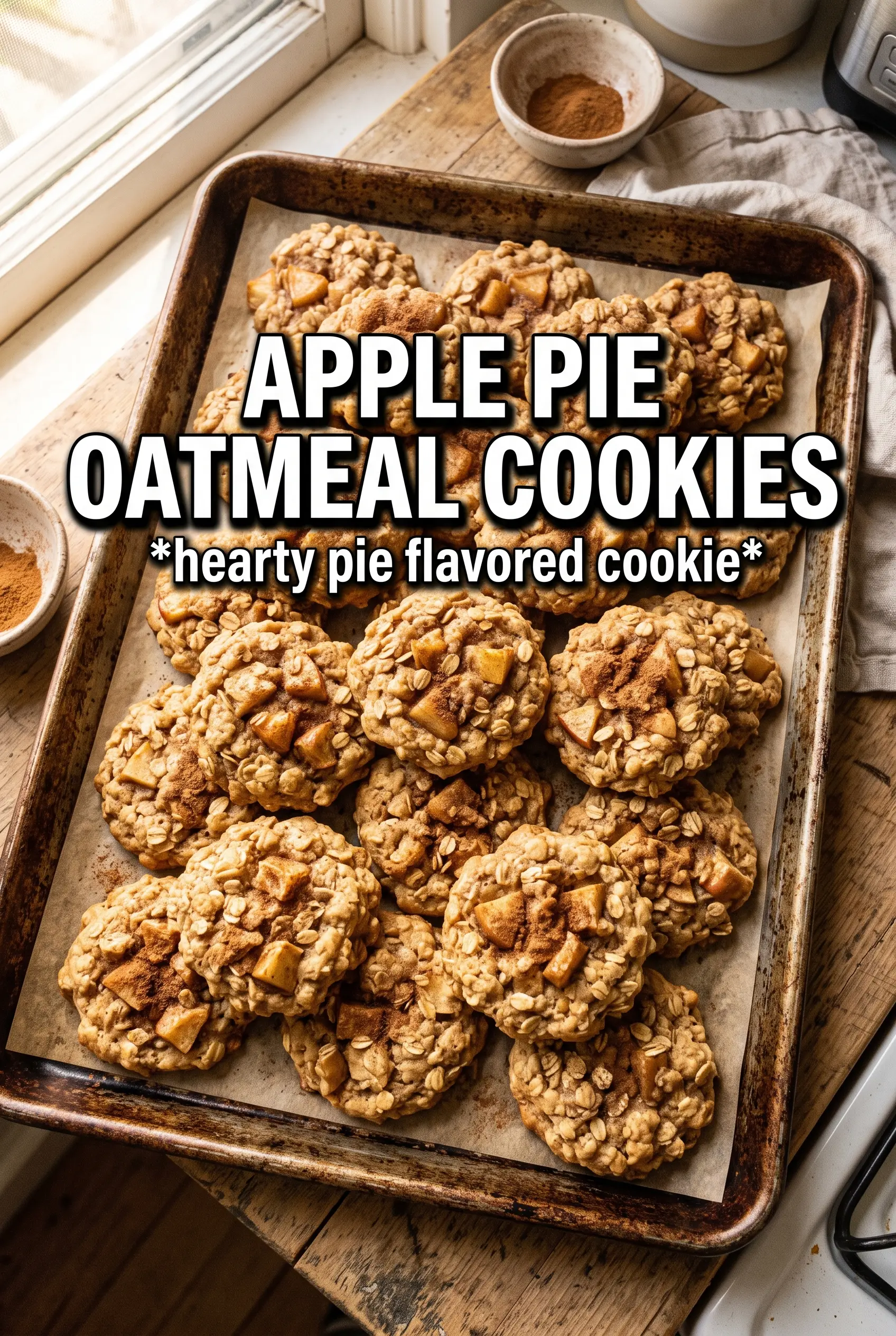
Apple pie oatmeal cookies hit that sweet spot between cozy and sturdy: soft in the center, lightly crisp at the edges, and packed with chewy oats and little pockets of caramel. They taste like a bakery cookie and an apple pie filling had a very smart meeting in the middle. The dried apple pieces keep the flavor concentrated, so every bite gets apple without adding extra moisture that would turn the cookies cakey or wet.
The texture here depends on two things: creaming the butter and sugars until light, then stopping the mixing as soon as the flour goes in. That keeps the cookies tender instead of dense. The apples should be chopped small enough to spread through the dough, and the caramel bits need to be folded in at the end so they stay distinct instead of disappearing into the batter.
Below, I’ll show you the one baking detail that keeps these cookies soft after cooling, plus a few smart swaps if you need to work around what’s in the pantry.
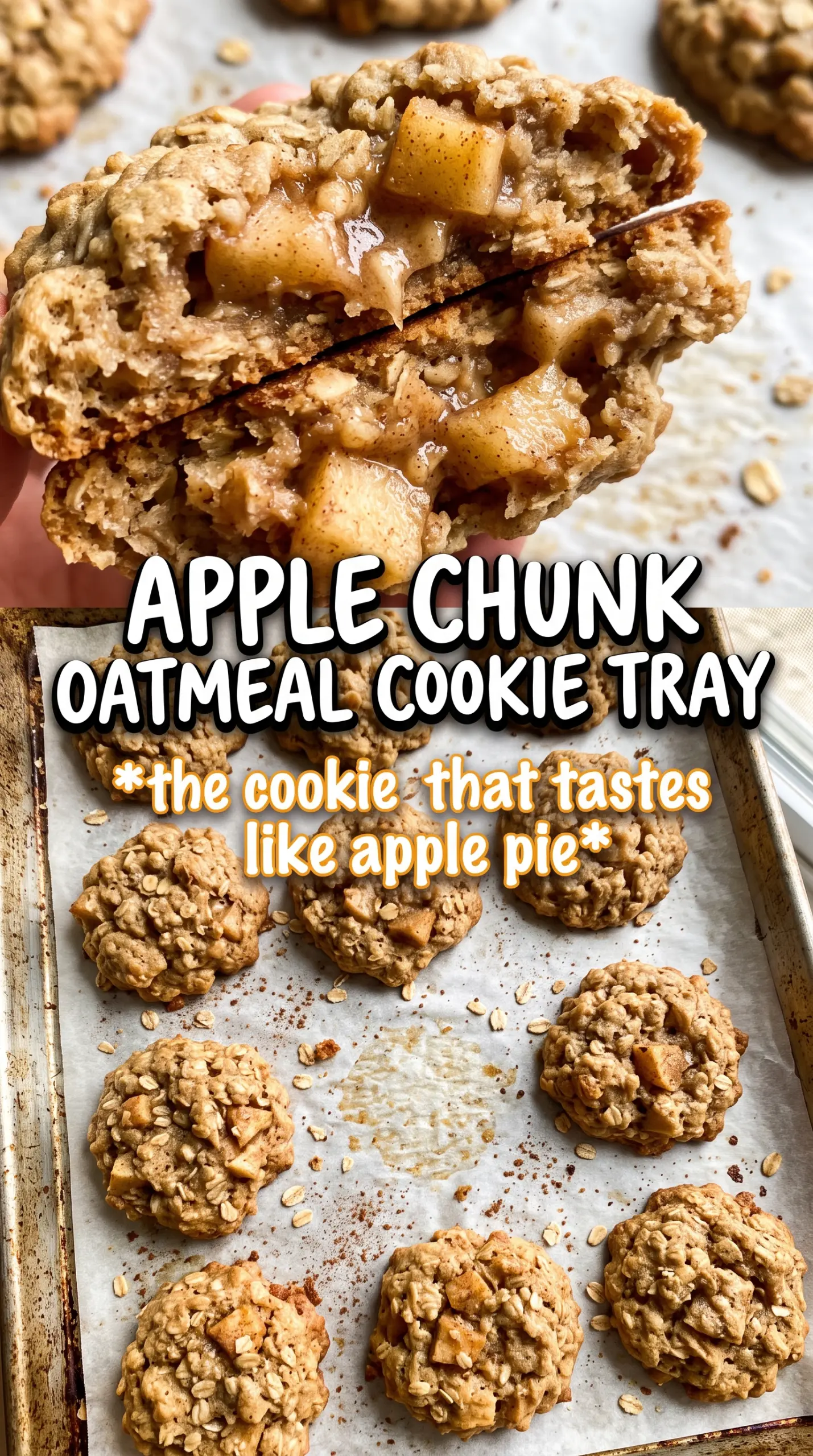
The oats stayed chewy, the apple pieces softened just enough, and the caramel melted into little gooey spots instead of making the cookies spread too much. I baked them 11 minutes and they were perfect after cooling.
Save these apple pie oatmeal cookies for the days when you want chewy oats, cinnamon spice, and little caramel pockets in every bite.
The Trick to Keeping These Cookies Soft Instead of Dry
Oatmeal cookies can go from pleasantly chewy to dry and crumbly fast, especially when they’re loaded with add-ins like apples and caramel. The fix is baking them until the edges look set and golden while the centers still look slightly underdone. They finish setting on the hot pan, and that resting time is what keeps the middle tender.
Another place people go wrong is overmixing after the flour goes in. Once the dry ingredients are added, stir only until the last streaks disappear, then fold in the oats and mix-ins. Overworking the dough tightens the crumb and makes the cookies tougher instead of soft and hearty.
- Rolled oats — Old-fashioned oats give these cookies their classic chew and rustic texture. Quick oats will work in a pinch, but they make the dough softer and less distinct.
- Dried apple pieces — Dried apples are the safest choice because they add concentrated apple flavor without extra water. Chop them finely so you get little bits in every cookie instead of big chewy chunks that can break up the dough.
- Caramel bits or chips — These melt just enough to give you sweet pockets without turning the cookies into a sticky mess. If you use soft caramel pieces, chill the dough first so they don’t spread too much in the oven.
- Brown sugar — This adds moisture and that deeper, almost pie-like note that makes the cookies taste finished. Light or dark brown sugar both work; dark brown sugar gives a stronger molasses edge.
What Each Ingredient Is Actually Doing in This Recipe
- Primary ingredient (the star) — Quality matters most. Choose the best you can find.
- Cooking medium (oil, butter, or broth) — This carries flavors and prevents dryness.
- Seasonings (salt, pepper, spices, herbs) — Layer flavors so nothing overpowers. Build depth gradually.
- Aromatics (garlic, onion, herbs) — Cook with fat to bloom flavors. Become the foundation.
- Supporting ingredients — Complement the main ingredient without overpowering it.
- Sauce or liquid (if applicable) — Brings flavors together. Balance richness with acid.
- Acid (lemon, vinegar, wine, or other) — Brightens and prevents flat-tasting results.
- Final finish (garnish, glaze, or sauce) — Prevents one-dimensional taste and adds visual appeal.
Building the Dough So the Apples and Oats Stay Balanced
Mix the dry ingredients first
Whisk the flour, baking soda, cinnamon, nutmeg, allspice, and salt together before you touch the butter. That keeps the spice evenly distributed, so you don’t get one cookie that tastes all cinnamon and another that tastes plain. The baking soda also needs to be fully dispersed or the cookies can brown unevenly.
Cream the butter and sugars until light
Beat the softened butter with both sugars until the mixture looks fluffy and a little paler in color. That step traps air, which helps the cookies bake up with soft centers instead of turning heavy. If your butter is too cold, the mixture stays gritty; if it’s melted, the cookies will spread too much.
Fold in the oats, apples, and caramel at the end
Once the flour is just mixed in, switch to a spatula and fold in the oats, chopped dried apples, and caramel bits. The dough will feel thick, and that’s exactly what you want. If it looks loose, it usually means the butter was too warm or the apples were chopped too large and are throwing off the structure.
Bake until the centers still look soft
Portion the dough into 2-tablespoon rounds, then press them slightly flat so they bake evenly. Pull them from the oven when the edges are golden and the centers still look soft and puffy. Let them sit on the pan for 5 minutes before moving them; that pause is what finishes the bake without drying them out.
How to Change These Up Without Losing the Apple Pie Feel
Gluten-free version
Swap the all-purpose flour for a 1:1 gluten-free baking blend that includes xanthan gum. The cookies will still hold together, but they may be a touch more delicate, so let them cool completely on the pan before transferring them.
Dairy-free version
Use a plant-based butter stick with a firm texture instead of tub-style spread. The flavor stays close to the original, but softer margarines can make the dough greasy and cause more spread.
No caramel bits on hand
Leave them out and add an extra 1/4 cup chopped dried apples for a cleaner apple-oat cookie. You lose the gooey caramel pockets, but the cookies still taste like apple pie and bake up a little less sweet.
Make them a little more dessert-like
Drizzle the cooled cookies with a thin vanilla glaze or melt a little extra caramel over the top. That adds sweetness and a bakery finish, but it also makes them less packable, so wait until they’re completely cool before decorating.
Storage and Reheating
- Refrigerator: Store in an airtight container for up to 5 days. The oats stay chewy, but the cookies soften a little as they sit.
- Freezer: Freeze baked cookies for up to 2 months, or freeze scooped dough balls and bake straight from frozen with 1 to 2 extra minutes.
- Reheating: Warm a cookie in the microwave for 8 to 10 seconds to loosen the caramel. Don’t overheat it or the edges turn hard before the center softens.
Questions I Get Asked About This Recipe
Apple Pie Oatmeal Cookies
Ingredients
Equipment
Method
- Preheat the oven to 375°F, and line baking sheets with parchment. Keep the sheets ready so the dough can go in right after mixing.
- Whisk the all-purpose flour, baking soda, cinnamon, nutmeg, allspice, and salt together until evenly speckled. The mixture should look uniform with no visible streaks.
- Beat the softened unsalted butter and both sugars until fluffy, about 1-2 minutes. Stop when the mixture looks lighter in color and holds shape.
- Beat in the eggs and vanilla extract until smooth and combined. Scrape the bowl as needed so no sugar remains stuck to the sides.
- Stir in the flour mixture until just combined, then stop as soon as you no longer see dry flour. Overmixing will make the cookies tougher.
- Fold in the rolled oats, dried apple pieces, and caramel bits until evenly distributed. You should see apple pieces and caramel throughout the dough.
- Scoop the dough into 2-tablespoon rounds on the prepared baking sheets, spacing them apart. Press each one slightly flat so they bake evenly.
- Bake at 375°F for 10-12 minutes until the edges are golden but the centers are still soft. Look for a set rim while the middle remains slightly underbaked.
- Cool the cookies on the pan for 5 minutes before transferring. They will firm up as the steam dissipates.