Golden, crackly-skinned baked chicken thighs are one of those dinners that never stop earning their place at the table. The skin turns deeply browned and crisp in the hot oven, while the meat underneath stays juicy enough to cut with almost no effort. When they’re cooked right, they taste like the best version of a simple chicken dinner: bold, savory, and dependable.
This version leans on bone-in, skin-on thighs because they stay tender in a 425°F oven without drying out. The seasoning is straightforward, but the order matters: dry the chicken well, coat it with oil, then work the spice blend over every surface so it clings and browns instead of sliding off. A rack helps the heat move all the way around the thighs, which is what gives you that crisp skin instead of soft, pale spots underneath.
Below, I’ve included the little details that make these thighs turn out consistently well, plus a few easy ways to adjust the seasoning or change the method when you want a different finish.
The skin came out shatter-crisp and the thighs were still juicy at 40 minutes. I usually overcook chicken thighs, but using the rack and checking the temperature at 165°F kept them perfect.
Save these juicy baked chicken thighs for the nights when you want crisp skin, simple seasoning, and a no-fuss oven dinner that always lands well.
The Secret to Crisp Skin Without Drying Out the Meat
The biggest mistake with baked chicken thighs is crowding them or putting them on a wet surface. Both trap steam, and steam is the enemy of crisp skin. Patting the chicken dry matters more than people think, because the oven has to spend less time evaporating moisture and more time browning the skin. A rack over a baking sheet helps even more since hot air can move underneath the thighs instead of letting them sit in their own drippings.
High heat is part of the formula here. At 425°F, the skin has enough energy to render and crisp before the meat dries out. If your thighs look pale at the end, the usual culprit is moisture on the skin or an oven that never fully preheated. Give the oven enough time to hit temperature before the chicken goes in, and don’t pull them early just because the juices look clear.
What Each Seasoning Is Actually Doing Here

- Bone-in, skin-on chicken thighs — These give you the most forgiveness in the oven. The bone helps the meat cook evenly, and the skin protects the surface from drying out while it crisps. Boneless thighs work, but they cook faster and lose some of that rich, juicy bite.
- Olive oil — This helps the seasoning stick and encourages the skin to brown. You don’t need a lot, but you do need enough to lightly coat the chicken on both sides. A neutral oil works too if that’s what you keep on hand.
- Paprika, garlic powder, onion powder, and Italian herbs — This blend builds the savory backbone of the dish without needing a marinade. Paprika adds color and a little warmth, while the dried herbs give the chicken a roasted, homey flavor. Fresh garlic won’t give you the same even coating, and it can burn on the skin.
- Salt and pepper — Salt is what seasons the meat all the way through, not just the surface. If you under-season here, the chicken tastes flat even when the skin looks great. Use kosher salt if you have it, and keep the seasoning even under the skin where possible.
Getting the Thighs Crispy in the Oven, Not Steamed
Drying and Seasoning the Chicken
Start by patting each thigh dry with paper towels, including the tucked edges around the bone. Any moisture left on the skin turns into steam, and steam keeps the skin soft. Rub the chicken with oil first, then add the seasoning blend so it adheres evenly instead of clumping. If some seasoning falls onto the pan, that’s fine — but the skin itself should look coated, not wet.
Using the Rack for Better Browning
Set the thighs skin-side up on a rack over a baking sheet. That gap underneath matters because it keeps the bottom from soaking in rendered fat and lets the heat circulate all around. If you skip the rack, the bottoms will cook, but they won’t get the same crisp, evenly browned finish. Leave a little space between each piece so the skin can roast instead of steam against another thigh.
Watching for the Right Finish
Bake until the skin is a deep golden brown and the internal temperature reaches 165°F at the thickest part without touching the bone. Around 35 to 40 minutes is the usual window, but thickness and oven accuracy change the timing. If the skin is browned before the center is done, keep going and shield the top loosely with foil only if it starts getting too dark. Let the thighs rest for 5 minutes after baking so the juices settle back into the meat instead of running onto the cutting board.
How to Change These Baked Chicken Thighs Without Losing the Good Part
Make It Gluten-Free Without Changing the Method
This recipe is naturally gluten-free as written, so there’s nothing to replace. Just check your spice labels if you’re cooking for someone sensitive, since some seasoning blends include anti-caking agents or hidden additives. The texture and bake time stay the same.
Swap the Herbs for a Different Finish
Italian herbs give the chicken a familiar roasted flavor, but thyme, rosemary, or a pinch of smoked paprika can shift it in a good direction. Use dried herbs sparingly if they’re woody, since too much can taste dusty on the skin. If you want a more lemony result, add lemon zest to the seasoning mix and finish with the wedges at the table.
Use Boneless Thighs When That’s What You Have
Boneless thighs still work, but they cook faster and won’t stay in the oven quite as long. Start checking them around 25 to 30 minutes so they don’t turn dry. You’ll lose a little of the rich flavor that comes from the bone, but you’ll still get a juicy result with crisp seasoning on top.
Storage and Reheating
- Refrigerator: Store in an airtight container for up to 4 days. The skin softens, but the meat stays tender.
- Freezer: These freeze well for up to 3 months. Wrap each thigh tightly and thaw overnight in the refrigerator before reheating.
- Reheating: Warm in a 375°F oven until hot through, about 12 to 15 minutes. The oven helps bring back some of the skin’s texture; the microwave will make it rubbery.
Questions I Get Asked About This Recipe
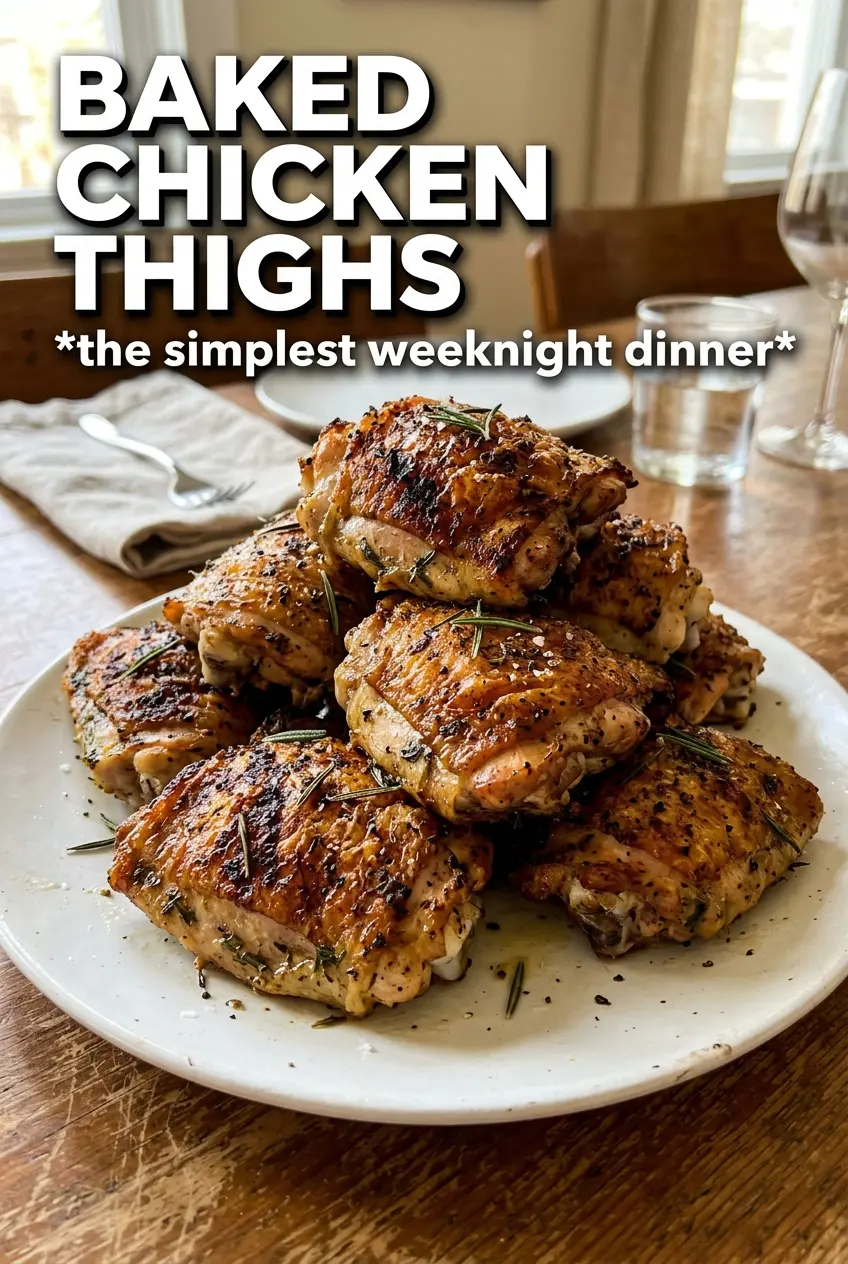
Baked Chicken Thighs
Ingredients
Equipment
Method
- Preheat the oven to 425F, then pat the chicken thighs completely dry so the skin can crisp.
- Rub both sides of the chicken with olive oil.
- Mix garlic powder, onion powder, paprika, dried Italian herbs, salt, and black pepper, then rub the seasoning all over the thighs, including under the skin.
- Place the thighs skin-side up on a rack set over a baking sheet.
- Bake for 35-40 minutes at 425F until deeply golden and the internal temperature reaches 165F, with crackly skin visible.
- Rest for 5 minutes before serving so the juices settle, keeping the meat tender.
- Serve with lemon wedges and fresh parsley.