Sticky baked honey garlic chicken thighs earn their place in the dinner rotation because the sauce clings to the skin instead of sliding off, and the edges turn glossy and caramelized while the meat stays juicy underneath. The pan ends up with a spoonable glaze that tastes sweet, savory, and deeply garlicky, not thin or one-note.
The trick is balancing the honey with soy sauce and vinegar so the glaze can reduce without turning cloying. Skin-on thighs are the right cut here because they forgive a little extra oven time and give you that browned, crisped skin that holds up under the sauce. A short marinade helps the flavor reach the meat, but the real payoff happens in the oven when the pan juices concentrate.
Below, you’ll find the timing that keeps the chicken juicy, the reason the broiler finish is worth it, and a few smart swaps if you need to adjust the recipe without losing that sticky, lacquered finish.
The glaze thickened up beautifully in the oven, and the chicken stayed juicy even after the second bake. I served it over rice and the extra sauce from the pan was the best part.
Save these sticky honey garlic chicken thighs for the night you want caramelized chicken, a glossy pan sauce, and almost no cleanup.
The Part That Keeps the Glaze Sticky Instead of Burnt
Honey goes from glossy to scorched fast, and that is the main thing that goes wrong with baked chicken like this. The fix is using high heat for enough browning, but not so long that the sugar in the marinade dries out before the chicken is done. The chicken thighs need to start skin-side up so the fat renders and the skin has a chance to crisp before the final glaze turns lacquered.
The other mistake is baking at too low a temperature. Low heat leaves the sauce watery, and watery sauce never clings. At 425°F, the chicken cooks through in a short enough window that the glaze reduces around it instead of steaming in the pan.
What Each Ingredient Is Doing in the Pan Sauce
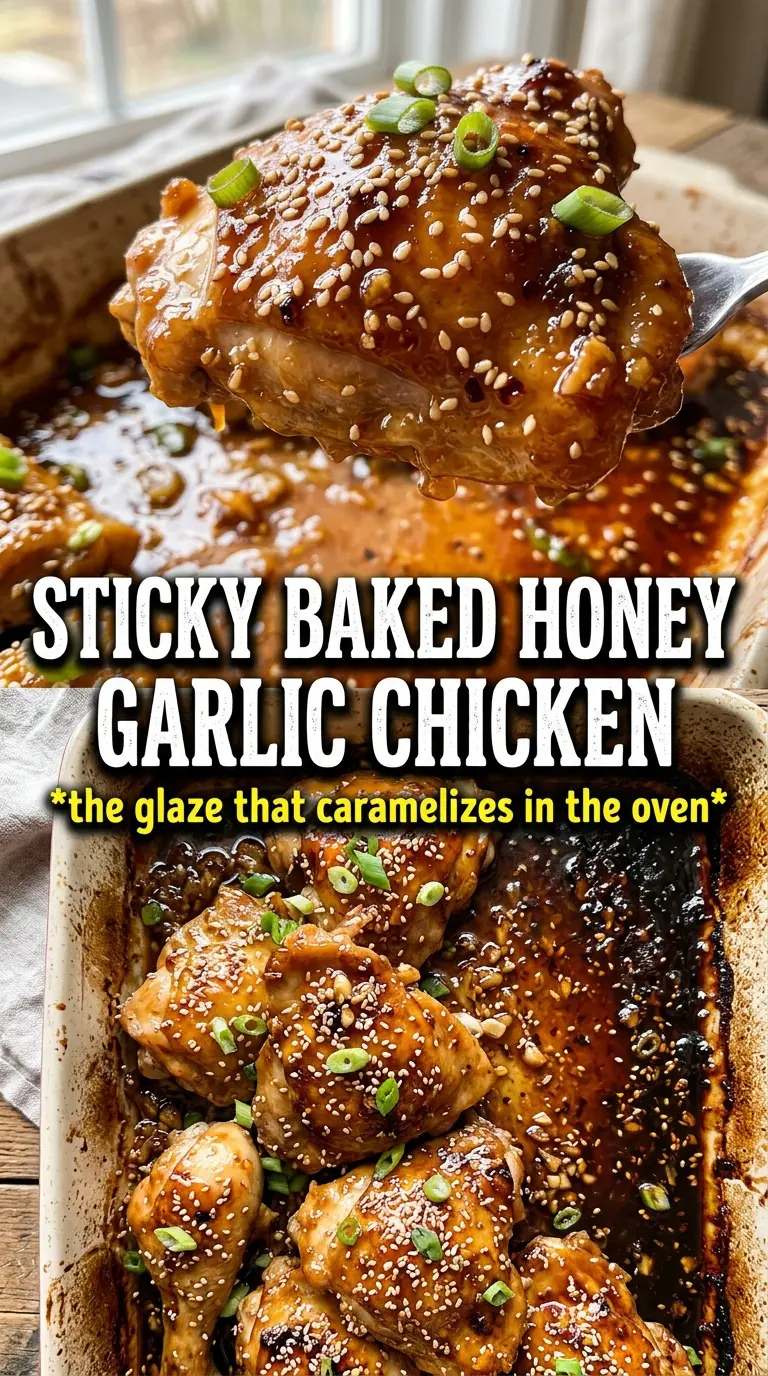
- Bone-in, skin-on chicken thighs — These stay juicy through the bake and give you the best browned skin. Boneless thighs work in a pinch, but they cook faster and don’t give the same crisp finish.
- Honey — This is the glaze’s backbone and the reason the sauce turns sticky. There isn’t a real substitute that caramelizes the same way, but maple syrup can work if you want a slightly deeper, less floral sweetness.
- Soy sauce — It keeps the sweetness in check and gives the sauce that savory, dark color. Use low-sodium if that’s what you keep on hand; the flavor still comes through.
- Apple cider vinegar — The acid keeps the glaze from tasting flat and helps it reduce into a sharper, more balanced sauce. Lemon juice can stand in, but the vinegar edges are a little rounder here.
- Garlic — Fresh minced garlic is what makes the sauce smell irresistible as it bakes. Jarred garlic will work, but it tends to taste softer and less punchy once it cooks down.
- Red pepper flakes — They don’t make the dish spicy; they wake up the glaze. Leave them out if you want it mild, or add a little more if you like a gentle heat at the end.
How to Build the Glaze So It Caramelizes, Not Clumps
Whisking the Marinade
Mix the honey, garlic, soy sauce, olive oil, vinegar, red pepper flakes, and black pepper until the honey loosens and everything looks unified. If the honey sits in a thick ribbon at the bottom of the bowl, it hasn’t blended enough to coat the chicken evenly. The marinade should smell sharp, sweet, and garlicky all at once.
Giving the Chicken Time to Take on Flavor
Thirty minutes in the refrigerator is enough to season the surface and start building flavor. Longer is fine, but don’t leave the chicken swimming in the marinade all day because the vinegar can start to toughen the outer layer. Use a shallow dish or a zip-top bag so every thigh gets contact with the sauce.
Baking, Basting, and Finishing Hot
Arrange the thighs skin-side up and spoon some marinade over the top before they go into the oven. After 25 minutes, baste with the pan juices so the glaze can build in layers instead of drying out on top. If the chicken is cooked through but the glaze still looks pale, the final 2-minute broil gives you that deep caramel color; watch it closely because honey can go from beautiful to bitter in a minute.
Make It Gluten-Free
Use tamari or a certified gluten-free soy sauce in place of regular soy sauce. The sauce still reduces and clings the same way, so you don’t lose the sticky finish.
No Skin, No Problem
You can use boneless, skinless thighs if that’s what you have, but shorten the bake and skip the broil unless the sauce needs a quick finish. The texture will be softer and less crisp, but the flavor still lands.
Swap the Sweetener
Maple syrup works if you want a deeper sweetness with a little less stickiness than honey. The sauce will still glaze the chicken, but it won’t set with quite the same lacquered shine.
Storage and Reheating
- Refrigerator: Store leftovers in an airtight container for up to 4 days. The skin softens as it sits, but the sauce stays flavorful.
- Freezer: Freeze for up to 2 months, ideally with the chicken and sauce packed together. The texture won’t be as crisp after thawing, but it reheats well for a second meal.
- Reheating: Warm covered in a 350°F oven until hot, then uncover for a few minutes so the glaze can re-stick to the chicken. The common mistake is blasting it in the microwave, which makes the skin rubbery and can dry out the edges before the center heats through.
Questions I Get Asked About This Recipe
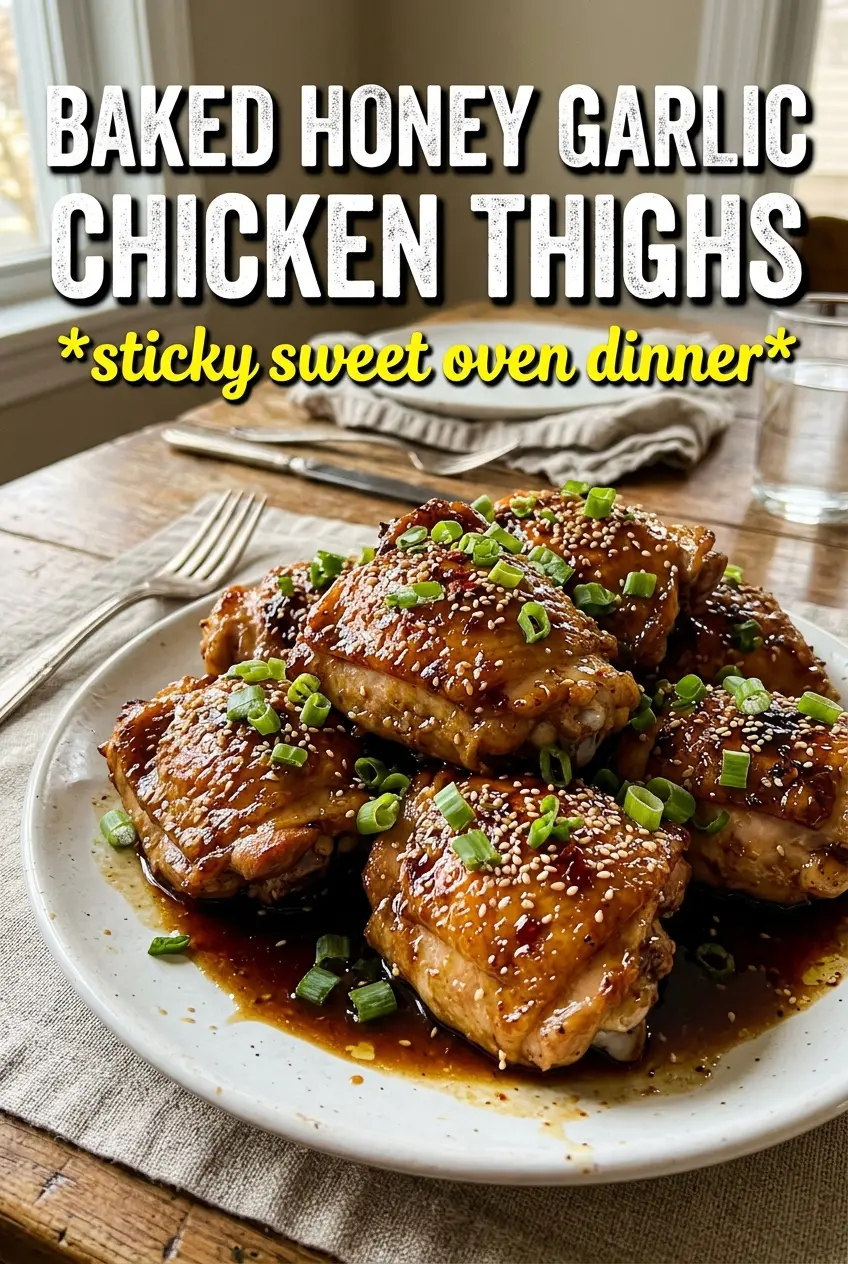
Baked Honey Garlic Chicken Thighs
Ingredients
Equipment
Method
- Whisk honey, garlic, soy sauce, olive oil, apple cider vinegar, red pepper flakes, and black pepper together until smooth and evenly combined.
- Place chicken thighs in a dish and marinate at least 30 minutes in the refrigerator, turning once if possible.
- Preheat oven to 425F and arrange chicken skin-side up in a baking dish; spoon the marinade over the top.
- Bake 25 minutes, then baste with the pan juices to deepen the glaze on the skin.
- Bake 10 more minutes until golden and caramelized, then broil 2 minutes for an extra-gloss glaze.
- Garnish with fresh thyme and sesame seeds right before serving.