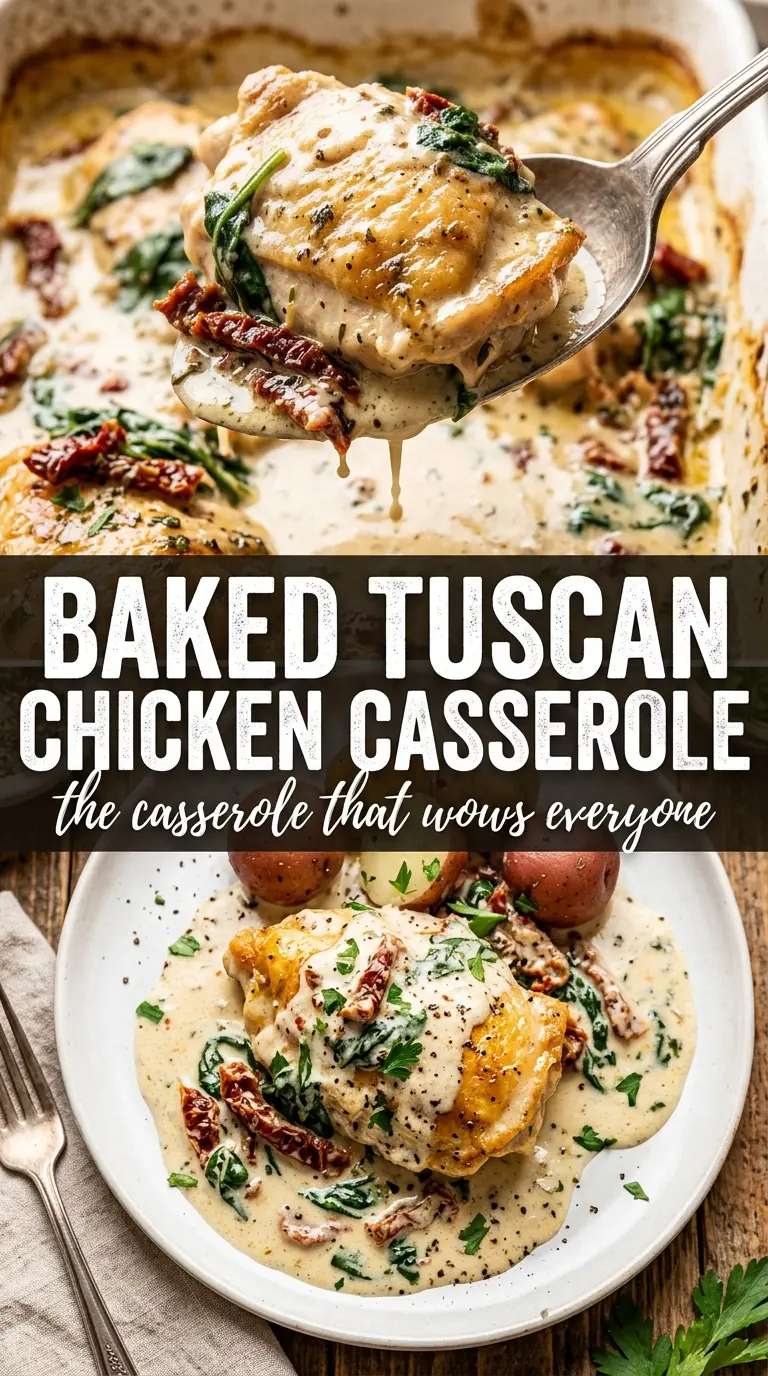
Baked Tuscan chicken casserole lands with the kind of rich, savory sauce that makes people hover around the stove before dinner is even plated. The chicken comes out bronzed on top, the spinach folds into the cream sauce without turning watery, and the sun-dried tomatoes bring enough tang to keep every bite from feeling heavy. It eats like the sort of meal you’d expect from a long-simmered Sunday dinner, but it comes together in one pan with a lot less work.
The trick is building flavor in stages. Searing the chicken first gives you crisp skin and the browned bits that make the sauce taste like something special, and cooking the garlic and tomatoes in that same pan wakes up the oil-packed tomatoes without burning the garlic. The cream goes in after the broth has loosened the pan, so the sauce stays silky instead of grainy, and the Parmesan melts in cleanly when the heat is kept moderate.
Below, you’ll find the exact cue for when the chicken is ready to move into the oven, the ingredient swap I’d use if I were out of spinach, and a few ways to keep the sauce smooth if you want to make this ahead.
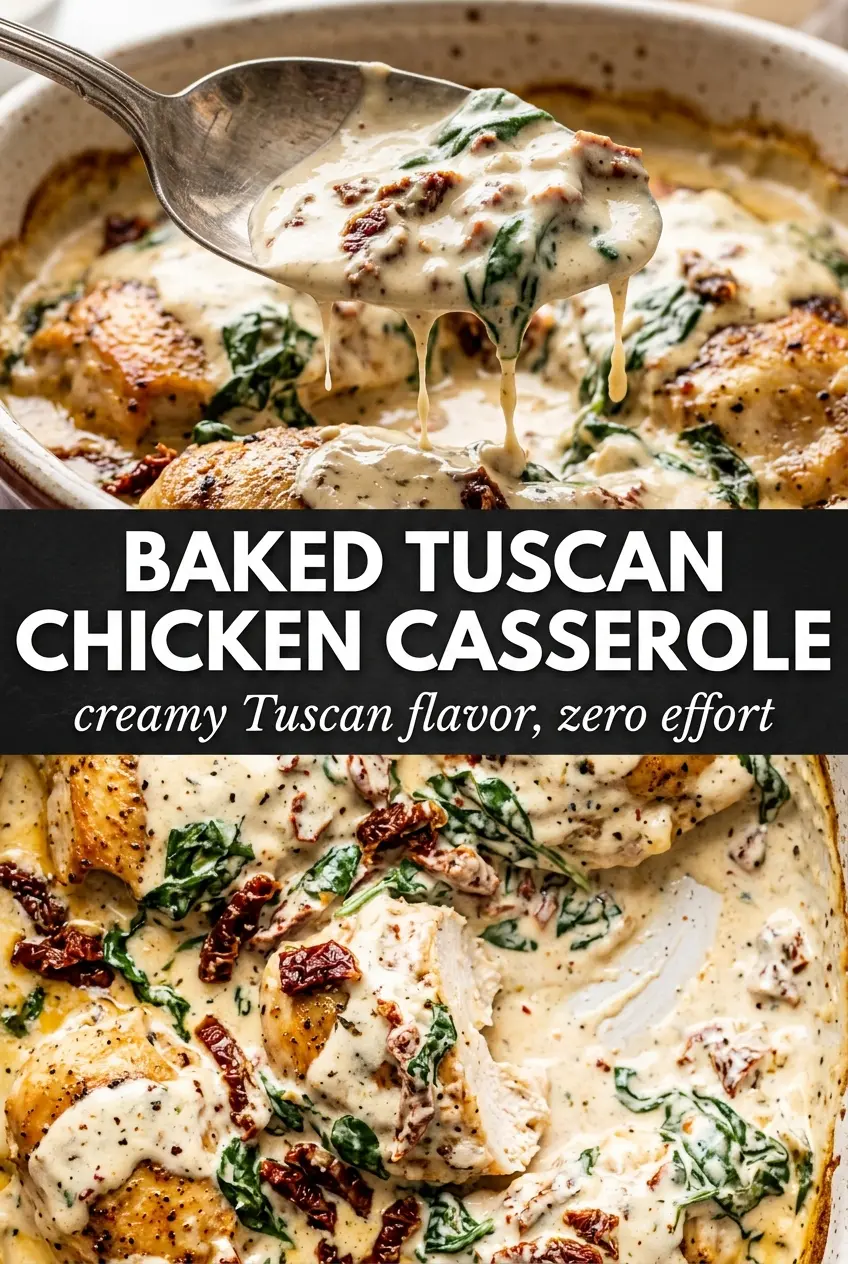
The chicken skin stayed crisp even after baking, and the sauce thickened up into this silky, spoon-coating layer with the sun-dried tomatoes and Parmesan. I served it over rice and my husband asked if we could put it on repeat.
Save this baked Tuscan chicken casserole for the nights when you want golden chicken, spinach, and a creamy sun-dried tomato sauce in one pan.
The Part That Keeps the Cream Sauce From Breaking
Most Tuscan-style chicken bakes go wrong in the same place: the pan gets too hot once the cream and Parmesan go in. That’s when the sauce can turn oily or grainy, especially if the cheese hits a furious simmer. The fix is simple. Pull the heat back after deglazing, then stir in the cream and Parmesan over gentle heat so the sauce has time to thicken smoothly.
The other place people lose the texture is after the chicken goes into the oven. If the pan is overcrowded or the sauce is too thin before baking, the chicken steams and the sauce loosens instead of concentrating. A wide oven-safe skillet or braiser gives the sauce room to bubble around the thighs, and uncovered baking lets some moisture cook off so the sauce finishes silky, not soupy.
- Bone-in, skin-on chicken thighs — These stay juicy through the oven time and give you the best drippings for the sauce. Boneless thighs work in a pinch, but they cook faster and won’t give you the same browned skin or depth in the pan.
- Sun-dried tomatoes in oil — The oil-packed kind bring a rounder, richer flavor than dry-packed tomatoes. Drain them before slicing, but don’t rinse away the seasoning clinging to them.
- Heavy cream — This is what gives the sauce its body. Half-and-half can curdle more easily and will make a thinner sauce, though it can work if you keep the heat low and expect a lighter finish.
- Parmesan — Grate it finely so it melts without clumping. Pre-shredded Parmesan often contains anti-caking agents that can leave the sauce a little sandy.
- Baby spinach — Add it at the end. It only needs a minute in the hot sauce, and cooking it longer is how you end up with dull, muddy greens instead of tender ribbons.
What Each Ingredient Is Actually Doing in This Baked Chicken
- Chicken breasts or thighs (the protein) — Let them sit at room temperature for 15 minutes before baking. This helps them cook evenly.
- Olive oil or butter (the cooking medium) — This prevents the chicken from drying out and carries herb and spice flavors.
- Garlic (the aromatic foundation) — Fresh minced or thin slices mellow and become sweet when baked. Don’t brown it or it turns bitter.
- Cream or sauce (the moisture keeper) — This prevents the chicken from drying out in the oven. Balanced sauce makes the difference between dry and juicy.
- Lemon or white wine (the brightness) — Acid prevents heavy cream sauces from tasting flat. Add it so flavors balance.
- Fresh herbs (basil, thyme, parsley) — These add complexity. Add some during cooking and some after so you get both cooked and fresh flavors.
- Cheese (optional richness) — Parmesan or feta adds creaminess and salt. Don’t overdo it or the dish becomes heavy.
- Proper oven temperature (375-400°F) — This temperature bakes chicken through without drying the edges. Use a thermometer for 165°F.
Building the Sauce Around the Chicken, Not After It
Seasoning and Searing the Thighs
Pat the chicken thighs dry before seasoning them. That dry surface is what helps the skin turn deep golden instead of pale and rubbery. Heat the olive oil until it shimmers, then lay the thighs skin-side down and let them sit long enough to release cleanly from the pan. If they stick, they’re not ready yet. After 6 to 7 minutes on the first side and a shorter sear on the second, move them out to a plate while you start the sauce.
Pulling Flavor From the Pan
Use the same skillet without wiping it out. The browned bits stuck to the bottom are the backbone of the sauce. Cook the garlic and sun-dried tomatoes just until fragrant, about a minute, because garlic turns bitter fast once it starts browning. When you add the broth, scrape the pan well so every bit of seasoning lifts into the liquid.
Finishing the Cream Sauce
Stir in the cream, Parmesan, Italian seasoning, and red pepper flakes after the broth has loosened the pan. Keep the heat moderate, not aggressive. You want the sauce to look smooth and slightly thickened before the chicken goes back in, not boiling hard at the edges. If it starts to separate, the pan is too hot; take it off the burner for a minute and whisk gently.
Baking Until the Chicken Is Done
Set the chicken skin-side up in the sauce and bake uncovered until the thighs reach 165°F in the thickest part. The skin will stay bronzed if it sits above the liquid, while the underside picks up the sauce underneath. Let the casserole bubble around the edges and reduce a little as it bakes. If the sauce looks too loose at first, don’t worry. It tightens as the chicken finishes and the steam cooks off.
Wilting the Spinach and Serving
Stir the spinach into the hot sauce after the dish comes out of the oven. It should collapse almost immediately, turning glossy and tender without losing its color. Finish with basil right before serving so the herbs stay bright. Spoon plenty of sauce over the chicken, because that’s where the sun-dried tomato and Parmesan flavor really lives.
Small Changes That Still Keep the Dish Intact
Make it gluten-free without changing the texture
This casserole is naturally gluten-free as written, which is one reason it works so well for a weeknight main. Just check that your chicken broth and sun-dried tomatoes are labeled gluten-free, since some brands add thickeners or flavorings that aren’t obvious at first glance.
Use boneless chicken thighs for a faster version
Boneless thighs shave off a little cook time and are easier to serve, but they won’t keep the same dramatic, crispy skin. Sear them for less time so they don’t overcook before they go into the oven, and start checking them a few minutes early because they finish faster than bone-in thighs.
Go dairy-free with coconut cream and a different finish
Coconut cream can stand in for the heavy cream, but it will add a faint coconut note and won’t taste as close to the original. Skip the Parmesan and finish with a little extra salt plus a spoonful of nutritional yeast if you want more savory depth. The sauce will still be rich, just a little different in character.
Storage and Reheating
- Refrigerator: Store leftovers in an airtight container for up to 3 days. The sauce will thicken as it chills, and the spinach will soften a bit more.
- Freezer: It freezes, but the cream sauce may separate slightly when thawed. For the best texture, freeze only if you don’t mind a less silky sauce and reheat gently after thawing overnight in the fridge.
- Reheating: Warm it covered in a 325°F oven or in a skillet over low heat with a splash of broth. High heat is what makes cream sauces break, so go slow and stir often until everything is hot through.
Questions I Get Asked About This Recipe
Baked Tuscan Chicken Casserole
Ingredients
Equipment
Method
- Preheat oven to 400°F. Season the chicken thighs with salt, pepper, garlic powder, Italian seasoning, and smoked paprika.
- Heat olive oil in a large oven-safe skillet or braiser over medium-high heat until shimmering. Sear the chicken skin-side down for 6-7 minutes until deeply golden.
- Flip the chicken and sear for 3 more minutes. Remove the chicken to a plate.
- Cook garlic and sun-dried tomatoes in the same pan for 1 minute. Pour in the chicken broth and deglaze, stirring to lift browned bits.
- Stir in heavy cream, Parmesan, Italian seasoning, and red pepper flakes. Simmer until the sauce looks smooth and lightly thickened.
- Return the chicken skin-side up to the pan. Transfer to the oven and bake uncovered for 20-22 minutes until chicken reaches 165°F.
- Stir baby spinach into the sauce until wilted. Let it fold into the bubbling Parmesan cream pool.
- Garnish with fresh basil and serve. Spoon sauce over the chicken so the sun-dried tomato pieces are visible.