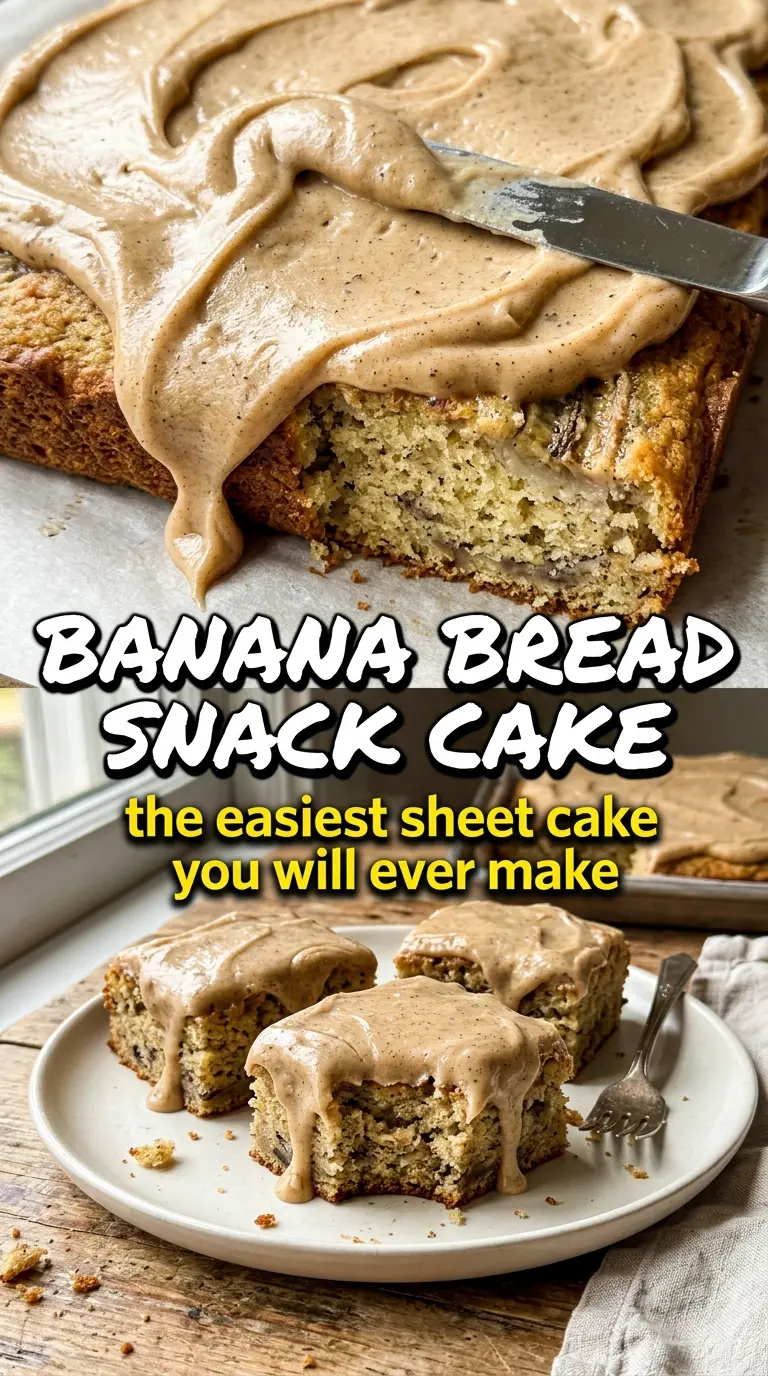
Banana bread snack cake lands in that sweet spot between a casual afternoon bake and a dessert people keep sneaking back to with a fork. It’s denser and more tender than a classic layer cake, but lighter and more polished than straight-up banana bread, with a moist crumb that holds together in neat squares. The brown butter cream cheese frosting on top takes it from “good use for ripe bananas” to the kind of pan that disappears before dinner.
What makes this version work is how little it asks of the batter. Melted butter keeps the mixing simple and gives the crumb a soft, rich texture without needing a mixer, and the banana flavor stays front and center because the spice is restrained. The frosting matters too: browning the butter adds a nutty depth that keeps the sweet cream cheese base from tasting flat. Cool the cake all the way before frosting it, or the topping will slide right off.
You’ll find the exact bake time that gives you a moist center without a gummy middle, plus a few notes on how ripe the bananas should be and what to do if you want the frosting a little thicker or softer.
The cake baked up with a tight, moist crumb and the browned butter frosting set up enough to slice cleanly after chilling. I used two very spotty bananas and it came out perfectly banana-y without tasting heavy.
Save this banana bread snack cake for the ripe-banana days when you want a moist square cake with browned butter frosting and almost no fuss.
The Trick to Keeping Banana Snack Cake Moist Instead of Gummy
The line between tender and gummy is narrower than people think with banana cake. Too much banana, too much flour, or overmixing the batter all push it in the wrong direction. This recipe stays on the right side because it uses just enough banana to flavor the cake and melted butter to keep the texture soft without making it heavy.
The other big mistake is chasing a deep browned top before the center has set. An 8×8 pan gives you enough thickness for a snack-cake feel, but that also means the middle needs a full bake. Pull it when a toothpick comes out clean or with a few moist crumbs, not wet batter, and let it cool in the pan so the crumb finishes setting.
- Ripe bananas — You want bananas with plenty of brown spots and a soft texture. They mash smoothly and bring the strongest banana flavor without adding extra liquid from overripe fruit that has turned watery.
- Melted butter — This gives the cake its easy one-bowl texture and a rich crumb. Oil will keep it moist too, but butter adds a cleaner, more bakery-style flavor.
- Baking soda — Banana batter needs that lift to keep from baking up dense and flat. If your soda is old, the cake will stay heavy and taste a little dull.
- Brown butter frosting — The browned butter is what makes the topping memorable. If you skip browning, the frosting still works, but it loses the nutty edge that balances the sweetness.
What Each Ingredient Is Actually Doing in This Banana Bread
- Bananas (the moisture and sweetness) — Use very ripe bananas for maximum sweetness and moisture. Overripe bananas are actually better here.
- Flour (the structure) — Don’t overmix or the bread becomes tough. Mix just until dry ingredients are incorporated.
- Sugar (the sweetness) — Ripe bananas are already sweet, so you might reduce sugar slightly. Adjust to taste.
- Butter or oil (the richness) — This creates tender crumb and carries flavors. Room temperature butter creams better.
- Eggs (the binder and lift) — These hold everything together and help the bread rise. Use room temperature eggs.
- Leavening (baking soda or powder) — This creates rise. Too much makes it taste bitter.
- Vanilla extract (the flavor enhancer) — This brings out the banana flavor. Use quality vanilla extract.
- Optional mix-ins (nuts, chocolate, or dried fruit) — These add texture and prevent the bread from being one-dimensional.
Building the Batter and Frosting Without Overcomplicating It
Mashing the Bananas Smooth
Start with bananas that mash easily with a fork and leave only a few small lumps. Those soft bits melt into the cake as it bakes and give it a more even banana flavor. If the bananas are still firm, the batter will be patchy and the texture won’t bake up as evenly.
Mixing the Wet Ingredients
Whisk the melted butter, sugar, eggs, vanilla, and bananas until the mixture looks smooth and a little glossy. The batter should come together quickly; if you beat it hard, you’ll work in extra air and then lose the soft snack-cake crumb this recipe is after. Don’t worry if it looks loose at this stage — the flour will tighten it up fast.
Adding the Dry Ingredients Just Until Combined
Fold in the flour, baking soda, cinnamon, and salt until the last streaks disappear. Overmixing here is the quickest way to make the cake tough. Stop as soon as you no longer see dry flour, then get it into the pan while the batter still looks thick and scoopable.
Baking to the Right Center Set
The cake is done when the top is golden, the edges pull away slightly from the pan, and a toothpick inserted in the center comes out clean or with a few moist crumbs. If the top is browning quickly but the middle still looks wet, give it a few more minutes and don’t open the oven repeatedly. The cake needs that full bake to hold its square shape once sliced.
Making the Brown Butter Frosting
Brown the butter until it smells nutty and the milk solids at the bottom turn amber, then let it cool for a few minutes before whisking in the sugar, cream, and vanilla. If the butter is too hot, the frosting turns greasy and loose. If it seizes or looks grainy, keep whisking; it usually smooths out as the cream and sugar come together.
Three Ways to Adapt This Banana Bread Snack Cake
Make It Dairy-Free
Swap the butter for a neutral dairy-free baking stick and use a dairy-free cream in the frosting. The cake will still stay moist and tender, but you’ll lose a little of the browned butter depth unless you use a plant-based butter that browns well.
Skip the Frosting for a More Snackable Cake
Leave the frosting off and dust the cooled cake with powdered sugar instead. The crumb stands on its own, and without the topping it leans more toward banana bread you can slice into neat squares for lunchboxes or coffee breaks.
Turn It Into Banana Cake Bars
Bake the batter in a parchment-lined 8×8 pan and chill the frosted cake before cutting. That gives you cleaner edges and a bar-style finish, especially if you want squares that hold up on a dessert tray.
Storage and Reheating
- Refrigerator: Store covered for up to 4 days. The frosting firms up in the fridge, but the cake stays moist.
- Freezer: Freeze unfrosted squares tightly wrapped for up to 2 months. Frost after thawing for the best texture.
- Reheating: Let chilled slices sit at room temperature for 20 to 30 minutes before serving. If you warm them, use short bursts in the microwave and stop before the frosting melts.
Answers to the Questions Worth Asking
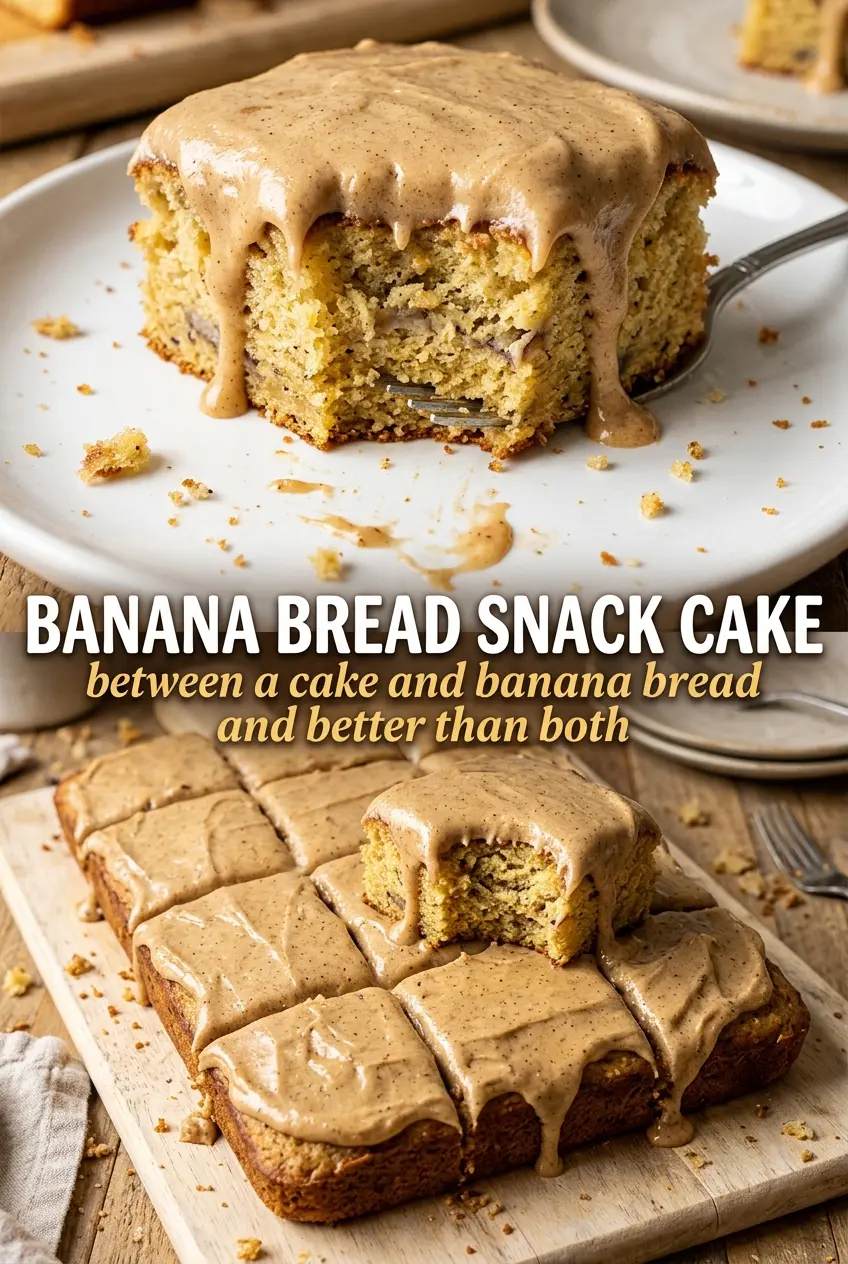
Banana Bread Snack Cake
Ingredients
Equipment
Method
- Preheat oven to 350°F and grease an 8x8 square pan. Make sure the pan is fully coated so the golden edges release cleanly.
- Whisk melted butter, sugar, eggs, and vanilla into mashed bananas until smooth. Stop when no streaks remain for a dense, moist batter.
- Fold in all-purpose flour, baking soda, cinnamon, and salt until just combined. Mix only until you don’t see dry flour.
- Pour batter into the prepared pan and bake for 25–30 minutes. Bake until the top is golden and a toothpick comes out clean.
- Brown the butter in a saucepan over medium heat until golden and nutty. When it smells toasted and turns amber, remove from heat.
- Cool browned butter for 5 minutes, then whisk in powdered sugar, heavy cream, and vanilla extract until smooth. Keep mixing until the frosting falls in a thick ribbon.
- Frost the completely cooled cake and slice into squares. Spread in swoops so the wave pattern shows across the golden top.