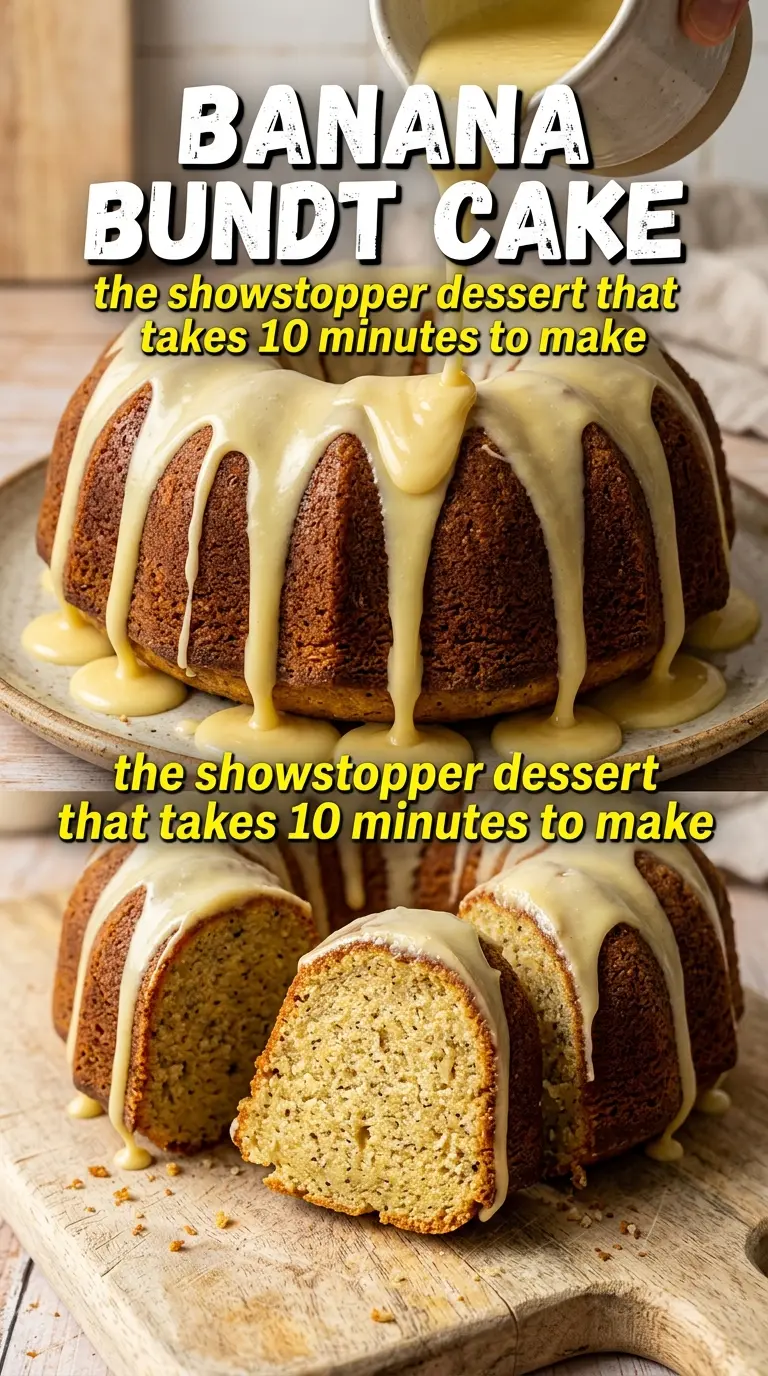
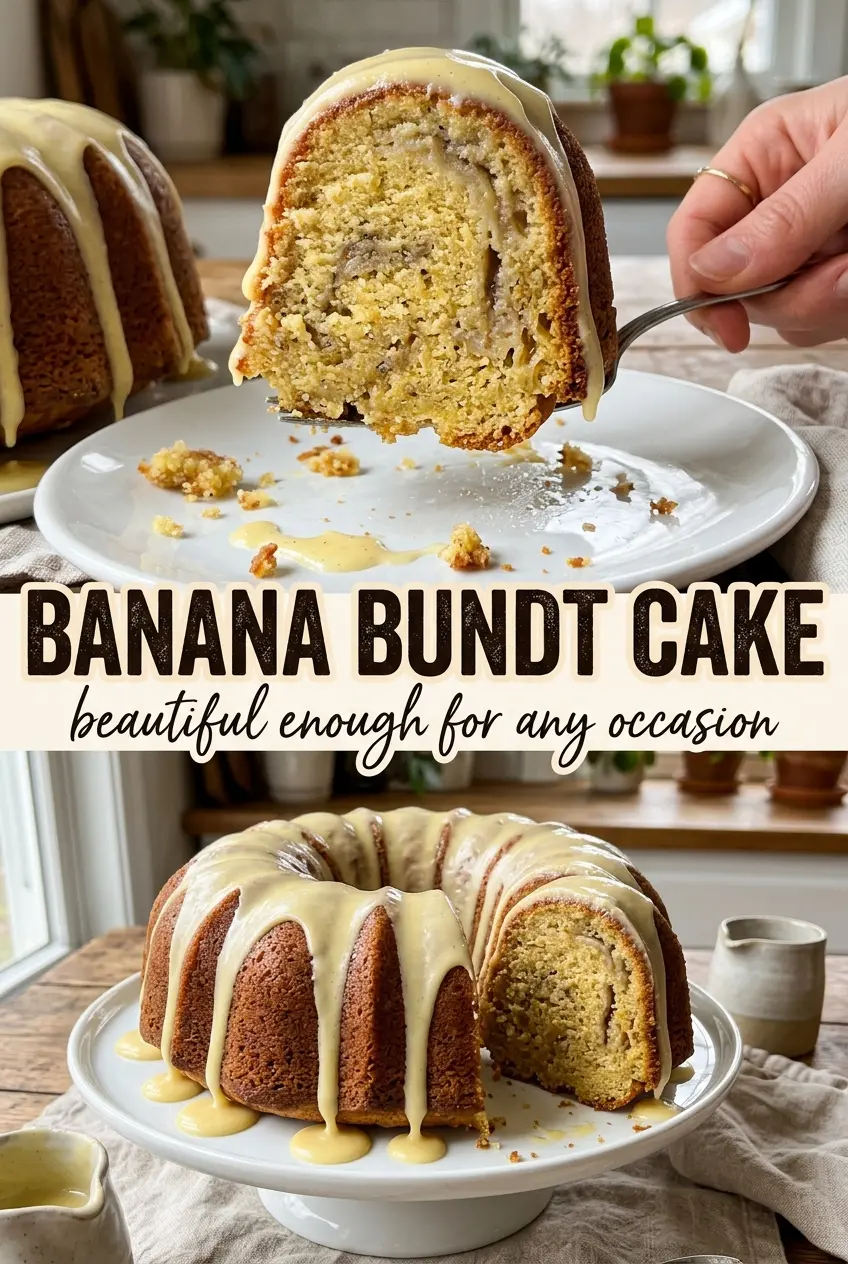
Banana Bundt Cake has a way of disappearing faster than almost any layer cake I bake. The crumb stays plush and tender for days, the banana flavor comes through clearly without tasting heavy, and that cream cheese glaze slides down every ridge just enough to catch on the edges. It feels special on the table, but it still comes together like a straightforward home cake.
What makes this version work is the balance of moisture and structure. Sour cream keeps the crumb soft without making it wet, while the banana brings flavor and tenderness that don’t need much help. The flour is mixed in with the sour cream in stages, which keeps the batter from turning gluey, and the bundt pan needs a serious coating of butter and flour because all those grooves will grab a cake that’s even a little underprepared.
Below you’ll find the one step that prevents sticking, the reason the glaze should go on only after the cake is fully cool, and a few swaps for when your bananas are extra ripe or you want a slightly different finish.
The cake came out with a perfect crust and didn’t stick at all, which never happens with bundt pans at my house. The glaze was thick enough to stay on the cake but still dripped into every ridge just like the picture.
Save this banana bundt cake for the days when you want a moist crumb and a thick cream cheese glaze that drips beautifully down every ridge.
The Bundt Pan Is the Recipe Here, Not Just the Cake Batter
A banana bundt cake lives or dies by how well it releases from the pan. A decorative bundt has more surface area than a regular cake pan, which means every groove is a chance for the crumb to cling. The batter itself is forgiving; the pan setup is not. If the cake sticks, it usually isn’t because the cake is bad. It’s because the pan wasn’t coated thoroughly enough or the cake was turned out too soon.
The other mistake that causes trouble is rushing the cool-down. A hot bundt is still fragile, and if you invert it before the edges have set, the center can tear. Twenty minutes in the pan gives the structure time to tighten, but letting it cool completely before glazing keeps the glaze thick and glossy instead of melting straight off the cake.
- Butter — Softened butter creates the light, rich base for the batter. It beats with sugar into a pale mixture that holds air, which helps the cake rise without turning dense.
- Very ripe bananas — The darker and spottier, the better. They bring sweetness, moisture, and the banana flavor you want in every bite. Under-ripe bananas won’t mash smoothly and taste flat.
- Sour cream — This is what keeps the crumb plush. Plain Greek yogurt can stand in, but sour cream gives a slightly softer, richer result and better moisture over a few days.
- Cream cheese — Use full-fat cream cheese for the glaze. Reduced-fat versions can turn loose or grainy, especially once powdered sugar and milk are added.
- Cinnamon — It doesn’t make the cake taste spiced; it rounds out the banana flavor and keeps the crumb from tasting one-note.
What Each Ingredient Is Actually Doing in This Banana Bread
- Bananas (the moisture and sweetness) — Use very ripe bananas for maximum sweetness and moisture. Overripe bananas are actually better here.
- Flour (the structure) — Don’t overmix or the bread becomes tough. Mix just until dry ingredients are incorporated.
- Sugar (the sweetness) — Ripe bananas are already sweet, so you might reduce sugar slightly. Adjust to taste.
- Butter or oil (the richness) — This creates tender crumb and carries flavors. Room temperature butter creams better.
- Eggs (the binder and lift) — These hold everything together and help the bread rise. Use room temperature eggs.
- Leavening (baking soda or powder) — This creates rise. Too much makes it taste bitter.
- Vanilla extract (the flavor enhancer) — This brings out the banana flavor. Use quality vanilla extract.
- Optional mix-ins (nuts, chocolate, or dried fruit) — These add texture and prevent the bread from being one-dimensional.
Building the Batter Without Overworking It
Starting with the Pan
Heat the oven to 325°F and grease every curve of a 12-cup bundt pan with softened butter, then dust it with flour. Turn the pan over the sink and tap out the excess so only a thin coating remains. If you see bare spots or clumps of flour, the cake will grab there. This is the step that saves the shape.
Mixing the Base
Beat the butter and sugar until the mixture turns pale and fluffy, then add the eggs one at a time. That gradual addition helps the batter stay smooth instead of looking curdled. Stir in the vanilla and mashed bananas after the eggs are incorporated so the mixture stays emulsified. If the bananas go in first, the batter can break and look separated before the dry ingredients even show up.
Folding in the Dry Ingredients
Mix the flour, baking soda, salt, and cinnamon in a separate bowl, then add it to the batter in thirds with the sour cream. Stop mixing as soon as the flour disappears. Overmixing after the flour goes in builds toughness, and this cake is best when the crumb stays tender and tight enough to slice cleanly.
Baking and Cooling
Scrape the batter into the prepared pan and bake until the top is deep golden and a toothpick comes out clean from the thickest part, usually 60 to 70 minutes. The cake should spring back lightly when touched and pull just a little from the sides. Let it sit in the pan for 20 minutes, then invert it onto a rack and let it cool all the way through before glazing. Warm cake will melt the glaze into a thin puddle instead of letting it cling.
Three Ways to Change the Finish Without Losing the Cake
Make it dairy-free with a different glaze
Swap the butter for a plant-based stick butter, use a thick dairy-free yogurt in place of the sour cream, and replace the cream cheese glaze with a simple powdered sugar glaze made with non-dairy milk. The cake will still be moist and banana-forward, but the topping will be thinner and a little less tangy.
Add pecans for a nuttier slice
Fold 1 cup of chopped toasted pecans into the batter or sprinkle them over the glaze while it’s still soft. Toasting matters here because raw nuts can taste dull against the sweet cake, while toasted pecans add crunch and a warm finish without changing the batter.
Turn it into a less sweet breakfast-style cake
Skip the glaze and dust the cooled cake with powdered sugar instead. You’ll lose the tangy cream cheese layer, but the banana flavor comes through more clearly, and the cake feels lighter for brunch or coffee.
Storage and Reheating
- Refrigerator: Store covered for 4 to 5 days. The crumb stays moist, though the glaze will firm up a bit in the fridge.
- Freezer: Freeze the cake without glaze for up to 2 months. Wrap slices tightly in plastic and foil so the banana flavor doesn’t pick up freezer odors.
- Reheating: Warm individual slices in the microwave for 10 to 15 seconds, just until the butter in the crumb loosens. If you heat it too long, the cake turns dense and the glaze separates.
Questions I Get Asked About This Recipe
Banana Bundt Cake
Ingredients
Equipment
Method
- Preheat the oven to 325°F. Grease and flour a 12-cup bundt pan very thoroughly, coating every crevice.
- Beat the butter and sugar until light and fluffy. Add the eggs one at a time, then mix in vanilla and mashed bananas until combined.
- In a separate bowl, whisk together the flour, baking soda, salt, and cinnamon. Alternate folding in the flour mixture and sour cream in three additions, mixing just until no dry streaks remain.
- Pour the batter into the prepared bundt pan. Bake for 60–70 minutes at 325°F until a toothpick comes out clean.
- Cool the cake in the pan for 20 minutes before inverting. Cool completely on a rack before glazing so the glaze stays smooth and thick.
- Beat the cream cheese, powdered sugar, milk, and vanilla until smooth. Pour the glaze over the cooled cake, letting it cascade down each ridge.