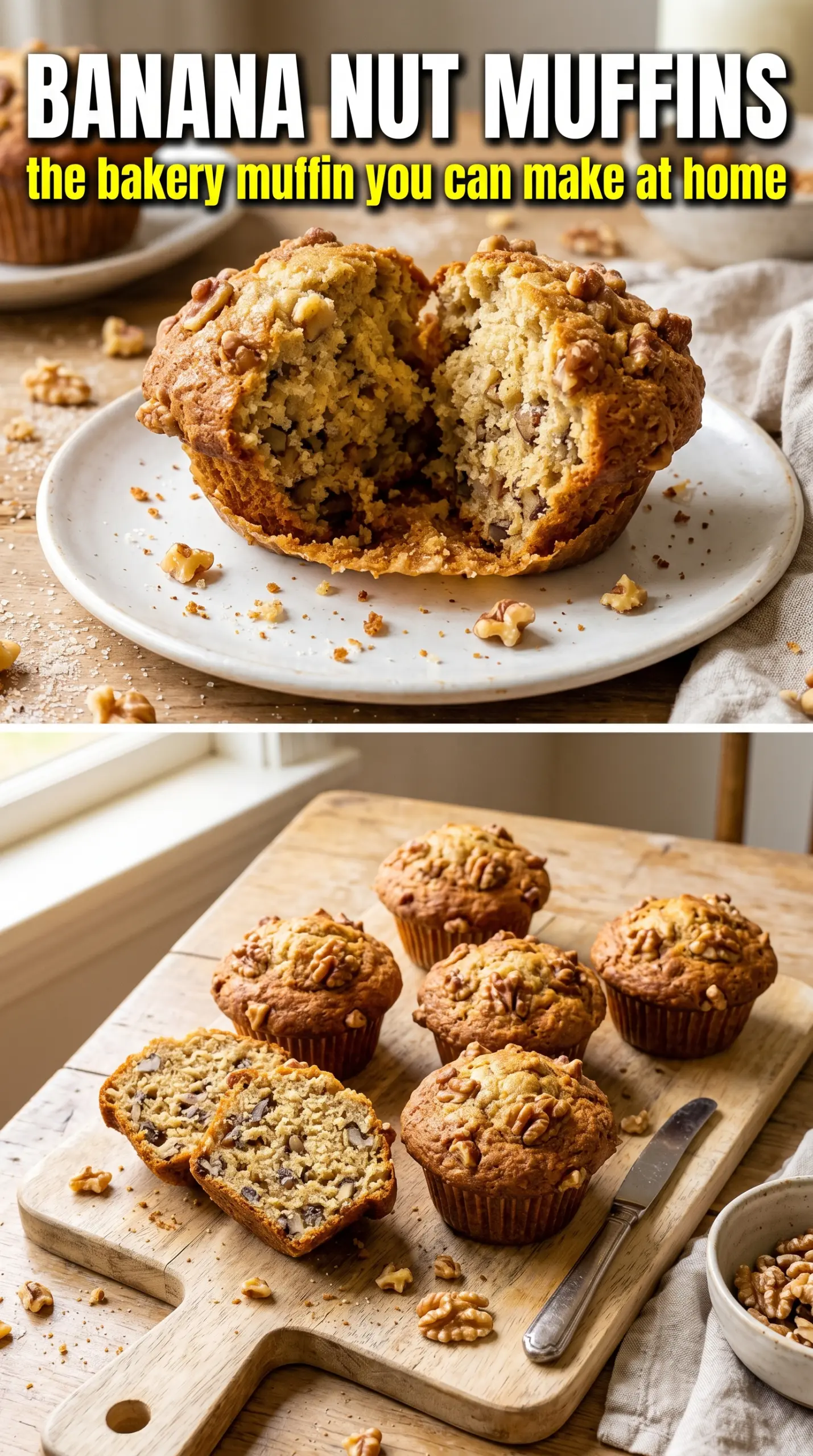
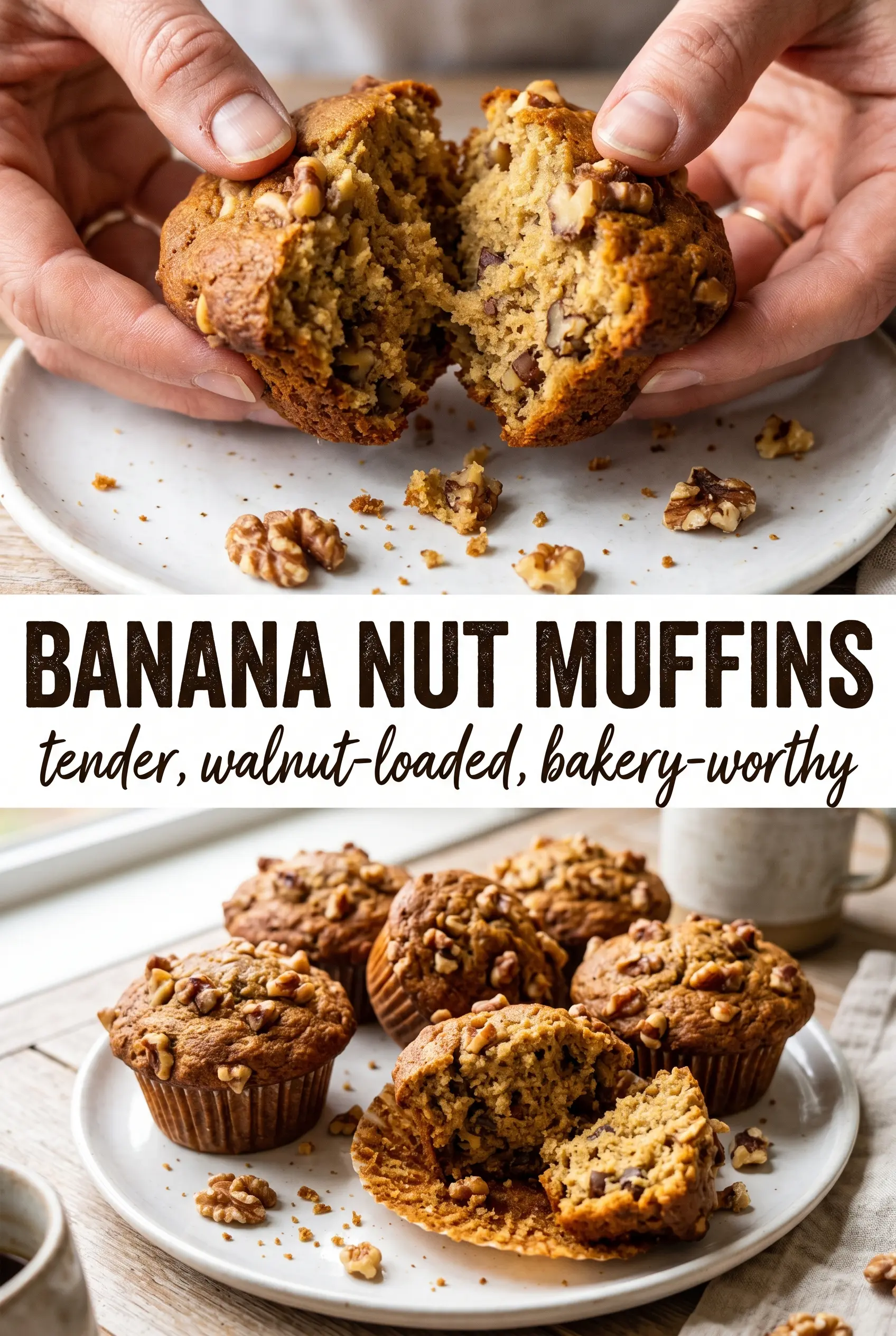
Banana nut muffins earn their place when they come out tall, tender, and deeply fragrant, with walnuts in every bite and just enough cinnamon to make the bananas taste sweeter. The best ones have a domed top that cracks slightly as you break them open, and the crumb stays moist without turning heavy or gummy. That balance is what separates a muffin you eat warm from one you keep coming back to all week.
This version leans on very ripe bananas for sweetness and moisture, then keeps the batter simple enough that the texture stays light. Melted butter gives the muffins a richer flavor than oil alone, while the egg and milk keep the crumb soft. The walnuts get divided between the batter and the top, so you get both crunch inside and that bakery-style finish on top.
Below, I’ve included the part that matters most if your muffins usually come out flat or dense: how to mix the batter without overworking it and how to get those high tops in a standard muffin pan. A few small details make a bigger difference here than another tablespoon of sugar ever could.
The muffins rose up with those big bakery-style tops, and the walnuts stayed crunchy instead of sinking. I loved that the crumb was moist all the way through without being dense.
Save these banana nut muffins for the mornings when you want a tender crumb, sweet banana flavor, and crunchy walnut tops.
The Trick to Tall Muffin Tops Without Drying Out the Crumb
Most banana muffins fail in one of two ways: they spread flat, or they bake up dense because the batter got worked too much. The high top comes from a batter that’s just mixed enough to bring everything together, then baked in a hot oven so the outside sets before the center overcooks. That first burst of heat matters more than extra leavening.
Ripe bananas also pull more weight than people think. They add moisture, sweetness, and body, which means you don’t need a long ingredient list to get good texture. If your bananas are still pale and firm, the muffins will taste dull and need more mixing to come together, which is the opposite of what you want.
- Ripe bananas — Use bananas with plenty of brown spots and a soft, almost custardy texture. Those bring the moisture and flavor that make the muffins taste like banana instead of sugar.
- Melted butter — Butter gives the muffins a richer, rounder flavor than oil. Melt it first so it blends cleanly into the bananas and doesn’t leave greasy streaks in the batter.
- Walnuts — Roughly chopping them keeps the texture interesting. If you chop them too fine, they disappear; if you leave them too large, they can pull the muffin apart when you bite in.
- Cinnamon and nutmeg — These don’t make the muffins taste spiced in a heavy way. They support the banana and walnut flavor and make the kitchen smell like you know what you’re doing.
What Each Ingredient Is Actually Doing in This Banana Bread
- Bananas (the moisture and sweetness) — Use very ripe bananas for maximum sweetness and moisture. Overripe bananas are actually better here.
- Flour (the structure) — Don’t overmix or the bread becomes tough. Mix just until dry ingredients are incorporated.
- Sugar (the sweetness) — Ripe bananas are already sweet, so you might reduce sugar slightly. Adjust to taste.
- Butter or oil (the richness) — This creates tender crumb and carries flavors. Room temperature butter creams better.
- Eggs (the binder and lift) — These hold everything together and help the bread rise. Use room temperature eggs.
- Leavening (baking soda or powder) — This creates rise. Too much makes it taste bitter.
- Vanilla extract (the flavor enhancer) — This brings out the banana flavor. Use quality vanilla extract.
- Optional mix-ins (nuts, chocolate, or dried fruit) — These add texture and prevent the bread from being one-dimensional.
Mix the Batter Barely Enough, Then Let the Oven Do the Rest
Build the banana base first
Start by whisking the mashed bananas with the melted butter, sugar, egg, vanilla, and milk until the mixture looks smooth and loose. You want the sugar mostly dissolved and the banana lumps broken down, but don’t beat in a lot of air here. If the butter is too hot, it can scramble the egg or make the mixture look oily, so let it cool for a minute before it goes in.
Fold the dry ingredients in gently
Add the flour, baking powder, baking soda, cinnamon, nutmeg, and salt all at once, then fold just until the flour disappears. A few streaks are fine; overmixing is what turns muffin batter tight and rubbery. If you keep stirring after it looks combined, the muffins will bake up with tunnels instead of a soft, even crumb.
Top with walnuts and bake hot
Fold in most of the walnuts, divide the batter into the lined muffin cups, and press the remaining walnuts into the tops so they bake into the surface. The tops should look generously filled, not half empty, because that extra batter gives you the dome you want. Bake until the tops are deeply golden and a toothpick comes out clean or with a few moist crumbs, then let them sit in the pan for a few minutes before moving them to a rack.
Three Ways to Change the Muffins Without Losing the Texture
Make them dairy-free
Swap the butter for melted coconut oil or a neutral oil and use an unsweetened non-dairy milk. The muffins will still stay moist, though the flavor will be a little less rich and more straightforward.
Use pecans instead of walnuts
Pecans give a softer, sweeter nuttiness and work especially well if your bananas are extremely ripe. The texture is a touch less rugged than walnuts, but the muffins still keep that bakery-style crunch on top.
Reduce the sugar for a less sweet breakfast muffin
Drop the sugar to 1/2 cup if your bananas are very ripe and you want a more breakfast-forward muffin. The crumb will be a little less tender and the tops won’t brown quite as deeply, but the banana flavor will come through more clearly.
Gluten-free version
Use a 1:1 gluten-free baking flour blend that includes xanthan gum. The muffins may need an extra minute or two in the oven, and the crumb will be slightly more delicate, but the banana and walnut flavor still works well.
Storage and Reheating
- Refrigerator: Store in an airtight container for up to 4 days. The texture stays moist, though the walnuts soften a little after day one.
- Freezer: These freeze well. Wrap individually and freeze for up to 2 months so you can thaw one at a time.
- Reheating: Warm a muffin in the microwave for 10 to 15 seconds or in a 300°F oven for a few minutes. Don’t overheat it or the crumb turns dry before the center is warm.
Answers to the Questions Worth Asking
Banana Nut Muffins
Ingredients
Equipment
Method
- Preheat the oven to 375°F and line a 12-cup muffin tin with paper liners.
- Whisk melted butter, sugar, egg, vanilla, and milk into mashed bananas until smooth.
- Fold in all-purpose flour, baking powder, baking soda, cinnamon, nutmeg, and salt until just combined.
- Fold in 3/4 cup of the chopped walnuts.
- Divide batter among the muffin cups and press the remaining walnuts into the domed tops.
- Bake for 18–22 minutes at 375°F until golden and domed and a toothpick comes out clean, with the tops visibly set.