Beef carbonnade stews down into something rich, dark, and deeply savory, with onions that turn almost jammy and beef that gives up the second you touch it with a fork. The beer isn’t background flavor here. It becomes the body of the sauce, giving the stew that Belgian edge that tastes mellow, malty, and just a little sharp around the finish.
The trick is patience with the onions and restraint with the heat. Let them cook until they’ve lost their raw bite and taken on a deep golden color before anything else goes in. That gives the stew its sweetness and keeps the finished sauce from tasting thin or one-note. The mustard-topped bread on the surface looks unusual, but it’s doing real work: as it breaks down, it helps thicken the braising liquid and adds another layer of tang.
Below, I’ve included the detail that matters most for getting the sauce glossy instead of muddy, plus a few swaps and storage notes that make this stew just as practical for a Sunday dinner as it is for leftovers the next day.
The onions melted down beautifully and the sauce turned glossy after the bread broke apart. I served it with fries like you suggested and my husband kept going back for the gravy.
Save this Belgian beef carbonnade for the nights when you want dark beer gravy, melting onions, and fork-tender beef in one pot.
The Part Most Stews Get Wrong: Building the Base Without Rushing the Onions
The onions carry this stew. If they stay pale, the broth tastes flat no matter how good the beef is. Twenty minutes in the pot sounds long until you taste what happens when they finally turn deep gold and start to collapse into the butter and drippings. That’s where the sweetness comes from, and it balances the bitterness and malt from the beer.
Brown the beef in batches and keep the heat high enough to get color without steaming the meat. Crowding the pot is the easiest way to lose that crust, and without it the braising liquid never gets the same depth. Once the onions are ready, the flour cooks in the fat for a minute before the liquid goes in, which helps the sauce thicken smoothly instead of tasting pasty.
What the Beer, Mustard Bread, and Vinegar Are Each Doing
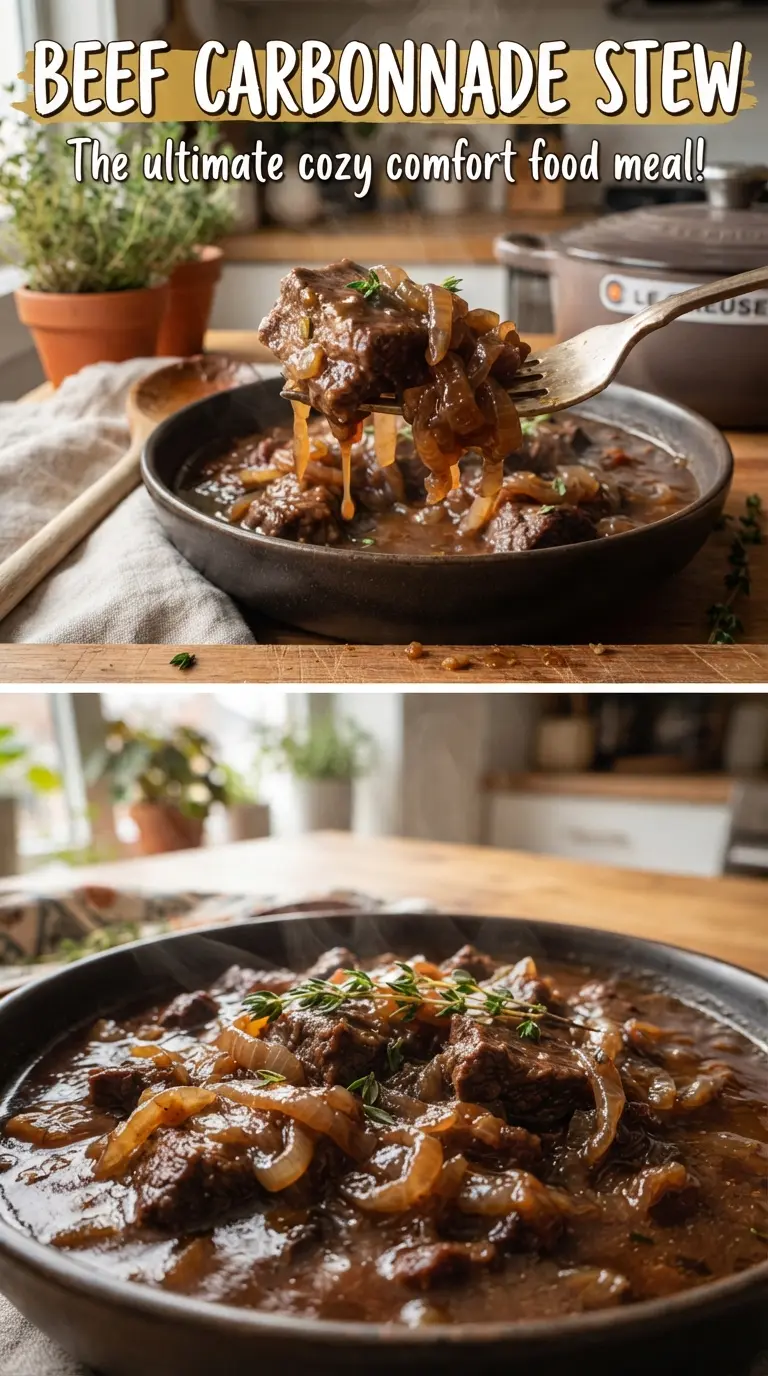
- Belgian brown ale — This is the flavor backbone. Use a beer you’d actually drink, because the stew concentrates everything in that bottle. A dark lager or brown ale can work in a pinch, but avoid anything aggressively hoppy or it will throw the balance off.
- Onions — Don’t rush them. Their sweetness replaces the roundness you’d otherwise get from a longer list of aromatics. If you slice them thin and give them enough time to soften and color, they dissolve into the sauce instead of sitting in stringy pieces.
- Apple cider vinegar — Just a small amount keeps the stew from tasting heavy. It sharpens the beer and cuts through the richness of the beef. Lemon juice isn’t the same here; it’s too bright and disappears during the long bake.
- Dijon mustard bread — This sounds odd until you see what it does. As the bread breaks down, it thickens the braise naturally and leaves behind a subtle tang that makes the sauce taste finished instead of merely reduced.
How to Build the Braise So the Sauce Stays Glossy
Seasoning and Browning the Beef
Season the beef before it hits the pot so the salt can start working while the meat browns. Sear in batches in the butter until each piece has a deep brown crust and releases without fighting the pan. If the pieces are crowded or the pot is too cool, they’ll steam and the stew will taste softer and less savory later.
Cooking the Onions Until They Collapse
Add the remaining butter and the onions after the beef comes out. Stir often and watch for the color shift from pale to golden to a deep amber; that middle stretch is where the flavor builds. When the onions start to look almost jammy and the bottom of the pot has browned bits clinging to it, stir in the brown sugar and flour so they can coat everything evenly.
Deglazing With Beer and Letting the Bread Work
Pour in the ale, broth, and vinegar and scrape the bottom of the pot until it looks clean. Those stuck-on bits are where the depth lives, and they need the liquid to release fully. Lay the mustard bread on top, mustard side down, and let it soften into the braise as the oven does the work. If the bread still sits in a solid layer after stirring once, keep cooking; it should melt into the liquid instead of staying intact.
The Final Tenderness Check
After about 2 1/2 hours, the beef should pull apart with almost no resistance and the sauce should coat a spoon. If it still feels tight, keep it covered and give it another 15 to 20 minutes. Pull out the thyme stems and bay leaves before serving, then let the stew sit for a few minutes so the sauce settles and tastes fuller on the plate.
How to Adapt This Belgian Stew Without Losing Its Character
Gluten-Free Version
Use a certified gluten-free beer and swap the flour for a gluten-free all-purpose blend or a cornstarch slurry added near the end. The flavor stays close to the original, but the sauce will be a touch lighter if you use cornstarch. Skip regular bread on top and let the braise reduce a little longer for body.
No Beer, Still Deep and Savory
If you need to leave out the beer, use an equal amount of beef broth plus 1 tablespoon extra apple cider vinegar and 1 teaspoon Worcestershire sauce. The stew loses the malty note, but it still lands in the rich, tangy lane that makes carbonnade work. Don’t replace the beer with plain water; the dish turns thin and flat.
Lower-Carb Serving Idea
Serve the stew over cauliflower mash instead of fries or mashed potatoes. The sauce is already rich enough to carry the whole plate, and the cauliflower gives you something soft and absorbent without competing with the braise. Keep the bread in the pot during cooking, since that’s part of the sauce-building, not just a garnish.
Storage and Reheating
- Refrigerator: Store for up to 4 days. The flavor gets deeper overnight, and the sauce thickens as it chills.
- Freezer: It freezes well for up to 3 months. Cool completely first, then portion it into airtight containers; the onions will soften a little more after thawing, but the stew holds up.
- Reheating: Warm it gently on the stove over low heat, covered, with a splash of broth if it looks too thick. High heat can make the beef tighten up and can scorch the sauce on the bottom of the pot before the center is hot.
Questions I Get Asked About This Beef Carbonnade
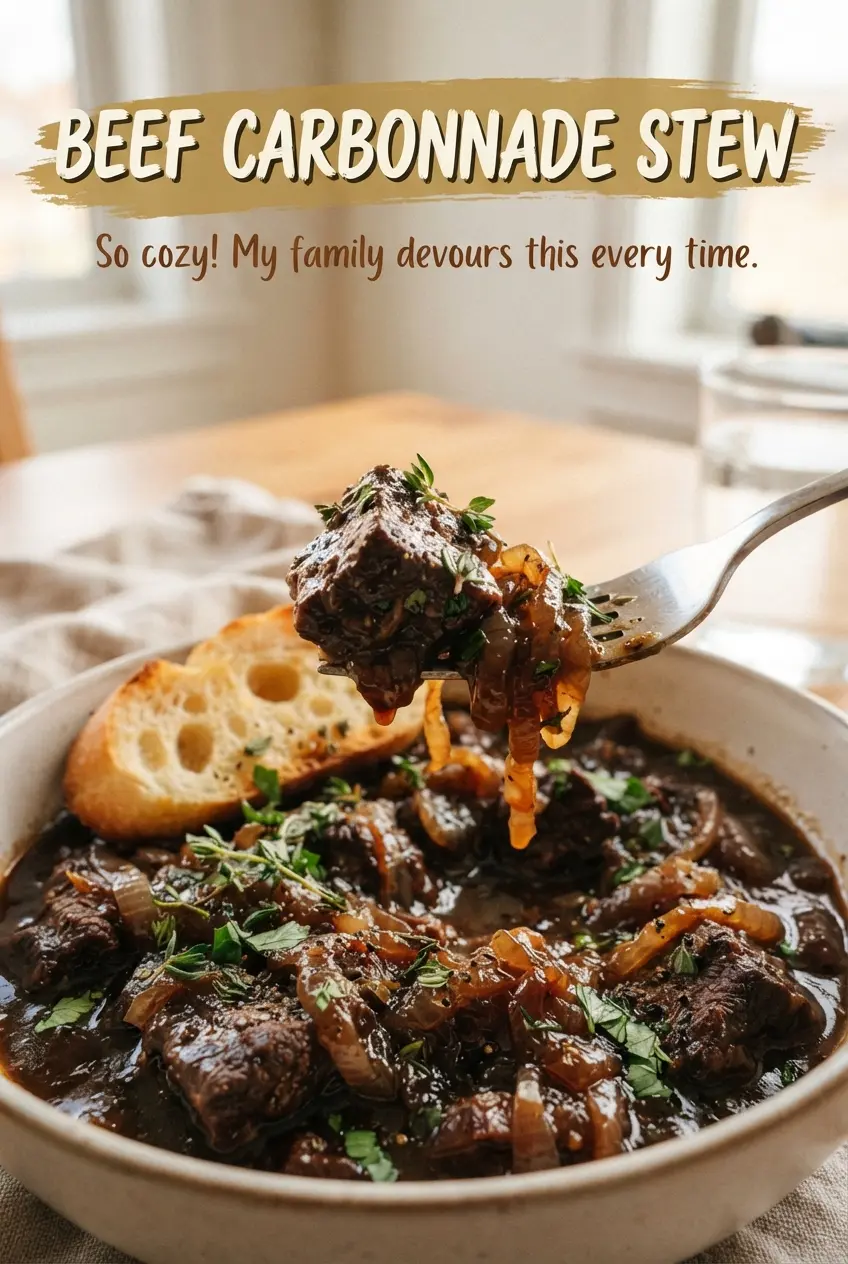
Beef Carbonnade Stew
Ingredients
Equipment
Method
- Preheat the oven to 325F. Season the beef chuck with salt and black pepper.
- In a Dutch oven, brown the beef in batches using 2 tablespoons butter. Cook until browned on multiple sides.
- Add the remaining butter and the thinly sliced onions. Cook for 20 minutes, stirring occasionally, until deep golden.
- Stir in the brown sugar and all-purpose flour. Cook for 1 minute to coat the onions and remove the raw flour taste.
- Pour in the Belgian brown ale, beef broth, and apple cider vinegar, scraping the bottom of the pot. Bring everything to a gentle simmer.
- Add the fresh thyme and bay leaves. Make sure they are distributed through the liquid.
- Lay the mustard-spread rustic bread on top of the stew, mustard side down. Press it lightly so it sits in the braising liquid.
- Cover and bake for 2 1/2 hours, keeping the oven at 325F. Stir once the bread has dissolved and continue baking until the beef is very tender.
- Remove the thyme sprigs and bay leaves. Taste and adjust seasoning with salt and black pepper if needed.
- Serve the beef carbonnade stew hot with fries or mashed potatoes. Spoon the dark, glossy sauce over the beef and onions.