Beef lasagna soup gives you the best parts of a bubbling pan of lasagna without waiting for layers to bake. The broth turns rich and tomato-forward, the noodles stay tender with just enough bite, and that ricotta-mozzarella dollop melts into the bowl like a shortcut to the creamiest finish. It eats like a full meal, but it comes together fast enough for a weeknight.
What makes this version work is the order. The tomato paste cooks with the onions and garlic long enough to lose its raw edge, which gives the broth a deeper, sweeter base. Broken lasagna noodles go in near the end so they don’t collapse into mush, and the cheese mixture is kept separate until serving so each bowl gets that thick, creamy contrast against the savory broth.
Below you’ll find the little details that keep the noodles from sticking, the broth from tasting flat, and the cheese topping from disappearing into the pot. If you’ve ever wanted lasagna flavor without the layering, this is the version worth keeping close.
The tomato broth had that slow-simmered taste, and the broken noodles held their shape instead of turning soft and greasy. I topped each bowl with the ricotta mixture and it melted just enough to make every spoonful taste like lasagna.
Save this Beef Lasagna Soup for the nights when you want lasagna flavor, a rich tomato broth, and a creamy ricotta topping without baking a whole pan.
The Broth Needs Time to Taste Like Lasagna, Not Soup
The biggest mistake with lasagna soup is rushing the base and expecting the cheese topping to carry everything. It won’t. The broth has to taste layered on its own, which means the tomato paste needs a minute with the onion and garlic before the liquids go in. That small step turns the broth from thin and sharp into something round and savory.
Another thing that matters here is the balance between broth and tomatoes. Too much broth and the soup tastes watery. Too little and the noodles seize up the pot before they’re tender. This version keeps enough liquid for the pasta to cook evenly while still leaving you with a spoon-coating broth that feels hearty instead of heavy.
- Tomato paste — This is the ingredient that gives the broth its deep, cooked tomato flavor. If you skip the quick fry in the pot, the soup will taste flatter and more acidic.
- Broken lasagna noodles — The rough edges catch the broth better than short pasta would. Break them into uneven pieces so the bowl feels rustic and spoon-friendly.
- Ricotta-mozzarella topping — Keep it separate until serving. If it goes straight into the pot, the ricotta disperses and you lose the thick, lasagna-like finish.
What Each Ingredient Is Actually Doing in the Pot
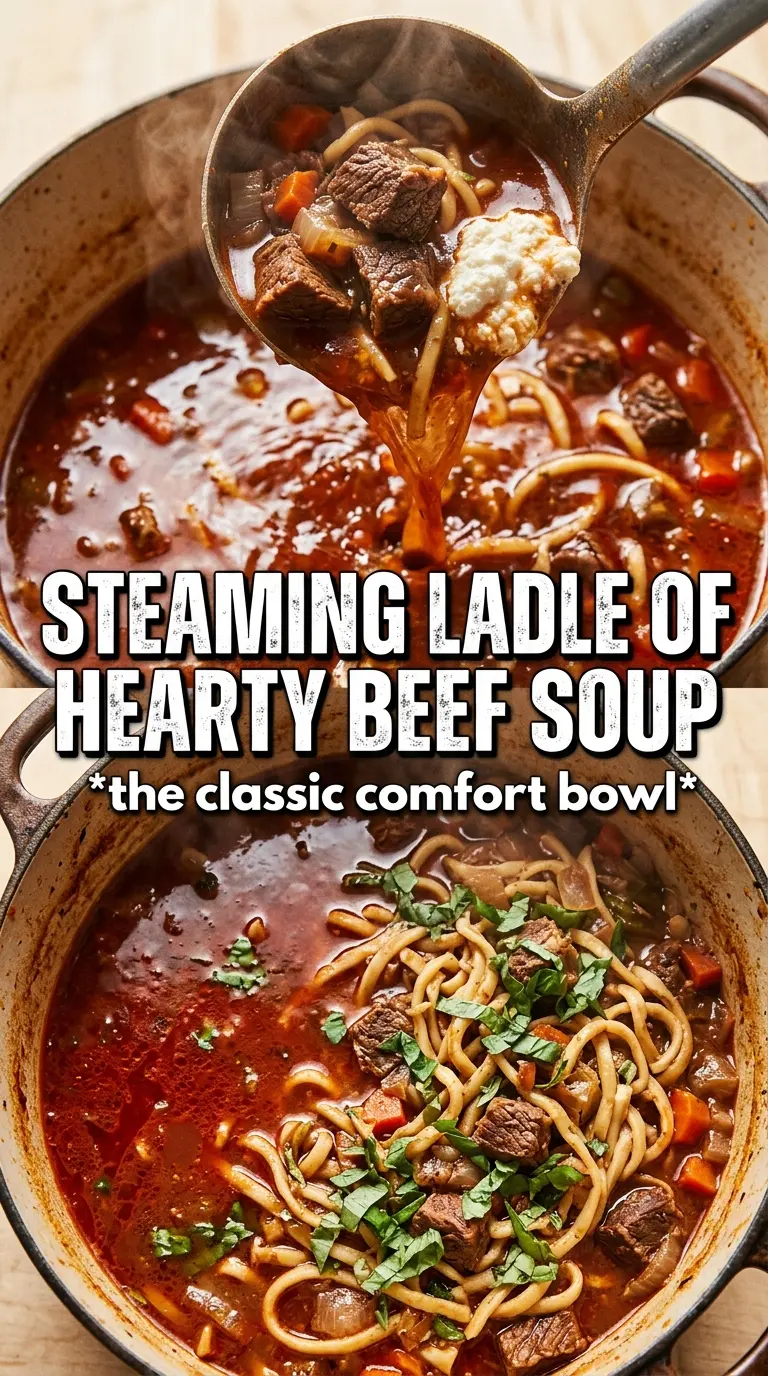
- Lean ground beef — Gives the soup its hearty base without making the broth greasy. If your beef renders a lot of fat, drain it well or the finished bowl will taste heavy instead of rich.
- Onion and garlic — These build the savory backbone. The onion needs enough time to soften before the tomatoes go in, or you end up with sharp bits that never fully mellow.
- Crushed tomatoes and diced tomatoes — The crushed tomatoes thicken the broth, while the diced tomatoes leave little bursts of texture. Using both gives the soup body without turning it into sauce.
- Beef broth — This carries the lasagna flavors and helps the noodles cook evenly. A good broth matters here; a weak one gets buried under tomato and never comes back.
- Ricotta, mozzarella, and parmesan — Ricotta gives the creaminess, mozzarella brings stretch, and parmesan adds salty depth. Fresh basil on top keeps the bowl from tasting too heavy.
How to Keep the Noodles Tender and the Cheese Topping Thick
Brown the Beef and Build the Base
Start with the beef in a large pot and break it up as it cooks so you get small crumbles instead of clumps. Drain the fat before adding the onion, because too much grease will blur the tomato flavor and leave an oily film on top. Once the onion softens, add the garlic and tomato paste and cook them until the paste darkens slightly and smells sweet, not raw. That step is what gives the broth depth.
Let the Tomatoes and Broth Come Together
Pour in the crushed tomatoes, diced tomatoes, beef broth, and all the dried herbs and spices. Bring it up to a boil first so the seasonings distribute quickly, then lower it to a steady simmer. If the heat stays too high, the tomatoes can taste harsh and the broth can reduce before the noodles are even added. You want the liquid moving gently, not raging.
Cook the Noodles at the End
Add the broken lasagna noodles once the broth is ready, then simmer until they’re tender with a little bite in the center. Stir every couple of minutes so the wide noodle pieces don’t stick to the bottom or fold into each other. If the pot looks dry before the noodles are done, add a splash of broth or water rather than letting them scorch. Taste one piece before you stop cooking; the difference between just-tender and overdone happens fast.
Finish with Salt and the Cheese Dollop
Season with salt at the end, after the broth has reduced and the noodles have absorbed some of the liquid. Mix the ricotta, mozzarella, parmesan, and basil in a bowl until it looks thick and scoopable. Serve the soup in bowls and add a generous spoonful right on top so it softens into the hot broth without fully disappearing. That creamy finish is what makes each bowl taste like lasagna instead of tomato soup with pasta.
How to Adapt This for a Smaller Pot, a Lighter Bowl, or No Dairy
Make it dairy-free
Skip the ricotta-mozzarella topping and serve each bowl with a spoonful of unsweetened cashew cream or a dairy-free ricotta substitute. You lose the classic lasagna melt, but the soup still tastes complete if you finish it with extra basil and a little olive oil.
Use ground turkey instead of beef
Ground turkey works well if you want a lighter bowl, but it needs a little help with flavor. Add an extra tablespoon of tomato paste or a pinch more parmesan at the end so the broth doesn’t taste thin.
Turn it gluten-free
Use gluten-free lasagna noodles and check the broth label before you start. Gluten-free pasta can soften quickly, so pull the soup from the heat as soon as the noodles are tender and serve it right away.
Make ahead for easy reheating
Cook the soup base without the noodles, then store the pasta separately or add it fresh when reheating. That keeps the noodles from absorbing half the broth and turning soft by day two.
Storage and Reheating
- Refrigerator: Store for up to 4 days. The noodles will keep absorbing broth, so expect the soup to thicken.
- Freezer: Freeze the soup base without the noodles for up to 3 months. Pasta gets soft and grainy after freezing, so add fresh noodles when you reheat.
- Reheating: Warm gently on the stove over medium-low heat with a splash of broth or water. High heat can make the noodles break down and can dull the tomato flavor.
Questions I Get Asked About This Recipe

Beef Lasagna Soup
Ingredients
Equipment
Method
- Brown lean ground beef in a large pot over medium-high heat; drain fat and keep the pot warm for the next step.
- Sauté onion for 4 minutes, then add garlic and tomato paste and cook for 2 minutes, stirring to prevent burning.
- Add crushed tomatoes, diced tomatoes, beef broth, Italian seasoning, dried basil, dried oregano, red pepper flakes, and black pepper; bring the mixture to a boil.
- Add lasagna noodles and reduce the heat to a gentle simmer; cook for 10-12 minutes until tender.
- Season with salt to taste, then stir occasionally to prevent the noodles from sticking.
- Mix ricotta, shredded mozzarella, and parmesan together for the cheese dollop.
- Ladle the soup into bowls and top each serving with a very generous spoonful of the cheese dollop, finishing with fresh basil.