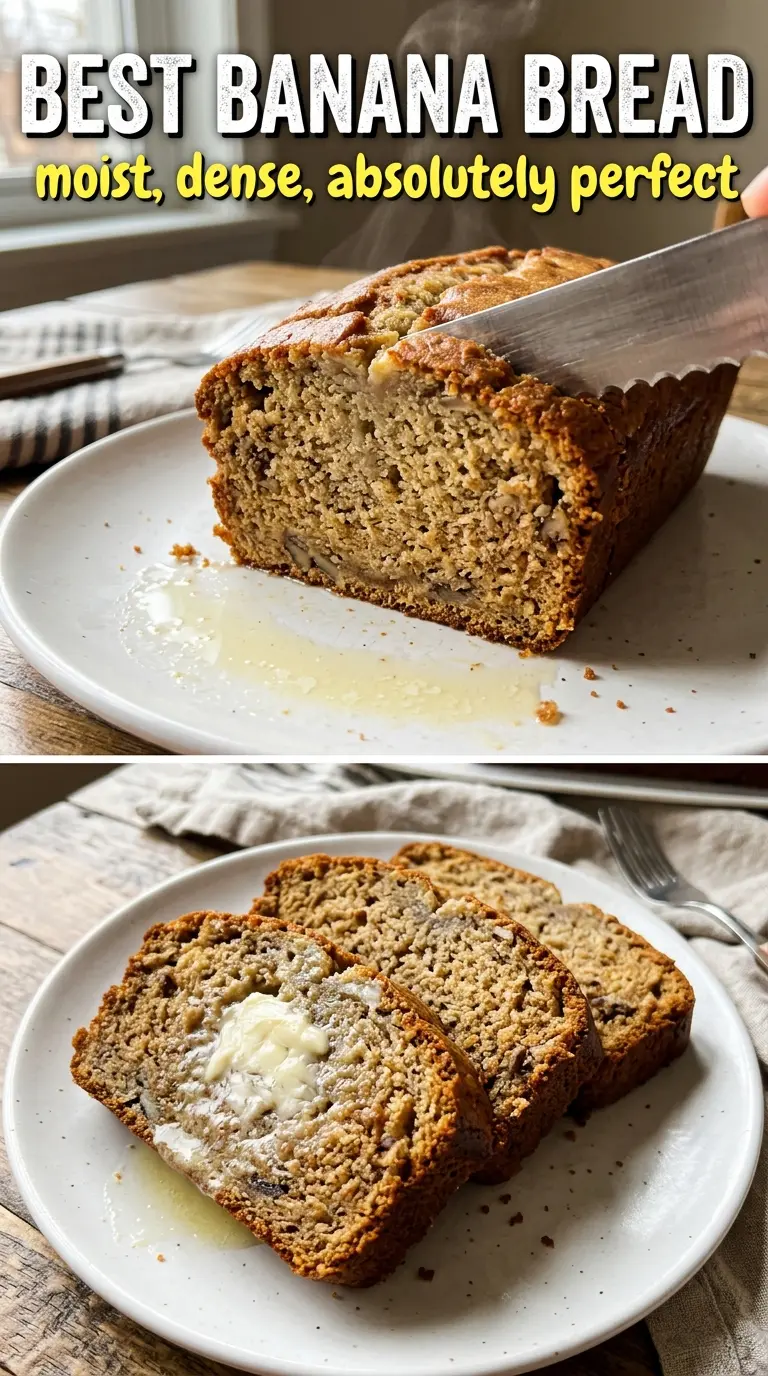
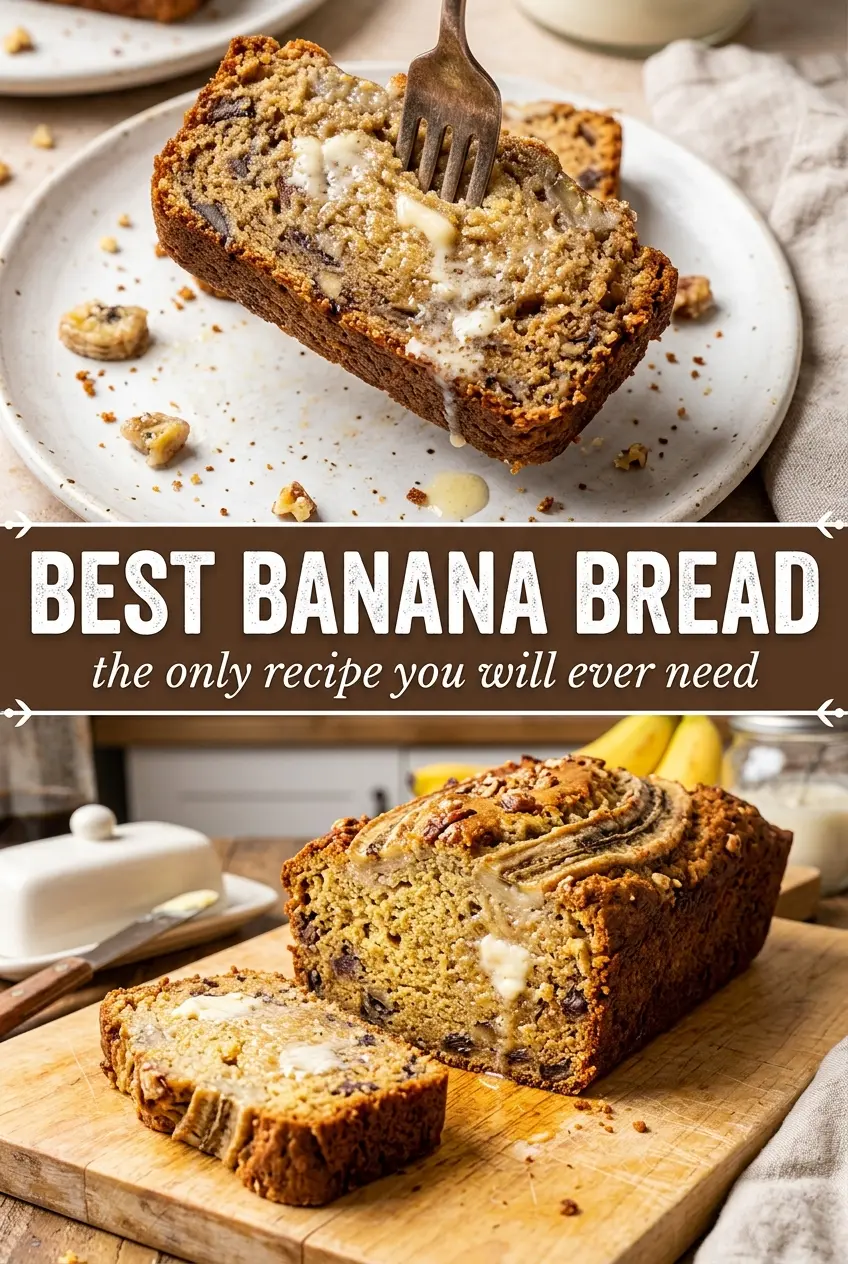
Banana bread earns its place when the loaf comes out with a dark golden top, a tender crumb, and that deep banana flavor that tastes like the fruit finally got its moment. The best versions aren’t dry or muffin-like. They slice cleanly once cooled, stay soft for days, and have enough caramelized sweetness on top to make the first bite the best one.
This version works because the bananas do the heavy lifting and the batter stays simple. Very ripe bananas bring moisture and natural sweetness, while melted butter keeps the texture rich without making the loaf heavy. A little cinnamon rounds everything out, and the egg gives the bread enough structure to rise without turning dense. The trick is not overmixing once the flour goes in. That’s where good banana bread either stays tender or turns tough.
Below, I’ve included the one cooling step people skip most often, plus a few smart ways to adapt the loaf if your bananas are extra small, extra large, or headed toward banana muffin territory.
The top came out beautifully crackled and the middle stayed moist for days. I used very ripe bananas like you suggested and the loaf baked up in 64 minutes with no gummy center.
Save this banana bread for the loaf with the crackled top and the soft, moist crumb that stays good all week.
The Difference Between Moist Banana Bread and a Dense Brick
The biggest banana bread mistake is treating the batter like cake. Once the flour goes in, every extra stir develops gluten and tightens the crumb. That’s how you end up with a loaf that looks fine from the outside but eats heavy and pasty in the middle.
The other failure point is underbaking. Banana bread often browns before the center is set because the sugar and fruit encourage early color. You want a deep golden top, yes, but the real test is a toothpick with a few moist crumbs, not wet batter. If the loaf still feels sloshy in the center when you press it lightly, give it more time.
- Ripe bananas — The darker and softer they are, the better this loaf turns out. They bring sweetness, moisture, and that strong banana flavor you can’t fake with extract.
- Melted butter — This gives the bread a richer crumb than oil and keeps the texture soft once cooled. It also blends easily with the bananas, which helps this stay a one-bowl recipe.
- Sugar — White sugar keeps the crumb tender and helps the top caramelize. If you cut it too far, the loaf loses both browning and moisture balance.
- Cinnamon — It doesn’t make the loaf taste spiced. It just nudges the banana flavor warmer and deeper. Leave it out if you want a cleaner banana taste.
What Each Ingredient Is Actually Doing in This Loaf
The flour amount is modest on purpose. That’s why the loaf stays tender instead of bready. All-purpose flour works best here because it gives just enough structure without pulling the crumb toward toughness. If you swap in whole wheat flour, use only part of it or the bread will get noticeably heavier.
The egg binds the batter and helps the loaf rise in a steady, even way. Vanilla rounds out the banana flavor, but it isn’t carrying the recipe. The baking soda matters more than people think — it reacts with the bananas’ acidity and gives the loaf lift, so don’t swap it for baking powder and expect the same texture.
If your bananas are large, mash and measure by volume so the batter doesn’t get too wet. If they’re on the smaller side, it’s better to add one extra banana than to bake a dry loaf and hope sugar can save it.
Getting the Batter Into the Pan Without Overworking It
Start With the Bananas and Butter
Mash the bananas in a large bowl, then whisk in the melted butter while it’s still warm, not hot. Warm butter helps the mixture come together quickly and evenly. If the butter is scorching, it can start cooking the egg later and leave little flecks in the batter.
Add the Wet Ingredients Until Just Combined
Stir in the sugar, egg, and vanilla until the mixture looks smooth and glossy. It doesn’t need to be whipped; it just needs to be uniform. Overbeating here won’t improve the loaf, but it can make the texture tighter once the flour is added.
Fold the Dry Ingredients and Stop Early
Sprinkle the flour, baking soda, salt, and cinnamon over the top, then fold until the last dry streak disappears. A few small lumps are fine. What you don’t want is a batter that’s been stirred until it looks satin-smooth, because that usually means the crumb will bake up tough.
Bake Until the Center Is Set, Not Dry
Pour the batter into the prepared pan and bake until the top is deeply golden and a toothpick comes out clean or with a few moist crumbs. If the top browns too fast, cover it loosely with foil for the last part of baking. Banana bread should smell toasted and sweet before it comes out, and the center should spring back lightly when touched.
Three Ways to Adjust This Banana Bread Without Ruining the Crumb
Make It Gluten-Free With a 1:1 Flour Blend
A good cup-for-cup gluten-free flour blend works here without changing the method. The loaf may be a touch more delicate when warm, so let it cool completely before slicing. Avoid almond flour as a direct swap; it changes the structure too much and the center can turn wet.
Turn It Into Banana Nut Bread
Fold in about 1/2 cup chopped walnuts or pecans after the dry ingredients are mixed. The nuts add crunch and a little bitterness that balances the sweet loaf. Toast them first if you want the flavor to stand out.
Reduce the Sugar Slightly for Less Sweet Banana Bread
You can drop the sugar to 1/2 cup if your bananas are extremely ripe and you prefer a less sweet loaf. The bread will still bake up moist, but the top won’t caramelize quite as deeply. Go lower than that and the loaf starts tasting flat instead of balanced.
Storage and Reheating
- Refrigerator: Keep it wrapped at room temperature for up to 3 days, or refrigerate for 5 days if your kitchen runs warm. The crumb firms up a bit in the fridge, which is normal.
- Freezer: Banana bread freezes well. Wrap the cooled loaf or individual slices tightly and freeze for up to 3 months.
- Reheating: Thaw at room temperature, then warm slices in a toaster oven or microwave just until the butter softens. Don’t overheat it or the crumb turns dry fast.
Questions I Get Asked About This Recipe
Best Banana Bread
Ingredients
Equipment
Method
- Preheat the oven to 350°F and grease a 9x5 loaf pan.
- Melt the unsalted butter and whisk it directly into the mashed very ripe bananas in a large bowl.
- Stir in the sugar, large egg, and vanilla extract until the batter looks smooth and well combined.
- Sprinkle the all-purpose flour, baking soda, salt, and cinnamon over the banana mixture, then fold until no dry streaks remain.
- Pour the batter into the prepared 9x5 loaf pan.
- Bake for 60–70 minutes at 350°F until the top is deeply golden and a toothpick inserted in the center comes out clean (no wet batter clinging).
- Cool in the pan for 10 minutes.
- Turn the loaf out onto a rack, and wait to slice until slightly cooled so the crumb holds together.