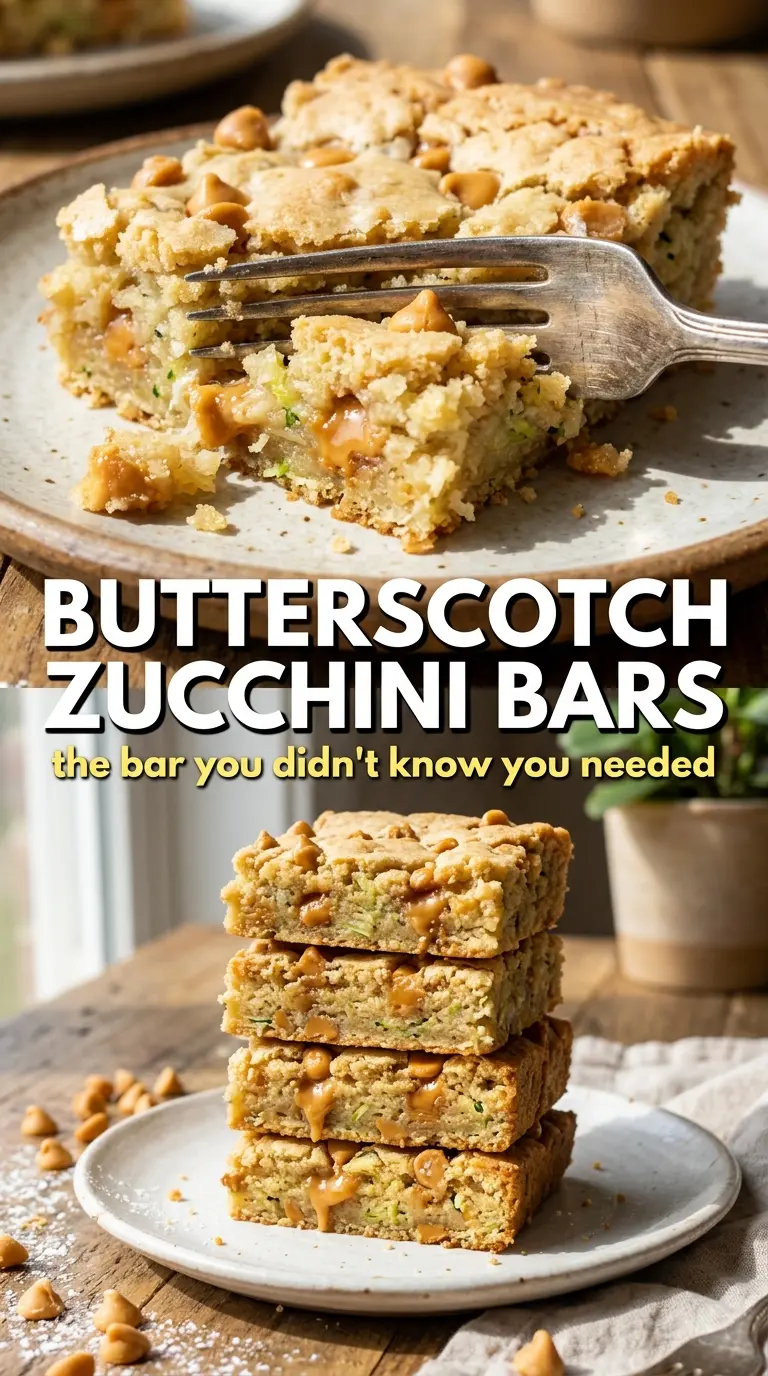
Thick, golden zucchini bars with butterscotch chips have a way of disappearing before they’ve even finished cooling. The crumb lands somewhere between a blondie and a soft cake bar: moist in the center, lightly chewy at the edges, and packed with little pockets of melted butterscotch that set up into glossy, caramelized spots as they cool. They don’t taste like vegetables. They taste like a pan of tender, brown-sugar bars that happen to use zucchini for the texture boost.
The trick is getting the zucchini dry enough that it disappears into the batter instead of watering it down. That one step matters more than anything else here. Once the moisture is under control, the rest is straightforward: oil for tenderness, brown sugar for depth, and enough cinnamon to round out the butterscotch without taking over. The top finishes with a faint sheen and a few chips pooled right at the surface, which is exactly what you want.
Below, I’ve included the small details that keep these bars from turning soggy or dense, plus a few swaps if you want to use walnuts, skip them, or work around what’s already in the pantry.
I squeezed the zucchini like you said and the bars baked up perfectly instead of getting wet in the middle. The butterscotch chips on top made the whole pan look bakery-style, and they cut cleanly once they cooled.
Butterscotch zucchini bars are the kind of gooey, chip-studded dessert worth saving for when you want an easy pan of blondie-style bars.
The Reason These Bars Stay Gooey Instead of Turned-Down Cake
Most zucchini bar recipes fail in one of two ways: they bake up wet and heavy, or they bake up cakey and lose the soft, fudgy texture that makes them worth eating. The difference here is the zucchini treatment and the sugar ratio. Squeezing the zucchini dry keeps the batter from flooding, while the brown sugar and oil keep the crumb tender instead of bread-like.
These bars also rely on a gentle hand once the flour goes in. If you stir until the batter looks perfectly smooth, you’ll usually overwork it and end up with a tighter crumb. Stop as soon as the flour disappears, then fold in the chips so they stay distributed instead of sinking into one dense layer.
- Zucchini — Grate it fine and squeeze it until it gives up a surprising amount of liquid. A clean kitchen towel works better than paper towels here. If you skip the squeeze, the bars can bake up gummy in the center.
- Brown sugar — This gives the bars their butterscotch backbone and that deep, molasses note. Light or dark both work; dark brown sugar makes them a little richer and more caramel-forward.
- Vegetable oil — Oil keeps the crumb moist for days, which matters in a bar like this. Melted butter can work, but the texture gets a little firmer and less plush.
- Butterscotch chips — These are the point of the recipe, so use a brand you like the flavor of. Stir some into the batter and save some for the top so you get those glossy pockets on the surface.
- Walnuts — Optional, but they add a nice little crunch against the soft bars. Leave them out if you want a smoother, more classic blondie-style texture.
What Each Ingredient Is Actually Doing in This Zucchini Bread
- Zucchini (the moisture keeper) — Grate finely and squeeze out excess moisture. The remaining moisture adds tenderness without making it soggy.
- Flour (the structure base) — Don’t overmix or the bread becomes tough. Mix just until dry ingredients are incorporated.
- Sugar (the sweetness and browning) — This tenderizes the bread and helps create browning. Adjust based on other ingredients.
- Oil or butter (the richness) — This creates tender crumb. Oil makes moister breads; butter makes them richer.
- Eggs (the binder) — These hold everything together and add structure. Use room temperature eggs for better incorporation.
- Leavening (baking powder or soda) — This creates rise and light crumb. Too much makes it taste bitter.
- Spices (cinnamon, nutmeg, or allspice) — These warm up the zucchini flavor. Layer spices so no single one overpowers.
- Optional mix-ins (nuts, chocolate, or dried fruit) — These add texture and flavor. Don’t overfill or the batter becomes dense.
How to Mix the Batter So the Bars Bake Up Soft, Not Dense
Whisk the dry ingredients first
Start with the flour, baking soda, baking powder, salt, and cinnamon in one bowl. That even distribution matters because the baking soda needs to be spread through the flour before it meets the wet ingredients. If you leave a clump behind, you can end up with a bitter pocket or an uneven rise.
Build the sugar and oil base
Beat the brown sugar, granulated sugar, oil, eggs, and vanilla until the mixture looks smooth and glossy. It won’t whip up like cake batter, and that’s fine. You’re looking for the sugars to dissolve enough that the batter turns cohesive instead of grainy.
Fold in the zucchini, then stop at just combined
Stir in the squeezed zucchini first, then add the dry ingredients and mix only until the flour disappears. This is where people usually overdo it and end up with tough bars. Once you add the chips, use a few broad folds and quit while the batter still looks a little rough.
Bake for moist crumbs, not a dry toothpick
Spread the batter into a greased 9×13 pan and scatter the remaining chips on top. Bake until the edges are set and the center gives a toothpick with moist crumbs, usually 28 to 32 minutes. If the toothpick comes out totally clean, the bars are probably already overbaked and will cool drier than you want.
How to Adapt These Bars When You Need to Work With What You Have
Make Them Gluten-Free
Use a 1:1 gluten-free flour blend that contains xanthan gum. The bars will still be soft and moist, but they may be a little more delicate when warm, so let them cool fully before slicing. A blend with rice flour and starches gives the most dependable texture.
Skip the Nuts Without Losing Structure
The walnuts add crunch, not binding power, so the bars bake just fine without them. Leave them out for a smoother bite and a more classic blondie texture. If you want a little extra texture without nuts, add a handful of extra butterscotch chips on top.
Use Dark Brown Sugar for a Deeper Butterscotch Note
Dark brown sugar gives the bars a stronger molasses flavor and a slightly darker color. The texture stays the same, but the finished bars taste more caramel-like and less light. If you like a pronounced butterscotch flavor, this is the swap to make.
Storage and Reheating
- Refrigerator: Store in an airtight container for up to 5 days. The bars firm up a bit in the fridge, but the texture stays pleasantly soft.
- Freezer: They freeze well. Wrap individual bars tightly and freeze for up to 2 months, then thaw at room temperature so the chips stay creamy instead of turning waxy.
- Reheating: Warm a bar in the microwave for 10 to 15 seconds if you want the chips soft again. Don’t overheat it or the edges will dry out before the center loosens.
Answers to the Questions Worth Asking
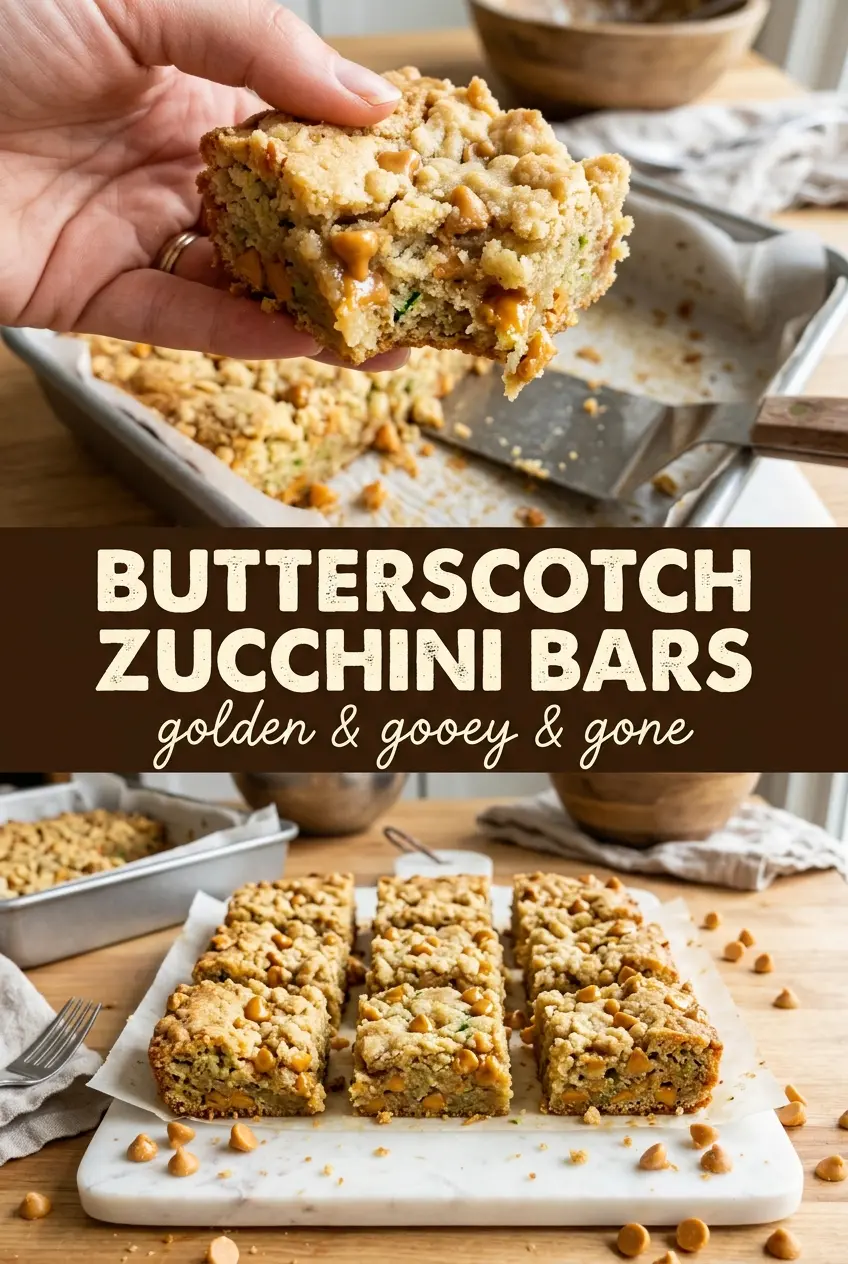
Butterscotch Zucchini Bars
Ingredients
Equipment
Method
- Preheat oven to 350°F and grease a 9x13 baking pan.
- Whisk all-purpose flour, baking soda, baking powder, salt, and cinnamon together until evenly combined.
- Beat brown sugar and granulated sugar with vegetable oil, eggs, and vanilla extract until smooth.
- Stir in grated zucchini that has been squeezed dry.
- Fold the dry ingredients into the wet just until no dry streaks remain.
- Fold in 1 cup of the butterscotch chips and the walnuts if using.
- Spread the batter into the pan in an even layer.
- Scatter the remaining butterscotch chips on top so they sit in glossy pools as they melt.
- Bake 28–32 minutes, until a toothpick comes out with moist crumbs; the edges should look set and lightly golden.
- Cool completely before cutting into bars so the centers finish setting and the chip pockets hold their shape.