Golden seared chicken breasts tucked into a silky spinach cream sauce earn their place in the regular dinner rotation fast. The chicken stays juicy, the sauce turns pale and glossy instead of heavy, and the spinach melts into the pan without getting swampy or dull. A little lemon at the end keeps the whole dish bright enough to taste elegant, not flat.
What makes this version work is the order of operations. The chicken gets a hard sear first, which leaves browned bits in the skillet for the sauce to pick up. Then the wine reduces before the cream goes in, so the sauce tastes layered instead of just rich. Parmesan, lemon juice, and zest go in near the end, after the heat has dropped, which keeps the sauce smooth and stops the cheese from clumping.
Below you’ll find the small details that matter here: how to keep the chicken from drying out, why the sauce thickens at the right moment, and which swaps still give you that restaurant-style finish.
The sauce thickened up perfectly and the lemon at the end kept it from tasting heavy. I served it over pasta, and my husband asked if we could have this chicken Florentine again the next night.
Like this chicken Florentine? Save it to Pinterest for a creamy skillet dinner with spinach, lemon, and a silky Parmesan sauce.
The Seared Chicken Is What Keeps the Sauce from Tasting Flat
The biggest mistake in chicken Florentine is treating the sauce like the main event and the chicken like an afterthought. If the chicken doesn’t get a real sear, the whole dish loses depth. Those browned bits left behind in the pan are what give the sauce its backbone, and they matter more than an extra pinch of seasoning.
Medium-high heat is the sweet spot here. Too low, and the chicken steams before it browns. Too high, and the outside scorches before the center cooks through. You’re looking for a deep golden crust that releases cleanly from the skillet, not pale chicken that sticks and tears.
What Each Ingredient Is Actually Doing in This Skillet
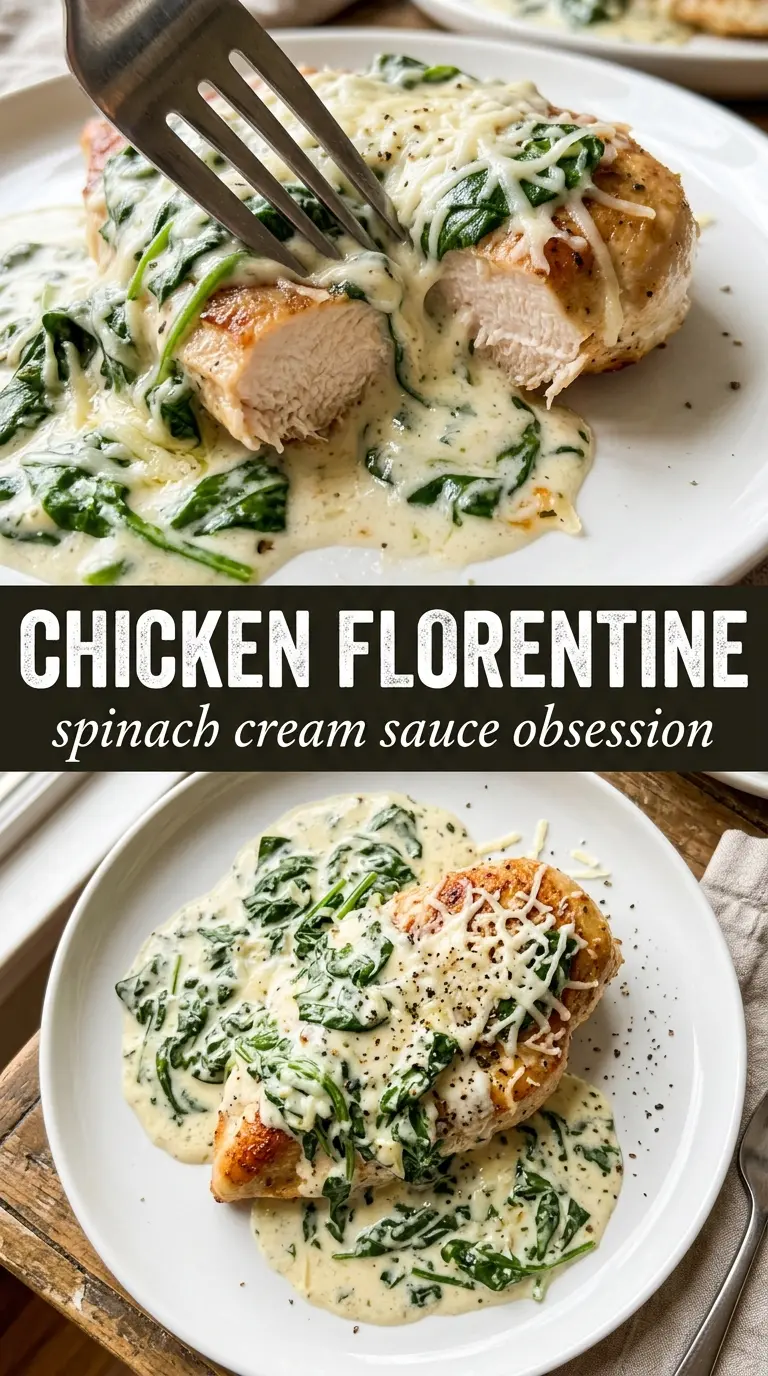
- Chicken breasts — Boneless, skinless breasts keep this quick and elegant, but thickness matters. If one end is much thicker than the other, pound them lightly so they cook at the same pace and stay juicy instead of drying out at the edges.
- Dry white wine — This isn’t just for restaurant flair. It cuts the richness of the cream and lifts the browned bits off the pan. Use something dry and drinkable, not sweet; if you don’t cook with wine, replace it with extra chicken broth plus a small squeeze of lemon, though the sauce will taste a little softer.
- Heavy cream — This is what gives the sauce its body and keeps it from breaking when the Parmesan goes in. Half-and-half can work in a pinch, but it won’t cling to the chicken the same way and is more likely to thin out too much.
- Parmesan — Freshly grated melts into the sauce much more smoothly than the shelf-stable kind. Pre-grated Parmesan often has anti-caking agents that can leave the sauce grainy.
- Fresh spinach — Baby spinach wilts fast and disappears into the sauce without needing extra cooking. Mature spinach works too, but the stems need to be removed and the leaves chopped so they don’t end up stringy.
- Lemon zest and juice — These finish the dish. The zest adds aroma, while the juice keeps the cream sauce from tasting heavy. Add both after the sauce has thickened so the dairy stays smooth.
Building the Sauce in the Same Pan That Seared the Chicken
Seasoning and Searing
Pat the chicken breasts dry before they hit the pan, then season both sides generously. Moisture is the enemy of browning, and wet chicken will sit there steaming instead of forming a crust. Add the chicken to hot olive oil and leave it alone until the first side releases easily and turns deep gold. If it sticks hard, it needs another minute.
Deglazing the Flavor off the Bottom
Once the chicken comes out, keep the same skillet over the heat and add the garlic just long enough to smell fragrant, about 30 seconds. Then pour in the white wine and scrape up every browned bit with a wooden spoon. That step is where the sauce gets its savory base, and if the pan looks clean too soon, you’re leaving flavor behind.
Reducing the Cream Until It Naps the Spoon
After the wine has simmered down, add the cream and chicken broth and let the sauce bubble gently until it thickens enough to lightly coat a spoon. Don’t rush this with high heat. A hard boil can make cream look greasy before it ever thickens properly. The sauce should look slightly loose before the Parmesan goes in, because the cheese and spinach will finish the texture.
Finishing with Cheese, Greens, and Lemon
Turn the heat lower before adding the Parmesan so it melts into the sauce instead of turning grainy. Stir in the lemon juice, zest, and spinach next, and watch the leaves collapse in a minute or two. Return the chicken to the skillet and spoon the sauce over the top so every piece gets coated before serving.
How to Adapt Chicken Florentine Without Losing the Creamy Finish
Make It Dairy-Free
Use full-fat coconut milk instead of cream and skip the Parmesan, then add an extra squeeze of lemon and a little more salt to keep the sauce balanced. The result will be a little less savory and more coconut-leaning, but it still gives you a creamy skillet sauce that works well with the spinach and chicken.
Use Chicken Thighs Instead
Boneless, skinless thighs bring more richness and stay juicy even if you cook them a minute or two longer. They take a little longer to brown and may need a lower finish temperature, but they make the dish deeper and a touch more forgiving.
Gluten-Free Serving Options
The sauce itself is naturally gluten-free as long as your broth is certified gluten-free. Serve it over rice, mashed potatoes, or gluten-free pasta, and you’ll get the same creamy result without changing the method at all.
Make It More Sauce-Like for Pasta
If you’re serving this over pasta, keep the sauce slightly looser by stopping the simmer a minute earlier and adding a splash of the pasta cooking water at the end. That helps the sauce cling to noodles instead of tightening too much in the pan.
Storage and Reheating
- Refrigerator: Store leftovers in an airtight container for up to 3 days. The sauce will thicken as it chills.
- Freezer: I don’t recommend freezing this one. Cream sauces can separate and turn grainy after thawing, and the spinach softens too much.
- Reheating: Warm it gently in a skillet over low heat with a splash of broth or cream. High heat is what breaks the sauce and dries out the chicken, so keep it slow and stir often.
Answers to the Questions Worth Asking

Chicken Florentine
Ingredients
Equipment
Method
- Season the chicken breasts generously on both sides with salt, pepper, garlic powder, and Italian seasoning.
- Heat the olive oil in a large skillet over medium-high heat and sear the chicken for 5-6 minutes per side until golden and cooked through to 165°F; remove and set aside.
- Cook the minced garlic in the same pan for 30 seconds, stirring constantly until fragrant.
- Pour in the dry white wine and simmer for 2 minutes to deglaze and reduce slightly, scraping up browned bits.
- Add the heavy cream and chicken broth, then simmer for 4-5 minutes until slightly thickened.
- Stir in the grated Parmesan, fresh lemon juice, and lemon zest until smooth and the sauce looks pale and creamy.
- Add the baby spinach and stir until wilted, about 1-2 minutes.
- Return the chicken to the pan and spoon the sauce over each breast so it pools around the meat.
- Garnish with fresh parsley and lemon and serve over pasta or rice.