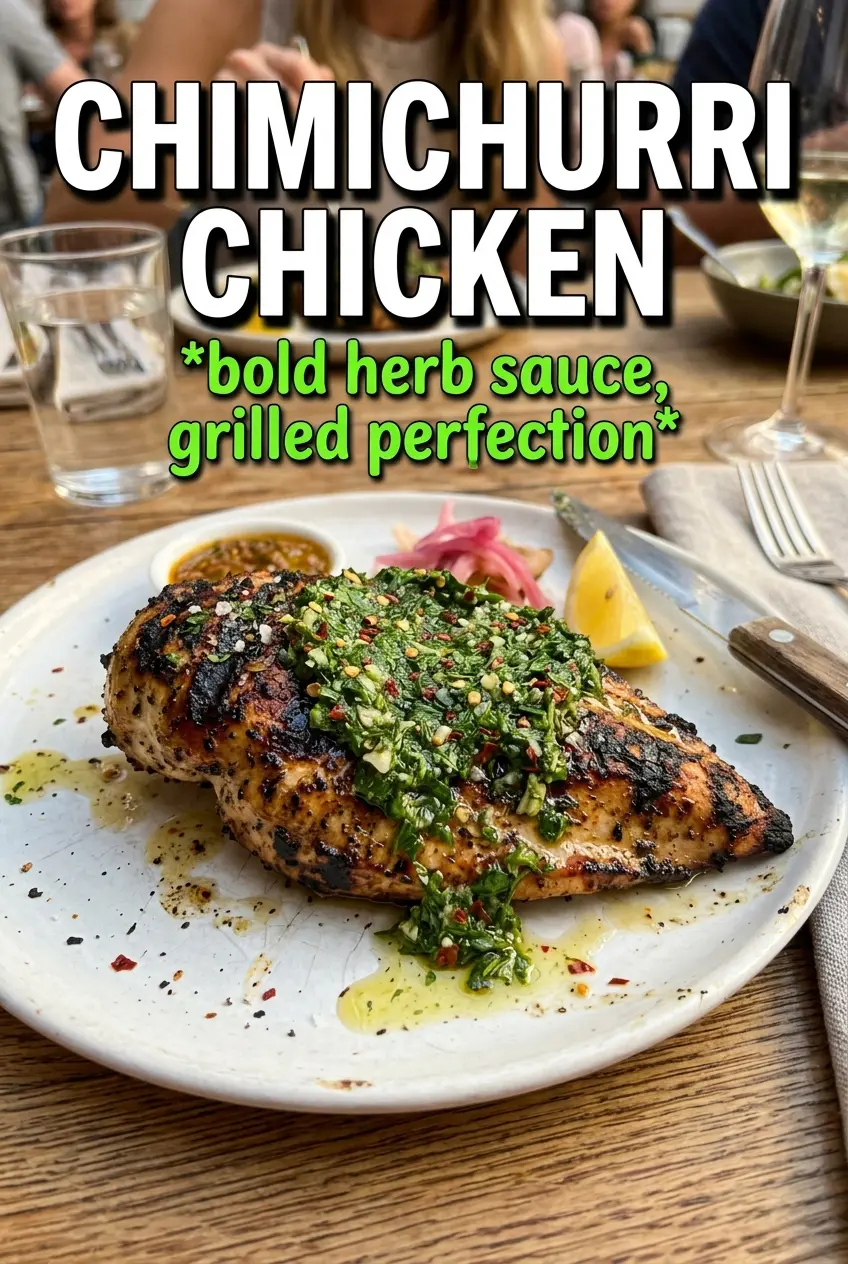
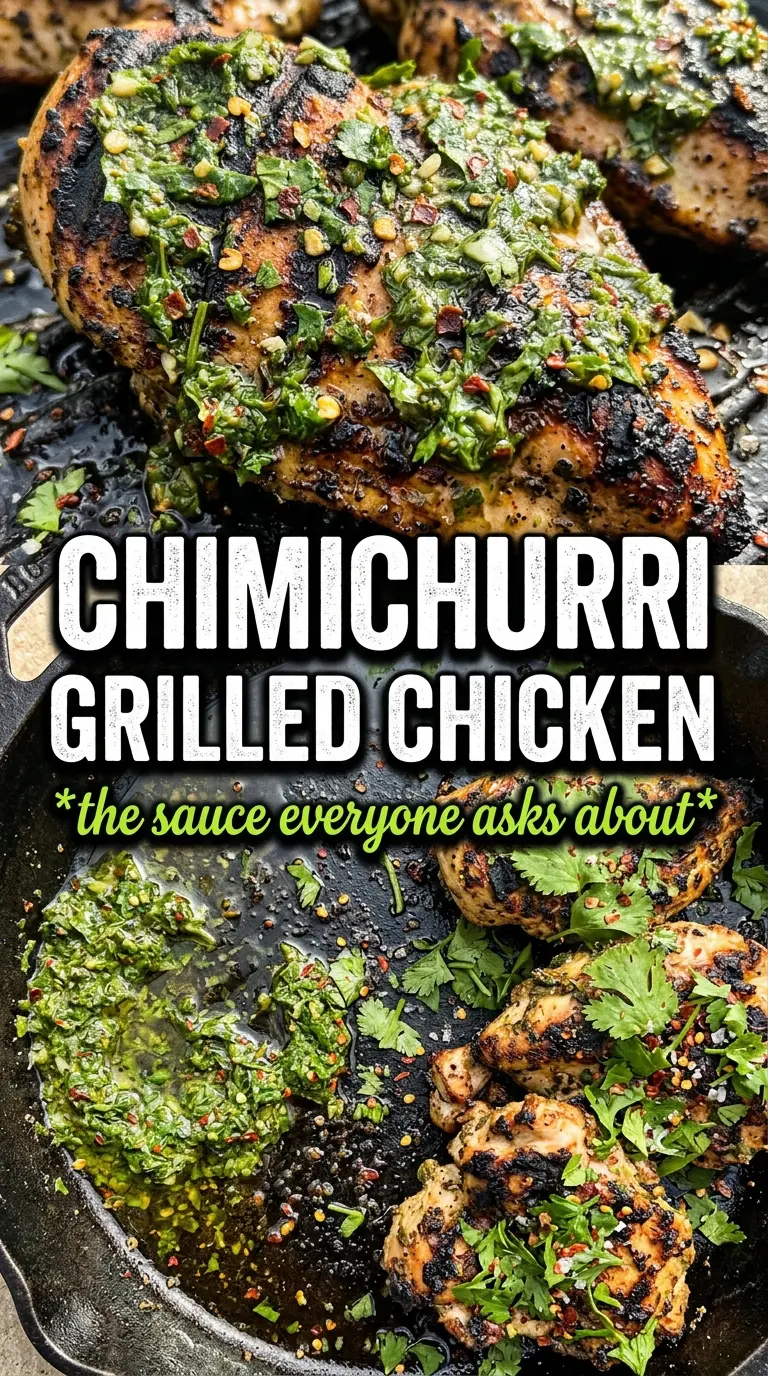
Chimichurri chicken comes off the grill with a charred, salty crust and a bright herb sauce that cuts straight through the richness. The chicken stays juicy under all that parsley, garlic, and vinegar, and the first bite gives you smoke, tang, and a little heat all at once. It’s the kind of main dish that looks like you worked harder than you did.
The trick is keeping the chimichurri fresh and punchy instead of turning it muddy or bitter. I use just enough of the sauce as a marinade to season the chicken, then I save the rest for serving so the herbs stay vivid and the garlic stays sharp. That split between cooked-on flavor and raw sauce is what makes this version taste balanced instead of heavy.
Below, I’ve added the small details that matter: how to keep the chicken from drying out on the grill, what to do if your chimichurri tastes flat, and a few smart swaps if you’re working with what’s already in the pantry.
The chimichurri stayed bright and garlicky, and the chicken came off the grill with those perfect char marks without drying out. I marinated it for just 30 minutes and it still tasted like it had been planned all day.
Save this chimichurri chicken for the nights when you want juicy grilled chicken with a bold herb sauce in under 20 minutes.
The Part That Keeps Chimichurri Bright Instead of Muddy
Chimichurri can go flat fast if you treat it like a marinade that needs hours to work. The vinegar starts softening the herbs and garlic almost immediately, which is great for seasoning the chicken, but it also means the sauce can lose some of its snap if it sits too long once it’s mixed. That’s why this version uses just a little chimichurri on the chicken before cooking and keeps the rest for the finish.
The other mistake is overprocessing the herbs. A quick chop or a short pulse in the blender gives you texture and keeps the sauce from turning into green paste. You want flecks of parsley, not a puree. That texture clings to the chicken better, and it tastes fresher on the plate.
- Parsley — Flat-leaf parsley gives chimichurri its clean, grassy backbone. Curly parsley works in a pinch, but the flavor is less assertive and the sauce can feel fluffier than saucy.
- Red wine vinegar — This is the sharp edge that wakes everything up. If you swap in lemon juice, the sauce will taste brighter and slightly less earthy, which is fine, but it won’t taste like classic chimichurri anymore.
- Garlic — Fresh garlic matters here. Jarred garlic tastes muted and a little sweet, which dulls the sauce. If yours is especially strong, start with 3 cloves and taste before adding the fourth.
- Olive oil — Use a good-tasting olive oil because it carries the herbs. There’s no real substitute for the body it gives the sauce, but a neutral oil will work if you just need the chicken cooked tonight.
What Each Ingredient Is Actually Doing in This Recipe
- Primary ingredient (the star) — Quality matters most. Choose the best you can find.
- Cooking medium (oil, butter, or broth) — This carries flavors and prevents dryness.
- Seasonings (salt, pepper, spices, herbs) — Layer flavors so nothing overpowers. Build depth gradually.
- Aromatics (garlic, onion, herbs) — Cook with fat to bloom flavors. Become the foundation.
- Supporting ingredients — Complement the main ingredient without overpowering it.
- Sauce or liquid (if applicable) — Brings flavors together. Balance richness with acid.
- Acid (lemon, vinegar, wine, or other) — Brightens and prevents flat-tasting results.
- Final finish (garnish, glaze, or sauce) — Prevents one-dimensional taste and adds visual appeal.
How to Grill the Chicken So It Stays Juicy Under the Sauce
Mixing the Chimichurri First
Blend or finely chop the parsley, garlic, oregano, vinegar, red pepper flakes, salt, pepper, and olive oil until the sauce is loose and spoonable, not completely smooth. Taste it before it touches the chicken; it should taste a little too sharp on its own because the chicken will mellow it out. If it tastes dull, add a pinch more salt or a splash of vinegar rather than more oil.
Giving the Chicken a Short Marinade
Rub the chicken with olive oil, salt, pepper, and just a couple tablespoons of chimichurri, then let it sit for 30 minutes. That short window is enough to season the surface without turning the texture soft or stringy. If you leave the acid-heavy sauce on for hours, the outside can start to taste cured instead of grilled.
Cooking Over Real Heat
Preheat the grill or grill pan until it’s properly hot, then cook the chicken for 6 to 7 minutes per side. You’re looking for clear grill marks, firm edges, and juices that run mostly clear when you press the thickest part. If the chicken sticks, it’s not ready to turn yet; it will release when the crust has formed.
Finishing with the Fresh Sauce
Let the chicken rest for 5 minutes before topping it with the remaining chimichurri. That rest keeps the juices in the meat instead of running onto the plate the second you slice it. Spoon the sauce over the top generously, because this is where the dish goes from good grilled chicken to something you’ll want again next week.
Three Ways to Make This Chimichurri Chicken Fit the Night You Have
Use chicken thighs for a juicier finish
Thighs stay a little more forgiving on a hot grill and handle a few extra minutes without drying out. They also hold onto the chimichurri beautifully, though the final dish will taste richer and less lean than chicken breast.
Make it dairy-free and gluten-free as written
This recipe already fits both without any changes, which is part of why it’s such a useful one to keep around. Just double-check your vinegar and spice labels if you’re cooking for someone with a sensitivity, since the sauce is so simple that hidden additives stand out.
Swap oregano when you don’t have fresh on hand
Dried oregano works fine here, and the recipe already accounts for it. Use less than you think you need, since dried herbs bloom more aggressively in the oil and can take over the sauce if you’re heavy-handed.
Storage and Reheating
- Refrigerator: Store cooked chicken and chimichurri separately for up to 3 days. The sauce will mellow and the herbs will darken a little, but the flavor still holds.
- Freezer: The cooked chicken freezes well for up to 2 months, but the chimichurri is best made fresh because the herbs lose their bright color and texture after thawing.
- Reheating: Warm the chicken gently in a covered skillet over low heat or in a 300F oven until just heated through. High heat dries the meat out fast, so reheat slowly and add the fresh chimichurri only after the chicken is hot.