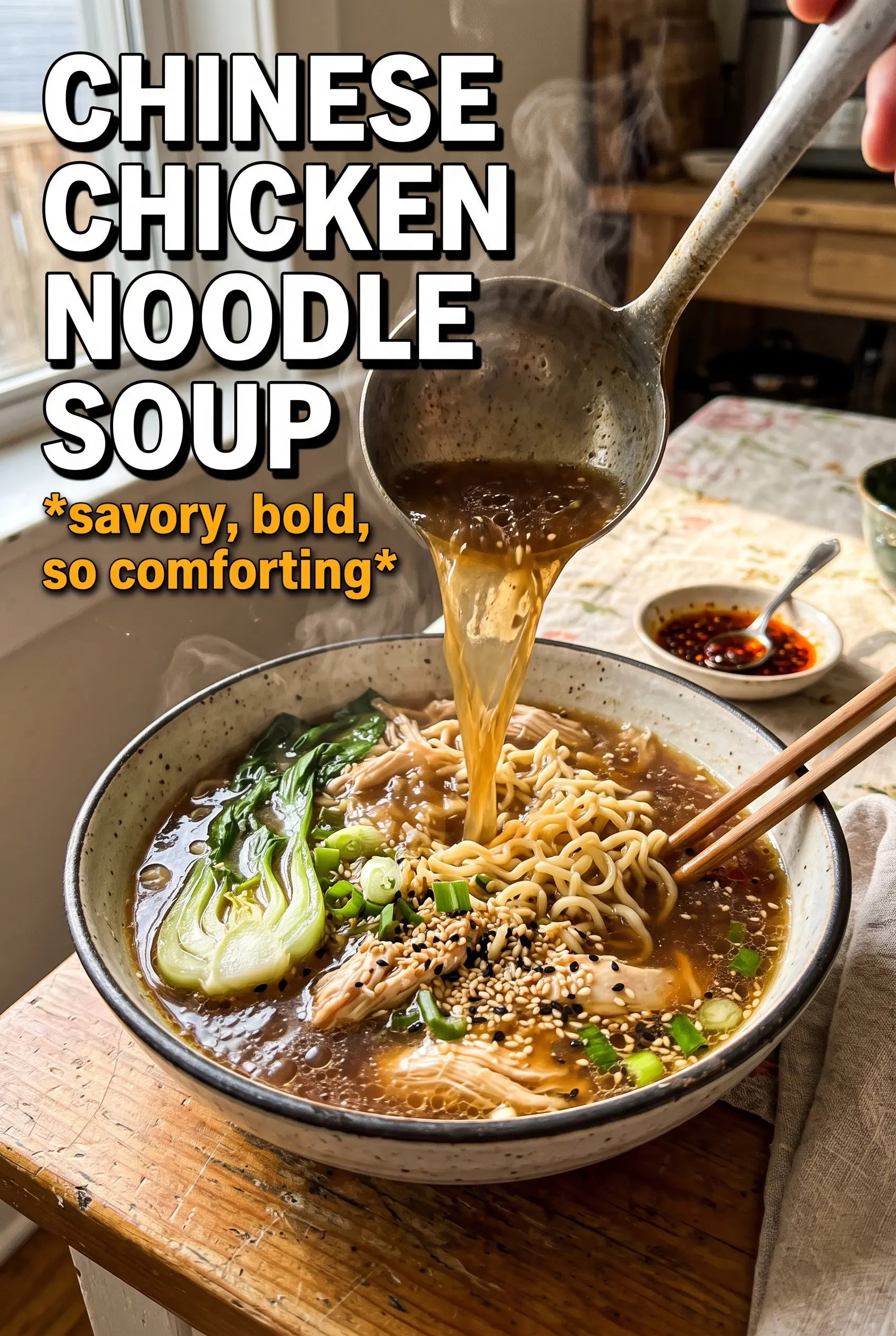
Clear broth, tender chicken, and slurpy noodles make this Chinese chicken noodle soup the kind of bowl that disappears fast. It tastes light at first, then builds with garlic, ginger, sesame oil, and a little white pepper that gives the broth a quiet warmth instead of loud heat. The bok choy stays bright, the mushrooms soak up all that savory flavor, and the noodles keep the soup hearty enough for a full meal.
What makes this version work is the layering. The broth gets a head start with garlic and ginger, then soy sauce, sesame oil, and rice vinegar go in before the chicken so the liquid tastes seasoned all the way through, not just at the end. Cooking the noodles separately matters too. It keeps the broth clean and prevents the bowl from turning starchy or overly soft if you have leftovers.
Below, I’ll show you how to keep the broth clear, how to time the vegetables so they stay fresh, and a few smart swaps if you need to work with what’s already in the kitchen.
The broth stayed clear and the white pepper gave it that little restaurant-style kick. I loved that the noodles were cooked separately because the leftovers were still perfect the next day.
Save this Chinese chicken noodle soup for nights when you want a clear, gingery broth with tender chicken and separate noodles that never go soft.
The Trick to Keeping the Broth Clean Instead of Cloudy
Cloudy soup usually happens when noodles cook in the broth, the pot boils too hard, or the chicken goes in and out of a rolling simmer. This soup stays clearer because the broth is gently simmered, the aromatics are added early, and the noodles are handled on their own. That separation is the difference between a bowl that tastes fresh and one that turns heavy by the time you reach the bottom.
The other detail that matters is heat control. Chicken breast stays tender when it’s cooked at a steady simmer, not blasted at a hard boil. If the liquid is bubbling aggressively, the meat tightens up and the broth loses that smooth, clean finish you want in a noodle soup like this.
- Chicken breast — Thin slices cook fast and stay tender. Cut them against the grain so each piece feels softer in the bowl.
- Shiitake mushrooms — They bring a deeper, almost meaty note that plain button mushrooms won’t fully give you. If shiitakes are hard to find, cremini work, but the broth will taste a little flatter.
- White pepper — This is the small ingredient that makes the soup taste unmistakably Chinese-American. Black pepper works in a pinch, but white pepper gives a cleaner, warmer finish.
What Each Ingredient Is Actually Doing in the Bowl
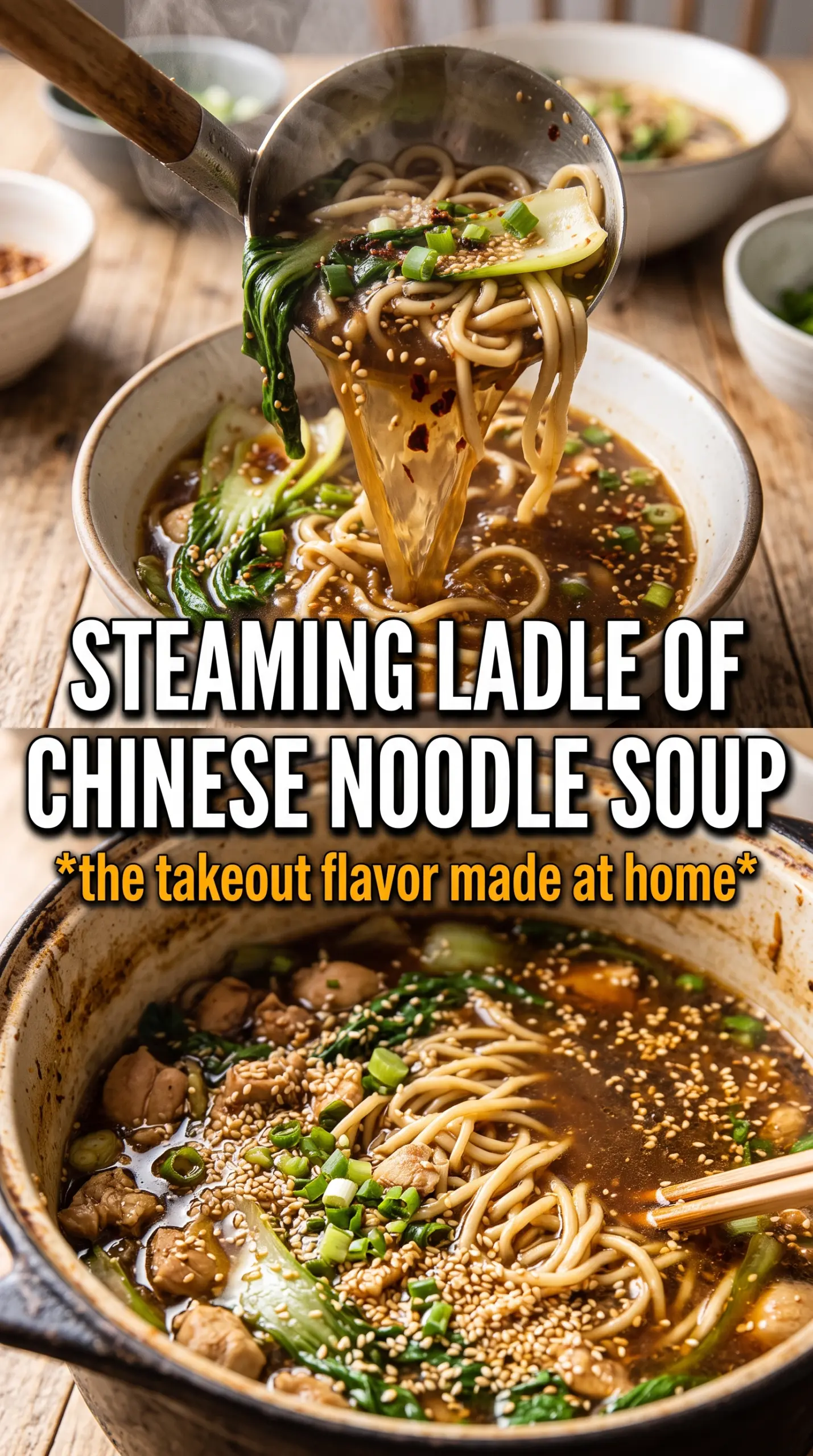
- Chicken broth — Use the best broth you can get, because this is the body of the soup. If yours is a little thin, let it simmer a few extra minutes with the garlic and ginger before you add anything else.
- Sesame oil — A small amount goes a long way and gives the soup its nutty finish. Don’t swap in a neutral oil here unless you’re willing to lose that last layer of flavor.
- Rice vinegar — This wakes up the broth without making it taste sour. If you skip it, the soup can taste dull even if the salt level is correct.
- Bok choy — It wilts quickly and keeps a fresh bite that balances the noodles. Add it at the end; if it cooks too long, it turns limp and muddy-looking.
- Thin noodles — Chinese wheat noodles give you the most classic texture, but rice noodles work well if that’s what you have. Cook them separately no matter which one you use so they don’t drink up the broth.
Building the Bowl So Every Part Stays in Its Lane
Start the broth with the aromatics
Bring the chicken broth to a gentle simmer, then add the garlic and ginger and let them cook for about 5 minutes. You want the broth fragrant, not aggressively boiling, because hard heat can make the garlic taste sharp instead of round. The liquid should smell warm and savory before anything else goes in. If the garlic starts browning, the pot is too hot.
Season before the chicken goes in
Stir in the soy sauce, sesame oil, and rice vinegar before adding the chicken. That gives the broth time to taste balanced while the meat cooks, which means the chicken absorbs the seasoning instead of getting added to a plain base at the end. Taste the broth now. It should be a touch saltier than you think, since the noodles will dilute it a little once everything is combined.
Cook the chicken and mushrooms gently
Add the sliced chicken and mushrooms, then simmer until the chicken is cooked through and no longer pink in the thickest piece, about 10 to 12 minutes. Keep the simmer steady and calm; if it boils hard, the chicken can turn tough before the mushrooms have a chance to soften and release flavor. Thin slices help here, so don’t leave the pieces too chunky. The broth should stay clear and the mushrooms should look glossy and tender.
Finish with the greens and noodles
Cook the noodles separately according to the package directions, then divide them into bowls. Add the bok choy to the broth and cook just until wilted, about 3 minutes, so it stays bright and slightly crisp. Ladle the hot soup over the noodles, then finish with white pepper, salt, green onions, cilantro, and a little chili oil. If you add the noodles to the pot, they’ll keep swelling and soak up broth before anyone gets to the table.
How to Adapt This Soup When You Need a Different Bowl
Gluten-Free Version with Rice Noodles
Use rice noodles and check that your soy sauce is gluten-free, or swap in tamari. The broth still tastes clean and savory, but the texture gets a little softer and silkier than wheat noodles.
Dairy-Free and Naturally Light
This soup is already dairy-free, so nothing needs to be removed. Keep the sesame oil and white pepper in place, because that combination is part of what gives the broth its rounded finish.
Make It Heartier with More Vegetables
Add sliced carrots, napa cabbage, or baby corn with the mushrooms so they have enough time to soften. The soup becomes more filling without changing the flavor balance, but don’t crowd the pot so much that the broth starts tasting watery.
Storage and Reheating
- Refrigerator: Store the broth, chicken, and vegetables separately from the noodles for up to 4 days. The noodles keep their best texture this way.
- Freezer: Freeze the broth, chicken, and mushrooms for up to 2 months. Don’t freeze the noodles; they turn soft and patchy after thawing.
- Reheating: Warm the soup gently on the stovetop until steaming, then add freshly cooked noodles to each bowl. If you boil it hard, the chicken tightens and the broth loses its clean taste.
Answers to the Questions Worth Asking
Chinese Chicken Noodle Soup
Ingredients
Equipment
Method
- Bring the chicken broth to a simmer in a large pot over medium-high heat, then add the minced garlic and grated ginger and cook for 5 minutes with gentle bubbling.
- Stir in the soy sauce, sesame oil, and rice vinegar, then taste and adjust to balance the broth.
- Add the sliced chicken breast and shiitake mushrooms to the broth and simmer for 10–12 minutes, until the chicken is cooked through and no longer pink.
- Cook the thin Chinese wheat noodles or rice noodles separately according to package directions, then drain and divide into serving bowls.
- Add the chopped bok choy to the broth and simmer for 3 minutes until wilted but still bright green.
- Ladle the hot soup over the noodles in the bowls, then season with white pepper and salt to taste.
- Top with sliced green onions, cilantro, and a drizzle of chili oil right before serving.