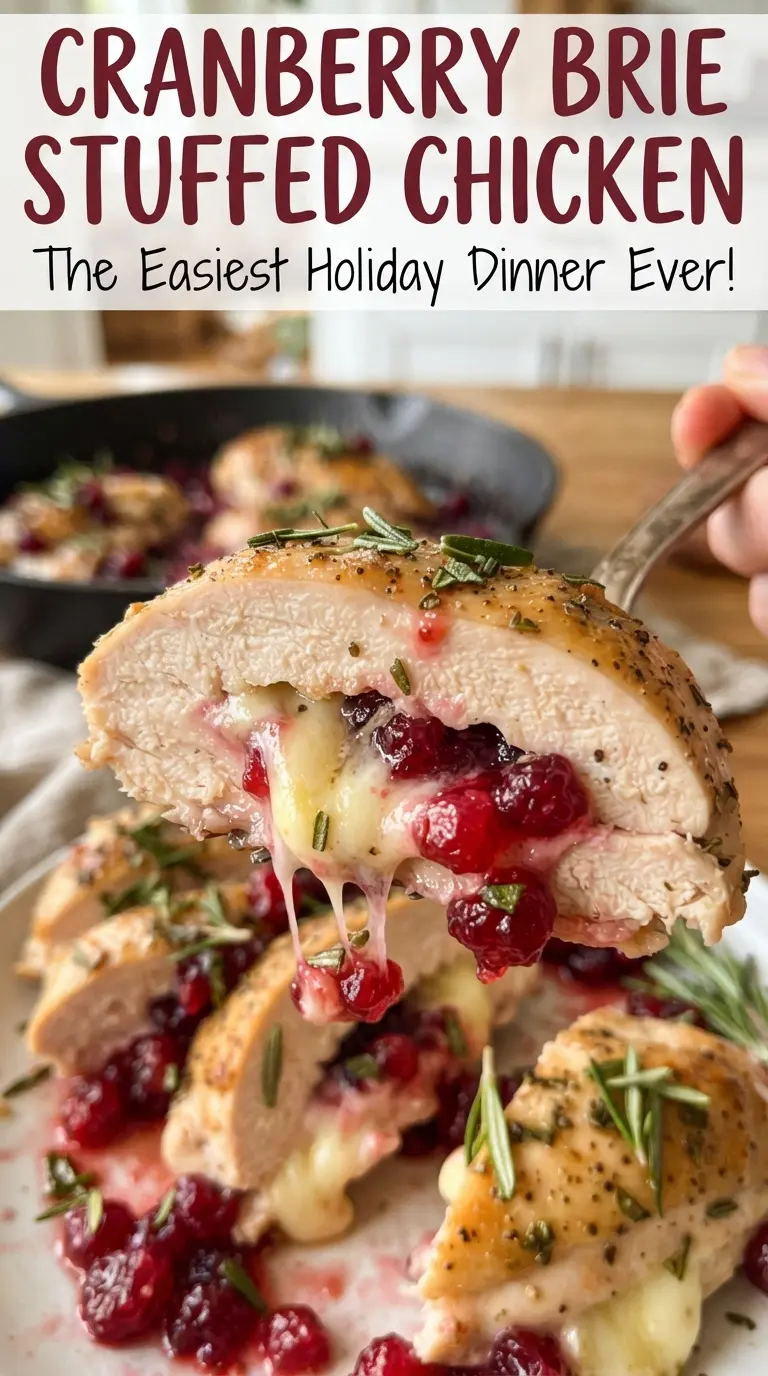
Cranberry Brie Stuffed Chicken lands on the table with crisp, golden edges and a center that turns rich and saucy the second you slice into it. The brie melts into the spinach and cranberry filling, while the balsamic-honey pan sauce gives the whole dish a glossy finish that tastes like more effort than it takes. It’s the kind of dinner that feels polished without asking for a long ingredient list or a pile of side dishes.
What makes this version work is the order of operations. The chicken gets seared first so the outside picks up color before it goes into the oven, which keeps the breast from tasting flat. The cranberry sauce goes both inside the chicken and into the pan sauce, so you get sweet-tart flavor in every bite instead of just on top. A little spinach helps hold the filling in place and keeps the brie from running out too fast.
Below, I’m walking through the pocket-cutting trick that keeps the filling inside the chicken, plus the small pan sauce detail that turns the drippings into something worth spooning over everything on the plate.
The chicken stayed juicy, the brie melted without flooding the pan, and that cranberry-balsamic sauce tied everything together. Even the spinach inside tasted like it belonged there.
Save this Cranberry Brie Stuffed Chicken for a golden seared dinner with molten brie, tart cranberry filling, and a quick balsamic pan sauce.
The Reason the Filling Stays Inside Instead of Leaking Out
The pocket is doing more work here than most stuffed chicken recipes admit. If you cut too shallow, the filling sits on top and slides off in the oven. If you cut too deep, the breast splits open and the cheese escapes into the skillet before the chicken is done. Aim for a deep pocket with enough structure left around the edges to hold the stuffing in place.
Searing before baking matters for a second reason: it sets the outside fast, which helps the chicken keep its shape while the brie melts. That golden crust also gives the pan sauce something to build on. Those browned bits are not a bonus; they’re the base of the sauce.
- Chicken breasts — Choose breasts that are close in size so they cook at the same pace. If one is much thicker, pound the thicker end slightly before cutting the pocket so the oven time stays even.
- Brie — Use a wedge that’s still chilled when you slice it. Cold brie is easier to tuck inside the pocket, and it melts into creamy pockets instead of spilling out right away.
- Whole berry cranberry sauce — The berries give the filling texture and keep the sauce from turning thin and one-note. Jellied cranberry sauce works in a pinch, but it gives a smoother, sweeter result.
- Baby spinach — This keeps the filling balanced and absorbs some of the melted cheese. Chop it only if the leaves are large; otherwise, leave them whole so they layer neatly inside the pocket.
What Each Ingredient Is Actually Doing in This Recipe
- Primary ingredient (the star) — Quality matters most. Choose the best you can find.
- Cooking medium (oil, butter, or broth) — This carries flavors and prevents dryness.
- Seasonings (salt, pepper, spices, herbs) — Layer flavors so nothing overpowers. Build depth gradually.
- Aromatics (garlic, onion, herbs) — Cook with fat to bloom flavors. Become the foundation.
- Supporting ingredients — Complement the main ingredient without overpowering it.
- Sauce or liquid (if applicable) — Brings flavors together. Balance richness with acid.
- Acid (lemon, vinegar, wine, or other) — Brightens and prevents flat-tasting results.
- Final finish (garnish, glaze, or sauce) — Prevents one-dimensional taste and adds visual appeal.
How to Keep the Cheese Melty and Build the Pan Sauce at the Same Time
Cutting the Pocket
Lay each chicken breast flat and use a sharp knife to slice a pocket into the thickest side, stopping before you cut all the way through. You want a deep cavity, not a split breast. Season the outside well, because the filling softens the interior and the crust is where the flavor lives. If the chicken is slippery, a paper towel underneath it gives you better control.
Stuffing Without Overfilling
Layer in a little spinach first, then the brie, then a spoonful of cranberry sauce. The spinach acts like a buffer so the cheese melts into the pocket instead of gushing out the opening. Toothpicks help keep the edges closed, but don’t cram the filling until the pocket is stretched thin. Overstuffed chicken bursts in the skillet before it ever reaches the oven.
Searing for Color, Not Doneness
Heat the oil until it shimmers, then add the chicken and leave it alone long enough to build a deep golden crust. Two to four minutes per side is usually enough. If the chicken sticks, it isn’t ready to turn yet. The goal here is color and flavor, not cooking it through.
Finishing in the Oven
Move the skillet straight into the oven and cook until the thickest part hits 165F. Pull it as soon as it reaches temperature; brie keeps melting after it comes out, and overcooked chicken turns dry fast. Letting the chicken rest for a few minutes before slicing helps the filling settle instead of flooding the plate.
Turning the Drippings Into Sauce
After the chicken comes out, add the broth, remaining cranberry sauce, honey, balsamic vinegar, and rosemary to the same skillet. Simmer until it loosens into a glossy sauce, scraping up the browned bits as it bubbles. If the sauce looks too thin, give it another minute; if it gets too tight, splash in a little more broth. Spoon it over the sliced chicken right before serving so the crust stays intact.
How to Adapt This for a Smaller Dinner or a Different Cheese
Go Dairy-Free With a Clean Swap
Use a creamy dairy-free cheese that melts well and keep the filling modest so it doesn’t run out before the chicken finishes. You’ll lose brie’s signature buttery richness, but the cranberry sauce and pan sauce still carry the dish. A soft cashew-based wheel gives the closest texture.
Make It Gluten-Free Without Changing the Method
This recipe is naturally gluten-free as written, so the main job is checking that your cranberry sauce and broth are labeled gluten-free. The cooking method stays exactly the same, and that’s a good thing here because the sear-and-bake structure is what keeps the chicken juicy.
Swap the Brie for Goat Cheese
Goat cheese gives you a tangier filling that stands up nicely to the cranberry sauce. It won’t melt as oozily as brie, so the center stays a little more defined when you slice it. That makes the plate cleaner, but the texture is less silky.
Storage and Reheating
- Refrigerator: Store leftovers in an airtight container for up to 3 days. The brie firms up as it chills, but the flavor holds well.
- Freezer: Freeze the cooked chicken without the sauce for up to 2 months. The filling texture changes a bit after thawing, so freeze only if you don’t mind a softer center.
- Reheating: Warm in a 325F oven, covered loosely with foil, until heated through. The biggest mistake is blasting it in the microwave, which turns the chicken rubbery and pushes the cheese out of the pocket.
Answers to the Questions Worth Asking

Cranberry Brie Stuffed Chicken
Ingredients
Equipment
Method
- Preheat the oven to 400F.
- Cut a deep pocket into the side of each chicken breast, then season the outside with salt, black pepper, garlic powder, and dried thyme.
- Stuff each pocket with baby spinach, brie, and 1 tablespoon whole berry cranberry sauce, then secure with toothpicks.
- Heat the olive oil in an oven-safe skillet over high heat and sear the chicken for 3-4 minutes per side until golden.
- Transfer the skillet to the oven and bake for 15-18 minutes, until the chicken reaches 165F (no pink in the center).
- Remove the chicken, then add chicken broth, the remaining whole berry cranberry sauce, honey, balsamic vinegar, and fresh rosemary to the skillet and simmer for 3 minutes, stirring and scraping browned bits.
- Spoon the cranberry pan sauce over the chicken and serve.