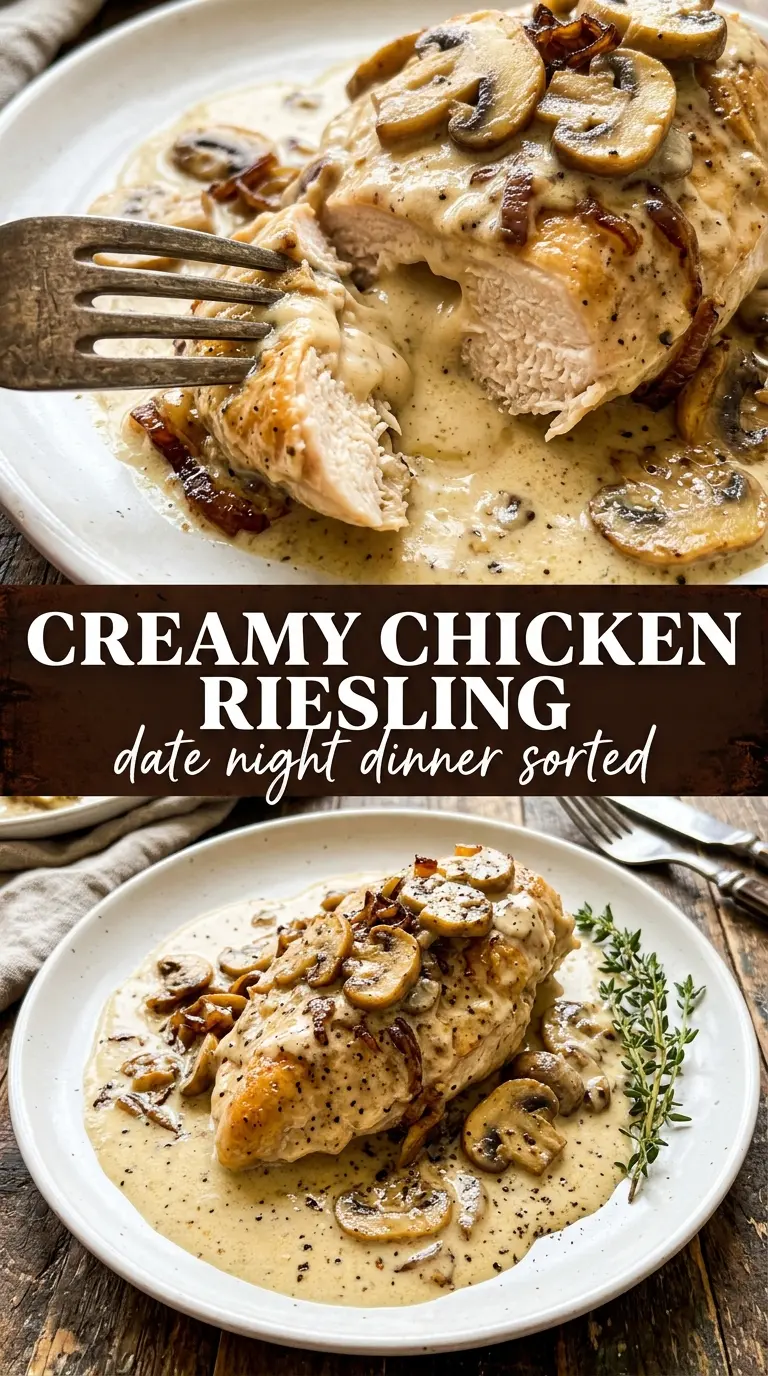
Golden chicken thighs tucked into a pale, fragrant Riesling cream sauce make the kind of skillet dinner that feels special without asking for much more than a good sear and a little patience. The chicken stays juicy under its crisp skin, the mushrooms and shallots turn savory and sweet, and the wine cooks down into something bright enough to keep the sauce from tasting heavy.
The key is treating the Riesling like an ingredient, not just a liquid. It needs a few minutes in the pan to lose that sharp alcohol edge and concentrate into the sauce base, and the mustard gives the cream enough backbone to stay balanced. Bone-in, skin-on thighs matter here because they hold up to simmering and bring enough fat to enrich the sauce as they finish cooking.
Below, I’ve laid out the exact points that matter most: getting the skin deeply browned, reducing the wine at the right moment, and finishing the sauce so it turns glossy instead of splitting.
The sauce reduced into this silky, pale gold gravy and the chicken stayed juicy all the way through. My husband kept going back for more mushrooms and asked if I could make it again next week.
Like this creamy Chicken Riesling? Save it for the nights when you want golden chicken, a silky wine sauce, and one skillet doing all the work.
Why the Wine Needs Time Before the Cream Goes In
The mistake that ruins a lot of wine sauces is rushing the middle. If the Riesling goes in and the cream follows too fast, the sauce can taste thin and a little sharp, with none of the rounded sweetness that makes this dish work. Let the wine bubble until it smells less boozy and more fruity, and you’ll get that pale gold sauce that tastes layered instead of flat.
The second thing worth paying attention to is the chicken skin. It has to be properly browned before the liquid goes in, because that’s where the flavor starts. A pale sear gives you pale sauce. A deep golden sear gives you a skillet full of fond, which the wine lifts right back into the sauce.
- Chicken thighs — Bone-in, skin-on thighs stay juicy during the final simmer and bring enough fat to keep the sauce rich. Breasts can work, but they dry out faster and don’t give the same payoff.
- Riesling — Choose a dry or off-dry bottle. Sweet Riesling can push the sauce too far in that direction, while dry Riesling keeps the finish bright and balanced.
- Dijon mustard — This doesn’t make the sauce taste like mustard. It gives the cream a little structure and keeps the wine reduction from tasting one-note.
- Cremini mushrooms — They add the earthy base note that makes the sauce feel savory and complete. White button mushrooms work in a pinch, but cremini give more depth.
What Each Ingredient Is Actually Doing in This Baked Chicken
- Chicken breasts (the protein) — Pat dry so they brown instead of steam. Even thickness ensures uniform cooking.
- Sauce or cooking liquid (the moisture keeper) — This prevents the chicken from drying out in the oven. Balance richness with acid.
- Garlic (the aromatic foundation) — Fresh minced garlic mellows and becomes sweet when baked. Don’t brown it or it turns bitter.
- Cream or wine (optional richness) — This adds luxury and moisture. Don’t let it boil hard or it can break and separate.
- Lemon or white wine (the brightness) — Acid prevents heavy sauces from tasting flat. Balance is essential.
- Fresh herbs (basil, thyme, parsley) — Add some during cooking and some after so you get both cooked and fresh flavors.
- Cheese (optional richness) — Parmesan or feta adds depth. Don’t overdo it or the dish becomes heavy.
- Proper oven temperature (375-400°F) — This temperature bakes chicken through without drying the edges. Use a thermometer for 165°F.
Building the Sauce So It Stays Smooth
Getting the Chicken Skin Deeply Golden
Season the thighs well, then put them skin-side down in a hot skillet with the olive oil. Leave them alone until the skin is deep golden and releases without sticking, about 7 to 8 minutes. If you try to move them early, the skin tears and you lose the crust that flavors the whole dish. Flip them and give the second side a shorter sear, just enough to start the cooking before they come back to the pan later.
Letting the Mushrooms and Shallots Turn Savory
After the chicken comes out, the shallots and mushrooms go into the same pan. Cook them until the mushrooms give off their liquid and that liquid cooks away, then keep going until the edges pick up some color. That step matters because watery mushrooms make a watery sauce, and you want the pan to stay concentrated. The garlic only needs a minute at the end; any longer and it can turn bitter in the cream.
Reducing the Riesling Before the Cream Joins In
Pour in the Riesling and let it bubble for a few minutes before adding anything else. You’re not just heating it through — you’re cooking off the harsh edge and shrinking the liquid into something that can carry the sauce. Once the cream, broth, Dijon, and tarragon go in, keep the simmer gentle. A hard boil can make cream taste greasy and can pull the sauce apart at the edges.
Finishing With Butter for a Glossy Sauce
Return the chicken skin-side up and simmer until it reaches 165°F. Pull the chicken out, then swirl in the butter off the heat or over very low heat so the sauce turns glossy instead of dull. If it looks thin at first, give it a minute; the sauce thickens as it cools slightly. Put the chicken back in at the end so the skin stays intact and doesn’t go soggy.
How to Adapt the Skillet Without Losing What Makes It Work
Make It Dairy-Free
Use full-fat coconut cream or an unsweetened plant-based cooking cream in place of the heavy cream, then finish with olive oil instead of butter. The sauce won’t be quite as plush, but it will still be rich enough to coat the chicken. Keep the heat gentle, because dairy-free alternatives can break faster if they boil hard.
Swap the Wine Based on What You Have
Dry white wine, such as Pinot Grigio or Sauvignon Blanc, gives a cleaner finish and a little less natural sweetness than Riesling. The dish still works, but you’ll lose some of that floral, slightly fruity note that makes the original stand out. If you use a very crisp wine, add an extra splash of broth to keep the sauce from tasting too sharp.
Use Chicken Breasts Instead of Thighs
Chicken breasts work, but they need a shorter final simmer and a little more attention so they don’t dry out. Sear them just until golden, then cook them in the sauce only until they reach 165°F. You’ll lose some of the richness that thigh meat brings, so the sauce does more of the heavy lifting here.
Storage and Reheating
- Refrigerator: Store leftovers in an airtight container for up to 3 days. The sauce thickens as it chills, so it may look tighter the next day.
- Freezer: I don’t recommend freezing this one. Cream sauces can separate after thawing, and the mushrooms turn soft in a way that hurts the texture.
- Reheating: Warm it slowly in a covered skillet over low heat with a splash of broth or cream. High heat is the fastest way to split the sauce and make the chicken tough.
Answers to the Questions Worth Asking
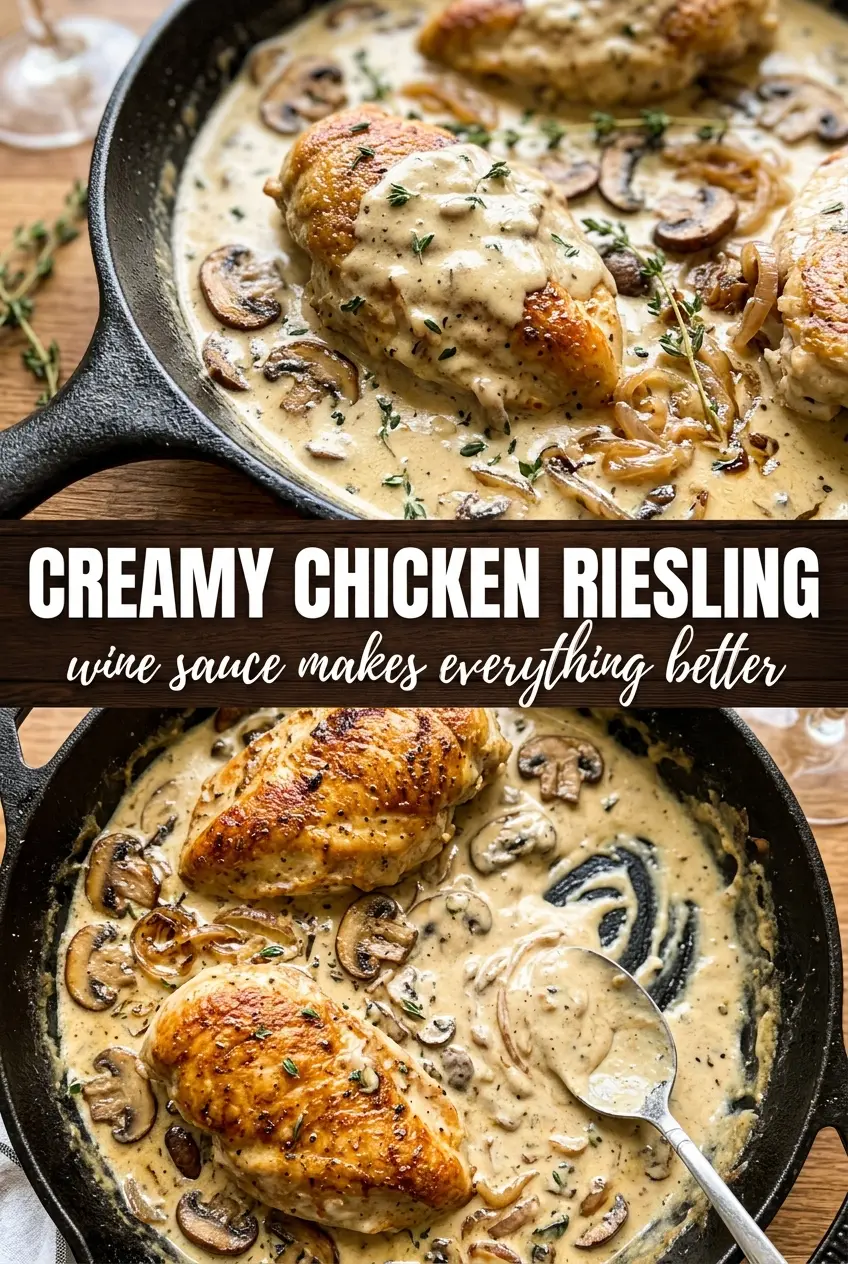
Creamy Chicken Riesling
Ingredients
Equipment
Method
- Season the chicken thighs with salt, pepper, and garlic powder to taste. Pat lightly so the seasoning adheres.
- Heat olive oil in a large skillet over medium-high heat and sear the chicken skin-side down for 7-8 minutes until deeply golden. Visual cue: the skin should look crisp and golden.
- Flip the chicken and sear for 4 minutes on the second side. Visual cue: the underside should also develop deep browning.
- Remove the chicken from the skillet and set aside. Leave any browned bits in the pan for flavor.
- Cook the minced shallots and sliced mushrooms in the skillet for 5-6 minutes until golden. Visual cue: mushrooms should release moisture and start browning.
- Add the minced garlic and cook for 1 minute. Visual cue: garlic should be fragrant but not dark.
- Pour in the Riesling wine and let it simmer for 3 minutes to cook off the alcohol. Visual cue: the liquid should reduce slightly and smell less sharp.
- Add the heavy cream, chicken broth, fresh tarragon, and Dijon mustard, then stir until combined. Visual cue: the sauce should turn pale golden and look smooth.
- Return the chicken to the skillet, skin-side up, and cover. Simmer over a gentle heat for 15-18 minutes until the internal temperature reaches 165°F.
- Remove the chicken from the skillet and swirl the butter into the sauce until glossy. Visual cue: the sauce should look silky and lightly thickened.
- Return the chicken to the skillet and garnish with fresh tarragon. Serve while the sauce is warm and fragrant.