Golden, seared chicken thighs tucked into a coconut milk sauce is the kind of skillet dinner that earns repeat status fast. The skin stays crisp enough to matter, the sauce turns silky without feeling heavy, and the ginger-garlic base keeps every bite tasting bright instead of flat.
The trick here is building the sauce in the same pan you used for the chicken. Those browned bits at the bottom are not background noise; they season the coconut milk and give the sauce depth. Full-fat coconut milk matters too, because the thinner carton versions don’t reduce into that lush, spoon-coating texture.
Below, I’ve included the small details that keep the sauce from feeling split or greasy, plus a few ways to adjust the heat, make it dairy-free by nature, or stretch the dish for leftovers without losing the good texture.
The coconut sauce turned out silky and never split, and the lime at the end kept it from tasting too rich. I used jasmine rice underneath and my husband asked if I could add this to our regular dinner list.
Save this creamy coconut milk chicken for the nights when you want a silky skillet sauce, crisp-edged chicken, and a fast finish with lime and cilantro.
The Part Most Coconut Chicken Gets Wrong: Let the Sauce Simmer, Not Boil
Once the coconut milk and broth go in, the goal is a gentle simmer. A hard boil can make the sauce look broken or oily before the chicken is fully cooked, and it can also tighten the meat faster than you want. Low, steady heat gives the fat in the coconut milk time to emulsify with the broth and pan juices.
The other mistake is rushing the sear. You want a deep golden skin on the thighs before they ever hit the sauce. If the pan is crowded or the heat is too low, the chicken will steam and shed its skin instead of giving you that crisp-edged, flavorful start.
What Each Ingredient Is Actually Doing in This Skillet

- Bone-in, skin-on chicken thighs — These stay juicy through the simmer and give you the best flavor in the pan. Boneless thighs work in a pinch, but you lose the crisp skin and some of the rich drippings that build the sauce.
- Full-fat coconut milk — This is non-negotiable if you want a sauce that turns silky instead of thin. Shake the can before opening, then stir it in well; if it has separated, that’s fine, because it comes together once it heats gently.
- Fresh ginger and garlic — These are what keep the dish lively. Ground ginger won’t give the same clean heat, and jarred garlic can taste dull here, so fresh is worth it.
- Soy sauce and lime — Soy sauce deepens the coconut milk and keeps the sauce from tasting flat, while lime juice and zest cut through the richness at the end. Don’t add the lime early or the bright flavor cooks off.
- Turmeric and red pepper flakes — Turmeric adds warmth and that golden color on the chicken; the pepper flakes are adjustable, so you can keep the dish mild or push it a little hotter.
Building the Skillet in the Right Order
Seasoning and Searing the Chicken
Season the thighs generously, then lay them skin-side down in hot coconut oil and leave them alone until the skin is deeply golden. If you move them too soon, the skin sticks and tears instead of crisping cleanly. You want the rendered fat in the pan, because that’s what flavors the onion and sauce later. Flip only after the skin releases easily.
Softening the Aromatics
Use the same skillet after the chicken comes out. The onion should soften and turn translucent, not brown hard, because you’re building sweetness before the ginger and garlic go in. Stir the garlic, ginger, and red pepper flakes for just a minute until fragrant. If the garlic starts to darken, the heat is too high and the sauce will taste sharp.
Simmering the Coconut Sauce
Pour in the coconut milk and broth, then stir well to lift the browned bits off the bottom. Bring it to a gentle simmer, not a rolling boil, and return the chicken skin-side up so the top stays as crisp as it can. Cover and cook until the thighs hit 165°F in the thickest part. If the sauce seems thin at first, it usually tightens as the chicken finishes cooking and the steam reduces.
Finishing with Lime and Cilantro
Stir in the lime juice and zest after the chicken is done. That last hit of acid wakes up the coconut milk and keeps the sauce from feeling heavy. Cilantro goes on at the end for freshness, not before, or it disappears into the sauce. Serve right away over rice so the sauce stays silky instead of setting up in the pan.
How to Adapt This Coconut Chicken Without Losing the Good Parts
Make it dairy-free without changing a thing
This recipe is naturally dairy-free as written, which is part of why the coconut milk works so well here. Just use a full-fat can, not a light version, or the sauce loses its body and turns watery.
Use boneless thighs for a faster weeknight version
Boneless thighs cook faster and slice neatly over rice, but they don’t give you quite the same richness in the pan. Cut the simmer time down and watch closely so they stay tender instead of tight.
Swap in chicken breast if that’s what you have
Chicken breast works, but it needs a gentler hand. Sear it briefly, then simmer only until it reaches temperature, because breast meat dries out faster than thighs and doesn’t forgive extra time in the sauce.
Make it gluten-free with one easy swap
Use tamari or a certified gluten-free soy sauce in place of regular soy sauce. The flavor stays deep and savory, and the sauce still balances the coconut milk the same way.
Storage and Reheating
- Refrigerator: Store for 3 to 4 days in a sealed container. The sauce thickens as it chills, which is normal.
- Freezer: It freezes well for up to 2 months, though the sauce may separate slightly when thawed. Stir well while reheating and it comes back together.
- Reheating: Reheat gently on the stove over low heat with a splash of broth or water. High heat can make the coconut sauce look greasy and can dry out the chicken before the center is warm.
Questions I Get Asked About This Recipe
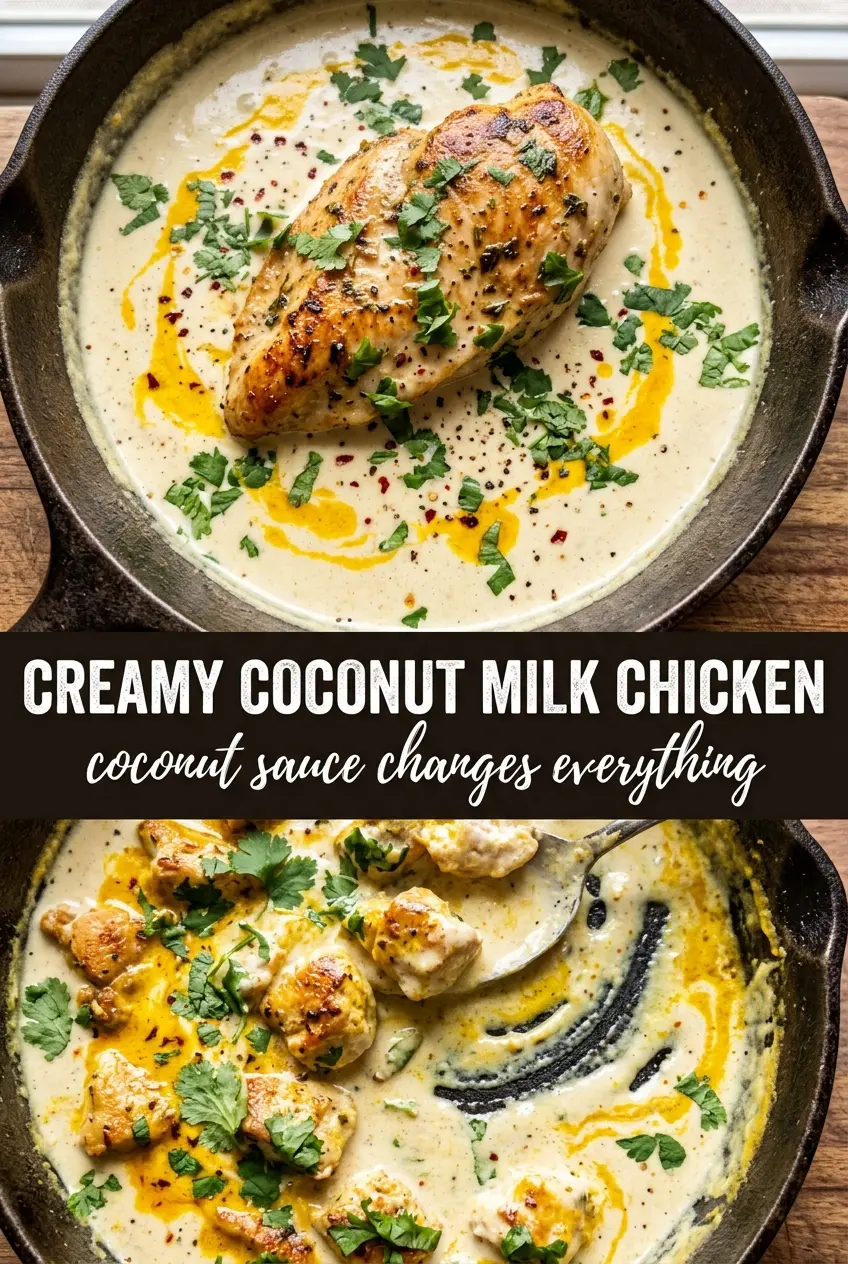
Creamy Coconut Milk Chicken
Ingredients
Equipment
Method
- Season the chicken thighs with salt, pepper, garlic powder, and turmeric. Pat lightly so the coating sticks.
- Heat coconut oil in a large skillet over medium-high heat and sear the chicken skin-side down for 6-7 minutes until golden. Visual cue: the skin should look crisp and deep golden.
- Flip and sear the chicken for 3 more minutes. Visual cue: the second side should also develop golden color before removing.
- Remove the chicken from the skillet and set aside. Leave any fond and drippings in the pan for flavor.
- Cook the diced onion in the same skillet for 3 minutes until softened. Visual cue: edges become slightly translucent.
- Add minced garlic, grated ginger, and red pepper flakes and cook for 1 minute. Visual cue: fragrant aroma should bloom without browning the garlic.
- Pour in the coconut milk and chicken broth, then stir in soy sauce and bring to a simmer. Visual cue: the sauce should start bubbling around the edges.
- Return the chicken skin-side up to the skillet. Nestle thighs into the sauce so they partially submerge.
- Cover and simmer over medium-low for 18-20 minutes until the internal temperature reaches 165°F. Visual cue: the chicken is cooked through and the sauce looks creamy and lightly thickened.
- Stir in the lime juice and lime zest. Visual cue: the sauce becomes brighter and more aromatic.
- Garnish with fresh cilantro and serve with lime wedges over jasmine rice. Visual cue: fresh green cilantro sits on top and the sauce looks ivory-golden and silky.